Artificial Intelligence (AI)

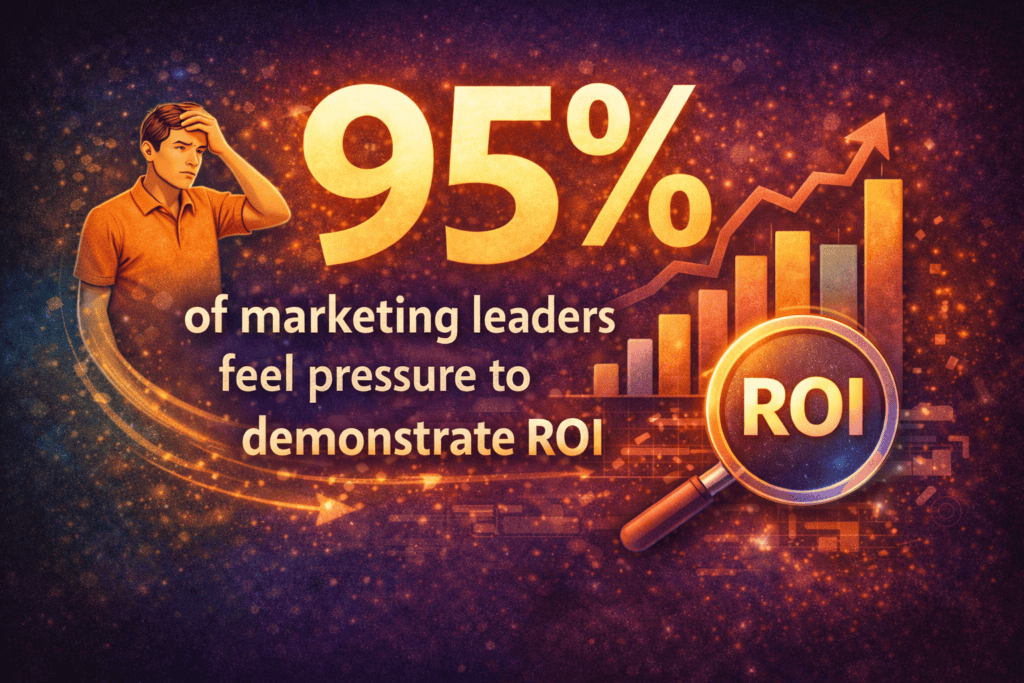
95 percent of marketing leaders feel pressure to demonstrate roi

How Marketers Are Measuring AI ROI and Where They Struggle

Reading Time: 4 minutes

Challenges in Measuring AI ROI

Marketers report intense pressure to prove AI’s value even as traditional metrics fall short. In fact, a recent survey found 95% of marketing leaders feel pressure to demonstrate ROI. Yet AI’s benefits often lie in efficiency gains or long-term insights, not immediate sales. For example, one consultant notes AI yields “efficiency, innovation, and risk reduction,” which are “hard to quantify in dollars”.

Likewise, IBM points out that many AI impacts are indirect and long-term, so short-term ROI is often elusive. This mismatch means “traditional analytics ROI metrics…fail to capture AI’s true value proposition”. Marketing veteran Jessica Apotheker (BCG CMO) bluntly observes that “most people are not seeing ROI from [AI] investment yet at scale”.

In practice, marketers struggle with multi-touch attribution (which channel “earned” revenue), defining soft costs (time and talent spent), and avoiding “vanity metrics” (like sheer content volume). In short, AI’s benefits often span multiple campaigns and customer journey stages, making a single ROI number hard to pin down.

Examples of Measurable Success

Despite the challenges, several case studies report clear lifts after adopting AI in marketing:

  • Advertising Optimization: A Nielsen and Google study of more than 50,000 brand campaigns and more than 1 million performance campaigns found AI-powered ad solutions significantly outperformed manual campaigns. For example, AI-driven YouTube ads achieved about 17 percent higher ROAS (return on ad spend), AI search Broad Match keywords drove about 15 percent higher ROAS, and Performance Max campaigns saw about 8 percent higher ROAS versus traditional methods. In total, combining AI-powered formats such as video reach and view campaigns boosted sales effectiveness by about 23 percent.
  • Email Personalization: Generative AI personalization can dramatically improve engagement. One retail case (Michaels Stores) increased personalized email campaigns from 20 percent to 95 percent of sends. This jump lifted click-through rates by 25 percent for email and 41 percent for SMS. More generally, AI-driven email personalization has been shown to boost revenue up to about 41 percent and click-through rate by about 13 percent. Bloomreach reports plus 41 percent revenue and plus 13.4 percent CTR.
  • Lead Scoring and CRM: AI predictive scoring also delivers value. One company using machine learning based lead scoring reported about a 25 percent larger sales pipeline and ultimately a 76 percent win rate on deals. By letting AI rank leads, conversion rates jumped compared to old methods. Pipeline growth and win rate lifts translate into clear revenue gains.
  • Process Automation: In related marketing and commerce functions, AI can yield large time savings. For instance, a direct to consumer retailer used generative AI to automate customer support responses, cutting time to first response by 80 percent and shaving about 4 minutes off each ticket resolution. While support is downstream of marketing, this efficiency freed teams to focus on higher value marketing activities.

Each of these examples ties AI investment to concrete metrics, such as higher ROAS or CTR, larger pipelines, and faster process times. This shows how ROI can be measured when the right KPI is chosen.

To see how AI efforts could pay off for your own marketingm try my free AI Content ROI Calculator.

Emerging Best Practices

Experts recommend new frameworks and tools for quantifying AI’s impact rather than relying on old metrics alone. A leading practice is to combine different measurement approaches: use ROI where applicable, but also track efficiency and prediction gains. Instead of just “revenue gained,” measure how AI cuts campaign analysis time, such as reducing a report run from hours to minutes, or improves forecast accuracy.

Gartner advises building an AI “portfolio” of use cases, from quick wins (measured by time or cost saved) to transformational initiatives (valued for long-term growth), and pilot each with clear targets. This might mean setting concrete goals like “increase model-driven ROI forecasts by 25 percent” or “cut data prep time by 50 percent” when testing a new AI tool.

On the tooling side, AI-driven analytics platforms are emerging. Marketers use unified measurement tools that blend marketing mix modeling and multi-touch attribution with incremental lift tests. For example, platforms like Rockerbox ingest all channel data and apply machine learning to allocate credit across touchpoints. Similarly, predictive analytics tools such as Pecan AI let teams forecast a campaign’s future ROAS and customer lifetime value within days. These systems make ROI more visible by simulating outcomes and testing scenarios up front. In practice, marketers are increasingly using “AI for attribution” to allocate budgets more effectively and “AI for prediction” to estimate campaign returns before full rollout.

Other best practices include investing in talent and data. Skilled analysts and clean data often deliver ROI faster than technology alone. As CMSWire notes, companies showing positive AI analytics ROI have built internal capability as much as buying tools.

Finally, incremental testing, such as A/B tests or hold out groups, is recommended to prove AI lift. By comparing similar audiences with and without an AI intervention, teams can attribute real revenue impact to the AI feature, much as Nielsen did for Google’s AI ads. In short, today’s best practice is to pilot AI projects with clear success metrics, both financial and operational, and use advanced analytics such as marketing mix modeling, machine learning attribution, and lift testing to tie AI-driven changes to concrete business outcomes.

References

  1. Nielsen study confirms Google’s AI-powered ad solutions drive higher ROI (Adgully summary)
  2. How AI is redefining marketing, today and tomorrow (Nielsen Insights)
  3. How Bloomreach Delivers True End-to-End Personalization (Bloomreach Blog)
  4. How BrewDog increased revenue using personalized email campaigns with Bloomreach (Case Study)
  5. River Island’s Email Marketing Success (Bloomreach Case Study)
  6. Why Marketing — and Not IT — Must Lead the AI Transformation (CMSWire)
  7. From Productivity to Impact: Unlocking the True Potential of AI in Marketing (Gartner)
  8. Marketing Teams Are Bringing Their Own AI — And It’s Changing Everything (CMSWire)

How Marketers Are Measuring AI ROI and Where They Struggle Read More »
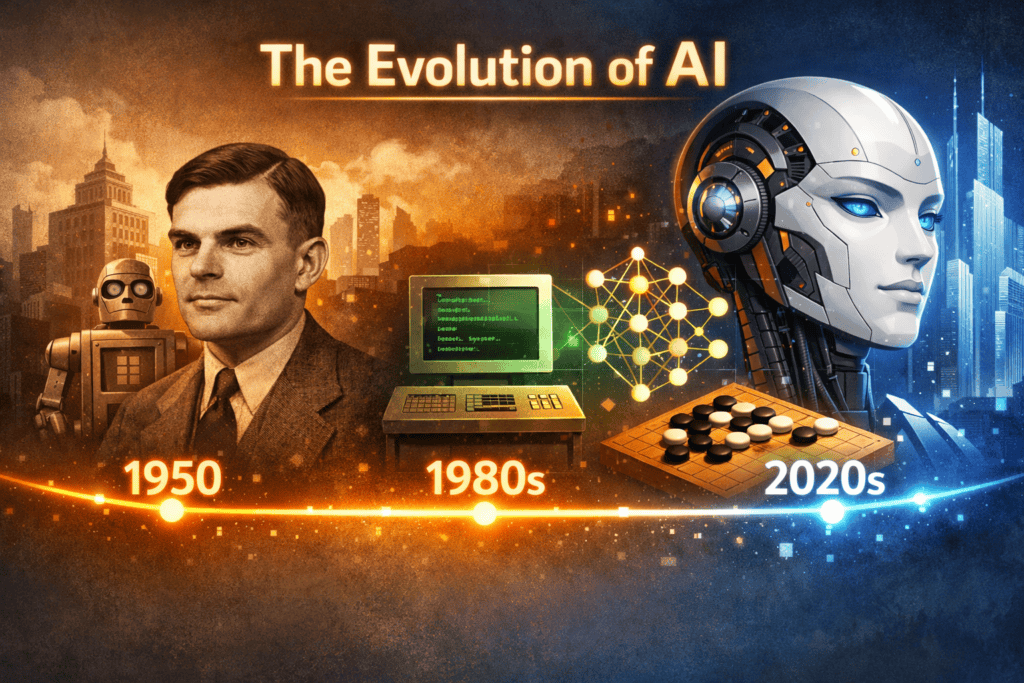
the historical evoluation of ai

A Historical Evolution of Artificial Intelligence (AI)

Reading Time: 4 minutes

In the past several decades, artificial intelligence (AI) has evolved from theoretical concepts to an integral part of our daily lives. Below is a timeline highlighting some of the most significant milestones in AI history, from its mid-20th century origins to the breakthroughs of the modern era.

1950
October

Alan Turing Proposes the Turing Test

Alan Turing publishes “Computing Machinery and Intelligence,” introducing the idea of an “imitation game” (now known as the Turing Test) to evaluate a machine’s ability to exhibit human-like intelligence.

1956
Summer

The Term “Artificial Intelligence” Is Coined

At the Dartmouth workshop in the summer of 1956, John McCarthy and fellow researchers officially coin the term “artificial intelligence,” marking the birth of AI as a distinct field of study.

1966
1966

First Chatbot – ELIZA

Joseph Weizenbaum develops ELIZA, an early natural language processing program that simulates conversation. Many users are surprised by its human-like responses, making ELIZA a landmark experiment in human-computer interaction.

1969
1969

Shakey the Robot

Researchers at Stanford Research Institute introduce Shakey, the first general-purpose mobile robot able to perceive and navigate its environment. Shakey’s integration of computer vision and planning algorithms breaks new ground in robotics and AI.

1974
1974

The First “AI Winter”

Following years of hype and unmet expectations, the mid-1970s see a steep decline in funding and interest in AI research. A critical 1974 report by Sir James Lighthill leads to budget cuts, ushering in the first “AI winter” period of slowed progress.

1980
1980s

Rise of Expert Systems

Throughout the 1980s, AI research shifts toward “expert systems” – software designed to mimic the decision-making of human experts. These systems gain commercial success (especially in corporate and medical domains), spurring renewed investment and the formation of AI research communities like the AAAI.

1997
May 11

Deep Blue Defeats Chess Champion

IBM’s Deep Blue supercomputer defeats reigning world chess champion Garry Kasparov in a six-game match. It marks the first time a computer has beaten a human world champion, demonstrating the rapidly advancing power of AI in strategic reasoning.

2011
February

IBM Watson Wins on “Jeopardy!”

IBM’s Watson question-answering AI system competes on the TV quiz show “Jeopardy!” and beats two of the show’s greatest champions. Watson’s ability to interpret natural language questions and retrieve answers in real-time highlights major strides in AI’s language understanding and information processing.

2012
2012

Deep Learning Breakthrough

An AI system (AlexNet) built on deep neural networks wins the 2012 ImageNet image recognition contest by a startling margin. This breakthrough brings neural networks and “deep learning” into the mainstream, revolutionizing AI approaches to vision, speech, and beyond.

2016
March

AlphaGo Conquers the Game of Go

Google DeepMind’s AlphaGo program defeats Go champion Lee Sedol, a feat once thought decades away due to Go’s complexity. Mastering this ancient board game through advanced neural networks and reinforcement learning, AlphaGo’s victory is hailed as a milestone demonstrating AI’s potential to tackle incredibly complex problems.

2020
June

OpenAI’s GPT-3 Astonishes

OpenAI releases GPT-3, a language model with an unprecedented 175 billion parameters capable of producing remarkably human-like text. GPT-3’s performance across writing, question-answering, and other tasks shows a dramatic leap in AI’s natural language generation abilities.

2022
November

AI Goes Mainstream with ChatGPT

OpenAI deploys ChatGPT, a conversational AI chatbot that attracts over a million users within its first week. ChatGPT’s ability to engage in human-like dialogue and assist with a wide range of questions and tasks brings generative AI into everyday use for millions, sparking mainstream excitement about AI’s possibilities.

2023
March

GPT-4 and the Future of AI

OpenAI launches GPT-4, a new multimodal AI model that accepts both text and image inputs while producing even more sophisticated outputs. The rapid progress of AI models like GPT-4 fuels discussions worldwide about AI’s potential benefits and the importance of ensuring responsible, ethical AI development as we look to the future.

2024
March

Claude 3 and AI Self-Awareness

Anthropic releases the Claude 3 model family, including Claude 3 Opus, which surprises researchers with its ability to reflect on its own behavior during evaluations — suggesting a new level of meta-cognition in AI reasoning.

2024
March

European Union Passes AI Act

The EU formally adopts the Artificial Intelligence Act, the first comprehensive legal framework to regulate AI across the continent. It introduces a tiered, risk-based system and sets a global precedent for responsible AI governance.

2024
April

OpenAI Introduces Sora for AI Video

OpenAI unveils Sora, a powerful text-to-video model capable of generating realistic, minute-long video clips from natural language prompts, expanding the creative possibilities of generative AI into visual storytelling.

2024
May

OpenAI Launches GPT-4o

OpenAI debuts GPT-4o, a faster, more accessible multimodal model capable of reasoning across text, image, and audio. GPT-4o becomes available to free ChatGPT users, dramatically expanding public access to cutting-edge AI capabilities.

2024
June

Apple Intelligence Announced

Apple unveils “Apple Intelligence,” a suite of on-device generative AI tools integrated into iPhones, iPads, and Macs. The launch emphasizes user privacy, signaling a shift toward personal AI assistants with secure, hybrid processing.

2024
August

EU AI Act Takes Effect

The European Union’s AI Act officially takes effect, requiring companies to comply with new transparency and safety regulations for high-risk AI systems, marking a significant step in global AI policy enforcement.

2025
January

DeepSeek-R1 Disrupts AI Access

A Chinese startup launches DeepSeek-R1, an open-source language model offering GPT-4-level performance. Its free release and efficient design spark a surge in global downloads and challenge assumptions about AI model exclusivity.

2025
February

ChatGPT Deep Research Mode Debuts

OpenAI introduces a new “Deep Research” mode in ChatGPT, enabling users to request detailed, source-backed reports. This feature blurs the line between human and AI research capabilities, offering autonomous, multi-step synthesis tools.

2025
May

Google Veo 3 and Generative Video Ethics

Google unveils Veo 3, a state-of-the-art generative video model capable of creating hyper-realistic scenes from text. Its realism prompts widespread discussions about misinformation, authenticity, and synthetic media safeguards.

2025
May

Anthropic Releases Claude 4

Anthropic releases Claude 4, featuring extended autonomous capabilities and sustained task handling for hours without human input. Its enhanced reasoning and long context memory highlight the ongoing shift toward AI agents.

2025
July

Creative Labor Wins AI Protections

After a prolonged strike, voice actors secure a groundbreaking contract guaranteeing consent and compensation for AI use of their voices. This milestone sets global precedent for artist rights in the age of generative content.

2025
August

OpenAI Releases GPT-5

OpenAI launches GPT-5, a major step toward tool-using, agentic AI. The model excels at reasoning, software development, and multi-step tasks, marking a transition from conversational assistants to full-fledged digital collaborators.

A Historical Evolution of Artificial Intelligence (AI) Read More »

the cambridge handbook of responsible artificial intelligence

The Cambridge Handbook of Responsible Artificial Intelligence — Summary and Takeaways

Reading Time: 4 minutes

Source: The Cambridge Handbook of Responsible Artificial Intelligence by Cambridge University Press
Date Published: October 2022
Audience: Lawyers, business leaders, policymakers, and tech teams using AI
Data Sources Cited: European courts, EU AI Act plans, GDPR rules, WHO health guidelines, and research from MIT and Stanford.

This handbook covers the big legal and ethical problems AI creates. It looks at product safety, data privacy, medical uses, business rules, and fair competition. You will learn about new laws like the EU AI Act. You will understand who gets blamed when AI makes mistakes. And you will get clear steps to use AI the right way.

Actionable Tips

Nine quick wins for marketers and business leaders using AI:

  1. Sort your AI tools by risk level. Use the EU AI Act as your guide, even if you are in the US. High risk means it affects jobs, key systems, or critical services.
  2. Write down how your AI makes choices. Good records protect you in court. AI is a black box, so clear docs are your best defense.
  3. Explain your AI results in simple words. GDPR says people must understand what you do with their data. Machine learning makes this hard, but you still must try.
  4. Do a privacy check before you use AI on lots of personal data. GDPR Article 35 says you must do this for high-risk work. No exceptions.
  5. Keep humans in charge. AI should help people make choices, not replace them. This matters most when safety or rights are at stake.
  6. Watch your pricing AI closely. Regulators worry that AI can fix prices on its own without people knowing. If you use pricing tools, check them often.
  7. Get ready for changing rules. You will need to review your AI tools often. Save money or get insurance for high-risk AI. New laws say this is coming.
  8. Budget for regulatory capital now. Europe is testing a system where companies must set aside money before using high-risk AI. If your AI causes no harm after review, you get the money back. Set aside 10 to 20 percent of AI project costs as compliance insurance.
  9. Audit pricing algorithms for collusion risk. AI can learn to match competitor prices without any human telling it to. This breaks antitrust laws even if nobody programmed it. If you use dynamic pricing in e-commerce or SaaS, check quarterly. Compare your price changes to competitors. Document that you are not watching them. Hire a lawyer to review.

Pro Tip: Build your AI rules now. Do not wait for new laws. Starting early shows regulators you care. It also saves you money later.

Key Stats and Sources

  • World data storage hit 20 zettabytes in 2018. By 2025, it may reach 160 zettabytes. That is ten times more. More data helps AI but makes rules harder to write.
  • The EU AI Act sorts AI into four risk levels. High-risk tools must pass outside checks. Very bad uses, like government social scores, are banned completely.
  • AI can beat doctors at some tasks. One test showed AI beat 136 out of 157 skin doctors at finding skin cancer. This shows AI works well but also raises big questions about who is responsible.
  • Rules change fast. Always check the newest laws and stats before you make big choices.

Examples You Can Steal

  • Luxembourg said yes to the Webtaxi app. The app sets taxi prices using AI. But it helps customers too. This shows regulators look at both good and bad effects.
  • Germany went after Facebook for breaking privacy rules in its terms. This shows how fair competition laws and privacy laws now overlap. Watch both.
  • Siemens got approval for an AI tool that reads chest scans. It makes reports for doctors. Medical AI must follow safety rules and new AI laws. That is two sets of rules.

How To Apply This Fast

  • Today: Make a list of every AI tool you use. Write down what each one does, what data it uses, and who makes choices based on it. Use a simple spreadsheet. This list is your starting point.
  • This month: Build an AI team. Get people from legal, tech, and business. Have them sort your AI by risk level using EU rules. Find where you need better records, clearer explanations, or more human checks. Meet every month as rules change.

Bold Claims and Counterpoints

  1. Claim: AI can secretly team up to fix prices without people knowing.
    Counterpoint: This is really hard to do. Experts think people worry too much. But research is still going.
  2. Claim: GDPR rules about data use clash with how AI works. AI needs freedom to learn new things.
    Counterpoint: These rules stop spying on people. You can still build AI within clear limits. It takes balance, but it can work.
  3. Claim: You cannot truly hide who health data belongs to. Blood tests and heart scans are too unique.
    Counterpoint: Perfect hiding is hard, but good security steps can protect people enough for most uses.

Metrics That Matter

  • Watch these numbers to know if your AI is working right:
  • How many AI tools you have sorted by risk. Goal is all of them in six months.
  • How many privacy checks you did for high-risk AI. Match this to your AI list to find missing ones.
  • How well people understand your AI choices. Ask users or test your explanations.
  • How often people change AI choices. Write down why. This helps you make AI better.
  • How many complaints you get about AI. Fewer complaints means you are doing better.

What Is Missing or Caveats

  • This book has lots of legal talk but not much help for small businesses. Most tips are for big companies or banks and hospitals.
  • Rules change fast. Some parts may get old quickly. The EU AI Act is still being written. Each country will do it differently.
  • The book does not talk much about working across countries. This matters for global companies. It focuses on Europe. It skips China and US rules.
  • Not much here for marketers. The book talks more about doctors, banks, and factories. Less about product tips or personalized ads.

One-Sentence Takeaway

Build your AI rules now, not later, because fixing problems after you get in trouble costs way more money and time.

References and Resources

The Cambridge Handbook of Responsible Artificial Intelligence — Summary and Takeaways Read More »

case study sephora vr and ai

Case Study: How Sephora Leads the Beauty Industry with Virtual Reality and AI

Reading Time: 5 minutes

Brief Summary

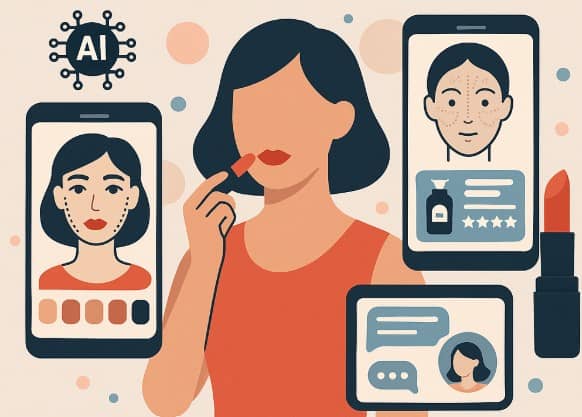
Sephora has deployed augmented reality and artificial intelligence tools such as Virtual Artist, Color IQ, AI skin diagnostics, chatbots and virtual try-ons to give customers personalized, immersive beauty experiences.

These tools have helped Sephora boost confidence, reduce product returns, improve shade match accuracy, and kept it ahead of competitors in the digital beauty space.

The innovations show how blending technology with retail can create competitive advantage.

Company Involved

Sephora

Marketing Topic

  • Customer Experience
  • Strategy
  • Product Positioning

Public Reaction or Consequences

Customers have generally responded very positively to Sephora’s VR and AI tools. Many users appreciate being able to virtually try on makeup, see realistic foundation matches, and get skin diagnostics without guesswork. These tools are often cited in reviews and social media as reducing friction in online shopping and improving confidence in buying decisions. The media has praised Sephora’s innovations as industry-leading. However there have also been challenges in terms of accuracy (lighting, device differences), inclusivity (shade ranges), privacy concerns around image uploads, and ensuring in-store versions of technology are up to par with digital.

Why It Matters Today

Sephora’s approach matters because:

  • Consumer expectations for personalization are rising, especially for inclusive shade matching and skincare recommendations.
  • Virtual try-ons and AI diagnostics reduce risk for consumers, especially post-COVID where in-person sampling may be less comfortable.
  • Competing retailers are also investing heavily in digital tools; staying ahead can drive loyalty, conversion, and operational efficiencies.
  • Privacy, diversity and ethical AI are key trends: being accurate, inclusive, transparent matters.

3 Takeaways

  1. Invest in accurate, inclusive shade matching: tools like Color IQ that handle depth, undertone, saturation make a difference in customer trust and loyalty.
  2. Omnichannel digital-physical integration is essential: virtual try-ons, AR mirrors, diagnostic tools must work both online and in stores to deliver full value.
  3. Transparency, user feedback, and iteration are key to overcoming challenges around technology limitations, privacy, and shade inclusivity.

Notable Quotes and Data

  • “Since its launch, Sephora stores have generated 14 million Color IQ matches.”
  • “By 2018, within two years of launching the app, Sephora Virtual Artist saw over 200 million shades tried on, and over 8.5 million visits to the feature.”
  • “Sephora tells Digital Commerce 360 that its new Color IQ technology—which launched in September 2021—accounts for depth, undertone, and saturation to recommend the best products that closely match customers’ skin tones.”

Full Case Narrative

Sephora’s journey into artificial intelligence and virtual reality reflects its broader strategy of using technology to enhance customer experience. For years, buying beauty products meant trial and error: guessing foundation shades, experimenting with lipsticks, and relying on in-store testers. Sephora saw an opportunity to solve these pain points with data, computer vision, and augmented reality. The company introduced several major initiatives that now define its reputation as an innovator in beauty retail.

Color IQ: Launched in 2012 in partnership with Pantone, Color IQ was Sephora’s first major step into precision technology. The handheld device scanned a customer’s skin to generate a unique color code that corresponded to the best matching foundation shades across Sephora’s vast catalog. Later updates added the ability to measure undertone, depth, and saturation, which made the system even more accurate. Customers loved that it solved one of the biggest frustrations in makeup shopping: buying the wrong shade. While Ulta and other competitors later introduced virtual matching tools, Sephora’s combination of in-store technology and Pantone’s scientific rigor gave it credibility. The challenges were practical ones: device calibration, rolling it out across hundreds of stores, and ensuring inclusivity for all skin tones.

Virtual Artist: In 2016, Sephora unveiled its Virtual Artist app, which let customers try on lipsticks, eyeshadows, foundation, and even false lashes using augmented reality. The feature exploded in popularity, generating more than 200 million virtual try-ons within two years. Customers enjoyed experimenting with shades they might not have tried in store, while Sephora benefited from lower return rates and higher conversion. Still, AR technology has its limits: differences in lighting, camera quality, and skin undertones sometimes reduced realism. Ulta launched GLAMlab in response, but Sephora kept an edge by constantly updating the app, adding tutorials, and bringing the experience into physical stores via kiosks.

AI-Driven Skin Diagnostics: Building on these successes, Sephora introduced Smart Skin Scan and other AI-powered tools that analyze customer selfies to detect skin concerns such as dryness, texture, or fine lines. The system then recommends tailored skincare routines, bringing dermatologist-style guidance directly to shoppers’ smartphones. This empowers customers to make more confident choices and drives product sales. However, challenges include ensuring accuracy across diverse skin tones, safeguarding privacy with image uploads, and managing user expectations. Competitors like L’Oréal’s ModiFace offer similar tools, but Sephora stands out by integrating diagnostics with its loyalty program and vast product inventory.

Chatbots and Virtual Beauty Assistants: To complement AR and AI tools, Sephora added chatbots to its app and messaging platforms. These virtual assistants answer questions, suggest products, and even book in-store services. While less glamorous than Virtual Artist, they deliver practical value by giving customers immediate access to advice. Natural language limitations sometimes frustrate users, but the service reflects Sephora’s strategy of meeting shoppers wherever they are—online, in-app, or in-store.

Taken together, these initiatives show Sephora’s willingness to invest early in technology that directly enhances the shopping journey. The company has faced challenges in scaling devices, ensuring inclusivity, and maintaining realism in virtual tools, yet it consistently improves based on feedback. Compared to Ulta and L’Oréal, Sephora’s competitive advantage lies in integrating these innovations into a seamless omnichannel experience. This positions the brand as not just a retailer but a digital beauty advisor, reinforcing its leadership in a rapidly evolving industry.

Comparisons to Competitors

  • Ulta Beauty has its own AR tool, GLAMlab, and has acquired AI firms like QM Scientific to improve personalization. Ulta also experiments with virtual hairstyle try-ons and AI assistants, though the variety of price tiers across its catalog makes consistent matching more difficult.
  • L’Oréal owns ModiFace, the AR and AI technology that powers many beauty brands’ try-on features. Its strength lies in research and scale, but Sephora differentiates through its retail presence, Pantone-based device tech, loyalty integration, and direct customer experience.

Timeline

  • 2012: Sephora launches Color IQ in U.S. stores with Pantone partnership.
  • 2015: Expansion to Lip IQ and Concealer IQ services.
  • 2016–2017: Virtual Artist adds thousands of products, expert looks, and tutorials.
  • 2021: Color IQ algorithm updated to include depth, undertone, and saturation.
  • 2023–2025: Ongoing rollout of Smart Skin Scan, AR mirrors, and enhanced app integrations.

What Happened Next?

Sephora continues to expand and refine its VR and AI tools. Virtual Artist and Smart Skin Scan are now deeply integrated into its app and website, while in-store kiosks bring digital experiences to physical locations. The company is actively working on inclusivity in shade matching, improving diagnostic accuracy, and ensuring consistency across devices. With competitors narrowing the gap, Sephora must keep innovating on transparency, privacy, and user experience to stay ahead.

One Sentence Takeaway

Sephora proves that combining AR and AI with inclusivity, accuracy, and omnichannel design can transform customer trust and loyalty into long-term competitive advantage.

Sources and Citations

Sephora Smart Skin Scan—official page

Digiday article on Color IQ loyalty and shade matching

Cut-The-SaaS on Virtual Artist usage data

Digital Commerce 360 on updated Color IQ algorithm

Glossy on Ulta AI tools

Tatler Asia on AI in beauty brands including Sephora and L’Oréal

BrandXR report on AR mirrors

Case Study: How Sephora Leads the Beauty Industry with Virtual Reality and AI Read More »

marketing with ai for dummies

Marketing with AI for Dummies by Shiv Singh Book Summary

Reading Time: 3 minutes

Top Three Quotes

Version 1.0.0
  1. “AI isn’t replacing marketers—it’s supercharging them.”
  2. “Marketing will be less about guessing and more about predicting.”
  3. “The future of marketing lies in creating deeply personalized experiences at scale.”

Book Theme

The Marketing with AI for Dummies book centers around how artificial intelligence is transforming marketing by automating repetitive tasks, improving customer insights, and enhancing personalization which enables marketers to be more strategic, efficient, and data-driven.

Why You Should Read This Book

  • Learn how AI tools can elevate every aspect of marketing from customer segmentation to content creation.
  • Get practical, real-world use cases of AI in email marketing, paid media, SEO, and customer journey mapping.
  • Understand the ethical considerations and best practices for implementing AI responsibly.
  • Stay competitive in a rapidly evolving digital landscape by upskilling in AI.

Key Ideas and Arguments Presented

  • AI is a tool for augmentation, not replacement. It enhances creativity and strategic thinking.
  • Data is the fuel for AI. Quality input data is essential for accurate AI outcomes.
  • AI enables hyper-personalization by analyzing customer behavior and preferences at scale.
  • Predictive analytics and machine learning can forecast customer needs and optimize timing.
  • AI simplifies content generation by auto-creating or suggesting blog posts, product descriptions, or emails.
  • Chatbots and virtual assistants can significantly enhance customer service and response times.
  • AI is transforming ad targeting and optimization with real-time bidding and adaptive campaigns.
  • Ethics and transparency in AI are crucial for maintaining customer trust.
  • AI is not plug-and-play. It requires the right infrastructure, training, and human oversight.
  • Marketers need to evolve their skills to include data analysis, prompt engineering, and AI literacy.

Book Outline

  • Introduction to AI in Marketing
  • AI in Content Marketing
  • AI for Social Media and Influencer Strategy
  • Personalization and Predictive Analytics
  • Using AI in Paid Media and SEO
  • Customer Service and Chatbots
  • AI Tools and Technologies for Marketers
  • Challenges, Risks, and Ethics of AI
  • Future-Proofing Your Marketing Career

Key Takeaways

  • AI can make marketers smarter, not obsolete.
  • It’s critical to choose the right tools that align with your goals.
  • AI is already in many platforms (e.g., Google Ads, HubSpot) and can be used without deep coding knowledge.
  • Ethical AI use matters—bias and privacy must be managed.
  • Marketers who embrace AI now will lead the next generation of customer engagement.

Key Techniques

  • Prompt optimization for better AI output in content tools.
  • Customer segmentation models using AI clustering.
  • Predictive lead scoring based on behavioral data.
  • A/B testing with AI automation to speed up conversion insights.
  • AI-driven email subject line testing using natural language processing.

Author’s Qualifications

Shiv Singh’s background:

  • Former SVP of Marketing at Visa and digital marketing leader at PepsiCo.
  • Advisor to AI and tech startups.
  • Recognized thought leader in digital transformation and brand strategy.
  • Co-author of multiple marketing-related books and frequent keynote speaker.

Comparison to Similar Books

Target Audience

  • Digital marketers looking to modernize their strategy
  • CMOs and marketing executives evaluating AI solutions
  • Small business owners exploring automation tools
  • Marketing students or professionals wanting to stay relevant
  • Content creators and social media managers using AI tools
  • Customer experience and CRM managers
  • Marketing consultants advising on tech adoption

Critical Response to the Book

  • Praised for simplifying a complex topic without dumbing it down
  • Recognized for actionable insights and relatable examples
  • Appreciated by both beginners and mid-level marketers for its tool-based recommendations

One Sentence Takeaway

Marketing with AI isn’t about replacing people. It’s about equipping marketers to create smarter, faster, and more personalized campaigns at scale.

Marketing with AI for Dummies by Shiv Singh Book Summary Read More »

,
ai agents explained

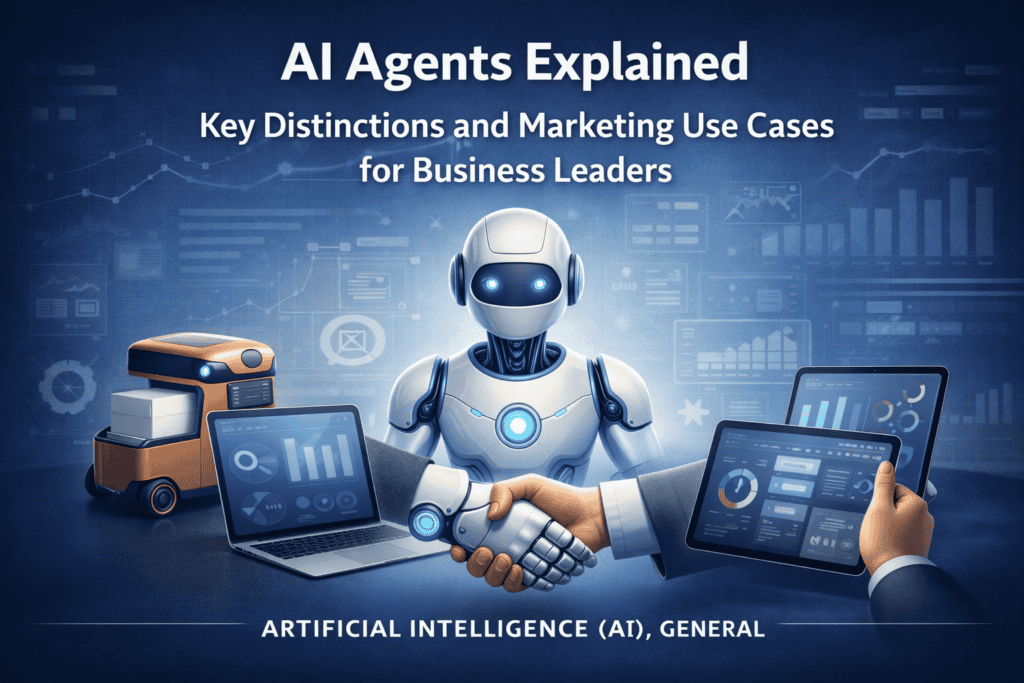
AI Agents Explained: Key Distinctions and Marketing Use Cases for Business Leaders

Reading Time: 3 minutes

AI agents are poised to transform how businesses operate and how we interact with technology. According to a report by McKinsey & Company, the AI market is projected to deliver up to $13 trillion in additional global economic activity by 2030. Microsoft CEO Satya Nadella predicts that “AI agents will become the primary way we interact with computers in the future.”

Understanding the nuances of AI agents is essential for any business leader aiming to stay ahead in this rapidly evolving landscape.

In the book AI Agents Explained for Business Leaders by David M. Patel, six critical distinctions in AI agent design are explored. These distinctions highlight the diverse capabilities, applications, and trade-offs organizations must consider when integrating AI into their operations.

1. Task-Specific vs. General-Purpose Agents

Task-Specific Agents: These agents are designed to perform a single function efficiently. For example, a chatbot handling customer support inquiries is a task-specific agent tailored for a specific purpose.

General-Purpose Agents: These are more flexible and capable of performing various tasks across different domains. For instance, virtual assistants like Siri or Alexa can handle scheduling, answer questions, and control smart home devices.

2. Reactive vs. Proactive Agents

Reactive Agents: These respond to stimuli or commands but lack the ability to predict future needs. An example is a spam filter that reacts to incoming emails and classifies them based on their content.

Proactive Agents: These anticipate needs and act accordingly. For example, an AI-powered recommendation engine on an e-commerce platform proactively suggests products based on user behavior.

3. Learning vs. Static Agents

Learning Agents: These improve their performance over time by analyzing new data. For instance, a personalized marketing AI can refine its customer targeting as it gathers more purchase history.

Static Agents: These operate with fixed rules and do not adapt over time. A rule-based chatbot using predefined responses is an example of a static agent.

4. Physical (Embodied) vs. Virtual Agents

Physical Agents: These exist in the physical world, such as autonomous delivery robots navigating urban environments.

Virtual Agents: These exist purely in digital spaces, like AI-powered virtual customer assistants interacting through websites or apps.

5. Single-Agent vs. Multi-Agent Systems

Single-Agent Systems: These involve a solitary AI performing a task independently, such as a virtual assistant handling voice commands on a smartphone.

Multi-Agent Systems: These involve multiple AI agents working together. For example, autonomous vehicles in a delivery fleet communicate to optimize routes and reduce delays.

6. Autonomous vs. Human-AI Collaborative Agents

Autonomous Agents: These operate without human intervention. An autonomous drone delivering packages independently falls into this category.

Human-AI Collaborative Agents: These work alongside humans, enhancing productivity. For example, AI-powered medical diagnosis tools assist doctors in analyzing patient data and suggesting potential treatments.

Why These Distinctions Matter

Understanding these distinctions helps business leaders make informed decisions when implementing AI solutions. By choosing the right AI agent type, organizations can enhance efficiency, reduce costs, and stay competitive in the age of artificial intelligence.

AI Agent Use Cases in Marketing:

As a digital marketer, I found these AI agent use cases particularly valuable for enhancing marketing efforts and improving customer engagement.

1. Personalized Content Creation

Generate tailored email campaigns, social media posts, and product recommendations by analyzing customer data such as browsing behavior, purchase history, and engagement patterns.
Example: An AI agent can craft personalized emails with product suggestions based on past purchases.

2. Customer Behavior Analysis

Track user activity across websites and social platforms to identify patterns, predict trends, and assign lead scores for better audience targeting.
Example: AI agents monitor web page visits and assign lead scores to prioritize high-potential customers.

3. Campaign Analytics and Optimization

Extract, process, and analyze large datasets to identify key patterns, measure performance metrics (e.g., click-through and conversion rates), and recommend campaign improvements.
Example: An AI agent tracks engagement rates and suggests optimized messaging for better ROI.

4. Automated Social Media Management

Assist with content scheduling, audience targeting, and sentiment analysis while providing real-time feedback to improve future posts.
Example: AI agents identify trending topics and automatically post optimized content for better engagement.

5. eCommerce Support

Manage inventory, predict restocking needs, and offer personalized product recommendations to boost sales and ensure seamless customer experiences.
Example: AI agents update inventory in real-time during high-traffic shopping seasons.

6. Decision Support for Marketing Teams

Analyze data, suggest strategies, and provide actionable insights while leaving final decision-making to human marketers.
Example: AI agents suggest target audience segments based on historical campaign data.

7. Enhanced Customer Experiences

Deliver relevant, engaging content at scale, improving customer satisfaction and increasing loyalty.
Example: An AI agent anticipates customer questions and provides proactive, personalized support.

AI Agents Explained: Key Distinctions and Marketing Use Cases for Business Leaders Read More »