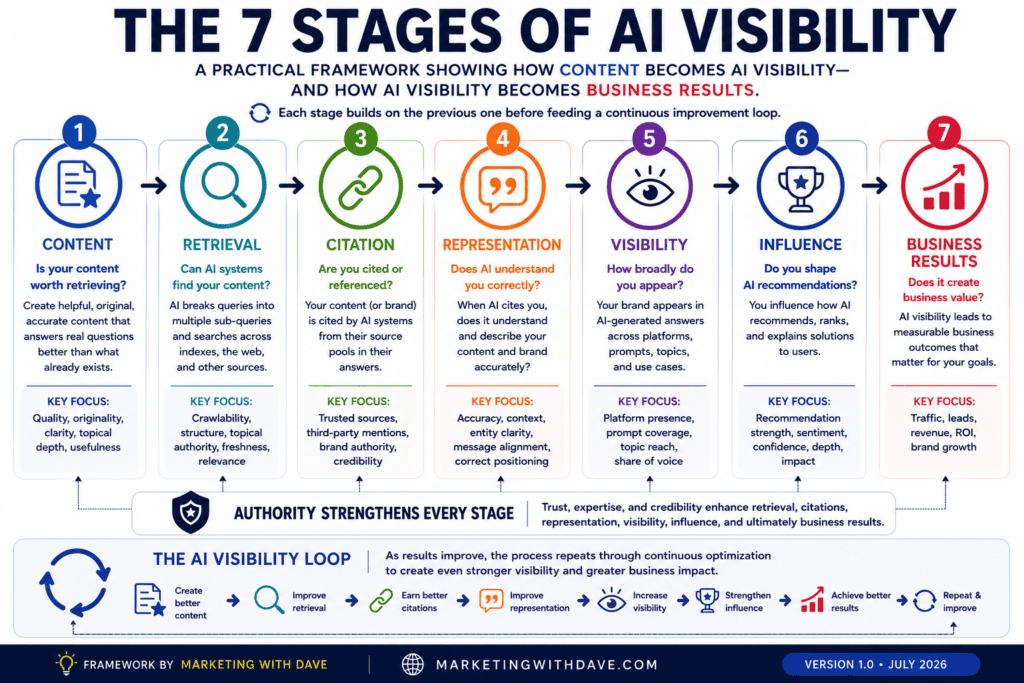
5 Questions That Reveal What AI Visibility Really Means
AI search visibility is quickly becoming another thing marketers want to reduce to a score.
How often was my brand mentioned? How many citations did I earn? What’s my AI share of voice?
Those metrics matter. But a visibility score can tell you that you showed up without telling you how you got there, what AI said about you, or whether any of it influenced a decision.
That’s a much bigger measurement problem.
I started thinking about this after reading Spinutech’s The SEO vs. GEO Debate is the Wrong Conversation. One line stuck with me:
“No retrieval means no inclusion.”
Retrieval was the piece I hadn’t been thinking about clearly enough. Retrieval happens upstream of citation, but being retrieved doesn’t mean you’ll ultimately be cited. And even after your brand makes it into a response, one question remains: did that visibility actually matter?
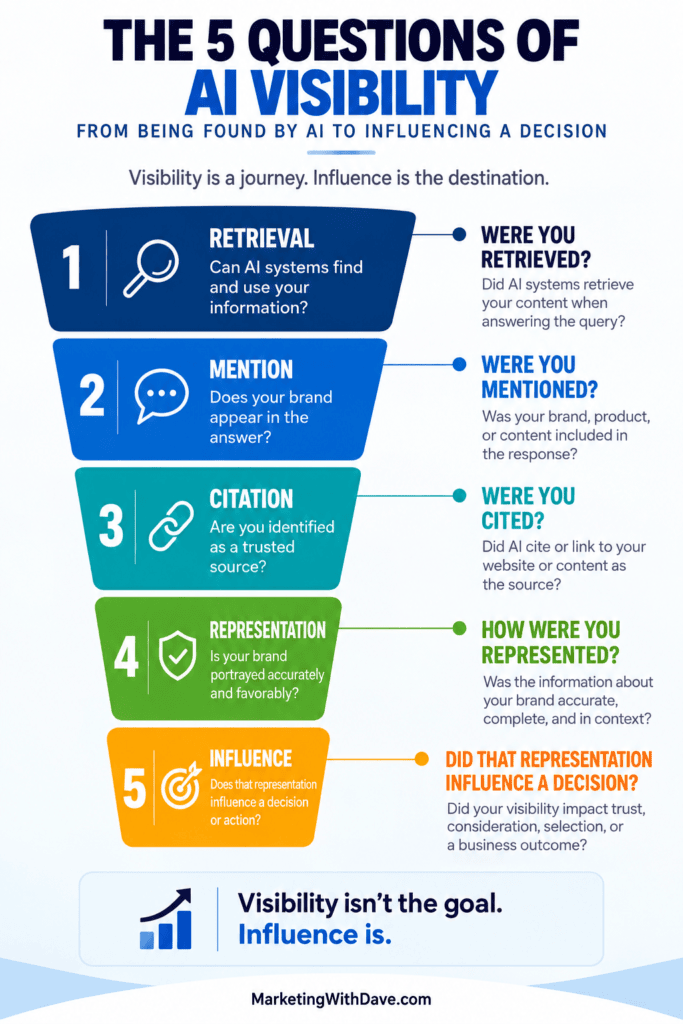
That led me to five questions I think give a more complete picture of AI visibility, from technical opportunity to business impact:
- Were you retrieved?
- Were you mentioned?
- Were you cited?
- How were you represented?
- Did that representation influence a decision?
They aren’t perfectly sequential stages, and I’ll get into why that matters. But together, they expose real gaps in how we currently measure AI search visibility.
1. Were You Retrieved?
Before you can worry about being cited, there’s a more fundamental question: did the AI system retrieve your content at all?
This isn’t just theoretical. In March 2026, AirOps analyzed 548,534 pages retrieved by ChatGPT while answering 15,000 prompts. Only 15% of those pages were ultimately cited in the final response.
85% of the pages ChatGPT retrieved never became citations.
Retrieval creates an opportunity to be considered. It doesn’t guarantee your content survives the selection process.
This is also where traditional SEO and AI visibility overlap more than the “SEO is dead” narrative suggests. Many of the fundamentals marketers already work on, including technical accessibility, clear content structure, internal linking, semantic clarity, and authority, can still contribute to whether information is discoverable and usable.
But retrieval introduces a measurement problem: marketers usually can’t see it. A citation is visible. A brand mention is visible. Retrieval without either often isn’t — which makes it both foundational and one of the hardest parts of AI visibility to track.
2. Were You Mentioned?
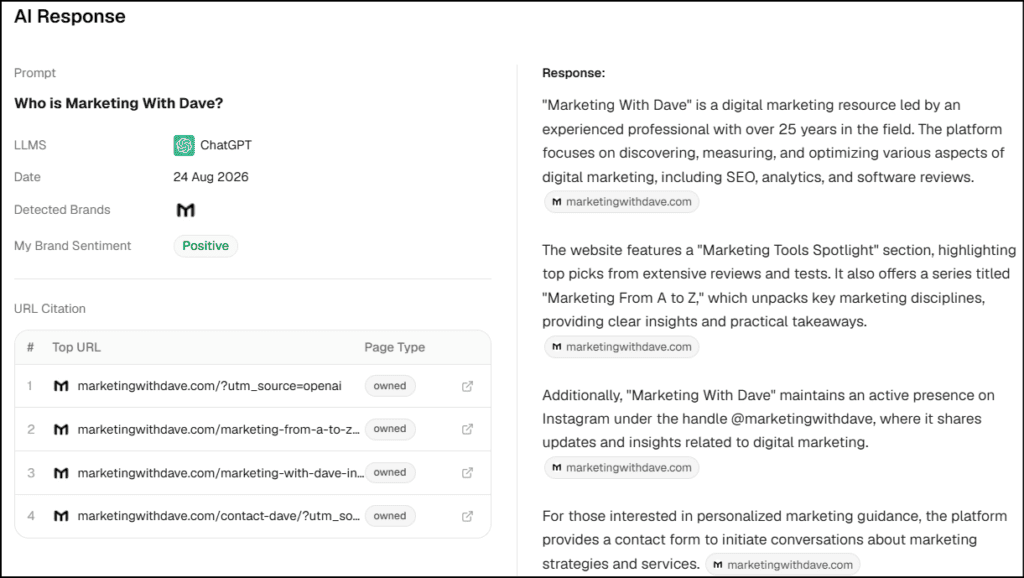
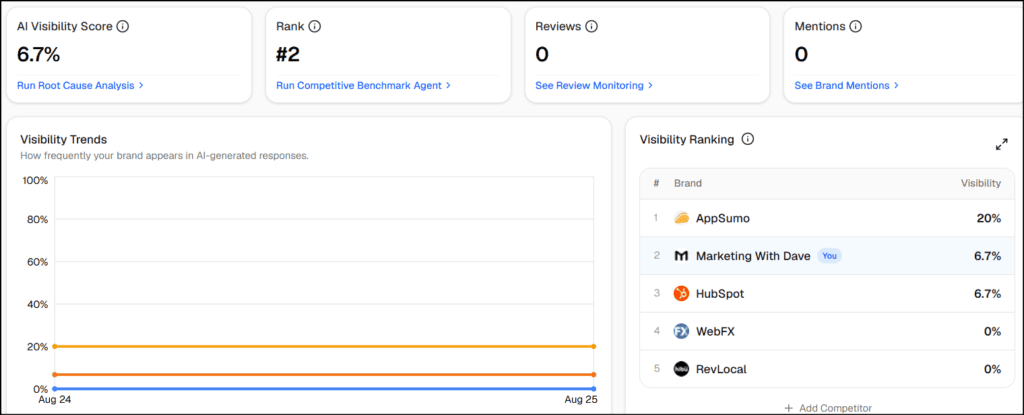
Next comes the metric most AI visibility platforms already measure well: did your brand appear in the answer?
Mentions matter because they tell you whether you’re in the conversation at all. If someone asks an AI assistant for the best software in your category and your company keeps showing up alongside your competitors, that’s useful signal.
But a mention doesn’t tell you where the information came from. An AI system can mention your brand without citing your website — pulling instead from a third-party review, a community discussion, or information it learned during training.
That’s the gap between mention and citation. A mention answers did I show up? It doesn’t answer did my content help me show up?
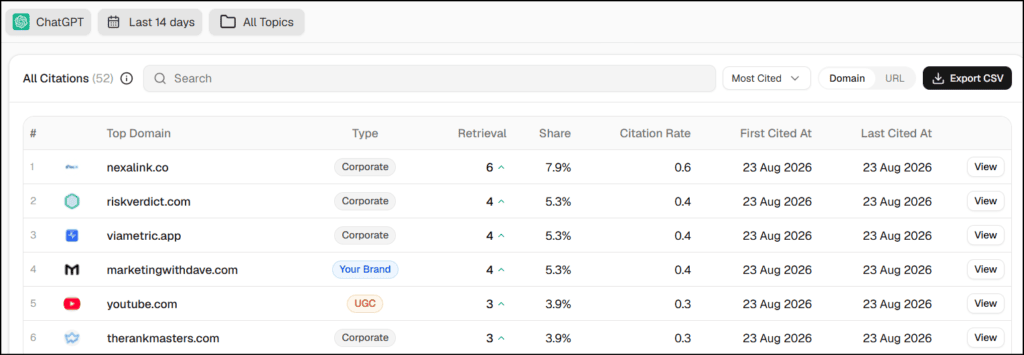
3. Were You Cited?
Citations give you something mentions don’t: attribution. If an AI-generated answer links to your page as a source, you have stronger evidence your content actually shaped the response.
That’s why citations have become such a prominent AI search metric — they’re visible, countable, and can drive referral traffic.
But citations have limits too. If only 15% of retrieved pages became citations in the AirOps dataset, then citation tracking alone misses most of what happens earlier in the process. And being cited doesn’t mean you were prominently mentioned or recommended — your page might support one fact in an answer while a competitor gets the actual recommendation.
Citation matters. It’s just not the finish line.
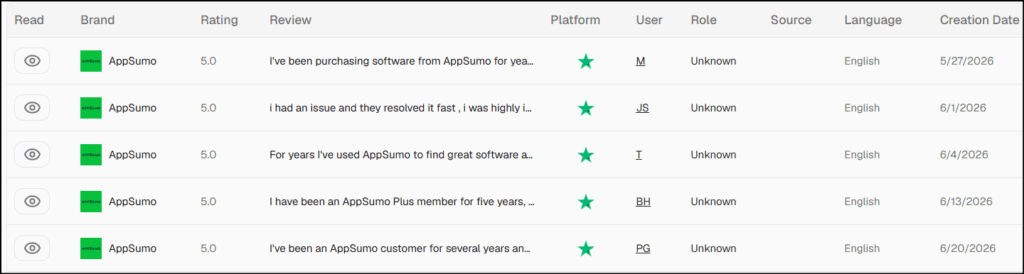
4. How Were You Represented?
This is the question I think marketers underrate most: showing up is not automatically a good outcome.
An AI system can mention your company and still:
- Describe your product incorrectly
- Use outdated pricing or features
- Misunderstand who your product is for
- Compare you with the wrong competitors
- Leave out an important differentiator
- Repeat inaccurate information from a third-party source
If that happens, your visibility metric can look great while your actual brand representation is poor. The better question isn’t “did AI say something favorable about us?” It’s: was the representation accurate, current, complete, and appropriate to the question asked?
This pulls AI visibility into brand management territory, and it extends beyond your own website. AI systems pull from review sites, publishers, forums, comparison pages, and databases — your site can say one thing while the rest of the information ecosystem says another.
5. Did That Representation Influence a Decision?
Eventually marketing has to answer the harder question: did any of this cause someone to do something — search for your brand, visit your site, add you to a consideration set, request more information, buy?
This is where AI visibility becomes a business measurement problem, not just an SEO or GEO one. And attribution gets messy fast: someone discovers you through ChatGPT, searches Google later, reads reviews on Reddit, visits your site directly, and buys three days later. Analytics records a branded or direct conversion. The AI interaction that started it all disappears from the trail.
That’s why I’m skeptical of judging AI search’s business value purely by referral traffic. Referral traffic matters, but influence can happen without a click.
Visibility isn’t the goal. Influence is.
This Looks Like a Funnel, but It Isn’t
It’s tempting to line these up as a funnel: retrieved → mentioned → cited → represented → influenced. It makes a clean visual, but it’s technically imperfect. You can be:
- Retrieved and never cited
- Mentioned without being cited
- Cited without a prominent brand mention
- Represented without your own website being cited
- Influential without producing a measurable site visit
There’s also a deeper wrinkle: content can be cited without being the primary information that actually shaped the answer.
So these aren’t five stages every AI answer moves through in order. They’re five questions marketers should keep asking as visibility moves from technical opportunity toward business impact.
What Can AI Search Software Actually Measure?
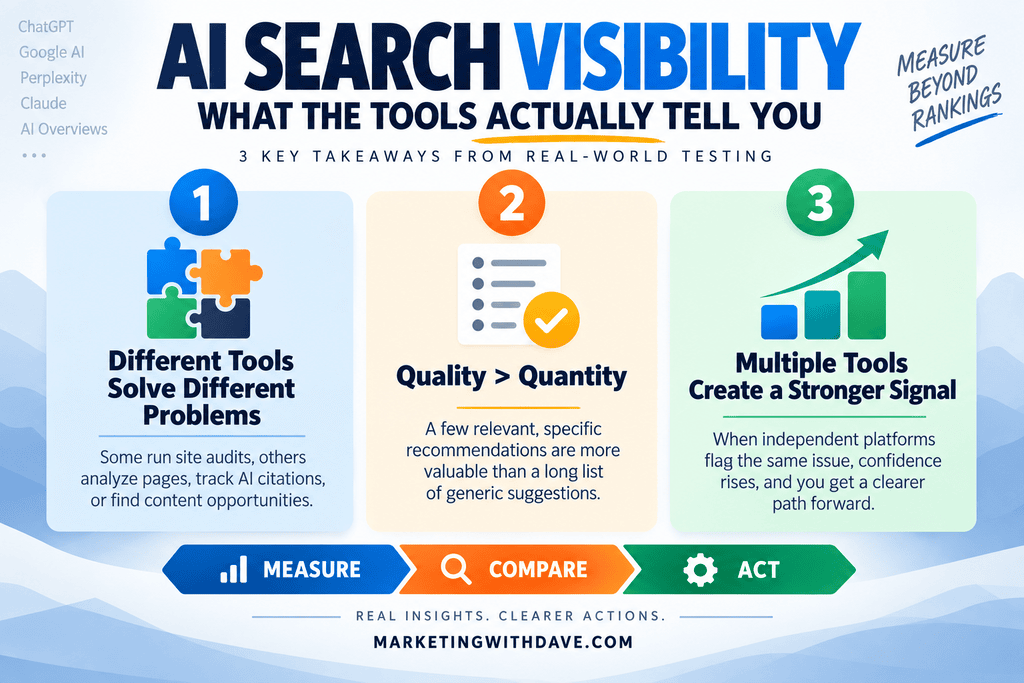
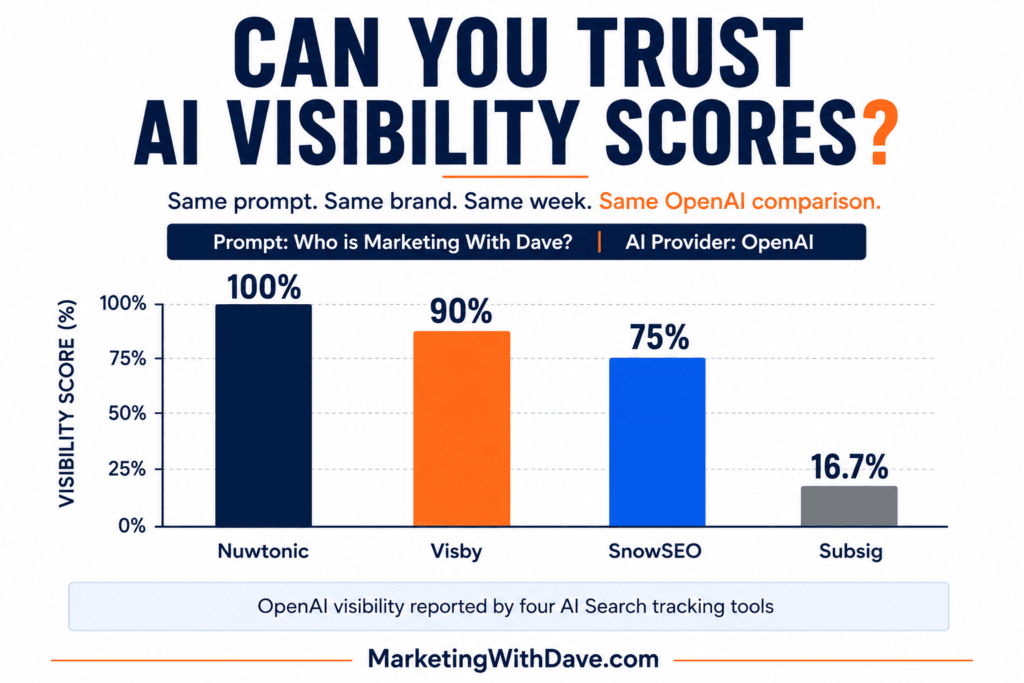
This is where the framework earns its keep. I’ve spent a lot of time testing AI search visibility software, and most platforms are far stronger in the middle of this model than at either end.
| AI visibility question | What it tells us | Measurement today |
|---|---|---|
| Were you retrieved? | Whether your information entered the AI’s research and selection process | Difficult |
| Were you mentioned? | Whether your brand appeared in the answer | Relatively measurable |
| Were you cited? | Whether your source received attribution | Relatively measurable |
| How were you represented? | What the AI actually said about your brand | Measurable, but needs interpretation |
| Did you influence a decision? | Whether visibility contributed to a business outcome | Very difficult |
Tracking prompts, mentions, citations, sentiment, and share of voice tells you a lot about what shows up in AI-generated answers. It doesn’t tell you why you got selected, or whether being selected actually mattered. Those may be the two most valuable questions in AI search visibility right now.
The tools are improving quickly, particularly around mentions, citations, sentiment, and share of voice. The harder problem is connecting those observable signals to what happened before the answer was generated and what happened after someone saw it.
AI Visibility Is Bigger Than Citation Tracking
I don’t need another argument over whether SEO, GEO, AEO, or some other acronym wins. What interests me is the actual visibility problem: can AI systems find and use our information, do we show up when relevant questions are asked, are we earning attribution, are we described correctly, and does any of that move a decision?
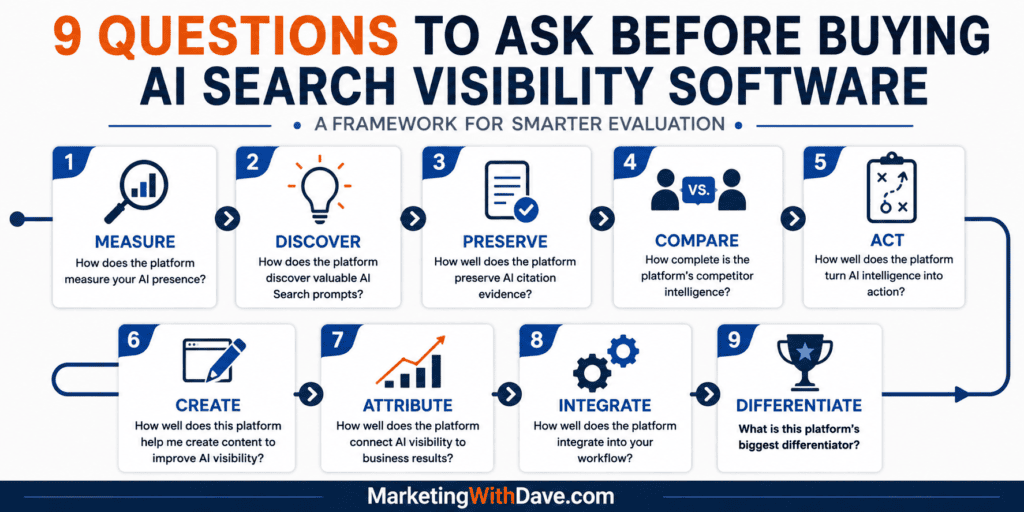
That’s also the gap between measuring AI visibility and improving it — two different jobs. A dashboard can tell me I wasn’t cited. The more valuable platform tells me why, and what to do about it. It’s why I treat AI search as one piece of a broader AI Visibility Framework rather than a standalone replacement for SEO, and why I keep coming back to these five questions when evaluating AI search software:
Knowing your brand showed up in an AI answer is useful. Understanding how it got there, what was said, and whether it mattered is what actually matters.
Sources and Further Reading
5 Questions That Reveal What AI Visibility Really Means Read More »