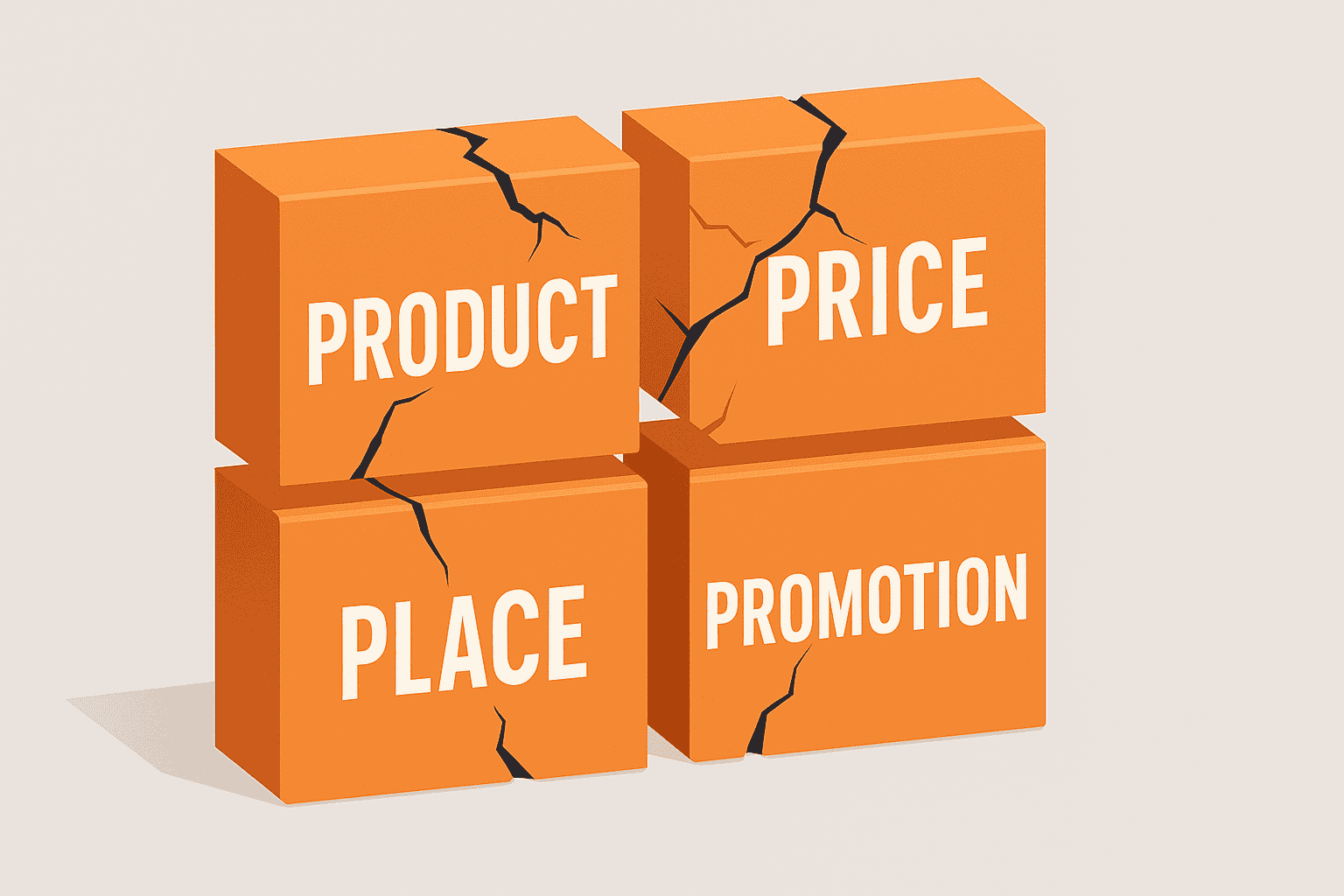
AI First Is Not a Strategy
People keep saying they are “AI-first.” I get why. It sounds modern, confident, and inevitable.
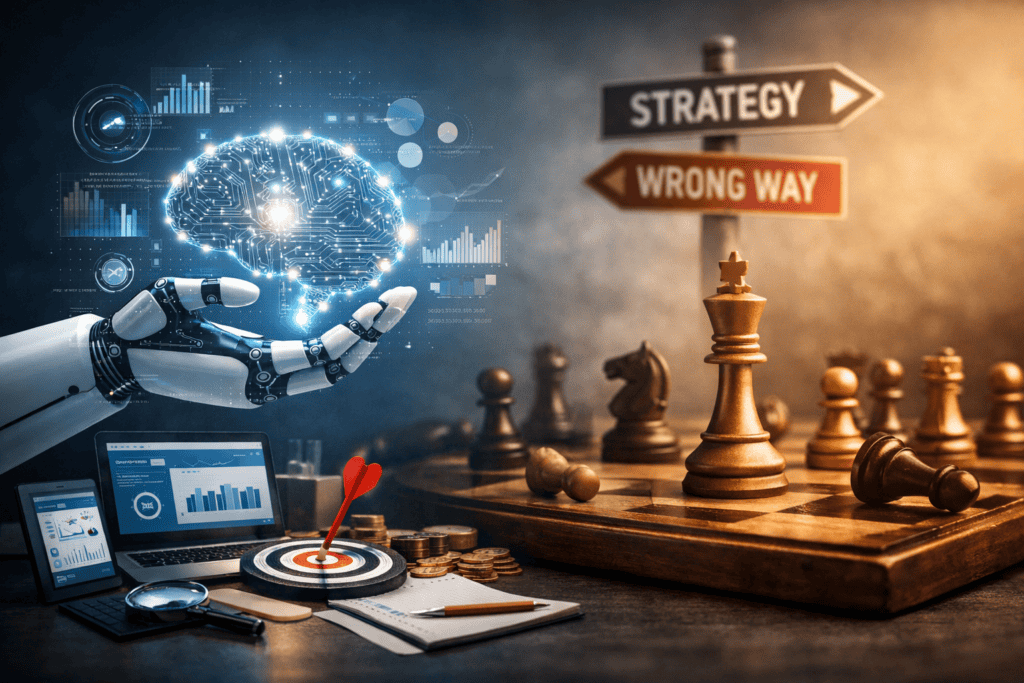
But it is also usually a tell.
AI is a tool, not a strategy. And if AI is your strategy, you do not have one.
That does not mean AI is unimportant. It means AI belongs in the execution and optimization layer, not in the leadership layer where direction, trade-offs, and accountability live.
Strategy decides direction. AI increases speed.
Strategy answers questions a tool cannot answer.
Who are we serving, specifically?
What problem are we uniquely solving?
Where do we compete, and where do we refuse to compete?
What trade-offs are we making on purpose?
AI can help you move faster once those decisions exist. It cannot create them for you. When teams go AI-first too early, they often move faster in the wrong direction.
“AI-first” is usually signaling, not substance
Years ago, nobody serious announced they were spreadsheet-first.
Nobody positioned their company as database-first, Excel-driven, or SQL-native.
Those were capabilities, not identities.
Teams used spreadsheets because spreadsheets were useful. The same is true with AI. When a company leads with the tool, it often signals that the real strategy is missing, unsettled, or not differentiated.
Customers do not buy “AI.” Customers buy outcomes.
Digital marketing lens: AI does not create demand, it processes demand
In digital marketing, AI is strongest when it is working on existing signals like search intent, behavior patterns, and historical performance data.
AI can accelerate research, drafting, testing, and optimization.
AI cannot decide what your brand stands for, what category story you should own, or what promise is worth making.
Marketers who go AI-first often optimize channels before they understand why customers are searching, why they convert, and why they churn.
AI scales the funnel you have, even if it is broken
AI will gladly help you scale a mediocre offer, a confusing landing experience, and weak differentiation.
It will improve efficiency inside a system that might be fundamentally misaligned.
That is why tool-led adoption can feel like progress while results stay flat. You did not need more speed. You needed better positioning, clearer messaging, or a stronger conversion path.
AI makes mediocre content cheaper, not great content inevitable
From an SEO and content perspective, AI lowers the cost of production. It does not lower the bar for performance.
Search visibility is still earned through usefulness, credibility, and clarity.
When teams adopt an “AI-first content strategy,” a common outcome is a flood of pages that look complete but are not anchored in real audience insight, true search intent, or firsthand expertise.
In other words, AI can help you publish more. It cannot guarantee you are publishing something worth finding.
AI cannot choose the right metrics
Marketing does not have a data shortage. It has a judgment shortage.
AI can summarize dashboards and generate forecasts. It cannot decide what matters.
Strategy is choosing whether you care most about pipeline quality, customer acquisition cost, retention, lifetime value, or brand trust.
Without that clarity, AI will optimize whatever is easiest to move. That is how teams end up winning vanity metrics and losing the business.
AI shortens feedback loops, which exposes weak positioning faster
In paid media, email, and social, AI can speed up testing and iteration.
That is great until you realize it also accelerates proof that your message is not resonating.
If your positioning is fuzzy, your promise is generic, or your offer is not compelling, AI does not fix it. AI helps you discover the problem faster, and it helps you repeat it faster.
AI-first can quietly weaken marketing leadership
This is the part people are not saying loudly enough.
When AI is used too early in the thinking process, teams outsource judgment before they have earned it.
You see it when decks are generated before insights are earned, when messaging is polished before it is understood, and when volume replaces clarity.
It creates the illusion of progress while weakening the core marketing muscle: reasoning, selection, and trade-offs.
That is not a tooling issue. That is a leadership issue.
AI does not own risk. People do.
Digital marketing lives inside constraints.
Brand trust, compliance, ad policies, reputation risk, and ethical boundaries are not optional.
AI can help enforce guidelines. AI cannot fully grasp reputational cost, contextual nuance, or the long-term impact of short-term optimization.
When a team uses AI as the decision-maker, it often underestimates how expensive public mistakes are.
So what does “AI-first” mean when it is actually valid?
There is a narrow, legitimate version of AI-first, but it is not what most people mean.
It only works when the strategy is already clear, the customer problem is defined, the value chain is understood, and accountability stays human-owned.
In that world, “AI-first” is not an identity. It is a design choice about how work flows through the organization.
Even then, the better framing is simpler and more accurate: strategy-led, AI-enabled.
The question to ask anyone who says they are AI-first
If someone says they are AI-first, the most useful follow-up is this:
What are you second?
If the answer is not customer, problem, or strategy, then AI is not their edge. It is their crutch.
What to do instead: a practical digital marketing posture
Here is a healthier posture for marketers and teams who want the upside without the confusion.
1. Be problem-first
Start with a clear customer problem and a measurable outcome.
2. Be strategy-led
Make the trade-offs explicit, including what you will not do.
3. Be human-led, tool-assisted
Keep positioning, voice, and ethical boundaries owned by people.
4. Use AI where it multiplies execution
Drafting, research acceleration, analysis support, experimentation, and workflow automation are where AI shines.
5. Measure what matters, not what moves
Choose the small set of metrics that reflect real business health, then use AI to help you monitor and improve them.
Closing thought
AI is not the strategy. It is the multiplier.
That is why it rewards teams with strong fundamentals and exposes teams without them.
If you want a durable advantage, lead with clarity, judgment, and trade-offs. Then let AI help you move faster after the direction is set.
AI First Is Not a Strategy Read More »