Case Studies

case study 7 up uncola

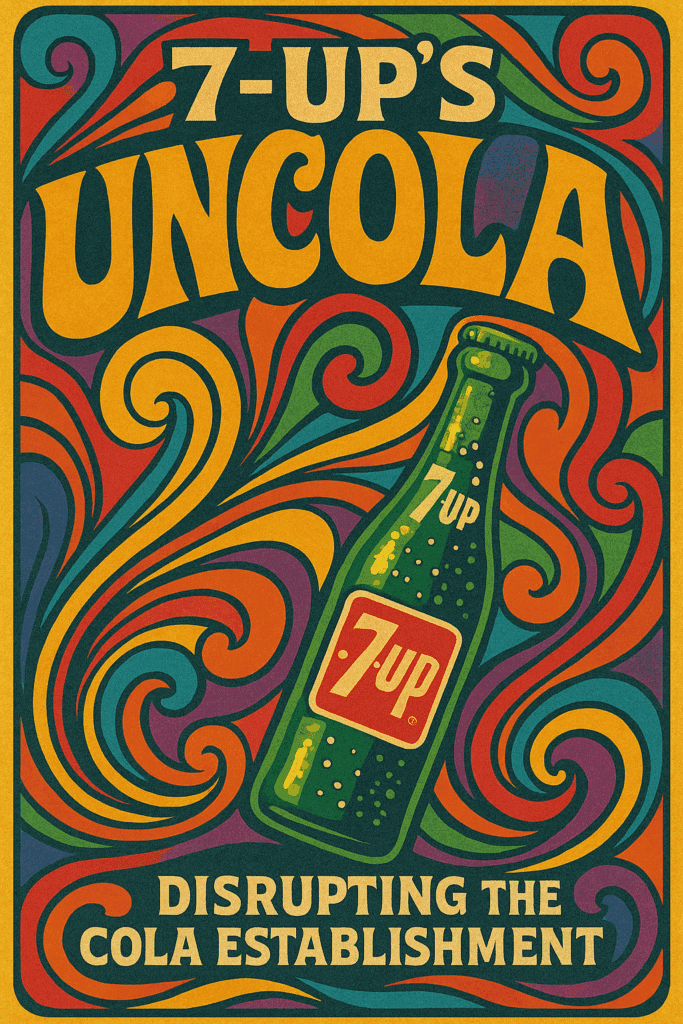
Case Study: 7‑Up’s “Uncola” Campaign — Disrupting the Cola Establishment

Reading Time: 2 minutes

Brief Summary

In the late 1960s, 7‑Up broke away from cola conventions with its iconic “Uncola” campaign. Instead of competing directly with Coke or Pepsi, it embraced bold visuals, countercultural vibes, and clever messaging to position itself as the alternative choice — ultimately boosting sales and brand identity.

Company Involved

7‑Up

Marketing Topic

  • Brand Positioning
  • Advertising
  • Cultural Strategy

Public Reaction or Consequences

The campaign struck a chord amid youth rebellion and counterculture movements. Sales reportedly jumped by as much as 30 to 56 percent following the launch. However, by the 1990s, the campaign’s youthful edge aged, prompting a rebrand in 1998.

Why It Matters Today

  • Shows how cultural alignment can fuel brand differentiation
  • Highlights long-term risks when messaging stops evolving
  • Offers lessons in disruptive positioning amid crowded markets
  • Relevant for marketers tapping into subculture, TikTok trends, and niche audiences

3 Takeaways

  1. Flip the narrative: position your product as the antithesis to category leaders
  2. Tap into zeitgeist: connect authentically with cultural movements
  3. Evolve intentionally: update branding before your audience moves on

Notable Quotes and Data

  • “In one year, sales of 7‑Up went up 56 percent!”
  • “The original 7‑Up Uncola campaign stands as one of the most audacious and successful branding efforts.”
  • “The entire campaign … catapulted 7‑Up into the position as the third leading soft drink in America.”

Full Case Narrative

By the late 1960s, 7‑Up lagged far behind cola giants Coca‑Cola and Pepsi in both profile and youth appeal. In response, they partnered with ad agency J. Walter Thompson to launch the “Uncola” campaign, positioning the drink as a rebel alternative to mainstream colas.

Visually striking ads featured upside-down cola imagery, psychedelic artwork, and slogans like “See the Light, Feel the Bite” and “Wet Un Wild.” The campaign included a public art contest, giving artists creative ownership and expanding visual diversity.

Sales soared. Estimates suggest a 30 to 56 percent rise within the first year and 7‑Up became the only non-cola in America’s top three soft drinks. As the countercultural moment faded, the youthful edge of the campaign grew dated, leading to its retirement in 1998 as the brand reinvented its message.

Timeline

  • 1967: “Uncola” campaign launches with J. Walter Thompson
  • 1968–71: Psychedelic billboards, contests, and media spots spread the message
  • 1969–70: Sales jump 30 to 56 percent
  • 1998: Campaign retired due to aging brand image

What Happened Next?

7‑Up continued experimenting with creative campaigns — introducing “Cool Spot” and “Make 7‑Up Yours” — but none rivaled the cultural punch of “Uncola.” Today the campaign endures as a case study in disruptive, culture-driven branding.

One Sentence Takeaway

Positioning your brand as the daring alternative can work wonders — just remember to evolve with your audience to maintain relevance.

Sources and Citations

Uncola: Seven‑Up, Counterculture and the Making of an American Brand

The Genius Behind the 7‑Up Uncola Campaign

Uncola Marketing: 7UP’s Long Brand Evolution

Flashback Friday: The Uncola

Positioning Strategy: It’s Not What You Say, It’s How They Think

The Seven‑Up Company and 7‑Up Bottles – The Real Story (PDF)

Case Study: 7‑Up’s “Uncola” Campaign — Disrupting the Cola Establishment Read More »

Tylenol cyanide crisis poster highlighting consumer response, nationwide recall, emergency hotlines, and safer packaging from Johnson & Johnson.

Case Study: Tylenol’s Cyanide Crisis – A Masterclass in Crisis Response

Reading Time: 2 minutes

Brief Summary

In 1982, seven people in Chicago tragically died after taking cyanide‑laced Tylenol capsules. Johnson & Johnson responded with a full national recall, transparent communication, and tamper‑resistant packaging.

Their swift, consumer‑first action restored trust and created a crisis management blueprint.

Company Involved

Johnson & Johnson

Marketing Topic

  • Crisis Response
  • Corporate Social Responsibility
  • Public Relations

Public Reaction or Consequences

The public panicked, sales plunged, and media coverage was intense. J&J’s immediate recall, hotline support, and CEO James Burke’s on‑camera presence earned widespread praise. They sacrificed over $100 million but regained market share within a year.

Why It Matters Today

  • Consumer safety trumps profits in trust‑building
  • Transparency can defuse panic in the age of social media
  • Industry‑wide tamper‑proof packaging standards evolved
  • Precedent for current accountability and real‑time stakeholder expectations

3 Takeaways

  1. Act quickly and publicly to stop reputational damage
  2. Use empathy and honesty to cement long‑term loyalty
  3. Address root causes to prevent recurrence and control narrative

Notable Quotes and Data

  • “They pulled 31 million bottles at a cost of $100 million to put people first”
  • “Tylenol sales rebounded to previous levels within six weeks after introducing triple‑sealed bottles”
  • “This effective handling… has since become a model for corporate crisis management”

Full Case Narrative

In late September 1982, seven individuals in the Chicago area died after ingesting Extra‑Strength Tylenol capsules contaminated with cyanide.

Johnson & Johnson’s chairman James Burke formed crisis teams with two core priorities: protect consumers and preserve trust.

The company initiated a voluntary recall of 31 million bottles, suspended advertising, launched hotlines, and held national press conferences. Burke appeared on network television to speak empathetically and transparently.

They collaborated with FDA and law enforcement to reinforce accountability. Within six weeks, triple‑sealed tamper‑resistant packaging debuted. By early 1983, Tylenol regained 100 percent of its market share, cementing J&J’s reputation for ethical crisis leadership.

Timeline

  • Sept 29 1982: First deaths reported
  • Early Oct 1982: Nationwide recall of 31 million bottles
  • Nov 1982: Tamper‑proof packaging launched
  • 1983: Market share fully recovered; crisis praised as exemplary

What Happened Next?

J&J rebuilt Tylenol’s brand through media outreach, free replacements, and packaging innovation. Market share returned, the case became a crisis management classic, and transparency became central to J&J’s culture.

One Sentence Takeaway

Swift consumer‑first crisis response can turn near‑destruction into renewed brand trust.

Sources and Citations

The Tylenol Case Study: A Masterclass in Crisis Communications

How the Tylenol murders of 1982 changed how we consume medicine

How Poisoned Tylenol Became a Crisis‑Management Teaching Model

How J&J’s corporate responsibility policy paid off in 1982

Case Study: Tylenol’s Cyanide Crisis – A Masterclass in Crisis Response Read More »

case study nordstrom tires returned

Case Study: How Nordstrom’s Tire Return Became a Branding Legend with Limits

Reading Time: 3 minutes

Brief Summary

Vintage-style satire image of Nordstrom tire return

In the 1970s, a customer returned a set of used tires to a Nordstrom store in Fairbanks, Alaska. The store accepted the return, even though Nordstrom never sold tires, because the location used to be a different retailer.

This story became part of Nordstrom’s brand legend, representing exceptional service. However, it also highlights the importance of boundaries in customer experience strategies.

Company Involved

Nordstrom

Marketing Topic

  • Customer Experience
  • Branding
  • Company Culture

Public Reaction or Consequences

The story spread through business books, service training programs, and company folklore. Many praised Nordstrom for putting the customer first. The tire itself is displayed in Nordstrom’s flagship store in New York City. While it earned admiration, it also raised questions about where a company should draw the line in meeting customer requests.

Why It Matters Today

• Highlights how brand legends can shape perception over decades
• Reminds marketers that every story sets a precedent
• Shows the risk of viral anecdotes becoming unrealistic expectations
• Relevant in today’s culture of transparency, reviews, and employee autonomy

3 Takeaways

  1. Service stories can build brand equity that lasts for decades
  2. Employees should be empowered, but also trained to use sound judgment
  3. Legendary moments should inspire culture, not override policy and reason

Notable Quotes and Data

  • “We are known for our policy that we take everything back … but it boils down to the customer and how we take care of them” — Pete Nordstrom
  • “He called a local Firestone dealer to determine a fair price and gave the customer a refund” — Jeff Toister, customer service consultant
  • “Yes, this is a true story” — Seattle Refined

Full Case Narrative

In the mid-1970s, Nordstrom acquired a location in Fairbanks, Alaska that had previously operated as a department store selling everything from clothing to car tires. Some time after the acquisition, a customer walked in to return a pair of worn tires. Although Nordstrom never sold tires, a young associate named Craig Trounce honored the request. He called a local Firestone dealer, calculated a fair refund, and processed the return for about 25 dollars.

Rather than being reprimanded, Trounce was praised for delivering excellent customer service. The story was later confirmed and celebrated by Nordstrom executives, including Pete Nordstrom on the company’s podcast. The tire return became a symbol of Nordstrom’s customer-first mentality and was shared widely in management seminars and business books.

Still, the story is not just about generosity. It raises an important question for marketers and company leaders: what happens when legendary moments create unrealistic expectations? Nordstrom has continued to promote autonomy within clear service standards. The tire story lives on, but the brand does not promise to accept all outlandish requests. The goal is thoughtful service, not boundless concessions.

Timeline

  • Mid-1970s: Nordstrom acquires Fairbanks, Alaska location from a previous retailer
  • Late 1970s: Customer returns tires, associate refunds ~$25
  • 2010s–2020s: Story is confirmed by executives and displayed in stores

What Happened Next?

Nordstrom embraced the story as part of its brand identity, using it in employee training and customer engagement. The tire became a literal and symbolic display in stores. Internally, Nordstrom continued to encourage service with discretion. The company now balances generous service with realistic guidelines to avoid being taken advantage of.

One Sentence Takeaway

Exceptional customer service can define a brand, but only when supported by thoughtful boundaries and clear expectations.

Sources and Citations

The Nordy Pod: The Truth About Nordstrom’s Legendary Tire Story

The man behind Nordstrom’s famous “tire story” – Axios

Is the Nordstrom ‘tire refund’ legend real? We have answers!

How to use inspiring stories to grow your service culture – Jeff Toister

Case Study: How Nordstrom’s Tire Return Became a Branding Legend with Limits Read More »

case study coca cola new coke

Case Study: Coca‑Cola and the Launch of New Coke – A Branding Misstep That Sparked a Consumer Revolt

Reading Time: 3 minutes

Brief Summary

Coca Cola New Coke Case Study

In April 1985 Coca‑Cola replaced its original formula with a sweeter version known as New Coke. The change aimed to regain market share from Pepsi, which had been gaining ground in blind taste tests and consumer preference.

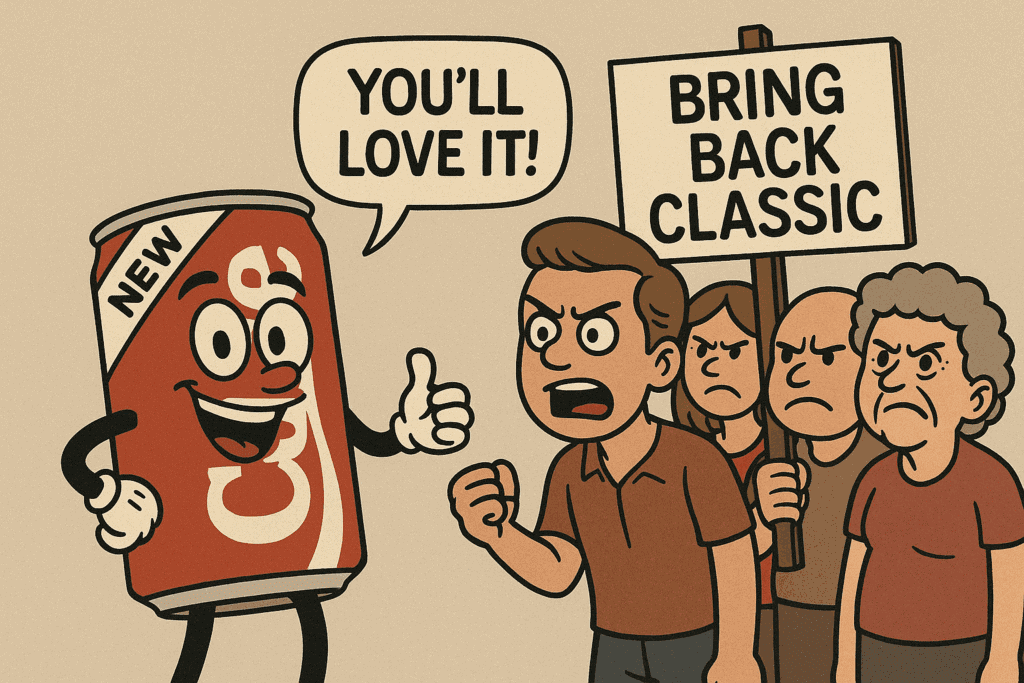
Although the new formula initially tested well, the public reaction was overwhelmingly negative. After just 79 days, Coca‑Cola brought back the original recipe as Coca‑Cola Classic.

This incident is now widely cited as one of the most significant lessons in brand loyalty and the emotional attachment consumers have to legacy products.

Company Involved

The Coca‑Cola Company

Marketing Topic

Product Positioning, Brand Identity, Crisis Response, Consumer Experience

Public Reaction or Consequences

The backlash was immediate and intense. Coca‑Cola’s customer hotline received over 1,500 calls per day, up from 400. Protest groups formed, including the Old Cola Drinkers of America. Letters were addressed to executives with names like “Chief Dodo.” Media outlets and comedians mocked the decision. Even Fidel Castro publicly criticized the move, framing it as a sign of American capitalist decline.

Why It Matters Today

This case underscores how emotional branding can override product logic. It teaches marketers that data from tests and surveys must be weighed against cultural and emotional resonance. In an era where brand decisions are amplified by social media, the lessons from New Coke are more relevant than ever.

3 Takeaways

  1. Consumer emotions matter more than product features. Functional improvements may backfire if they disrupt brand identity.
  2. Test results do not equal market readiness. Blind taste tests showed preference for New Coke, but failed to capture the emotional importance of the original formula.
  3. Own your mistakes and respond quickly. Coca‑Cola’s swift reintroduction of the original formula helped recover its reputation and regain consumer trust.

Notable Quotes and Data

  • “The cola category in general was lethargic. Consumer preference for Coca‑Cola was dipping.” — Coca‑Cola executive, History.com
  • “By June 1985, the company hotline was getting 1,500 calls a day, compared with 400 a day before the taste change.” — History.com
  • “It was, Time declared, ‘like putting a miniskirt on the refurbished Statue of Liberty.'” — Time Magazine

Full Case Narrative

In the early 1980s Coca‑Cola was losing market share to Pepsi, particularly among younger consumers. Pepsi’s advertising campaigns, including the Pepsi Challenge, showcased how people preferred its sweeter formula in blind taste tests. Coca‑Cola launched Project Kansas, a secret initiative to develop a new, sweeter formula to compete directly.

On April 23, 1985, New Coke was introduced. The announcement was backed by taste tests showing that consumers preferred the new formula. Sales initially rose, but emotional backlash quickly followed. Consumers felt betrayed, viewing the change as an attack on tradition. Protest campaigns, media mockery, and fan outrage spread quickly.

Just 79 days later, Coca‑Cola announced the return of the original formula, now branded as Coca‑Cola Classic. The public welcomed it with enthusiasm, and sales rebounded. While New Coke remained on the market for years under the name Coke II, it never achieved significant success again.

The case remains a classic lesson on understanding customer sentiment, brand equity, and how not to ignore the voice of the consumer in pursuit of innovation.

Timeline

  • April 23, 1985: Coca‑Cola launches New Coke nationwide.
  • May 1985: Consumer backlash escalates. Hotline calls spike to over 1,500 per day.
  • June 1985: Protest groups form and public ridicule increases. Editorials, late-night jokes, and political commentary amplify criticism.
  • July 11, 1985: Coca‑Cola announces the return of the original formula, rebranded as Coca‑Cola Classic.

What Happened Next?

After the reintroduction of Coca‑Cola Classic, public perception of the brand improved. The company leaned into nostalgia with patriotism-themed ads and celebrity endorsements. New Coke remained on shelves as Coke II until it was quietly discontinued in 2002. Marketers today continue to study this case as an example of how product changes must consider not just performance, but identity, history, and emotional resonance.

One Sentence Takeaway

Even the most researched product launch can fail if it disconnects from the emotional core of your brand.

Sources and Citations

History.com, New Coke debuts, one of the biggest product flops in history, published April 23, 2024.

Encyclopedia Britannica, New Coke overview, accessed June 2025.

The Coca‑Cola Company, New Coke: The most memorable marketing blunder ever?, company history page.

Allrecipes, Coke Classic: The Story of How America Saved Its Favorite Drink, published June 2025.

Time Magazine, Here’s What New Coke Tasted Like, published April 23, 2015.

Food and Wine, We compared New Coke to Coca‑Cola – Here are our thoughts, published June 2019.

Case Study: Coca‑Cola and the Launch of New Coke – A Branding Misstep That Sparked a Consumer Revolt Read More »

case study target pregnant personalization 1

Case Study: Target’s Personalization Strategy That Went Too Far

Reading Time: 3 minutes

Brief Summary

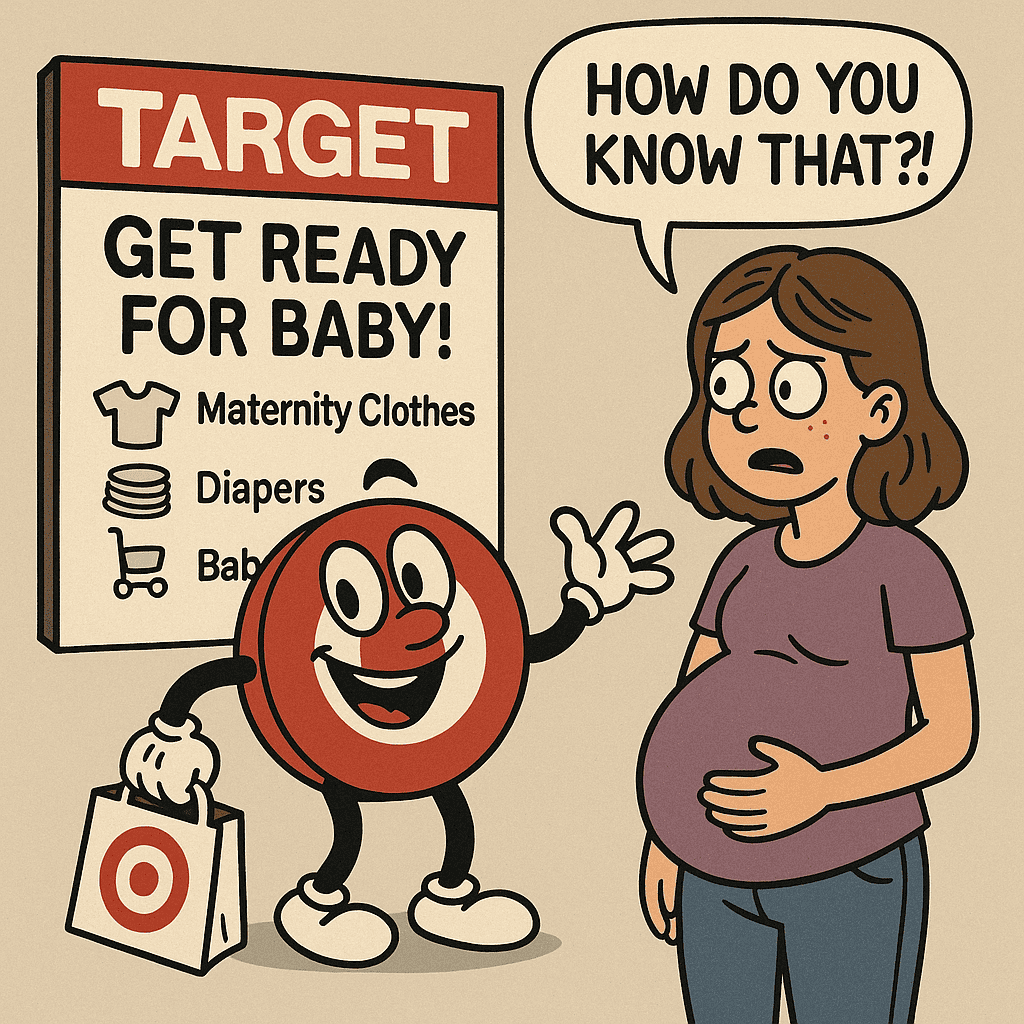
In 2012, Target used predictive analytics to assign a “pregnancy prediction score” to customers based on their purchasing behavior. The algorithm identified a teenage girl’s pregnancy, prompting her father to complain after she received baby-related coupons.

Target later admitted to interspersing baby offers among general household ads to reduce creepiness, but the incident sparked a national outcry over privacy and personalization.

Company Involved

Target Corporation

Marketing Topic

  • Personalization
  • Data-driven strategy
  • Customer experience
  • Data ethics

Public Reaction or Consequences

  • A widely reported anecdote of a father complaining when baby coupons were delivered to his pregnant teen daughter.
  • Public backlash over ethical implications of inferring personal life events without consent.
  • Coverage in *NYT*, *Forbes*, *Time*, *Slate*.
  • Conversations about customer privacy, transparency, and the adequacy of TOS.

Why It Matters Today

Highlights the tension between hyper-personalization and consumer trust. Serves as a caution for AI-driven lifecycle targeting which is still a privacy concern in a GDPR/CCPA era. Teaches modern marketers about ethical context and consent in data activation.

3 Takeaways

  • Personalization must respect boundaries. Accurate predictions can feel invasive without permission.
  • Transparency is essential. Disclose data usage to maintain trust.
  • Use camouflage sparingly. Mixing targeted and non-targeted content reduces perceived intrusion, but consent trumps camouflage.

Notable Quotes and Data

  • “Target calculated the girl was pregnant by combining data from individual purchases across approximately 25 product categories.”
  • “Target then began interlacing baby product coupons … with coupons for lawn mowers and other random items to avoid the perception that they are spying on their customers.”

Full Case Narrative

In early 2010, Target data scientist Andrew Pole developed a predictive model using baby registry data and purchase histories of products like unscented lotion, calcium, zinc, and magnesium. The goal: detect pregnancy early when purchasing needs change. By assigning each customer a “pregnancy prediction score,” Target could send relevant coupons precisely when the timing aligned with early and mid-pregnancy.

A few years later, journalist Charles Duhigg’s *New York Times Magazine* article detailed an incident where a father discovered his teen daughter’s pregnancy because she received maternity coupons. This narrative went viral under headlines like “How Target Figured Out a Teen Girl Was Pregnant Before Her Father Did.”

After the uproar, Target defended the program, emphasizing that coupon mailers included other products to camouflage sensitive targeting. But the backlash ignited serious debate over privacy, lifespan targeting, and whether TOS consent was sufficient.

Today, marketers view the case as a turning point—an early wake-up call about where personalization meets privacy boundaries.

Timeline

  • 2010: Andrew Pole rolls out pregnancy-prediction model using purchase data from baby registry customers.
  • February 2012: *NYT Magazine* publishes Duhigg’s article; anecdote of teen pregnancy becomes national headline.
  • 2012–2013: Target adds mixed-content mailers to reduce creepiness.
  • Post-2012: Public-private dialogue catalyzes privacy frameworks and regulations.

What Happened Next?

Target continued to refine its analytics with attention to perception, adding unrelated offers to avoid being intrusive. The incident helped spark consumer data bills and frameworks. Predictive personalization persists today, now backed by opt-ins, disclosures, and ethical guardrails.

One Sentence Takeaway

Even the smartest personalization can backfire without transparent consent and respect for customer boundaries.

Sources and Citations

Charles Duhigg, How Companies Learn Your Secrets , New York Times Magazine, February 16, 2012.

Kashmir Hill, How Target Figured Out a Teen Girl Was Pregnant Before Her Father Did , Forbes, February 16, 2012.

Gregory Piatetsky, How Companies Learn Your Secrets , KDnuggets, February 2012.

AIAAIC Incident Repository, Target predicts teen girl pregnancy , AIAAIC, February 2012.

Time, How Target Knew a High School Girl Was Pregnant Before Her Parents Did , Time, February 17, 2012.

Drive Research, How Target Used Data Analytics to Predict Pregnancies , January 8, 2023.

Wikipedia, Target Corporation – Consumer data usage , accessed June 2025.

Case Study: Target’s Personalization Strategy That Went Too Far Read More »

advertising strategies mad men claude hopkins

Selling the Same Thing Differently: Lessons from Mad Men and Claude Hopkins

Reading Time: < 1 minute

In the first episode of Mad Men, we’re introduced to Don Draper and his advertising team as they tackle a tough challenge for their cigarette client, Lucky Strike. Reader’s Digest has recently published an article warning about the dangers of smoking, and the ad team must find a way to make Lucky Strike stand out in a now scrutinized market.

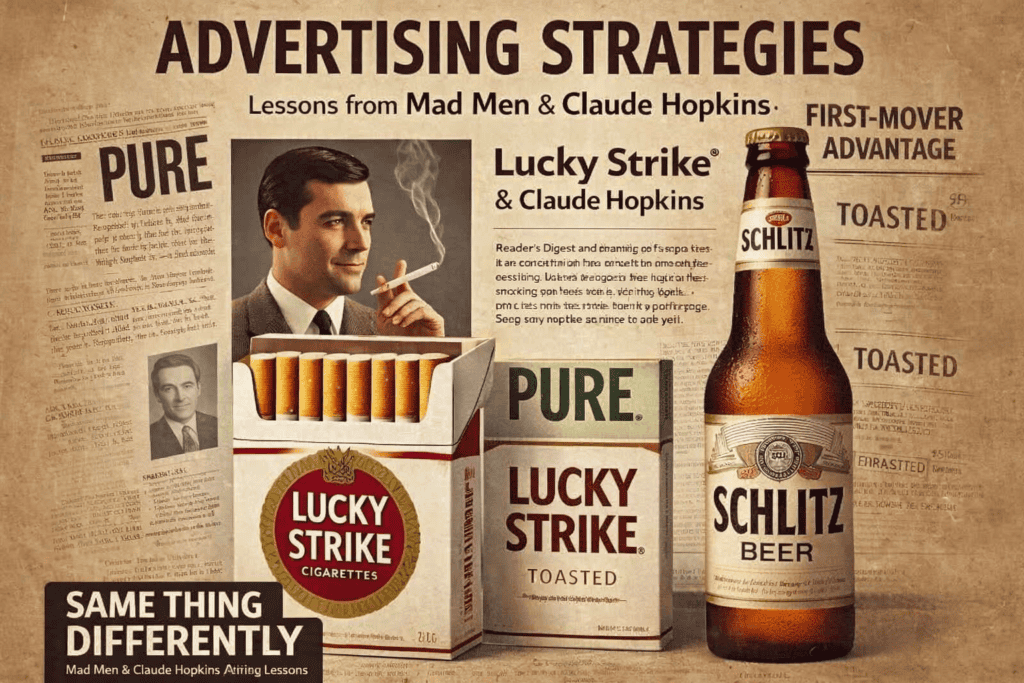
Draper’s solution is simple but effective: he suggests they emphasize that Lucky Strike cigarettes are “toasted,” a term that subtly implies quality and care in production. The twist? Every cigarette brand uses the same process—but no one else has claimed it in their messaging. By being the first to spotlight this common quality, Lucky Strike gains an edge in the consumer’s mind.

This approach echoes Claude Hopkins’ famous campaign for Schlitz beer. At the time, all brewers followed a similar process to ensure purity and quality, but none highlighted it in their advertising.

Hopkins recognized the opportunity and crafted a campaign that described Schlitz’s filtration process, showcasing it as a unique commitment to purity. By the time competitors tried to replicate the message, Schlitz had already secured its place as the “pure” beer in consumers’ minds.

Both Mad Men and Claude Hopkins demonstrate the power of the “first claim in advertising” —sometimes, being the first to say something ordinary can make it extraordinary.

Selling the Same Thing Differently: Lessons from Mad Men and Claude Hopkins Read More »