Strategy

Graph showing progress towards a daily goal with a current value of 146 out of 150, illustrating goal tracking and achievement for effective marketing planning.

SMART Goals and Three Tips to Ensure Success

Reading Time: 3 minutes

When it comes to achieving goals, the SMART framework has become a gold standard. The idea is simple yet powerful: make your goals Specific, Measurable, Achievable, Relevant, and Time-bound. Here’s a breakdown of the SMART framework, using the theme of losing weight, followed by an experience of mine that highlights the power of breaking goals into manageable chunks.

The SMART Goal Framework

S – Specific

A specific goal clearly defines what you want to achieve.

  • Less Effective: “I want to lose weight.”
  • Better: “I want to lose 15 pounds by eating healthier and exercising regularly.”

M – Measurable

A measurable goal allows you to track progress and know when it’s achieved.

  • Less Effective: “I want to exercise more.”
  • Better: “I will exercise 4 days a week for 30 minutes each session.”

A – Achievable

An achievable goal is realistic, given your resources and constraints.

  • Less Effective: “I will lose 30 pounds in two weeks.”
  • Better: “I will lose 1 to 2 pounds per week by reducing my calorie intake and exercising.”

R – Relevant

A relevant goal aligns with your overall priorities and values.

  • Less Effective: “I want to fit into a specific outfit.”
  • Better: “I want to lose weight to improve my health and energy levels.”

T – Time-bound

A time-bound goal has a deadline to keep you focused.

  • Less Effective: “I’ll start losing weight soon.”
  • Better: “I will lose 15 pounds over the next 12 weeks.”

My Push-Up Journey

In 2020, I had a simple goal: do 10,000 push-ups by the end of the year. I remember doing sets of less than five at a time when I started. This approach taught me two valuable lessons:

  1. Breaking It Down: Instead of focusing on a big, intimidating target, I focused on small, manageable chunks—one day or one week at a time. Not that I was doing push-ups every day but this worked out to around 27 push-ups a day to hit this 10,000 goal.
  2. Focusing on Activity Over Outcome: I didn’t obsess over the scale or immediate results. In fact, I didn’t even pay much attention to what I was eating which wasn’t ideal but instead of fighting that will power battle, the focus entirely was on the push-ups. Without realizing it, my body started looking more defined and less frumpy, and I became stronger and capable of more reps over time.

This method was a game-changer. By emphasizing consistent effort over immediate results, I achieved far more than I initially thought possible.

Three Lesser-Known Tips for Goal Setting

While the SMART framework is a fantastic starting point, here are three additional tips I’ve found helpful:

1. Make Tracking Easy and Accessible

Having an app or tool that’s always with you makes it easy to track progress and stay on top of your goals. Whether it’s a quick update during downtime or a reminder to stay on track, accessibility is key. For several years, I have been using the Strides. mobile app It’s not free but this is a case where you get what you pay for. It’s easy to update, I can see how I am pacing, and it offers flexibility not found in other apps like is this a daily/weekly/monthly entry or if every entry should be added to an overall total. Here’s a screen shot of one of my goals this year – simple but powerful.

However you want to track your goals, make sure it’s not adding friction to your whole goals process. One thing I noticed with Strides, is that I can bucket my goals into key categories – emotional, intellectual, physical, social, and spiritual. I often have too many intellectual goals with number of books to read, number of podcasts to listen to, number of videos to watch, and number of PDFs to read. This is too much and not realistic. Have balance and don’t sabotage yourself.

2. Make Each Day a Fresh Opportunity

Set up your goals so that every day feels like a new chance to succeed. For example, with my push-up goal, I had a yearly target but also knew the daily average I needed to hit. Missing a day didn’t feel like a failure but rather an opportunity to catch up and stay on course. Setting up your goals this way should avoid the typical New Year’s resolutions that crash and burn just a few weeks into the new year. Keep in mind, if you have a goal that you are not making progress on after a month, perhaps it just needs to be broken down into smaller, more doable pieces. Make it easy on yourself to take action.

3. Celebrate Milestones

Recognizing progress along the way keeps you motivated. Whether it’s completing a week of workouts or hitting your first 100 push-ups, celebrating these wins helps maintain momentum. Share your successes with friends and family. They can better support you and they may also catch the vision of hitting goals one day at a time.

Setting and achieving goals is a skill anyone can master with the right tools and mindset. By combining the SMART framework with these practical tips, you’ll be well on your way to accomplishing your objectives—whether it’s weight loss, push-ups, or any. What goals will you tackle next?

SMART Goals and Three Tips to Ensure Success Read More »

a curran christmas

A Curran Christmas: A Heartwarming New Book Release

Reading Time: 2 minutes

I never had the chance to meet my father-in-law, Doug Curran. He passed away before I met his third oldest daughter, who I’m lucky enough to now call my wife. But through his legacy, I’ve come to appreciate his many talents. Doug was a gifted musician (a former member of The Lettermen) and a wordsmith with a deep love for Christmas and a knack for capturing its magic in his writing.

While sifting through Doug’s collection of over 1,600 files—a mix of duplicates, drafts, and gems—we discovered a treasure trove of Christmas-themed poems, songs, and stories. Inspired by his love for the season, we decided to compile his holiday writings into a book to share with family, friends, and anyone who cherishes the Christmas spirit.

A Curran Christmas” is a delightful collection that includes:

  • Poems like Hate to See This Christmas Go and I’m a Snowflake
  • Songs and lullabies such as A Christmas Lullaby and It’s Christmas Time!
  • Short stories, including the heartwarming Christmas Ever After, where Doug playfully pleads to extend the Christmas spirit long after the holiday fades.

At the heart of the book is A Christmas Manifesto, an imaginative yet earnest invitation to keep the joy of Christmas alive well beyond the season—a sentiment that feels especially timely today.

We’re thrilled to announce that “A Curran Christmas” is now available on Amazon Kindle and in paperback. It’s the perfect addition to your holiday traditions or a thoughtful gift for loved ones.

Table of Contents

Poems

  • Hate to See This Christmas Go
  • Home for Christmas
  • I Have Stood on Snowy Roads
  • I’m a Snowflake
  • Twas the Week After Christmas
  • When I Walk in Snow

Songs and Lullaby’s

  • A Christmas Lullaby
  • Christmas Wishes
  • It’s Christmas Time!
  • Little Child
  • On Christmas Eve
  • The Christmas Star
  • The New Star

Short Stories

  • Christmas Ever After
  • Old Man Snowman
  • The Fake Christmas Tree
  • Santa’s Extra Elves and Their Fabulous Freaky Names

This collection celebrates the wonder, nostalgia, and joy of Christmas—just as Doug would have wanted. We hope it brings warmth to your home and inspires you to keep the holiday spirit alive, no matter the time of year.

A Curran Christmas: A Heartwarming New Book Release Read More »

swot matrix

SWOT Analysis: Strengths, Weaknesses, Opportunities and Threats Explained

Reading Time: 2 minutes

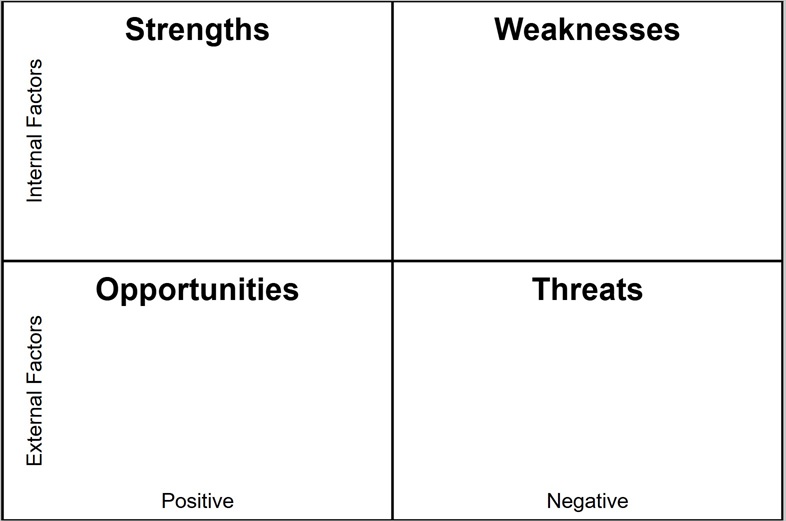
The SWOT Framework

The SWOT analysis framework was developed in the 1960s by Albert Humphrey, a business consultant at the Stanford Research Institute (SRI). Initially part of a research project designed to help businesses identify growth and improvement strategies, the SWOT framework evaluates a company’s Strengths, Weaknesses, Opportunities, and Threats. This 2×2 matrix helps businesses assess both internal and external factors that influence success. It is commonly used in strategic planning, project assessments, and competitive analysis to support informed decision-making.

  • Internal Factors: Strengths and Weaknesses
  • External Factors: Opportunities and Threats
  • Match your Strengths and Opportunities
  • Convert your Weaknesses to Strengths and your Threats to Opportunities

The Strengths of SWOT

SWOT analysis is valuable because it provides a structured way to assess a company’s current position and strategic possibilities. By understanding both internal and external factors, businesses can leverage their strengths, address weaknesses, seize opportunities, and mitigate threats. This leads to more comprehensive planning and a balanced approach to growth and risk.

The Weaknesses of SWOT

While SWOT is a widely-used tool, it does have limitations:

  • Subjectivity: SWOT analysis can be subjective, as they typically rely only on employees perspectives and opinions that may vary.
  • Lack of Prioritization: SWOT doesn’t prioritize factors, so it may not clarify which issues or opportunities are most critical.
  • Static Snapshot: SWOT captures a moment in time and may not account for rapidly changing market conditions.

SWOT Component Examples

Strengths:

  • Strong brand reputation
  • High customer loyalty
  • Skilled workforce

Weaknesses

  • Limited digital presence
  • High operating costs
  • Outdated technology

Opportunities

  • Expansion into new markets
  • Emerging consumer trends (e.g., eco-friendly products)
  • Partnerships with influencers or other brands

Threats

  • Increased competition
  • Regulatory changes
  • Economic downturns impacting consumer spending

SWOT Analysis of Owala Water Bottles

For a real-world example, check out our SWOT analysis of Owala, where we break down the strengths, weaknesses, opportunities, and threats of this popular water bottle brand. It’s a great way to see how SWOT applies to an actual product in a competitive market.

If you are interested, the Marketing 5 C’s are a common companion to the SWOT analysis.

SWOT Analysis: Strengths, Weaknesses, Opportunities and Threats Explained Read More »

amazons 16 leadership principles

Amazon’s 16 Leadership Principles

Reading Time: 2 minutes

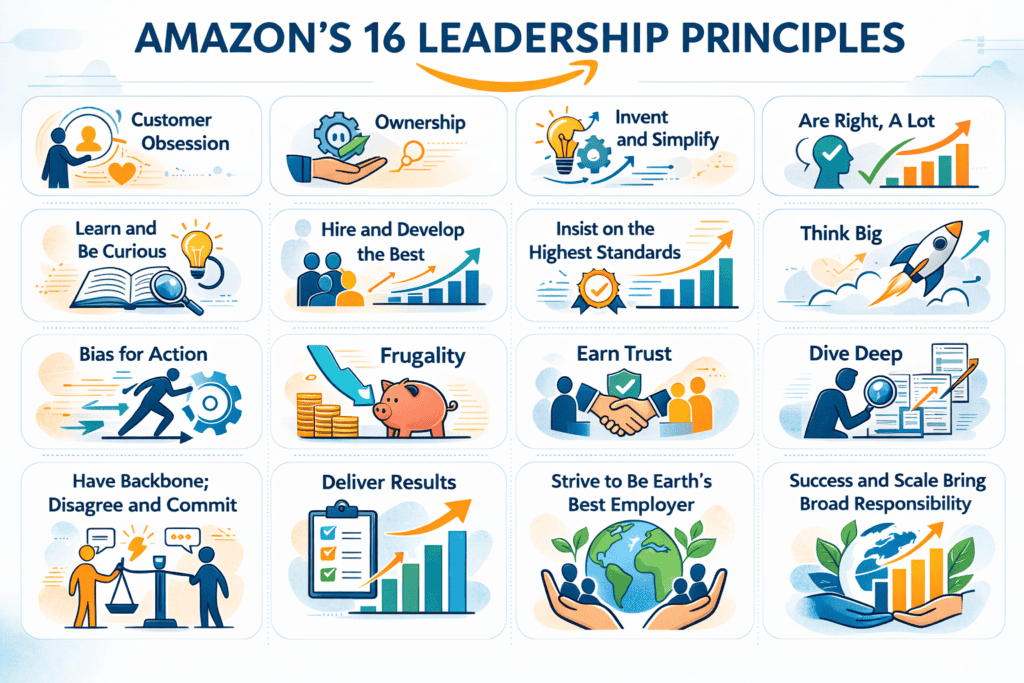
With all of the business and marketing books I have read, I was surprised that it took me so long to learn about these 16 leadership principles taught by Jeff Bezos. These are core to the Amazon’s culture and operational mindset along with guiding decision-making. Here they are:

  1. Customer Obsession
    Leaders start with the customer and work backward.
  2. Ownership
    Leaders act on behalf of the entire company, thinking long-term and never saying “that’s not my job.”
  3. Invent and Simplify
    Innovation and simplification are valued, and leaders seek out ways to simplify processes.
  4. Are Right, A Lot
    Leaders are expected to have strong judgment and good instincts.
  5. Learn and Be Curious
    Leaders are never done learning and always seek to improve themselves.
  6. Hire and Develop the Best
    Leaders raise the performance bar with every hire and coach others to improve.
  7. Insist on the Highest Standards
    Leaders continuously raise the bar for high-quality products and services.
  8. Think Big
    Leaders create and communicate a bold direction that inspires results.
  9. Bias for Action
    Speed matters, and many decisions and actions are reversible.
  10. Frugality
    Accomplish more with less, focusing on resourcefulness rather than excessive spending.
  11. Earn Trust
    Leaders work to build trust with others by being transparent, self-critical, and objective.
  12. Dive Deep
    Leaders operate at all levels, paying attention to details and understanding all aspects of their work.
  13. Have Backbone; Disagree and Commit
    Leaders are encouraged to respectfully challenge decisions when they disagree but commit fully once a decision is made.
  14. Deliver Results
    Leaders focus on key inputs for the business and deliver them on time and with high quality.
  15. Strive to Be Earth’s Best Employer
    Leaders work to make the workplace inclusive, safe, and fulfilling for employees.
  16. Success and Scale Bring Broad Responsibility
    Leaders consider the impact of their actions on the environment and society, taking responsibility for broader consequences.

These principles were implemented to ensure Amazon’s long-term success and have been integral to its corporate strategy.

Amazon’s 16 Leadership Principles Read More »

the 100 absolutely unbreakable laws of business success

The 100 Absolutely Unbreakable Laws of Business Success by Brian Tracy Book Summary

Reading Time: 6 minutes

I highly recommend reading or listening to The 100 Absolutely Unbreakable Laws of Business Success by Brian Tracy. This book provides rapid fire practical principles and insights for success in business, leadership, personal development, and life.

Each law highlights key principles that, when followed, can lead to better decision-making, stronger leadership, improved customer relationships, and personal fulfillment aimed at achieving success in business and life. The book emphasizes laws related to productivity, leadership, finances, personal development, and decision-making.

Here are my notes to give you a better idea on what is covered and to hopefully motivate you to read his book.

The Laws of Life

  1. The Law of Cause and Effect: Everything happens for a reason; there is a cause for every effect.
  2. The Law of Belief: Whatever you believe, with feeling, becomes your reality.
  3. The Law of Expectations: Whatever you expect, with confidence, becomes your own self-fulfilling prophecy.
  4. The Law of Attraction: You are a living magnet; you attract people, situations, and opportunities that are in harmony with your dominant thoughts.
  5. The Law of Correspondence: Your outer world is a reflection of your inner world.

The Laws of Success

  1. The Law of Control: You feel positive about yourself to the degree to which you feel you are in control of your own life.
  2. The Law of Accident: Life is a series of random events and occurrences over which you have no control.
  3. The Law of Responsibility: You are completely responsible for everything you are, everything you have, and everything you become.
  4. The Law of Direction: Successful people have a clear sense of direction and purpose in life.
  5. The Law of Compensation: You are always fully compensated for what you do, no more, no less.

The Laws of Business

  1. The Law of Purpose: The purpose of a business is to create and keep a customer.
  2. The Law of Organization: A business organization exists to create and keep customers.
  3. The Law of Customer Satisfaction: The customer is always right.
  4. The Law of Quality: The quality of a product or service is the key determinant of the success of a business.
  5. The Law of Innovation: In business, innovation is the key to success, longevity, and competitive advantage.

The Laws of Leadership

  1. The Law of Integrity: Great leadership is built on integrity, honesty, and credibility.
  2. The Law of Courage: It takes courage to lead, to make tough decisions, and to persist in the face of challenges.
  3. The Law of Realism: Leaders deal in reality.
  4. The Law of Power: A leader’s power is derived from the trust, respect, and admiration of their followers.
  5. The Law of Example: Leaders lead by example in all aspects of their lives.

The Laws of Money

  1. The Law of Value: Your earning ability is a reflection of the value you provide to others.
  2. The Law of Wealth: Wealth is the result of the accumulation of value over time.
  3. The Law of Capital: Your most valuable resource is your earning ability.
  4. The Law of Time: Time is money. The way you use your time largely determines the amount of money you earn.
  5. The Law of Investing: Proper investing of time and money is essential for building wealth.

The Laws of Selling

  1. The Law of Sales: All successful businesses rely on selling their products or services.
  2. The Law of Need: Successful selling begins with identifying the customer’s needs.
  3. The Law of Persuasion: People are persuaded by reason, emotion, and credibility.
  4. The Law of Negotiation: Life is a series of negotiations; the ability to negotiate well determines your success.
  5. The Law of Relationships: People prefer to do business with those they know, like, and trust.

The Laws of Negotiating

  1. The Law of Desire: In every negotiation, one party wants something more than the other.
  2. The Law of Advantage: In negotiations, whoever prepares best has the advantage.
  3. The Law of Maximization: The more you ask for in negotiations, the more you will achieve.
  4. The Law of Timing: Timing is everything in negotiation.
  5. The Law of Integrity in Negotiations: Always act with integrity in your dealings.

The Laws of Time Management

  1. The Law of Clarity: Clear goals and priorities are essential for effective time management.
  2. The Law of Priorities: You must focus on the most important tasks first.
  3. The Law of Concentration: Success comes from sustained focus and concentration.
  4. The Law of Time Pressure: Work expands to fill the time available for its completion.
  5. The Law of Leverage: You can leverage time through delegation and efficiency.

The Laws of Personal Development

  1. The Law of Habit: Successful people are those with successful habits.
  2. The Law of Discipline: Discipline is doing what you should do, when you should do it, whether you feel like it or not.
  3. The Law of Persistence: Persistence in the face of adversity is a key determinant of success.
  4. The Law of Self-Confidence: Self-confidence is the foundation of all personal achievement.
  5. The Law of Self-Respect: How much you respect yourself determines how much others will respect you.

The Laws of Happiness

  1. The Law of Happiness: Happiness is achieved through continuous growth and fulfillment.
  2. The Law of Service: The more you serve others, the happier you will be.
  3. The Law of Relationships: The quality of your relationships determines the quality of your life.
  4. The Law of Contribution: The more you contribute to others, the more happiness you will experience.
  5. The Law of Gratitude: Happiness comes from being grateful for what you have.

The Laws of Achievement

  1. The Law of Success: Success is the result of hard work, determination, and learning from failure.
  2. The Law of Mastery: To achieve greatness, you must master your craft through deliberate practice.
  3. The Law of Influence: Your ability to influence others will determine your long-term success.
  4. The Law of Excellence: Excellence is a habit developed by focusing on continuous improvement.
  5. The Law of Opportunity: Every problem contains within it an opportunity to grow and improve.

The Laws of Decision-Making

  1. The Law of Clarity in Decision-Making: The clearer you are about your decision, the better your outcome.
  2. The Law of Alternatives: The more alternatives you have, the better your decision will be.
  3. The Law of Risk: Every decision carries some level of risk, but avoiding decisions is often riskier.
  4. The Law of Decision: Success in business and life comes from making decisions quickly and changing them slowly.
  5. The Law of Opportunity Cost: Every decision has a cost, and choosing one option means forgoing another.

The Laws of Problem-Solving

  1. The Law of Problem Definition: The more clearly you can define a problem, the easier it is to solve.
  2. The Law of Creativity: Every problem can be solved with creative thinking.
  3. The Law of Focused Attention: Focusing on a problem intently often leads to the best solution.
  4. The Law of Timing in Problem-Solving: Some problems solve themselves with time, while others require immediate action.
  5. The Law of Problem Ownership: You are responsible for solving your own problems and challenges.

The Laws of Communication

  1. The Law of Clarity in Communication: Clear communication leads to better understanding and fewer mistakes.
  2. The Law of Listening: Effective communication is 50% listening and 50% speaking.
  3. The Law of Feedback: Continuous feedback is essential for improving communication.
  4. The Law of Preparation: The more you prepare before communicating, the better the outcome.
  5. The Law of Empathy: The ability to put yourself in someone else’s shoes enhances your communication.

The Laws of Persuasion

  1. The Law of Reciprocity: People feel obligated to return a favor, and this can be used in persuasion.
  2. The Law of Scarcity: People value things more when they believe those things are scarce.
  3. The Law of Authority: People are more likely to be persuaded by those who are seen as credible or authoritative.
  4. The Law of Liking: We are more likely to be influenced by people we like or admire.
  5. The Law of Commitment: People are more likely to follow through on something if they’ve made a public commitment to it.

The Laws of Influence

  1. The Law of Reciprocity in Influence: Influence grows when you give more than you take.
  2. The Law of Consistency: People are more likely to follow through if they have been consistent in the past.
  3. The Law of Social Proof: People tend to follow the actions of the masses, especially when uncertain.
  4. The Law of Unity: Building strong unity and alignment within a group enhances influence.
  5. The Law of Transparency: The more open and transparent you are, the easier it is to influence others.

The Laws of Customer Service

  1. The Law of Satisfaction: A satisfied customer is the best source of repeat business and referrals.
  2. The Law of Customer Loyalty: It is easier and cheaper to retain existing customers than to acquire new ones.
  3. The Law of Delight: Exceeding customer expectations leads to customer delight and long-term loyalty.
  4. The Law of Responsiveness: The faster you respond to customer needs and complaints, the more loyal they will become.
  5. The Law of Relationship-Building: Strong relationships with customers are the foundation of long-term business success.

The Laws of Personal Power

  1. The Law of Self-Esteem: High self-esteem is the foundation of personal power and influence.
  2. The Law of Responsibility for Results: The more responsibility you take, the more power you have.
  3. The Law of Positive Expectancy: Optimistic people achieve more because they believe in positive outcomes.
  4. The Law of Self-Control: Personal power grows with self-discipline and emotional control.
  5. The Law of Courage in Personal Power: Courage enables you to take risks and seize opportunities that lead to greater personal power.

The Laws of Teamwork

  1. The Law of Cooperation: The most effective teams are built on mutual cooperation and collaboration.
  2. The Law of Contribution: Team members are motivated when they feel they are making valuable contributions.
  3. The Law of Group Synergy: A team working together can achieve more than the sum of individual efforts.
  4. The Law of Communication in Teams: Open and honest communication is essential for effective teamwork.
  5. The Law of Common Goals: Teams work best when everyone is aligned toward a shared goal or vision.

The Laws of Achievement

  1. The Law of Preparation in Achievement: Thorough preparation is the foundation of successful achievement.
  2. The Law of Priorities in Achievement: Focusing on the highest-value tasks brings the most significant results.
  3. The Law of Perseverance: Persistence in the face of obstacles is key to achievement.
  4. The Law of Accountability: Accountability increases the likelihood of achieving your goals.
  5. The Law of Gratitude in Achievement: Gratitude enhances your ability to achieve by fostering positivity and resilience.

The 100 Absolutely Unbreakable Laws of Business Success by Brian Tracy Book Summary Read More »

Marketing Lessons from Wall Street Movie

Reading Time: 2 minutes

I love the Oliver Stone directed movie Wall Street that stars Michael Douglas with Charlie Sheen and his dad Martin Sheen. It’s rating on IMDb is a 7.3 and I gave it a 9. The acting is so good you fall in love with the characters and forget they are portraying terrible people doing horrible things.

As a digital marketer, there can be a fine line between promoting a product or service because it’s good for the company rather than good for the customer. True joy in life or in marketing comes from helping others. Although Wall Street is a product of Hollywood, the portrayal of illegal insider trading, greed that is unquenchable, and man’s inhumanity to man seems less shocking in today’s calloused world.

Wall Street was released in 1987 before we had the internet and digital marketing was just marketing. Unless you lived it, you wouldn’t believe the sophistication we now enjoy with technology over these decades. One example is the very, very brief scene where the 1985 Market Projections bar chart was shared. I of course had to pause the movie to zoom in on the details which I included in this post.

This bar chart was obviously not intended to be truly seen, let alone analyzed but let’s do it anyway.

  1. The X or horizontal axis obviously just has placeholder names for these markets, X, XX, and XXX. Each of these three markets has four different measurement but there is no way to know what those are.
  2. The Y or vertical axis ranges from 0 to 350. Best practice would say to show the 0 and to know what is this measurement, likely dollars but should this also be in thousands?
  3. For a movie made in 1987, why would we be seeing 1985 market projections given that projections are about the future.
  4. Whatever this X, XX, and XXX is that has four different bar graphs, it’s possible if we knew what this data was, a line chart would make better sense. I guess this will remain one of Hollywood’s secrets.

Bottom line, if you haven’t seen Wall Street, do it. Also, be a better human. There is enough suffering in the world and your kindness and selflessness could be answer to someone’s prayer.

Marketing Lessons from Wall Street Movie Read More »