Strategy

marketing sin01 click here

The Biggest Marketing Sins and How to Avoid Them


Warning: Undefined array key "width" in /home/sites/37a/3/3c19782e61/public_html/marketingwithdave/wp-includes/media.php on line 1503

Warning: Undefined array key "width" in /home/sites/37a/3/3c19782e61/public_html/marketingwithdave/wp-includes/media.php on line 1508

Warning: Undefined array key "height" in /home/sites/37a/3/3c19782e61/public_html/marketingwithdave/wp-includes/media.php on line 1508
Reading Time: 4 minutes

Marketing may be full of buzzwords and best practices, but some habits are just plain harmful. This growing list of marketing sins uses humor and satire to highlight real issues that can quietly ruin your results. The images may make you laugh, but the lessons behind them are serious. Review each one to make sure you’re not unknowingly guilty. And if you are, now’s the time to repent.

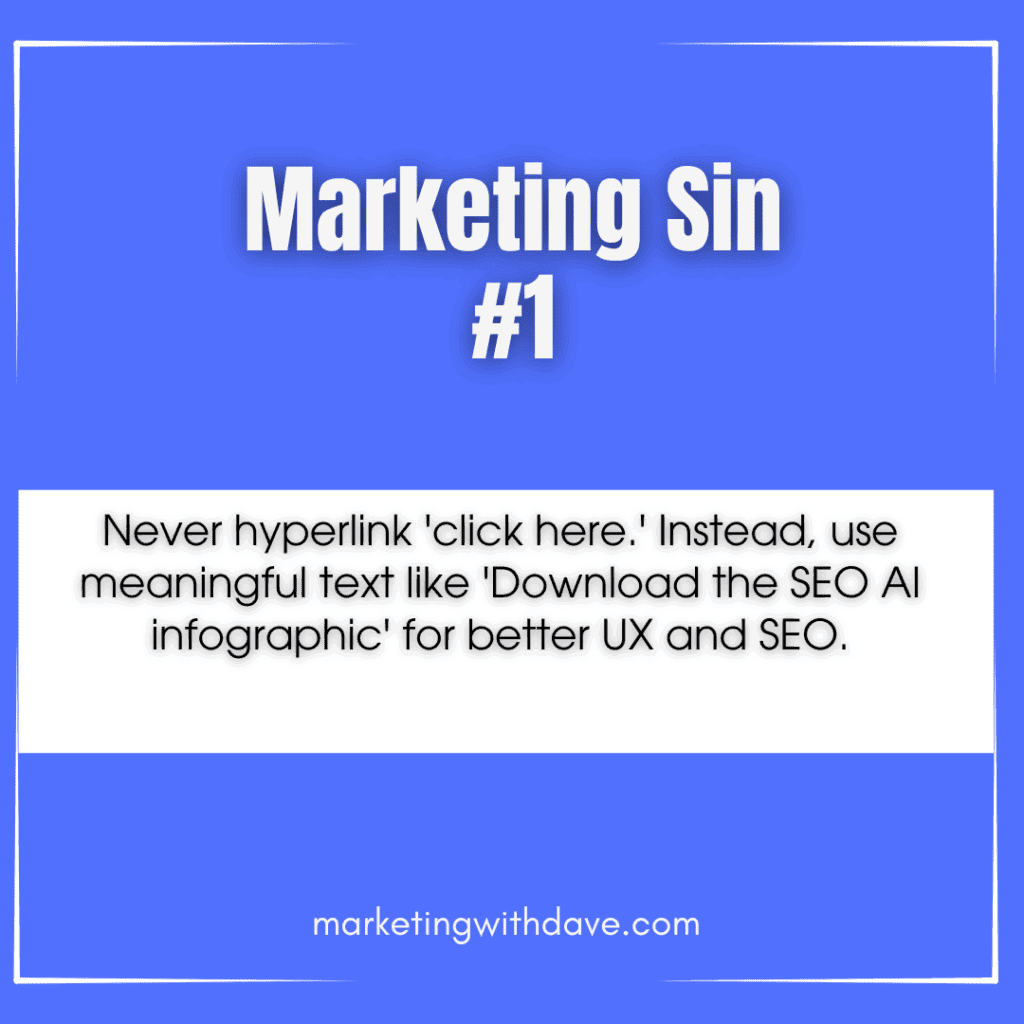
Marketing Sin #1: Using Click Here Hyperlink Text

Using ‘click here’ is lazy and ineffective. Instead, use descriptive text that tells visitors and search engines what to expect—don’t waste a valuable opportunity!

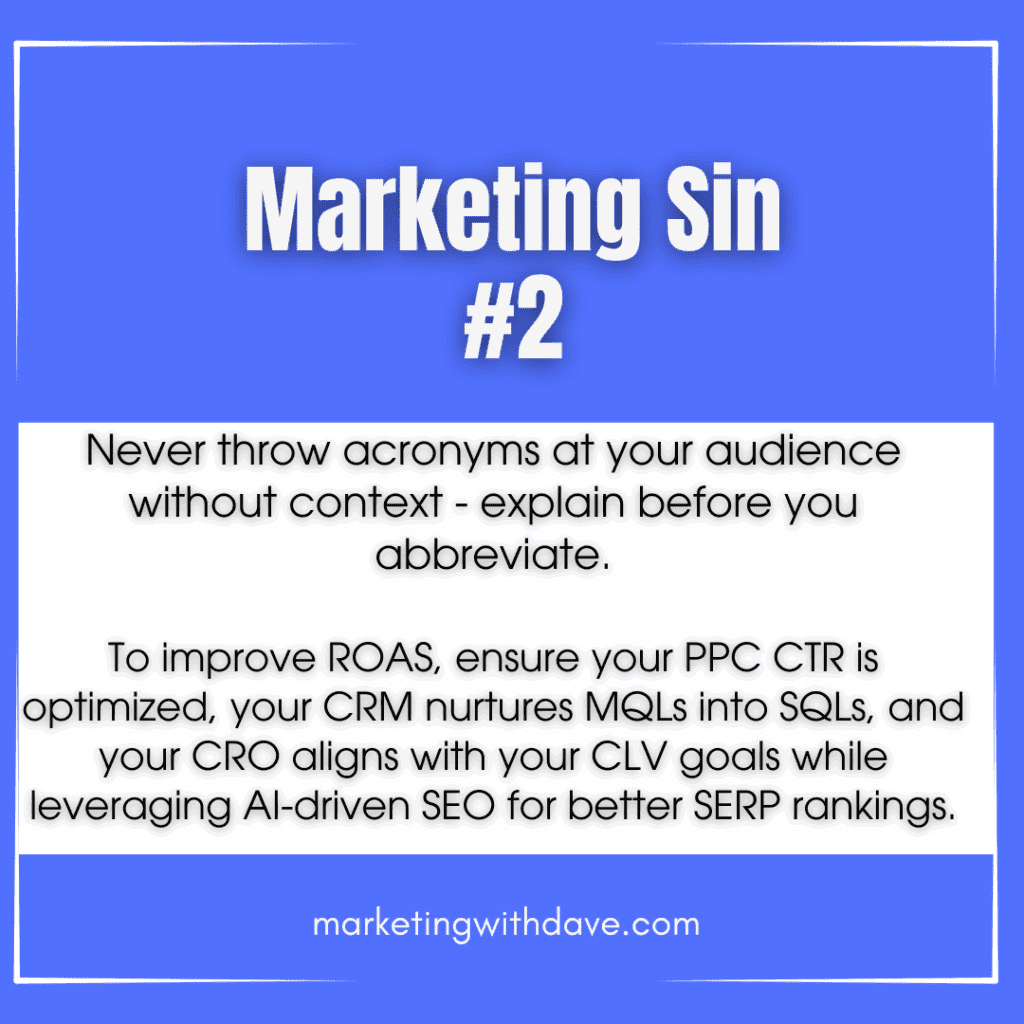
Marketing Sin #2: Using Acronyms Without Context

If your goal in communication is to be understood, meaning you adapt your message to your audience, this will likely never be a problem. But when acronyms get tossed around without context, especially outside your internal team, confusion kills momentum. Explain first, then abbreviate.

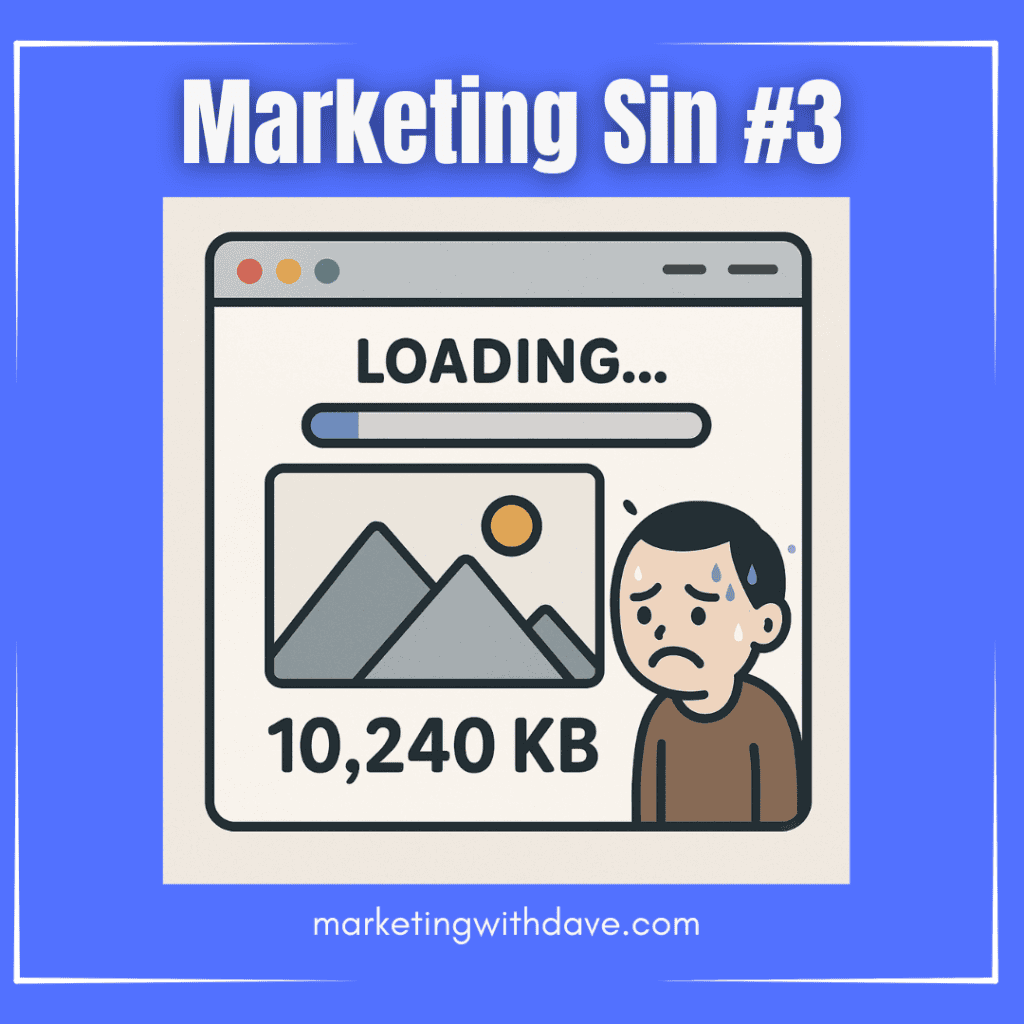
Marketing Sin #3: Using Images That Are Too Large

Is your website crawling because of massive image files?

Keep this in mind:

  • Most images should be under 100 KB
  • Use JPEGs for photos and PNGs only when transparency or sharp lines are needed
  • Work with your designer to balance quality and size

Faster load times = better UX, better SEO, and better conversions. Don’t let bloated images sink your performance.

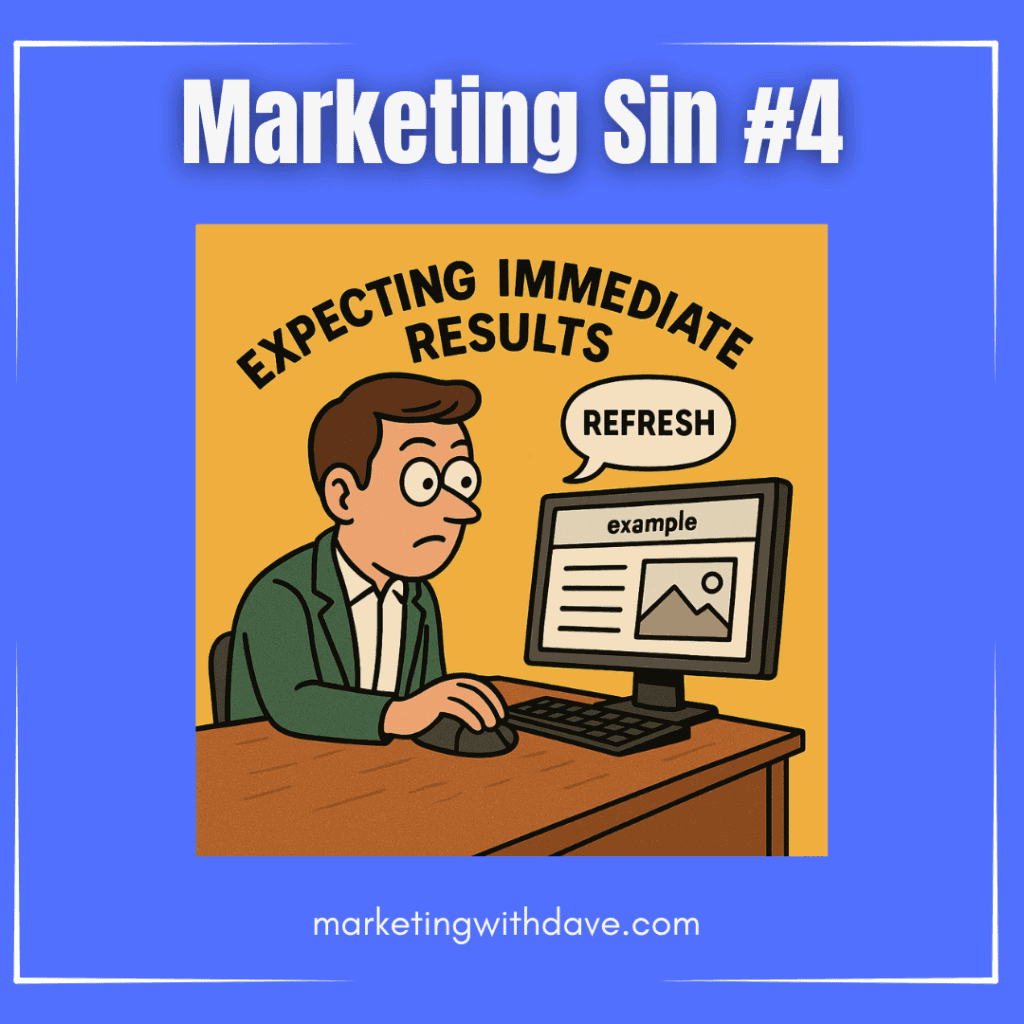
Marketing Sin #4: Expecting Immediate Results

A cartoon man sits at a computer, repeatedly hitting refresh, looking frustrated. Text above reads Marketing Sin #4: Expecting Immediate Results. Website marketingwithdave.com appears at the bottom.

Some of the most effective marketing work is the most unsexy. It’s rinse and repeat. It’s consistency.
SEO takes time. Brand awareness takes repetition.
And while you may be sick of your messaging, most of your audience is just starting to notice.
Results come from showing up again and again.
Patience is a marketing superpower.

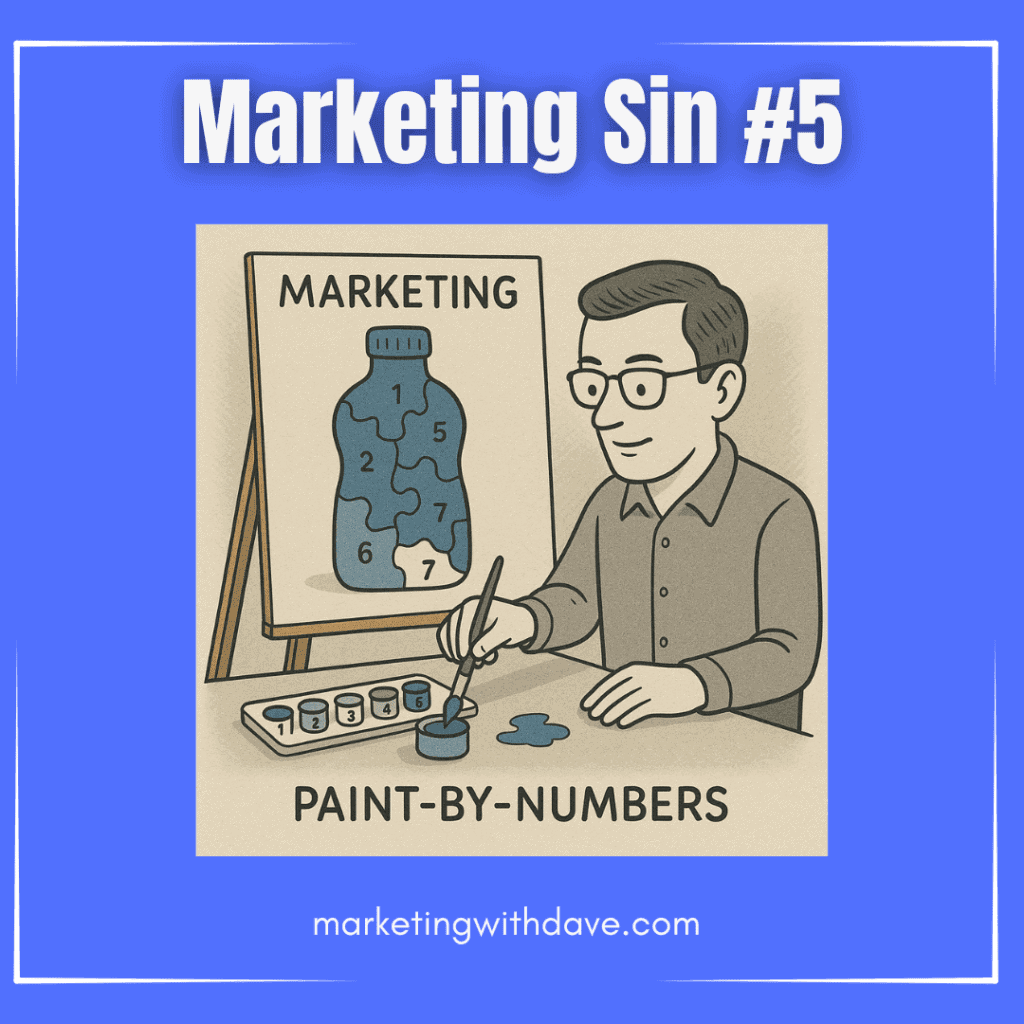
Marketing Sin #5: Assuming Marketing Success is Paint By Numbers

Success in one campaign doesn’t guarantee success in the next.

Marketing isn’t paint-by-numbers. What worked once won’t necessarily work again without adjustment. Your audience may have changed. The market, the platform, the timing—even the mood of the world could be different.

Treat every campaign like it’s your first: with curiosity, context, and a fresh set of eyes.

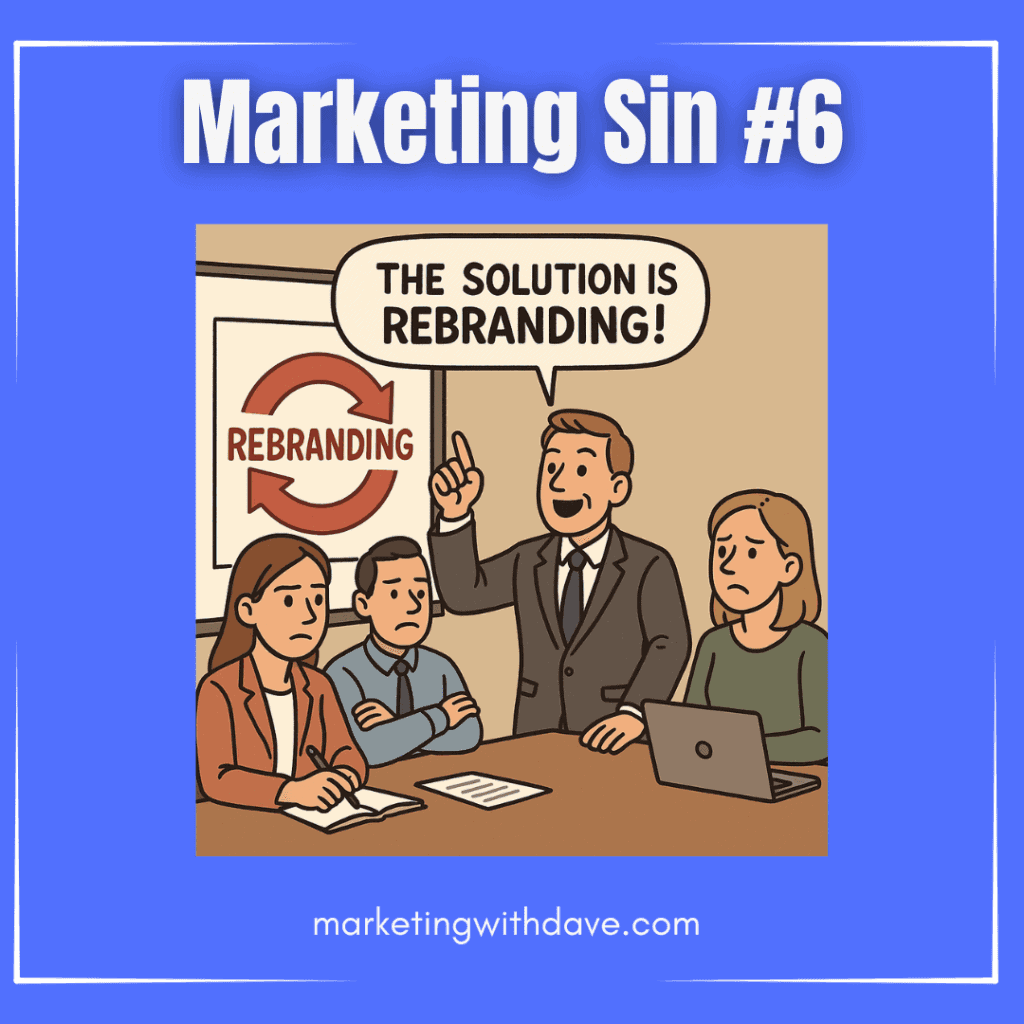
Marketing Sin #6: Using Rebranding to Avoid Real Problems

Rebranding isn’t a magic wand. Too often, it’s used as a knee-jerk reaction to underperforming campaigns or leadership shakeups. While rebranding can be a powerful strategic move when done right, using it to cover deeper issues can be a costly distraction that doesn’t fix the root issue.

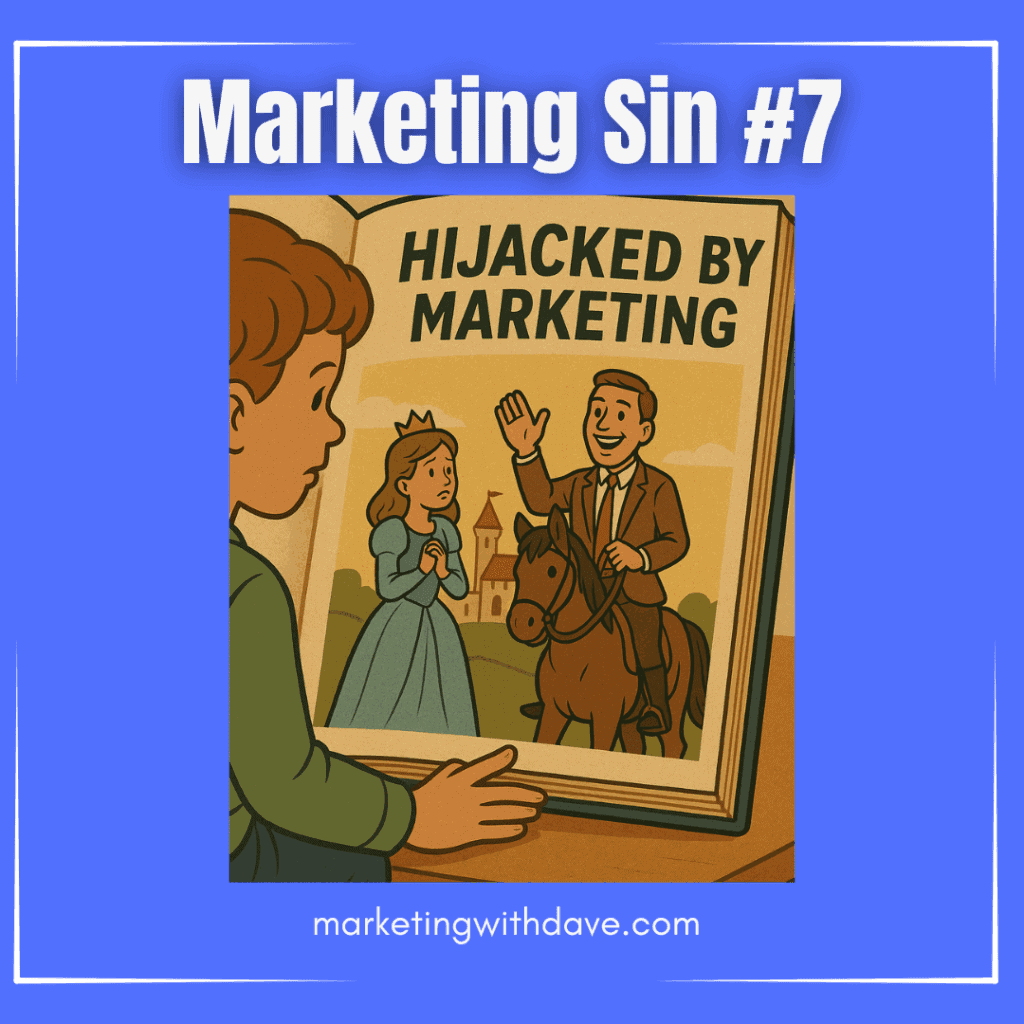
Marketing Sin #7: Letting Marketing Steal the Spotlight

If every post is about your product features or company milestones, you’re making yourself the star. Flip it—your customer is the hero. You’re the guide.

Educate 80%, self-promote 20%. Be the guide, not the hero. Your audience is here for value, not a one-way sales pitch.

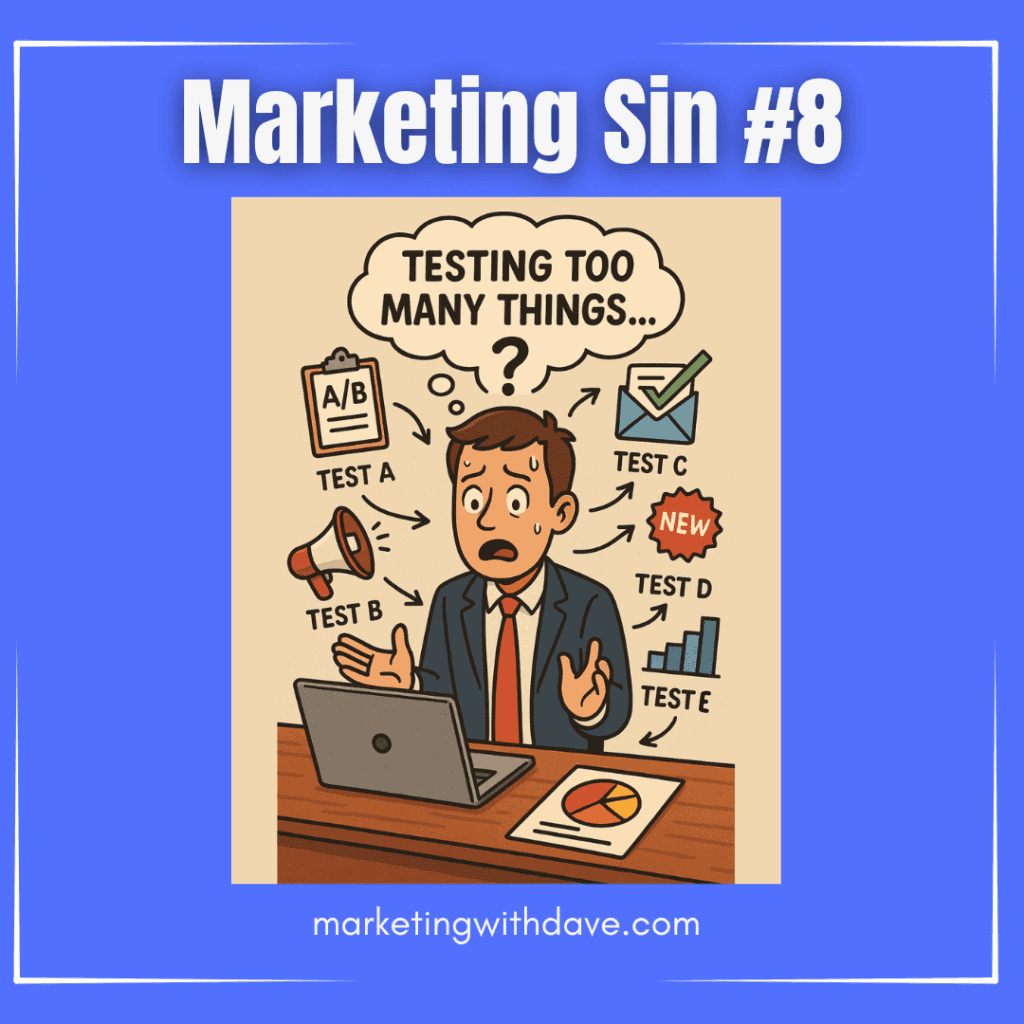
Marketing Sin #8: Testing Too Many Things At Once

Stacking too many tests at once is like pulling five Jenga pieces at the same time. When it all crashes, you don’t know which move did it.
The goal of every test? A clear learning you can build on.

If you don’t isolate your variables, you won’t know what caused the lift (or the flop).

Test strategically. Learn something. Repeat.

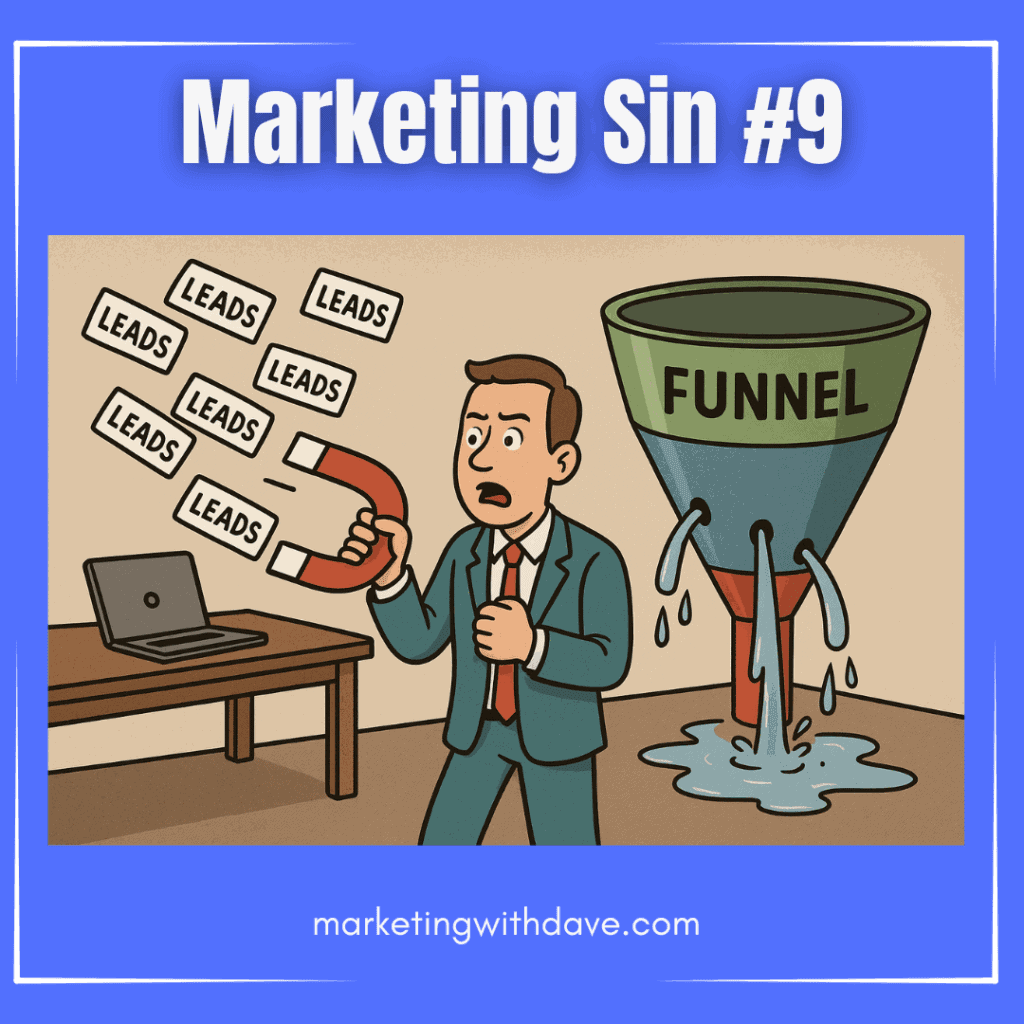
Marketing Sin #9: Chasing Leads With a Leaky Funnel

More traffic won’t fix a broken system. Before you chase leads, fix the funnel.

  • If you’re losing people after the click, it’s not a lead problem
  • Scaling chaos just multiplies waste
  • A healthy funnel boosts ROI without increasing ad spend

Got high traffic or engagement but low conversions? Seeing big drop-offs between steps? Leads not turning into customers? You’re likely leaking revenue at every stage.

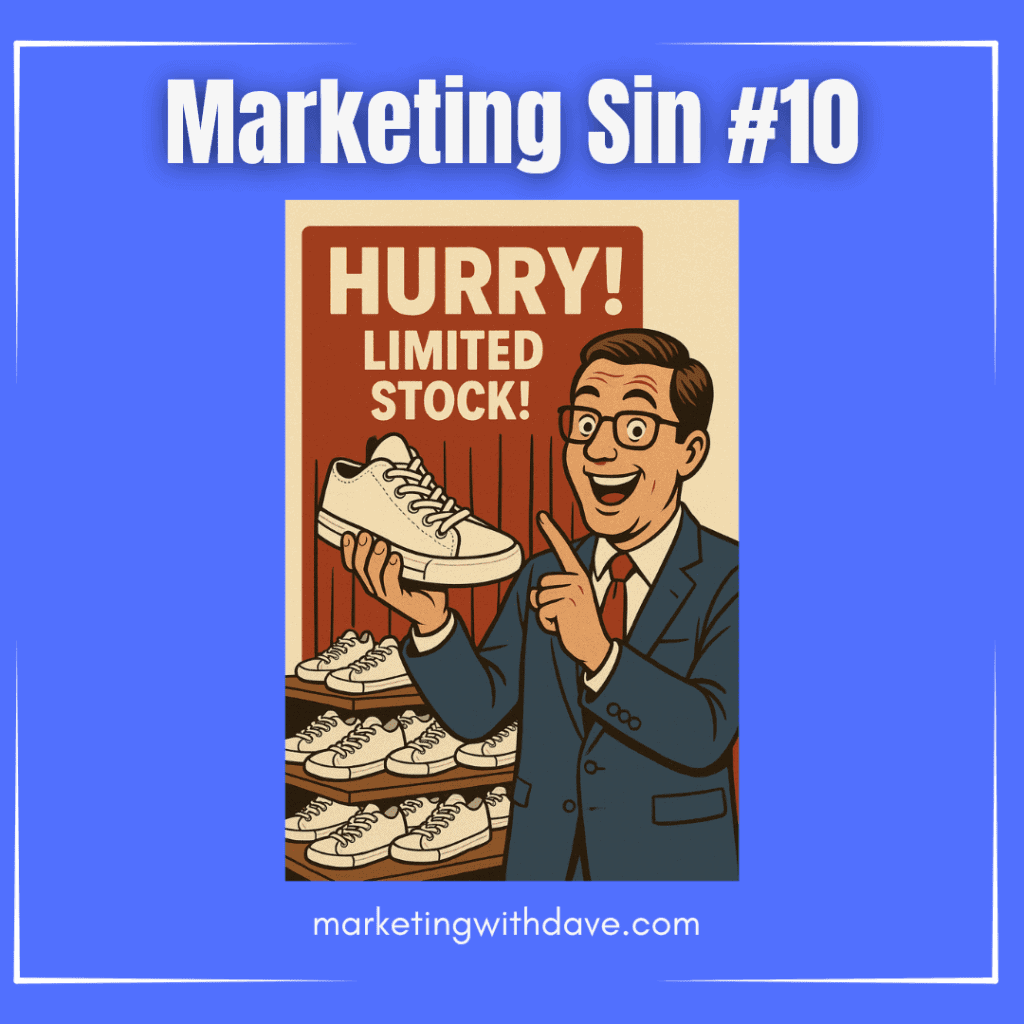
Marketing Sin #10: Creating a False Urgency

Scarcity works, but only when it’s real. Faking urgency erodes trust fast. Even if customers don’t catch it right away, building relationships on hype instead of honesty is a losing game. Be real. Be clear. Be credible.

Which of these sins have you seen lately? Got one I missed? Drop a comment and let’s add it to the list.

The Biggest Marketing Sins and How to Avoid Them Read More »

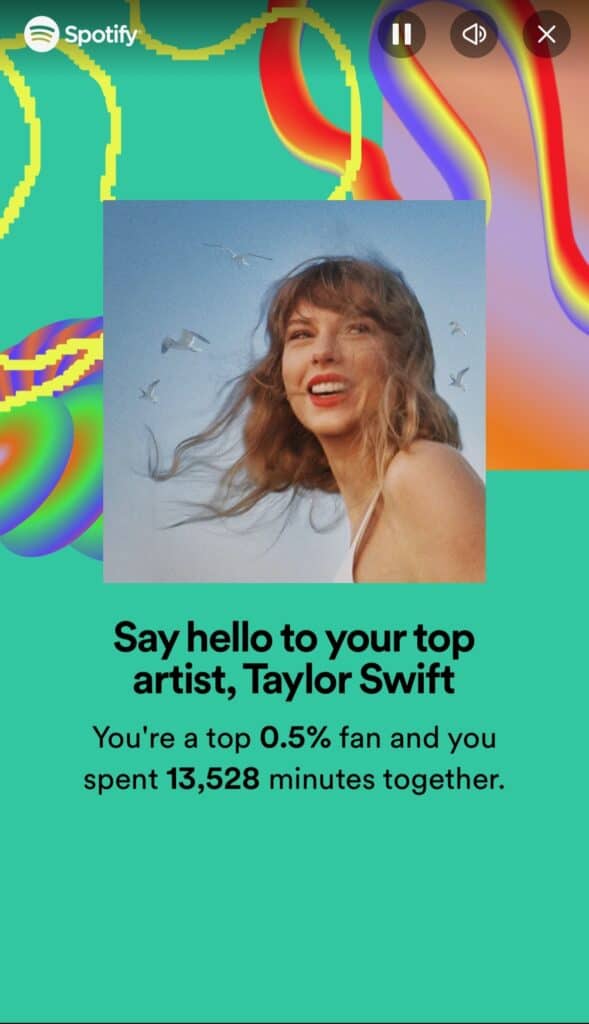
Taylor Swift's Spotify Wrapped profile showing top artist, 0.5% fan, and 13,528 minutes listened, with colorful abstract background and a photo of Taylor Swift.

Case Study: How Spotify Wrapped Became a Viral Phenomenon and When It Backfired

Reading Time: 9 minutes

Brief Summary

Spotify’s Wrapped is an annual year-end recap that turns user listening data into a shareable story and a marketing powerhouse. Launched in 2016, Wrapped grew into a viral cultural moment each December as millions of users eagerly share personalized insights about their music habits.

This campaign brilliantly showed customers how they use Spotify, sparking conversations and free promotion across social media. However, a bold 2024 revamp (with heavy doses of AI-generated content) struck a wrong chord, drawing user backlash.

This case study examines how Spotify’s data-driven campaign became a viral hit, why the 2024 edition faced negative reactions, and what marketers can learn about balancing innovation with user experience.

Company Involved

Spotify, a leading music streaming service with over 500 million users worldwide (as of 2025) is at the center of this story. Spotify’s platform popularized music streaming and leverages personalized data for user engagement.

Marketing Topic

  • Personalization
  • Social Media Marketing
  • Customer Experience

Public Reaction or Consequences

Public response to Spotify Wrapped has historically been overwhelmingly positive. Each year, the colorful, personalized summaries dominate social feeds as users proudly post their top songs and artists. Wrapped became a cultural phenomenon – from casual listeners to celebrities, everyone joined the conversation, giving Spotify enormous viral reach with minimal paid advertising. The sense of community (“Hey, I also listened to that!”) and lighthearted competition (“I streamed more minutes than you!”) fueled friendly buzz and free publicity for Spotify.

However, the 2024 edition of Wrapped sparked a rare public backlash. Users flooded TikTok, Twitter (X), and Reddit with complaints, calling the 2024 experience “lazy” and saying it “flopped” due to a lackluster design and missing favorite features. Spotify had removed popular components like the “top genres” stat and the fun “Sound Town” feature (which in 2023 matched users to cities based on listening).

Meanwhile, Spotify added new AI-driven elements that many found off-putting, including a personalized “Wrapped AI Podcast” that used an artificial voice to recap one’s year. The public reaction was swift and negative: “boring,” “AI overkill,” and “barebones” were common descriptors from disappointed fans. Memes and critical posts went viral, and even loyal Spotify users praised Apple Music’s simpler Replay recap for outshining Spotify’s offering that year. In short, an initiative once lauded for delighting users faced a wave of criticism that dented Spotify’s social media sentiment (at least temporarily).

Why It Matters Today

Power of Personalization: Spotify Wrapped demonstrates how turning user data into a personal narrative can drive massive engagement. In an era of data-driven marketing, consumers respond to brands that reflect their story – and they’ll voluntarily promote it.

Beware the Tech “Fad” Trap: The 2024 backlash shows that blindly jumping on the AI bandwagon can backfire. Incorporating new tech in marketing must serve a real user desire. Otherwise, it feels gimmicky and may alienate loyal customers.

Competitive Imitation: Wrapped’s success has influenced an entire industry – from Apple Music’s Replay (launched 2019) to YouTube Music’s Recap and Deezer’s new Year End feature. Marketers should note that a great idea will be copied. Continuous improvement is key to staying ahead.

3 Takeaways

1. Make it Personal (and Fun): Personalized content that focuses on the customer – not the brand – can turn users into enthusiastic ambassadors. Spotify succeeded by giving users a fun way to talk about themselves, not just about Spotify.

2. If It Ain’t Broke, Don’t “AI” Fix It: Consistency and user-centric design matter. Adding trendy tech for its own sake (or removing beloved features) can ruin a good thing. Innovation should never trump listening to your core users.

3. Encourage Sharing and Community: Design marketing experiences that people want to share. Wrapped works because it’s visually engaging, easily shareable, and creates a sense of community and competition among users, all without additional ad spend.

Notable Quotes and Data

“120 million. That’s how many users accessed their Wrapped in 2021… In 2021, 60 million users shared their Wrapped graphics to social media.” – Forbes (via Spotify) on Wrapped’s viral reach.

“We weren’t just talking about ourselves… We were giving people an interesting way to talk about themselves.” – Alex Bodman, Spotify VP of Creative, on why Wrapped resonates.

“If you look at the numbers, it was the biggest Wrapped we’ve ever had. But there was more negative feedback than we’ve seen before.” – Gustav Söderström, Spotify CPO, acknowledging the 2024 Wrapped backlash.

Full Case Narrative

Background: Spotify first experimented with year-end summaries in 2015 with a “Year in Music” review, but 2016’s rebranded Spotify Wrapped truly set the template. The concept was simple yet groundbreaking: give users a fun, glossy recap of their own listening habits each year. At a time when digital privacy debates were rising, Spotify managed a clever twist – presenting user data back to the user as a gift. This turned what could have been seen as “tracking” into a celebration of personal taste. By packaging statistics like top songs, favorite genres, and total minutes streamed into a colorful story with shareable graphics, Spotify tapped into a fundamental human impulse: the desire for self-expression and social sharing.

Rise of a Viral Phenomenon: Over the next few years, Spotify Wrapped grew exponentially. The company integrated it into the Spotify app by 2019, making participation frictionless. Each December, Wrapped’s bright, pop-art visuals and personal factoids (e.g. “You were in the top 5% of Taylor Swift listeners this year”) took over social networks. In 2021, over 120 million users accessed Wrapped and 60 million shared their results – a fourfold increase in engagement from 2017. Celebrities and influencers joined in, posting their eclectic music tastes, which only fueled FOMO among fans and friends. As one marketing analysis noted, “Wrapped is one of the biggest marketing success stories in recent history. For a few weeks every year, Spotify’s marketing team grows by tens of millions [of users]. In essence, Spotify found a way to make its users do the marketing: by giving them content worth bragging about.

Why It Worked: Spotify Wrapped hit the marketing sweet spot by combining personalization, social currency, and timing. Alex Bodman, Spotify’s Global Executive Creative Director, explained that the campaign succeeded because it wasn’t about Spotify – it was about the users themselves. Wrapped let people “show off” their unique music identity in a friendly way. The design was optimized for sharing (tall smartphone-friendly images, ready to post). Wrapped also fostered a sense of community: people compared their results, joked about their quirks, and felt part of a global event. Critically, Spotify Wrapped felt celebratory and not creepy – it uses first-party data that users knowingly generate by listening to music, and presents it back in aggregate form. This circumvented the privacy concerns that often accompany data-driven campaigns. As one digital agency put it, “Wrapped… is unintrusive, internal data science at work with fun outputs… delivered in a colorful and creative way. That’s a killer combo!”. In other words, Spotify earned user trust by making data fun and focusing on emotions (nostalgia, pride, humor) rather than overtly marketing the service.

Spotify also kept Wrapped fresh with new features each year. For example, 2021 introduced an “Audio Aura” that visualized your music vibe with colors, 2022 added a “Listening Personality” test (like a Myers-Briggs for music), and 2023 gave users “Sound Town” (matching your listening to a city) and a playful “Me in 2023” character persona. These updates generated new buzz annually, while maintaining the familiar core experience. By 2023, Wrapped engaged a record 227 million monthly active users on Spotify – a stunning figure that underscored how central the campaign had become to Spotify’s brand.

Competitors Take Note: The runaway success of Spotify Wrapped did not go unnoticed. In 2019, Apple Music launched its own year-in-review called Replay, and other platforms like YouTube Music soon offered similar recap features. Initially, these copycats were seen as less fun or polished – Apple’s Replay, for instance, lacked the flashy visuals and shareability and was often ridiculed in memes as the poor imitation of Wrapped. Yet, by 2024, Apple had significantly improved Replay (adding highlight reels, personalized insights, and easily shareable graphics), to the point that many users declared Apple Music Replay 2024 “100× better than Wrapped” in the wake of Spotify’s missteps. This competitive dynamic shows how one innovative campaign can set a new industry standard: Spotify’s idea was so good that every major streaming service felt it had to offer something similar or risk looking outdated.

The 2024 Campaign – Pushing the Limit: Enter December 2024, Spotify Wrapped’s much-hyped tenth anniversary edition. Expectations from users were sky high – and Spotify attempted its boldest update yet. The 2024 Wrapped doubled down on artificial intelligence and automation. Most notably, Spotify partnered with Google’s NotebookLM AI to generate a personalized podcast for each user, where an AI “host” duo would ostensibly chat about your listening year. On paper, it sounded cutting-edge: what if an AI could talk you through your music stats as if you’re listening to a radio show about you? In practice, however, the execution faltered badly. Users reported that the AI-driven podcast got basic facts wrong – one user’s podcast bizarrely announced, “You listened to five hundred and four hundred and ninety eighty-one minutes this year,” a nonsensical (and incorrect) statistic. The AI commentary also veered into cringe-worthy territory. In one example, the AI said, “Back in April, it seems like you were embracing those pumpkin spice strut-pop vibes,” to which its co-host asked, “What’s that?” – the first AI voice then explained, “Think upbeat pop anthems perfect for those crisp autumn days.” The problem? It was absurd to reference autumn (pumpkin spice season) in April. Such missteps made the AI feel disconnected from reality and users’ actual experiences.

At the same time, Spotify’s 2024 Wrapped inexplicably removed or pared down features that users loved. The detailed breakdown of top genres? Gone. The fun custom cards like “Me in 2023” and the Sound Town groups from the previous year? Nowhere to be found. The overall interface was described as more generic, with many users complaining it felt like a “barebones” slideshow of stats without the quirky, gamified elements of past years. As a result, what was meant to be an innovative twist ended up diminishing the experience. Longtime fans who looked forward to Wrapped felt let down – the special spark was missing.

Backlash and Fallout: The public reaction to Wrapped 2024 was immediate and intense, especially on social media. Within hours of launch, critical posts amassed: “Spotify Wrapped went all-in on AI and everyone hates it,” blared one headline. On Reddit, a top-voted thread bluntly proclaimed, “Spotify delivered a barebones experience that offered no payoff,” comparing it unfavorably to Apple’s more straightforward recap. Tech journalists noted that they could hardly find anyone with positive sentiments about Wrapped that year. Many users simply found the AI content unnecessary and tone-deaf – as one commenter quipped, “I made it about 30 seconds [into the AI podcast] before I turned it off”. The phrase “AI overkill” started trending in discussions about Spotify. Even worse, some users encountered outright errors in their Wrapped stats (a likely byproduct of the new data processing); people reported seeing artists in their Top Songs whom they hadn’t listened to all year. This undermined the trust and accuracy that is core to Wrapped’s appeal. After all, if your personal recap is wrong, it loses credibility and enjoyment.

Media outlets piled on. Adweek noted Spotify had joined the list of brands facing backlash for using generative AI in marketing, highlighting how listeners felt the Wrapped campaign had become “lazy” by relying on auto-generated content. The general consensus: Spotify had lost sight of what made Wrapped great (the human touch, the personal feel) in an attempt to seem trendy with AI. Crucially, no one had asked for an AI podcast – users were perfectly happy with the traditional format. The lesson for marketers was stark: introducing a flashy new technology means nothing if it doesn’t improve the customer experience. As Inc. put it, “Spotify seems to have lost sight of what people actually like about Wrapped and replaced it with something no one was asking for.”.

Spotify’s Response: Internally, the negative buzz was impossible to ignore. In early 2025, Spotify’s executives openly acknowledged the issue. Gustav Söderström, Spotify’s Chief Product Officer, admitted that while Wrapped 2024 reached more users than ever, it also drew unprecedented negative feedback. He noted that users missed some of the “things people loved from years before” and that perhaps Spotify shouldn’t have removed those elements. CEO Daniel Ek also conceded that the company “got it wrong” with the execution of that campaign. These candid admissions are somewhat rare in the marketing world, and they underscore just how beloved Wrapped is – Spotify couldn’t afford to alienate its core user base on this signature feature.

Timeline

Late 2015: Spotify launches “Your Year in Music,” a precursor to Wrapped.

Dec 2016: The first Spotify Wrapped debuts.

2019: Wrapped is fully integrated into the app.

2021: Wrapped goes viral with over 120 million users and 60 million shares.

2023: Record 227 million monthly active users engage with Wrapped.

Dec 2024: Wrapped rolls out AI features, sparking backlash.

Mid 2025: Spotify executives acknowledge missteps and promise course correction.

What Happened Next?

After the 2024 stumble, Spotify moved quickly to course-correct. Executives openly acknowledged the user backlash and promised a better balance of innovation and fan-favorite features in 2025. Competitors continue to push their own year-end summaries, and Spotify is working to ensure Wrapped remains the leader by restoring trust and engagement. Features that focus on fun, data accuracy, and community may define the future of Wrapped – not AI novelty for its own sake.

One Sentence Takeaway

Spotify Wrapped proves the power of personal data in marketing – when you hand the mic to your customers, they’ll sing your praises, but hit a wrong note and the crowd will let you know.

Sources and Citations

Contentgroup – “I’m Wrapped in Spotify Wrapped” (Nov 2023)

Adweek – “Spotify is the Latest Brand Facing AI Backlash Over Wrapped Campaign” (Dec 2024)

TechRadar – “Apple Music Replay walked all over Spotify Wrapped in 2024” (Dec 7, 2024)

TechRadar – “Spotify admits it made mistakes with Wrapped 2024 – here’s what could change” (June 4, 2025)

MusicAlly – “Spotify execs talk superfans, AI and Wrapped 2024 backlash” (May 30, 2025)

Spotify Newsroom – “We’re Commemorating a Decade of Spotify Wrapped…” (Dec 4, 2024)

Case Study: How Spotify Wrapped Became a Viral Phenomenon and When It Backfired Read More »

case study excite purchase google

Case Study: How Excite’s $750K Google Rejection Became a Historic Blunder

Reading Time: 7 minutes

Brief Summary

In the late 1990s, web portal Excite had the chance to acquire Google’s search technology for under $1 million. Excite’s executives, however, worried that Google’s superior search would cause users to leave the Excite site faster, hurting ad revenues.

Believing the new search wasn’t significantly better than their own, Excite walked away from the deal. In hindsight, this decision, essentially passing on Google, is often cited as one of the worst business mistakes in tech history. Google went on to become a trillion-dollar giant, while Excite faded into obscurity.

Company Involved

Excite was once a leading internet search portal and content site in the 1990s. The company, founded in 1994 and booming during the dot-com era, was approached by the young founders of Google (then a Stanford project called BackRub) about a potential acquisition. Excite’s handling of that offer is the focus of this case study.

Marketing Topic

  • Strategy
  • Advertising
  • Customer Experience

Public Reaction or Consequences

At the time, Excite’s decision to reject Google’s offer went largely unnoticed by the public – the negotiations were behind closed doors. But as Google’s success became apparent, this story entered tech industry lore as a legendary blunder. Analysts and bloggers frequently point to Excite’s choice as a cautionary tale of short-sighted leadership. The consequences for Excite were severe: it quickly fell behind in the search market, lost users to Google and other rivals, and never recovered. By 2001, Excite’s parent company went bankrupt amid the dot-com bust, and in 2004 what remained of Excite was acquired by Ask Jeeves (now Ask.com). In contrast, Google transformed into one of the world’s most valuable and dominant tech companies.

Why It Matters Today

  • Demonstrates the perils of short-term thinking. Excite worried about immediate ad revenue and failed to see the long-term value of superior search technology.
  • Highlights the importance of embracing disruptive innovation. Ignoring or underestimating a breakthrough (like Google’s algorithm) can leave a company obsolete.
  • Reminds marketers and executives that user experience is king. Trying to keep users “stuck” on your site for ad views backfired – ultimately, delivering the best user solution (even if it changes your business model) is critical for sustained success.

3 Takeaways

1. Don’t let short-term metrics blind you – Focusing solely on current revenue (page views, ad clicks) can cause you to miss transformational opportunities.

2. Be willing to adapt or partner – Embracing new technology early, even if it disrupts your existing operations, may secure your company’s future.

3. Prioritize product quality and user value – Delivering the best experience for customers will drive long-term growth, even if it means rethinking how you monetize.

Notable Quotes and Data

“The Stanford product was too good… If Excite were to host a search engine that instantly gave people information they sought… users would leave the site instantly. Since his ad revenue came from people staying on the site… using BackRub’s technology would be counterproductive.

“Larry Page actually insisted… that we would have to rip out all of the Excite search technology and replace it with Google… we concluded that… [the differences] really weren’t significant and we passed on the chance to buy it… I didn’t feel that that was a risk… I wanted to take.” – George Bell, former Excite CEO

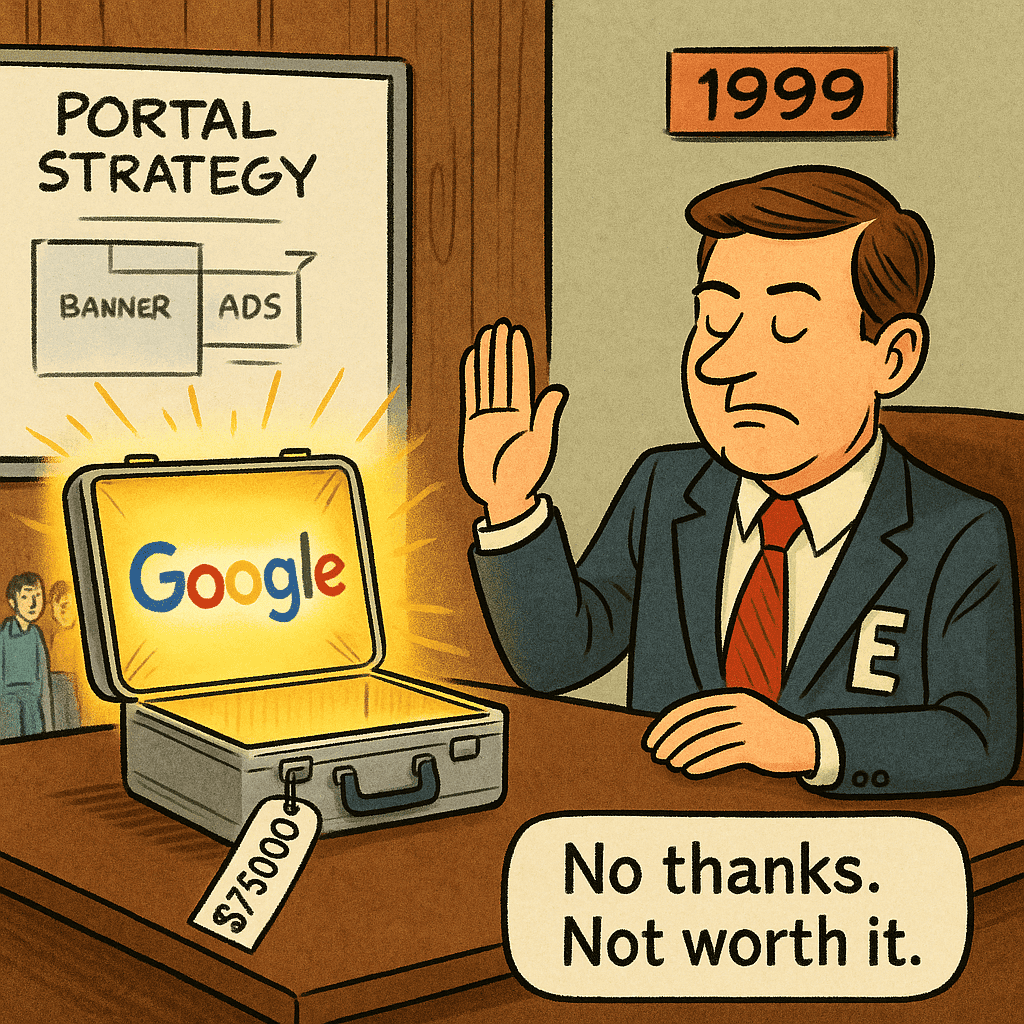
In 1999, Excite declined to buy Google for roughly $750,000; by 2018 Google’s value was around $367 billion, while Excite was sold for just $343 million in 2004.

Full Case Narrative

Background: In the mid-1990s, Excite was one of the web’s top portals, offering search, news, email, and more. It was the sixth most-visited website in 1997, competing with the likes of Yahoo!, Lycos and AltaVista in the early search engine market. Google, meanwhile, began as an academic project (originally nicknamed “BackRub”) by Larry Page and Sergey Brin at Stanford University. By 1998-1999, Page and Brin had developed a radically better search algorithm and were looking for a way to commercialize it – or possibly sell it, so they could return to their studies.

The Offer: Google’s founders approached Excite in 1999, through venture capitalist Vinod Khosla (an early Excite backer), and offered to sell Google’s search technology for around $1 million. Khosla helped negotiate the price down to approximately $750,000 in cash plus some Excite stock. In essence, for well under $1 million, Excite could have acquired what would become Google. However, Larry Page had one major stipulation: Excite had to replace its own search engine with Google’s if the deal went through. Google’s team believed their algorithm would vastly improve Excite’s search results, but this condition meant Excite would be discarding its existing search technology and possibly some of its engineering team’s work.

Excite’s Perspective: Excite’s CEO George Bell and his team were hesitant. Internally, Excite ran tests comparing Google’s search results to their own. According to Bell, those tests did not show a dramatic difference at the time, and the team believed their results were not significantly worse in the eyes of users. Excite was also proud of its in-house technology and culture as a search company. Replacing their core search engine with Google’s was seen as a drastic step that could undermine morale and the company’s identity. Bell later recalled worrying that the cultural risk of swapping in Google’s technology was too high if the benefits seemed limited. Meanwhile, Page and Brin were primarily interested in selling so they could return to their studies at Stanford.

Moreover, an account described in journalist Steven Levy’s book In The Plex suggests Excite had a deeper concern: Google’s search worked too well. During a demo, Google (BackRub) produced extremely relevant results that would answer users’ queries quickly. Excite’s portal business model relied on “stickiness” – keeping users engaged on its pages to show them ads. If an ultra-efficient search engine sent people away faster, it could reduce ad impressions. From this viewpoint, adopting Google’s superior search might have threatened Excite’s advertising revenue. (Bell has disputed that this was a deciding factor, but it’s a narrative that spread widely.

The Decision: Ultimately, George Bell and Excite’s leadership rejected the Google deal. Even after the price was lowered and despite Google’s promise, Excite walked away in 1999. Bell gave Khosla and the venture capitalists the go-ahead to invest in Google instead, since Excite wouldn’t be taking it over. In hindsight, Bell acknowledged that as CEO it was his decision – and one that “in the end, of course, I did make”. At the time, however, he believed he was protecting Excite’s culture and stability.

Fallout: The consequences of passing on Google became apparent within a couple of years. The search landscape of the early 2000s shifted dramatically. Google continued to refine its search engine and began to attract millions of users, quickly outpacing older portals. Excite, on the other hand, struggled. The dot-com bubble burst hit Excite hard: in 2001 Excite’s parent company (Excite@Home) went bankrupt. The Excite portal changed hands, eventually being acquired by Ask Jeeves by 2004. By then, Google was on an explosive growth trajectory: it launched AdWords, set the standard for search advertising, and went public in 2004 with a market capitalization in the tens of billions. Excite, lacking a strong differentiator, faded from prominence. Its brand survived in a diminished form (today Excite.com still exists, owned by IAC, but it’s a minor web portal with no influence in the search market.

Analysis – Why Excite Said No: Why would a company refuse a deal that looks, in retrospect, like a no-brainer? Excite’s case shows how context and mindset matter. In 1999, $750,000 was a small price, but Google was an unproven startup with just a handful of employees. Excite was a well-known internet player; from their view, Google’s algorithm didn’t obviously blow away what Excite already had. Also, integrating Google implied admitting Excite’s own technology wasn’t top-notch. That was a hit to pride and could mean upheaval – possibly laying off parts of Excite’s engineering team or reallocating resources. Bell and his team likely thought they were making a prudent choice: why fix what isn’t broken, especially if it might disrupt your business?

There was also a prevailing portal strategy at the time. Portals like Excite and Yahoo were not just about search – they wanted to be one-stop destinations where users would stay and browse multiple services. A design that quickly shuttles users off to external sites (which Google’s search excels at doing) seemed counter to this strategy. In essence, Excite failed to anticipate how the internet would evolve from portal hubs to specialized tools. The very metric they prized, keeping users on-site, was rendered less important once search engines (and later social networks) proved that delivering what users want, fast, leads to success and monetization in other ways.

Lesson for Marketers: Excite’s missed opportunity underscores the risk of being too committed to an existing business model. Successful marketing and product strategy require balancing the current revenue model with forward-looking innovation. Excite’s leadership feared cannibalizing their own traffic and ad earnings; Google, by contrast, focused on superior user experience and figured out monetization (through search ads) later – capturing huge market share in the process. Marketers today can learn from this. Clinging to short-term gains or familiar practices often means forfeiting game-changing growth. In fast-moving industries, it’s often better to disrupt yourself before someone else does.

Timeline

1999: Google’s Larry Page and Sergey Brin offer to sell their search engine to Excite for roughly $1 million. Excite CEO George Bell turns it down, even after the price is reduced to about $750,000.

2001: Excite@Home (Excite’s parent company) files for bankruptcy as the dot-com bubble collapses.

2004: Google launches its IPO, rapidly becoming a dominant tech company. The same year, Ask Jeeves acquires Excite’s portal business for a reported $343 million.

Present: Google (now part of Alphabet Inc.) is a global technology leader worth over a trillion dollars, while Excite exists only as a vestigial web portal owned by IAC, with minimal traffic and influence.

What Happened Next?

Excite’s decision not to buy Google is a textbook example of a missed opportunity. After 2004, Excite’s brand drifted into irrelevance. It became one of several small sites under the IAC umbrella, and has not been a meaningful player in the internet industry for decades. Google, on the other hand, revolutionized digital advertising and online information access. By prioritizing a better search product, Google unlocked a business model (search ads based on intent) that far outgrew portal banner ads. Excite’s earlier concerns about losing ad revenue were ironic – Google figured out how to make search ads immensely profitable without needing to trap users on a portal. In the end, Excite’s legacy is largely as a cautionary tale. The company that once sat near the top of the internet hierarchy is now remembered primarily for the giant that “got away.”

One Sentence Takeaway

Being fixated on preserving an old business model can cause you to miss the next big thing – a costly mistake that no marketer or business leader wants to repeat.

Sources and Citations

TechCrunch – “When Google Wanted To Sell To Excite For Under $1 Million (And They Passed)” (2010)

Internet History Podcast – “The Real Reason Excite Turned Down Buying Google for $750,000 in 1999” (2014)

Benzinga – “Former Excite.com CEO Explains Why He ‘Passed On’ Acquiring Google For Under $1 Million” (2015)

CEO Today – “8 of the Worst Business Decisions Ever Made” (2018)

BusinessWire – “The World’s Worst Business Decisions” (2020)

Case Study: How Excite’s $750K Google Rejection Became a Historic Blunder Read More »

case study mcdonalds milkshake

Case Study: McDonald’s Milkshake and the Power of Jobs to Be Done

Reading Time: 3 minutes

Brief Summary

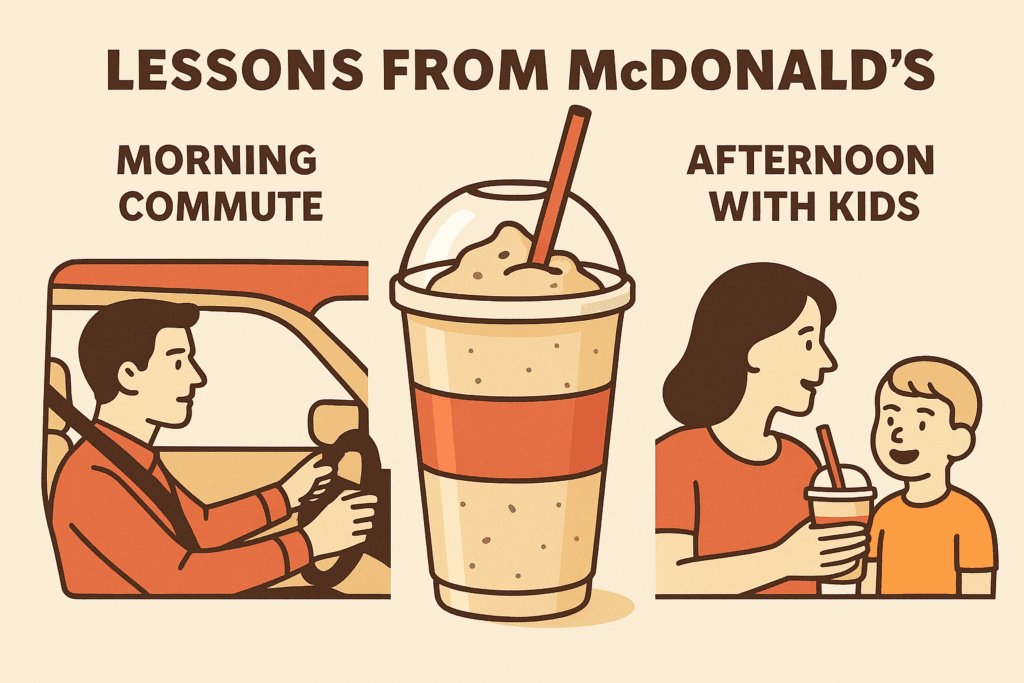
Clayton Christensen and his team helped a fast-food chain discover that morning commuters were “hiring” milkshakes to make their boring drives more engaging and stave off hunger, while afternoon customers wanted something different.

By reshaping the product based on those distinct “jobs,” the brand significantly grew sales and set a new standard for product positioning.

Company Involved

McDonald’s

Marketing Topic

  • Product Positioning
  • Customer Experience
  • Strategy

Public Reaction or Consequences

Customers noticed a more satisfying morning shake, but what made waves was the shift in corporate thinking: moving from demographic-based design to a deep focus on customers’ real-life contexts.

Why It Matters Today

Recognizing context-driven need is critical amid today’s AI‑driven personalization efforts. JTBD helps marketers understand underlying motivations beyond basic user profiles. Useful for product design where convenience and real‑world usage matter.

3 Takeaways

  1. Segment by situation, not just demographics.
  2. Ask what job the customer is hiring your product to do.
  3. Tailor the experience for different contexts to unlock new value.

Notable Quotes and Data

  • “Forty percent of the milkshakes were purchased first thing in the morning, by commuters.”
  • One customer said: “When I hire this milkshake… it takes me more than 20 minutes to suck it up… I’m full all morning and it fits right here in my cupholder.”
  • “The milkshake was not just a product. It was a solution to a very specific problem.” – Clayton Christensen

Full Case Narrative

In the late 1990s, McDonald’s struggled to boost milkshake sales despite efforts based on traditional demographic and attribute testing. They brought in Clayton Christensen, who observed sales patterns and interviewed customers. He noticed that nearly half of milkshake purchases occurred during the morning commute—and were consumed in cars.

Those commuters needed something that would occupy their time, be consumed neatly with one hand, and stave off hunger until later.

Christensen emphasized that customers do not just buy products — they “hire” them to do a job in their lives. Milkshakes were hired to keep commuters entertained, full, and mess-free during a long drive — not just as a breakfast food.

Christensen framed this as a “job to be done”: providing sustained, engaging breakfast on the go. Understanding this, McDonald’s introduced thicker shakes with fruit chunks and improved drive‑through speed, making the shakes last longer. In the afternoon, recognizing that parents buying shakes for their kids wanted something easier to drink, they served thinner variants. This dual‑product strategy, rooted in situational insight, supercharged sales.

Timeline

  • ~1997: McDonald’s requests help improving milkshake sales.
  • 18‑hour observation: Large share of sales occur during morning rush.
  • Customer interviews: Uncover distinct JTBDs for AM commuters and PM parents.
  • Product adjustments: Introduce thicker shake and drive‑through optimizations.

What Happened Next?

McDonald’s continued tailoring shakes while expanding JTBD thinking to other menu items. The framework inspired a wave of purpose‑driven innovation across retail and tech industries, influencing companies such as FedEx, IKEA, and P&G.

The JTBD framework became a foundational tool in product development and marketing strategy, leading to more empathetic design across tech, retail, and service industries. Harvard Business School and innovation consultancies continue teaching it today.

One Sentence Takeaway

This case proves that breakthrough marketing does not always come from more data. Sometimes it comes from better questions.

Sources and Citations

Clay Christensen’s Milkshake Marketing at HBS Working Knowledge (includes video of Clay explaining their research and findings)

Clayton Christensen’s Jobs to Be Done framework at Fullstory

The Re‑Wired Group’s “Milkshakes in the Morning – The JTBD Story”

Case Study: McDonald’s Milkshake and the Power of Jobs to Be Done Read More »

case study 7 up uncola

Case Study: 7‑Up’s “Uncola” Campaign — Disrupting the Cola Establishment

Reading Time: 2 minutes

Brief Summary

In the late 1960s, 7‑Up broke away from cola conventions with its iconic “Uncola” campaign. Instead of competing directly with Coke or Pepsi, it embraced bold visuals, countercultural vibes, and clever messaging to position itself as the alternative choice — ultimately boosting sales and brand identity.

Company Involved

7‑Up

Marketing Topic

  • Brand Positioning
  • Advertising
  • Cultural Strategy

Public Reaction or Consequences

The campaign struck a chord amid youth rebellion and counterculture movements. Sales reportedly jumped by as much as 30 to 56 percent following the launch. However, by the 1990s, the campaign’s youthful edge aged, prompting a rebrand in 1998.

Why It Matters Today

  • Shows how cultural alignment can fuel brand differentiation
  • Highlights long-term risks when messaging stops evolving
  • Offers lessons in disruptive positioning amid crowded markets
  • Relevant for marketers tapping into subculture, TikTok trends, and niche audiences

3 Takeaways

  1. Flip the narrative: position your product as the antithesis to category leaders
  2. Tap into zeitgeist: connect authentically with cultural movements
  3. Evolve intentionally: update branding before your audience moves on

Notable Quotes and Data

  • “In one year, sales of 7‑Up went up 56 percent!”
  • “The original 7‑Up Uncola campaign stands as one of the most audacious and successful branding efforts.”
  • “The entire campaign … catapulted 7‑Up into the position as the third leading soft drink in America.”

Full Case Narrative

By the late 1960s, 7‑Up lagged far behind cola giants Coca‑Cola and Pepsi in both profile and youth appeal. In response, they partnered with ad agency J. Walter Thompson to launch the “Uncola” campaign, positioning the drink as a rebel alternative to mainstream colas.

Visually striking ads featured upside-down cola imagery, psychedelic artwork, and slogans like “See the Light, Feel the Bite” and “Wet Un Wild.” The campaign included a public art contest, giving artists creative ownership and expanding visual diversity.

Sales soared. Estimates suggest a 30 to 56 percent rise within the first year and 7‑Up became the only non-cola in America’s top three soft drinks. As the countercultural moment faded, the youthful edge of the campaign grew dated, leading to its retirement in 1998 as the brand reinvented its message.

Timeline

  • 1967: “Uncola” campaign launches with J. Walter Thompson
  • 1968–71: Psychedelic billboards, contests, and media spots spread the message
  • 1969–70: Sales jump 30 to 56 percent
  • 1998: Campaign retired due to aging brand image

What Happened Next?

7‑Up continued experimenting with creative campaigns — introducing “Cool Spot” and “Make 7‑Up Yours” — but none rivaled the cultural punch of “Uncola.” Today the campaign endures as a case study in disruptive, culture-driven branding.

One Sentence Takeaway

Positioning your brand as the daring alternative can work wonders — just remember to evolve with your audience to maintain relevance.

Sources and Citations

Uncola: Seven‑Up, Counterculture and the Making of an American Brand

The Genius Behind the 7‑Up Uncola Campaign

Uncola Marketing: 7UP’s Long Brand Evolution

Flashback Friday: The Uncola

Positioning Strategy: It’s Not What You Say, It’s How They Think

The Seven‑Up Company and 7‑Up Bottles – The Real Story (PDF)

Case Study: 7‑Up’s “Uncola” Campaign — Disrupting the Cola Establishment Read More »

Tylenol cyanide crisis poster highlighting consumer response, nationwide recall, emergency hotlines, and safer packaging from Johnson & Johnson.

Case Study: Tylenol’s Cyanide Crisis – A Masterclass in Crisis Response

Reading Time: 2 minutes

Brief Summary

In 1982, seven people in Chicago tragically died after taking cyanide‑laced Tylenol capsules. Johnson & Johnson responded with a full national recall, transparent communication, and tamper‑resistant packaging.

Their swift, consumer‑first action restored trust and created a crisis management blueprint.

Company Involved

Johnson & Johnson

Marketing Topic

  • Crisis Response
  • Corporate Social Responsibility
  • Public Relations

Public Reaction or Consequences

The public panicked, sales plunged, and media coverage was intense. J&J’s immediate recall, hotline support, and CEO James Burke’s on‑camera presence earned widespread praise. They sacrificed over $100 million but regained market share within a year.

Why It Matters Today

  • Consumer safety trumps profits in trust‑building
  • Transparency can defuse panic in the age of social media
  • Industry‑wide tamper‑proof packaging standards evolved
  • Precedent for current accountability and real‑time stakeholder expectations

3 Takeaways

  1. Act quickly and publicly to stop reputational damage
  2. Use empathy and honesty to cement long‑term loyalty
  3. Address root causes to prevent recurrence and control narrative

Notable Quotes and Data

  • “They pulled 31 million bottles at a cost of $100 million to put people first”
  • “Tylenol sales rebounded to previous levels within six weeks after introducing triple‑sealed bottles”
  • “This effective handling… has since become a model for corporate crisis management”

Full Case Narrative

In late September 1982, seven individuals in the Chicago area died after ingesting Extra‑Strength Tylenol capsules contaminated with cyanide.

Johnson & Johnson’s chairman James Burke formed crisis teams with two core priorities: protect consumers and preserve trust.

The company initiated a voluntary recall of 31 million bottles, suspended advertising, launched hotlines, and held national press conferences. Burke appeared on network television to speak empathetically and transparently.

They collaborated with FDA and law enforcement to reinforce accountability. Within six weeks, triple‑sealed tamper‑resistant packaging debuted. By early 1983, Tylenol regained 100 percent of its market share, cementing J&J’s reputation for ethical crisis leadership.

Timeline

  • Sept 29 1982: First deaths reported
  • Early Oct 1982: Nationwide recall of 31 million bottles
  • Nov 1982: Tamper‑proof packaging launched
  • 1983: Market share fully recovered; crisis praised as exemplary

What Happened Next?

J&J rebuilt Tylenol’s brand through media outreach, free replacements, and packaging innovation. Market share returned, the case became a crisis management classic, and transparency became central to J&J’s culture.

One Sentence Takeaway

Swift consumer‑first crisis response can turn near‑destruction into renewed brand trust.

Sources and Citations

The Tylenol Case Study: A Masterclass in Crisis Communications

How the Tylenol murders of 1982 changed how we consume medicine

How Poisoned Tylenol Became a Crisis‑Management Teaching Model

How J&J’s corporate responsibility policy paid off in 1982

Case Study: Tylenol’s Cyanide Crisis – A Masterclass in Crisis Response Read More »