“The ’40/40/20 Rule’ makes this clear: 40% of a campaign’s success comes from targeting the right audience, 40% from the offer itself, and 20% from everything else.”
“There is no sale without marketing and no marketing without sales.”
“If content is king, context is key.”
Book Theme
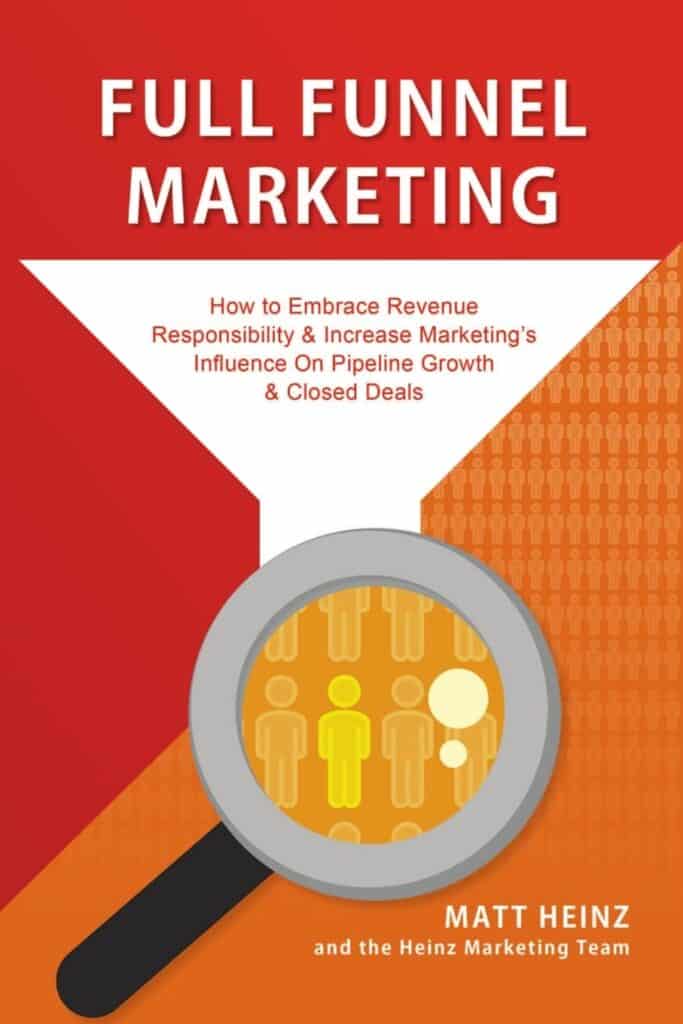
Full Funnel Marketing centers on the Predictable Pipeline Method—a framework for aligning marketing, sales, and customer success teams to create scalable, consistent revenue growth through full-funnel marketing orchestration.
Why You Should Read This Book
This book is essential for B2B leaders and marketers seeking a clear, actionable framework to align teams, sharpen their Ideal Customer Profile (ICP), and orchestrate go-to-market strategies that eliminate inefficiencies and drive long-term growth.
Key Ideas and Arguments Presented
Defining and auditing your Ideal Customer Profile (ICP) is the foundation of successful marketing.
Understanding the human side of B2B buying—committees, roles, and psychology—is crucial.
Trust is built through consistent, audience-centered messaging and reputation.
Content must be contextual, continually refreshed, and strategically repurposed.
The buyer’s journey is non-linear, requiring adaptive, personalized engagement strategies.
Sales and marketing alignment is mandatory for predictable revenue growth.
Technology supports strategy—it is not the strategy itself.
Metrics and KPIs provide accountability and shared visibility across teams.
Internal orchestration is as important as external buyer engagement.
Predictable growth comes from removing friction and focusing on high-value accounts.
Book Outline
Target Market
Messaging & Content
Buyer’s Journey & Sales Cycle
Resources & Technology
Metrics & KPIs
Go-to-Market Motion
Go-to-Market Orchestration
Key Takeaways
ICP clarity drives efficiency and growth.
Customer journeys are complex and require flexibility.
Sales and marketing must align on goals, data, and personas.
Trust and reputation accelerate pipeline velocity.
Technology must fit strategy, not replace it.
Key Techniques
The 40/40/20 Rule for campaign success.
Building validated buyer personas using data and sales insights.
Content taxonomy and repurposing (“Content Legos”).
Account-based GTM strategies.
Shared playbooks for cross-team alignment.
ICP audits to ensure ongoing market fit.
Author’s Qualifications
Matt Heinz is President of Heinz Marketing, with decades of experience in B2B demand generation, pipeline growth, and go-to-market consulting. His team contributes insights, blending research and practical application for modern marketing organizations.
Comparison to Similar Books
Compared to ABM is B2B or Challenger Sale, this book is more comprehensive in covering both sales and marketing orchestration. Unlike tactical-only books, it balances frameworks with actionable processes, making it similar in approach to Play Bigger but focused on pipeline predictability.
Target Audience
B2B marketing leaders
Sales executives seeking better alignment with marketing
Demand generation and revenue operations professionals
CEOs and founders of growth-stage companies
Customer success leaders integrating with sales/marketing
MarTech and RevOps specialists
Critical Response to the Book
The book is praised for being highly practical and grounded in real-world applications. Critics highlight its clear frameworks, digestible chapters (many derived from proven blog posts), and its relevance for modern, complex B2B buying environments.
One Sentence Takeaway
Building a predictable pipeline requires aligning every function—marketing, sales, and success—around a clear customer profile, unified strategy, and adaptive orchestration to drive sustainable growth.
Market Your Way to Growth: 8 Ways to Win by Philip Kotler and Milton Kotler (2013) introduces eight strategic pathways to achieve business growth even in the toughest economic climates.
In the face of slow growth and limited customer demand, the authors argue that companies can still thrive by creatively expanding and adapting their marketing strategies.
The book outlines actionable methods – from increasing market share and innovating offerings to forging partnerships with governments – showing that by embracing these pathways, businesses can outperform competitors and prosper in a low-growth world.
Top Three Quotes
“Innovate or die.” – This blunt directive underscores the critical importance of continuous innovation for maintaining competitiveness and driving growth. Companies that fail to innovate risk obsolescence in fast-changing markets.
“The customer is the only one who can fire us all.” – Emphasizes that customer satisfaction and loyalty are fundamental to a business’s survival. Ultimately, it’s the customer who determines a company’s success or failure, so their needs must be at the center of every strategy.
“A brand for a company is like a reputation for a person.” – Highlights the vital role of brand development in establishing a company’s identity and credibility. A strong brand builds trust with customers, much like a good reputation does for an individual, and this trust translates into sustained growth.
Book Theme
Market Your Way to Growth centers on how businesses can achieve sustainable growth in a slow-growth economy through strategic marketing initiatives. Philip and Milton Kotler argue that even when overall economic conditions are sluggish, companies can still find ways to expand by pursuing a broad range of marketing-driven growth strategies. The book introduces eight key pathways to growth – including boosting market share, cultivating customer loyalty, building strong brands, continuous innovation, international expansion, mergers/acquisitions, corporate social responsibility, and public sector partnerships – as the primary avenues for companies to “win” despite economic headwinds. The overarching message is that firms should not resign themselves to stagnation; instead, they must proactively leverage multiple strategies (often beyond the one or two traditional approaches they’ve relied on) to spark new growth opportunities.
Why You Should Read This Book
Proven strategies: This book delivers tried-and-tested marketing strategies for achieving growth, backed by the Kotlers’ decades of research and industry experience. Each strategy is illustrated with examples, making it clear how successful companies have implemented these ideas.
Adaptability: The guidance is applicable in both low-growth and high-growth environments, helping readers learn how to adapt their marketing approach to different economic conditions. Whether your market is stagnating or booming, the book provides relevant tactics for adjusting your strategy.
Holistic view:Market Your Way to Growth offers a comprehensive toolkit of growth avenues, from traditional methods like increasing market share to more unconventional tactics like partnering with governments. This broad perspective ensures you consider all possible paths to expansion, not just a single formula.
Actionable insights: Kotler and Kotler provide practical advice and tools that you can directly apply to your business. The book is filled with checklists, examples, and clear recommendations – making it a hands-on guide for executives and marketers looking to implement growth strategies immediately.
Key Ideas and Arguments Presented
“Grow or die” – the imperative of continuous growth: The Kotlers start with the premise that if a business isn’t growing, it’s effectively dying. In today’s rapidly changing environment, standing still means falling behind. Companies must continually seek growth opportunities, especially in challenging times, or risk obsolescence.
Grow by building your market share: One key strategy is to expand market share by outperforming competitors. Gaining a larger slice of the existing market can be achieved through better products, aggressive marketing, superior customer service, or more efficient operations. By taking share from rivals, a company can grow even when the overall market is flat.
Grow by developing committed customers and stakeholders: The authors stress the importance of cultivating loyal, long-term relationships with customers, employees, and investors. When customers are highly satisfied and engaged, they not only become repeat buyers but also advocates for the brand. Likewise, committed stakeholders (like enthusiastic shareholders and employees) provide stability and support for growth initiatives.
Grow by developing a powerful brand: Building a strong brand is presented as a cornerstone of growth. A powerful brand creates differentiation in the marketplace and fosters trust and credibility. The book argues that brand equity – the value of having a well-known, respected brand – translates into customer preference and pricing power, fueling long-term growth.
Grow by innovating new products, services, and experiences: Continuous innovation is crucial to staying ahead of the curve. The Kotlers advocate investing in new product development, service improvements, and even new business models or customer experiences. Innovation keeps a company relevant to changing customer needs and opens up new revenue streams, aligning with the mantra “innovate or die.”
Grow by international expansion: When domestic markets are saturated or growing slowly, expanding into international markets can tap into high-growth opportunities abroad. The book discusses entering emerging markets and developing regions as a way to find new customers. It emphasizes understanding local cultures and regulations, suggesting that success abroad requires adaptation of products and marketing strategies to fit each market.
Grow by mergers, acquisitions, and alliances:Market Your Way to Growth also highlights strategic mergers and partnerships as a rapid expansion route. By acquiring other companies or forming alliances/joint ventures, a business can quickly gain access to new technologies, products, customer bases, or geographic markets. This approach can accelerate growth much faster than organic expansion, though it comes with challenges like integrating different corporate cultures.
Grow by building an outstanding reputation for social responsibility: The authors argue that demonstrating corporate social responsibility (CSR) can drive growth by enhancing a company’s reputation. When a firm actively contributes to society – through ethical practices, sustainability, and community engagement – it earns goodwill that translates into customer preference and loyalty. In an age of conscious consumers, a strong CSR reputation can differentiate a brand and open up new customer segments.
Grow by partnering with government and NGOs: The final pathway involves collaborating with governments and non-governmental organizations to create mutual value. By partnering on infrastructure projects, education and social programs, or policy initiatives, companies can gain access to new funding, large-scale contracts, or underserved markets. These public-sector partnerships can not only solve social challenges but also drive business growth in areas a company might not reach alone.
Book Outline
Introduction:Preparing to Master the Eight Pathways to Growth – Sets the stage by describing the low-growth economic environment and the need for new marketing-driven growth strategies (introduces nine global megatrends affecting business).
Chapter 1:Grow by Building Your Market Share – Strategies for increasing market share in existing markets (e.g. beating competitors through better value, promotions, distribution).
Chapter 2:Grow through Developing Committed Customers and Stakeholders – How to deepen customer loyalty and stakeholder engagement (e.g. improving customer satisfaction, loyalty programs, cultivating employee and investor commitment).
Chapter 3:Grow by Developing a Powerful Brand – Guidance on building and managing a strong brand to support growth (covering brand identity, positioning, and consistent brand messaging).
Chapter 4:Grow by Innovating New Products, Services, and Experiences – Emphasizes innovation processes and culture; how creating new offerings and experiences can drive significant growth.
Chapter 5:Grow by International Expansion – Discusses entering foreign markets to find new growth, including evaluating which countries to enter, adapting to local needs, and overcoming barriers in global expansion.
Chapter 6:Grow by Mergers, Acquisitions, Alliances, and Joint Ventures – Explores growth via inorganic strategies: acquiring businesses or partnering with other companies to quickly add capabilities, products, or access new markets.
Chapter 7:Grow by Building an Outstanding Reputation for Social Responsibility – Shows how investing in CSR and ethical practices can enhance brand reputation and attract customers, thereby fueling growth.
Chapter 8:Grow by Partnering with Government and NGOs – Explains how collaborating with government agencies and NGOs can open opportunities (such as large projects or emerging market initiatives) that also drive business growth.
Epilogue: Summarizes how companies can integrate these eight pathways and encourages leaders to continually seek new growth avenues even in a low-growth world.
(Each chapter delves into one of the eight growth strategies, providing case studies and practical tips on implementation.)
Key Takeaways
Eight pathways to growth: There is no single silver bullet for growth; the book identifies eight major strategies that businesses can pursue in combination to achieve sustainable expansion. Companies should evaluate all these pathways – from boosting market share to forming partnerships – to determine which best fit their situation rather than relying on just one approach.
Continuous innovation is essential:Innovate or die is a recurring lesson. The Kotlers emphasize that continuous innovation in products, services, and business models is crucial to stay competitive and meet changing customer needs. Organizations must foster a culture of innovation and be willing to reinvent themselves to avoid stagnation.
Global expansion unlocks growth: For companies in mature markets, international expansion can be a powerful engine of growth. By entering high-growth emerging markets or underserved regions, businesses can access new customer bases. The book notes, however, that succeeding internationally requires careful market research, cultural adaptation, and risk management to navigate local conditions.
Brand and reputation matter: Building a strong brand and a positive reputation — particularly through social responsibility — creates long-term value. A trusted brand attracts and retains customers, and socially responsible practices enhance credibility. One takeaway is that intangible assets like brand equity and goodwill can directly contribute to a company’s growth by differentiating it from competitors.
Leverage partnerships and acquisitions: Growth can often be accelerated through strategic combinations – such as mergers, acquisitions, alliances, or public-private partnerships. Kotler’s message is that collaborating with or acquiring other organizations can provide new capabilities, technologies, or market access that would be hard to build alone. However, the book also cautions that these moves require due diligence and alignment of goals to be successful (cultural fit and integration planning are critical).
Key Techniques
Segmentation, targeting & positioning (STP): The authors reinforce the classic marketing process of identifying target segments, defining a clear positioning, and then executing with the right marketing mix (the “4 Ps”: product, price, place, promotion). This disciplined approach ensures that growth strategies are grounded in a deep understanding of the customer and market.
Formal innovation processes: To make innovation repeatable, Market Your Way to Growth advocates instituting structured innovation management techniques. For example, companies can implement a stage-gate process for new product development, encourage internal brainstorming initiatives, and collaborate with customers or startups. Such formal processes ensure a steady pipeline of new ideas and reduce time-to-market for innovations.
Brand-building framework: The book provides a playbook for strengthening your brand as a growth driver. Key steps include developing a clear brand identity and story, maintaining consistent visuals and messaging, delivering on brand promises at every touchpoint, and actively monitoring your brand’s reputation. By building a recognizable and trusted brand, a company can command customer loyalty and price premiums that fuel growth.
Customer engagement and feedback loop: In the era of empowered consumers, Kotler urges businesses to actively listen and respond to customer feedback. Companies should monitor online reviews, social media, and other channels to gather customer insights, and then quickly address issues or adapt offerings. Techniques like loyalty programs, personalized communication, and community-building are recommended to deepen customer engagement. Engaging customers not only boosts retention but can turn them into advocates who spur growth through word-of-mouth.
Thorough market research (“reconnaissance”): A recurring tactical advice is to do your homework before pursuing growth moves. “Time spent on reconnaissance is seldom wasted,” the book reminds readers. This translates into techniques like comprehensive market research, competitive analysis, and pilot testing strategies in small areas before full rollout. By investing in upfront analysis, companies can make informed strategic decisions and avoid costly missteps, thereby increasing the success rate of growth initiatives.
Measuring and managing CSR impact: When implementing corporate social responsibility programs, the Kotlers suggest measuring their impact to ensure these efforts support business goals. Techniques include comparing sales or market share in communities where the company engages in CSR versus those where it doesn’t, gathering customer feedback on the company’s social efforts, and tracking metrics like brand sentiment. By treating CSR initiatives with the same rigor as other investments (setting objectives and measuring results), companies can maximize the growth benefits of being socially responsible.
Strategic partnership execution: For growth through mergers, acquisitions, or alliances, the book provides guidance on execution. It stresses the importance of careful partner evaluation and integration planning. Companies are advised to conduct thorough due diligence, ensure cultural and strategic fit, and have a clear post-merger integration plan or alliance roadmap. By doing so, they can more successfully leverage partnerships to quickly scale into new markets or product areas without derailing their existing business.
Author’s Qualifications
Philip Kotler: Widely regarded as a leading authority on marketing, Philip Kotler is the S.C. Johnson Distinguished Professor of International Marketing at Northwestern University’s Kellogg School of Management. He has authored dozens of influential books (including the seminal textbook Marketing Management and other works like Marketing 3.0, Ten Deadly Marketing Sins, etc.) that have defined modern marketing practice worldwide. Kotler has been ranked among the top global management thinkers (Financial Times ranked him #4, and Wall Street Journal ranked him #6). Often called the “father of modern marketing,” he is known for pioneering concepts such as STP (segmentation, targeting, positioning) and the 4 Ps, and he has advised many large companies on marketing strategy.
Milton Kotler: Milton Kotler is an accomplished global marketing strategist and consultant. He is the Chairman of Kotler Marketing Group (KMG) USA, based in Washington, DC, and of KMG China in Beijing – recognized as one of China’s top marketing consultancy firms. Milton brings international expertise, having advised businesses on strategies for entering and succeeding in markets like China. He is also the author of A Clear-Sighted View of Chinese Business Strategy and a frequent contributor to the Chinese business press. His background complements Philip’s academic prowess with on-the-ground strategic consulting experience, especially in emerging markets.
Comparison to Similar Books
Market Your Way to Growth stands out by covering a broad spectrum of growth strategies in one volume, whereas many other business books focus on a single approach. For example, Blue Ocean Strategy (W. Chan Kim & Renée Mauborgne) advocates creating new market space to make competition irrelevant, which is a single strategy; in contrast, Kotler’s book discusses eight different avenues ranging from traditional tactics to innovative partnerships. This breadth means the book is very comprehensive, though it inevitably trades off depth in each area – indeed, some reviewers noted it doesn’t go as deep into each topic as more specialized books do.
Compared to Philip Kotler’s own earlier works, Market Your Way to Growth is more of a practical playbook. His famous textbook Marketing Management covers the fundamentals of marketing theory, whereas this book zeroes in on actionable strategies for growth. Kotler’s Marketing 3.0 and Marketing 4.0 books examine high-level shifts (like value-driven marketing and digital transformation), but Market Your Way to Growth focuses on implementing strategies in the current economic climate. It also complements Kotler’s other strategy-focused titles; for instance, in Winning Global Markets he explores succeeding in high-growth emerging markets, while in this book global expansion is just one of several strategies presented.
Readers who enjoyed broad strategy books like Good to Great (Jim Collins) or The Alchemy of Growth might find Kotler’s multi-faceted approach refreshing, as it combines elements of marketing, innovation, and corporate strategy. However, unlike those narrative-driven books, Market Your Way to Growth is structured more as a guide or handbook with clear sections for each growth path. It’s an ideal read for those who want a one-stop resource covering many growth techniques, rather than having to read separate books on branding, innovation, globalization, etc.
Target Audience
Corporate executives and business leaders: Especially those in large companies or mature industries who are seeking growth in a slow-growth or saturated market. The book speaks directly to C-suite and senior managers responsible for strategic growth planning.
Marketing managers and strategists: Professionals in marketing and business development roles who want a comprehensive overview of growth strategies to update their playbook. The Kotlers’ insights help marketers rethink and broaden their strategy beyond the basics.
Entrepreneurs and SME owners: While the tone targets big business, small and medium-sized enterprise owners can also draw valuable ideas (often by scaling down or adapting the strategies). In fact, smaller firms might implement changes faster – the book’s lessons on innovation, branding, and customer focus are highly relevant to startups and growing SMEs.
MBA students and business scholars: Kotler’s work is foundational in marketing academia, and this book can serve as a case-study-rich supplement for students learning about strategic marketing planning. It distills key concepts into practical strategies, bridging theory and real-world application.
International business developers: Managers and consultants involved in global expansion or emerging markets will find the global perspective of the book useful. The chapters on international growth and public-sector partnerships are tailored for those looking to enter new regions or work with governments/NGOs, offering guidance on navigating cross-border challenges.
Critical Response to the Book
Market Your Way to Growth has received a moderately positive reception overall, with an average rating around 4 out of 5 stars. Readers praise the book for its insightful overview of growth strategies and appreciate that it compiles many tactics in one place. In particular, marketing professionals at larger companies have found the advice on innovation, customer focus, and branding to be a valuable refresher. Some reviewers noted that the international examples and discussions of emerging markets make the book globally relevant and informative. Entrepreneurs and readers from small businesses also pointed out that, although the book is geared toward big firms, several of the strategies (like building a brand or leveraging social media for customer engagement) are indeed useful for smaller players as well.
From my perspective, while the book provides valuable insights, I noticed a few inaccuracies in the examples used. The description of Net Promoter Score (NPS) was not correct: NPS is measured on a 0–10 scale, with detractors defined as 0–6, passives as 7–8, and promoters as 9–10. In addition, the oft-cited Chevy Nova story, which claims the car failed in Latin America because “No va” means “doesn’t go,” is a marketing myth and not supported by historical sales data. These points don’t diminish the overall value of the book but do suggest that some anecdotes should be fact-checked against more reliable sources.
On the critical side, a few commentators felt that certain chapters lacked depth, as the book covers eight broad topics rather than diving deeply into one area. For instance, those looking for a detailed how-to on mergers and acquisitions or on innovation management might find the treatment in this book relatively high-level. Additionally, some readers mentioned that if you are already familiar with Kotler’s classic frameworks and have read other marketing books, Market Your Way to Growth may not present radically new concepts so much as a well-organized consolidation of known strategies. Nonetheless, the consensus is that the book is a handy “checklist” of growth ideas and a solid reference for brainstorming strategic options, even if it’s not a step-by-step manual for each path.
One Sentence Takeaway
To sum up: Market Your Way to Growth shows that even in a sluggish economy, companies can achieve enviable growth by pursuing a diversified set of marketing strategies – from strengthening core markets and innovating, to expanding globally and partnering with stakeholders – rather than relying on any single growth formula.
“The biggest challenge in Martech today is too many tools and too little strategy.”
“You have to let strategy drive technology and not the other way around.”
“To only think about technology is also a trap because you’ll miss out on all the strategic and creative value that humans bring to creating meaningful customer experiences.”
Book Theme
The Martech Handbook by Darrell Alfonso is about building and managing an effective marketing technology stack to attract, engage, and retain customers. The book provides a clear step-by-step framework for understanding and selecting marketing tools that drive business value across all areas of marketing. In essence, it bridges the gap between marketing strategy and technical tools, showing marketers how to leverage technology (from automation and data platforms to analytics) in a strategic, customer-centric way. Alfonso covers everything from why businesses need MarTech and what key categories exist, to how to design a cohesive tech stack and govern it for long-term success. The central theme is that technology should serve marketing strategy (and improve customer experience), not overwhelm or mislead it.
Why You Should Read This Book
If you’re a marketer or business leader navigating today’s digital marketing landscape, this book is a must-read because it demystifies the complex world of marketing technology in a practical, jargon-free manner. The Martech Handbook is often described as the “bible” for modern marketers who need to understand how tools and platforms can drive marketing success. You should read it if you’ve ever felt overwhelmed by the thousands of marketing software options or unsure how to integrate technology into your strategy. Darrell Alfonso gives you a field guide: a blend of strategic advice, real-world examples (case studies from companies like Spotify and Amazon), frameworks, and checklists. By reading this book, you will learn where to begin with MarTech, how to avoid common pitfalls, and how to make technology work for your specific marketing goals. In short, it’s a valuable roadmap to help marketers become more data-driven, efficient, and customer-centric by using the right tech in the right way.
Key Ideas and Arguments Presented
Start with Strategy, Not Tools: A core argument is that marketing strategy should drive tech decisions, not the other way around. Alfonso warns against letting shiny new tools dictate your marketing approach. Instead, define your goals and then find technology to achieve those outcomes. Every business is unique, so “every martech stack should be bespoke,” tailored to your strategy and customer journey.
Too Many Tools = Trouble: The biggest challenge is overload without a unifying strategy. With over 9,000 tools, companies often end up with fragmented systems, data silos, and wasted resources. Alfonso argues for a minimalist, needs-driven approach.
Customer Obsession is Key: Great marketing begins with an obsession over the customer experience. Tech should enhance how you attract, engage, convert, and delight customers, not replace understanding them.
MarTech is Omnichannel and Holistic: It spans the entire marketing ecosystem and must connect channels and data. Effective implementation aligns marketing, sales, and customer success.
Core Components of a Martech Stack: Most teams need a Marketing Automation Platform, Customer Data Platform, and Customer Relationship Management system as foundational tools.
Avoid “Feature Frenzy” & Shiny Objects: Don’t adopt tools for hype’s sake. Choose the best tool for your needs.
Importance of Data and Integration: Unified, governed data enables better personalization and measurement. Avoid “shelfware”.
Scaling and Governance: Maintain your stack with documentation, processes, and metrics.
Getting Buy-In: Ensure leadership and end-user support for MarTech adoption.
Continual Improvement: Regularly evaluate and optimize your stack.
Book Outline
Introduction – The Rise of Marketing Technology
The Business Need for Martech
Key Categories of Martech
What is a Martech Stack?
The Framework for Effective Martech Stack Design
The Core Business Systems and Platforms for Every Marketing Team
Identifying Value-Add Marketing Platforms and Tools
Principles for Robust and Scalable Martech Stack Management
Martech Measurement, Monitoring, and Governance
Getting Buy-In
Continual Improvement
Key Takeaways
MarTech is essential to marketing success.
Strategy must precede technology selection.
Avoid tool sprawl; quality over quantity.
Customer-centricity should be the guiding principle.
Focus on foundational platforms first.
Train and involve stakeholders.
Continually optimize and refine your stack.
Key Techniques
MarTech Stack Design Framework
Worst-Case Scenario Exercise
Martech Discovery Questionnaire
Core Platforms Checklist
Principles of Stack Management
Case Studies and Real-World Examples
Frameworks and Checklists
Author’s Qualifications
Darrell Alfonso is an award-winning MarTech leader with over 15 years of experience. He led marketing operations at Amazon Web Services and has consulted for major corporations. Recognized as a “Top Martech Marketer to Follow” and a two-time Adobe Marketo Champion, Alfonso is also a marketing instructor and industry speaker.
Comparison to Similar Books
This book offers a broad, practical foundation for MarTech, in contrast to works like Scott Brinker’s Hacking Marketing (which focuses on agile principles) or Customer Data Platforms by Chris O’Hara (which focuses solely on data management). Alfonso’s approach is holistic, making it a great entry point before diving into niche areas.
Target Audience
Marketing newcomers and juniors
Marketing students and academics
Marketers with limited MarTech experience
Marketing managers evaluating new tech
Non-marketing executives and cross-functional teams
Tech professionals entering marketing
Busy marketing leaders/CMOs needing a primer
Critical Response to the Book
The book has been praised for clarity, comprehensiveness, and practical frameworks. Endorsed by top MarTech leaders like Scott Brinker, it’s described as essential reading for modern marketers. The only critique is its introductory nature, which is ideal for beginners but less so for highly advanced practitioners.
One Sentence Takeaway
At its core, The Martech Handbook teaches that successful modern marketing isn’t about chasing every new tool, but about strategically aligning the right technology with customer-focused marketing strategy to drive business results.
“Your power as a marketing leader comes not from what you know, but from what you do.”
“If you want to lead, you must make a choice: the choice to move beyond the marketing function.”
“Great marketing leaders mobilize people: bosses, colleagues, teams, and themselves.”
Book Theme
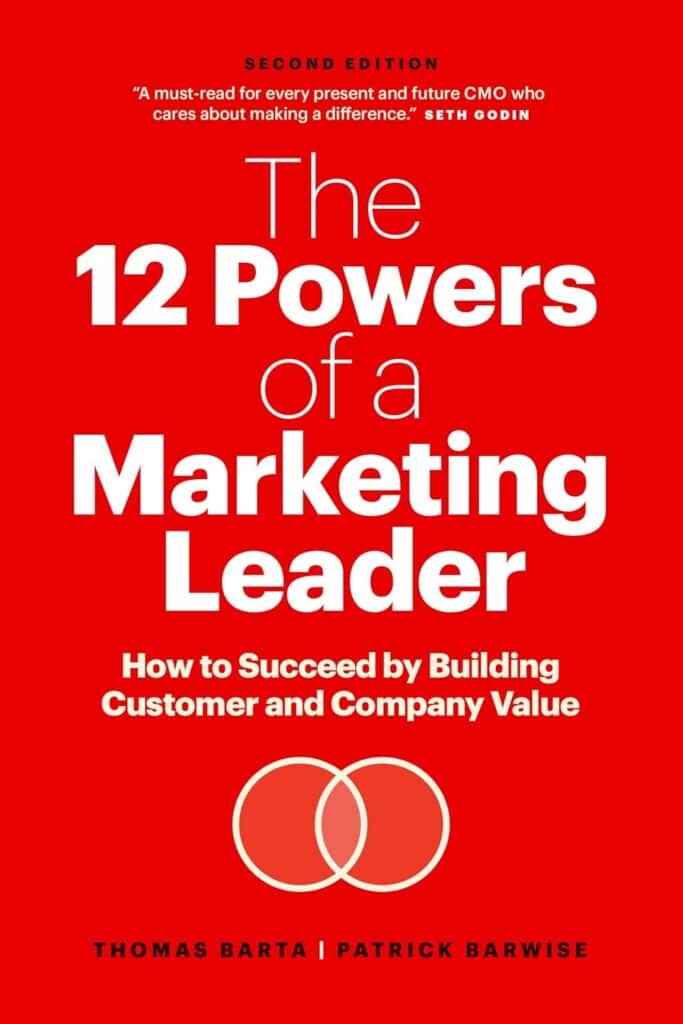
The 12 Powers of a Marketing Leader has as its central theme is that marketing leadership is not about technical skills or creativity alone. It’s about mobilizing people across the organization. The authors outline 12 essential “powers” that successful marketing leaders use to gain influence, drive growth, and lead change.
Why You Should Read This Book
It’s backed by the world’s largest leadership study on marketers (68,000+ executive assessments).
The book offers actionable steps for marketers who feel stuck or undervalued.
It bridges the gap between marketing execution and organizational leadership.
It’s highly relevant for CMOs, aspiring leaders, and cross-functional teams.
You’ll learn how to gain influence beyond your function and show business impact.
Key Ideas and Arguments Presented
Marketing is leadership. It’s not enough to be good at campaigns. You must drive strategy and change.
Leadership is not a title, it’s a choice. Influence starts with the decision to lead.
Credibility comes from impact. You must show how marketing delivers real business results.
Mobilize others. Great marketing leaders inspire and engage bosses, peers, and teams.
Marketing can’t succeed in isolation. Cross-functional collaboration is critical.
Build trust. Trust is the foundation of team success.
You must be both analytical and emotional. Winning hearts and minds is essential.
Early wins matter. Deliver returns fast to gain buy-in and momentum.
Inspiration is a skill. Learn how you inspire others and use it intentionally.
Marketers need courage. You must aim higher and challenge the status quo.
Book Outline
Introduction
Doing Marketing Isn’t the Same as Leading Marketing
Section I: Mobilize Your Boss
Power #1: Tackle Only Big Issues
Power #2: Deliver Returns, No Matter What
Power #3: Work Only with the Best
Section II: Mobilize Your Colleagues
Power #4: Hit the Head and the Heart
Power #5: Walk the Halls
Power #6: You Go First
Section III: Mobilize Your Team
Power #7: Get the Mix Right
Power #8: Cover Them in Trust
Power #9: Let the Outcomes Speak
Section IV: Mobilize Yourself
Power #10: Fall in Love with Your World
Power #11: Know How You Inspire
Power #12: Aim Higher
Final Sections
It’s Time for Your Launch
Appendix: About the Research
Key Takeaways
Marketing leadership is defined by your ability to influence, not just execute.
Bosses need marketers to solve big problems, not small ones.
Marketers must show ROI clearly and quickly.
Emotional intelligence is just as important as technical know-how.
Trust and inspiration are essential tools for building strong teams.
Marketing leaders must go beyond marketing—into strategy, operations, and finance.
Internal influence (“walking the halls”) is a daily leadership task.
You need to know what inspires people and use it deliberately.
Key Techniques
Mobilize Your Boss: Understand and align with their top goals.
Tackle Only Big Issues: Focus your time on high-stakes problems.
Deliver Returns, Fast: Prioritize early wins to build influence.
Walk the Halls: Build informal alliances and social capital internally.
Cover Them in Trust: Empower your team by assuming trust, not control.
Let the Outcomes Speak: Track and communicate your results, relentlessly.
Know How You Inspire: Identify your style of influence and amplify it.
Author’s Qualifications
Thomas Barta is a former McKinsey partner and global marketing leadership expert who led the largest global study of marketing leadership. Patrick Barwise is an Emeritus Professor of Management and Marketing at London Business School, known for his work on customer-focused strategy and marketing effectiveness.
Comparison to Similar Books
Compared to “This Is Marketing” by Seth Godin: Godin focuses on philosophy and brand connection, while The 12 Powers emphasizes internal leadership and corporate influence.
Compared to “Playing to Win” by Lafley and Martin: Both stress strategy, but The 12 Powers applies it directly to marketers leading across departments.
Compared to “Leaders Eat Last” by Simon Sinek: Sinek focuses on general leadership culture; Barta and Barwise provide practical steps specific to marketers.
Target Audience
Mid-level marketers ready to lead
CMOs seeking more influence in the C-suite
Cross-functional leaders collaborating with marketing
Business students in leadership and marketing tracks
Marketing consultants and executive coaches
CEOs looking to elevate their marketing team’s impact
Critical Response to the Book
Well-reviewed by global CMOs, marketing professors, and leadership experts.
Praised for being actionable, research-based, and directly applicable to real work settings.
Some readers wish for more B2C creative examples, but most value the strategic guidance.
One Sentence Takeaway
To become a powerful marketing leader, you must go beyond campaigns and take responsibility for mobilizing people, driving strategy, and delivering business growth.
“Marketing will be less about guessing and more about predicting.”
“The future of marketing lies in creating deeply personalized experiences at scale.”
Book Theme
The Marketing with AI for Dummies book centers around how artificial intelligence is transforming marketing by automating repetitive tasks, improving customer insights, and enhancing personalization which enables marketers to be more strategic, efficient, and data-driven.
Why You Should Read This Book
Learn how AI tools can elevate every aspect of marketing from customer segmentation to content creation.
Get practical, real-world use cases of AI in email marketing, paid media, SEO, and customer journey mapping.
Understand the ethical considerations and best practices for implementing AI responsibly.
Stay competitive in a rapidly evolving digital landscape by upskilling in AI.
Key Ideas and Arguments Presented
AI is a tool for augmentation, not replacement. It enhances creativity and strategic thinking.
Data is the fuel for AI. Quality input data is essential for accurate AI outcomes.
AI enables hyper-personalization by analyzing customer behavior and preferences at scale.
Predictive analytics and machine learning can forecast customer needs and optimize timing.
AI simplifies content generation by auto-creating or suggesting blog posts, product descriptions, or emails.
Chatbots and virtual assistants can significantly enhance customer service and response times.
AI is transforming ad targeting and optimization with real-time bidding and adaptive campaigns.
Ethics and transparency in AI are crucial for maintaining customer trust.
AI is not plug-and-play. It requires the right infrastructure, training, and human oversight.
Marketers need to evolve their skills to include data analysis, prompt engineering, and AI literacy.
Book Outline
Introduction to AI in Marketing
AI in Content Marketing
AI for Social Media and Influencer Strategy
Personalization and Predictive Analytics
Using AI in Paid Media and SEO
Customer Service and Chatbots
AI Tools and Technologies for Marketers
Challenges, Risks, and Ethics of AI
Future-Proofing Your Marketing Career
Key Takeaways
AI can make marketers smarter, not obsolete.
It’s critical to choose the right tools that align with your goals.
AI is already in many platforms (e.g., Google Ads, HubSpot) and can be used without deep coding knowledge.
Ethical AI use matters—bias and privacy must be managed.
Marketers who embrace AI now will lead the next generation of customer engagement.
Key Techniques
Prompt optimization for better AI output in content tools.
Customer segmentation models using AI clustering.
Predictive lead scoring based on behavioral data.
A/B testing with AI automation to speed up conversion insights.
AI-driven email subject line testing using natural language processing.
Author’s Qualifications
Shiv Singh’s background:
Former SVP of Marketing at Visa and digital marketing leader at PepsiCo.
Advisor to AI and tech startups.
Recognized thought leader in digital transformation and brand strategy.
Co-author of multiple marketing-related books and frequent keynote speaker.
Promoting a free or discounted book can quickly get expensive, but it doesn’t have to. If you’re using Amazon KDP (Kindle Direct Publishing), you can run a free book promotion for up to five days every 90 days. These windows are perfect opportunities to list your book on websites that don’t charge anything to help spread the word.
The websites in this list let you promote your book at no cost, and many are beginner-friendly. Just keep in mind: you get what you pay for. These platforms are a great starting point to test interest and see how much traction your book can gain organically. After trying a few, you can evaluate whether any are worth pursuing further through their paid tiers or explore other paid advertising options.
Tier 1: Websites That Ask for Both a Start and End Date
These websites request both the first and last day of your promotion, meaning they are likely taking action to promote your book during that exact window. Whether that’s featuring it in a newsletter, highlighting it on their home page, or including it in a genre-specific roundup, these are the websites most actively coordinating with your promotional schedule. If you’re planning a time-limited free or discounted book promotion, start here.
Tier 2: Websites That Ask for a Single Promotion Date
These platforms only require you to provide a start date or a single promotion day. While they may not align as precisely with a multi-day campaign, they still offer a great chance to get extra visibility, especially if you’re doing a one-day push or want to spread mentions across several days during your promo window.
These platforms don’t require any start or end dates for your promotion. Instead, they’ll list your book on their website once you submit it. While they may not provide time-sensitive exposure, they can still help with long-term discoverability, especially for free books or permanent price drops.
If you’re serious about marketing your book but working with a tight budget, these free platforms are a great place to start. Keep in mind that results can vary widely depending on your genre, timing, and presentation. Try a few during your next Amazon KDP free promotion window and track which ones drive the most downloads or engagement.
Did we miss one of your favorite free promotion websites? Let us know in the comments. We will keep this list updated as new resources emerge.