Books

market segmentation analysis

Market Segmentation Analysis by Sara Dolnicar Book Summary

Reading Time: 2 minutes

Top Three Quotes

Version 1.0.0
  • “Segmentation is not always the answer. It is only useful when it adds value.”
  • “No algorithm can compensate for poor data quality or ill-defined segmentation goals.”
  • “Market segmentation is not just a statistical exercise — it is a strategic decision-making process.”

Book Theme

Marketing Segmentation Analysis covers how to understand, perform, and apply market segmentation using both managerial and statistical perspectives — with an emphasis on replicable analysis using R.

Why You Should Read This Book

  • Bridges the gap between marketing strategy and data science.
  • Offers a replicable 10-step framework.
  • Includes real-world datasets and R code.
  • Improves targeting, resource allocation, and customer satisfaction.
  • Perfect for cross-functional marketing teams.

Key Ideas or Arguments

  1. Segmentation adds strategic clarity.
  2. 10-step framework covers the full lifecycle.
  3. Uses relatable tourism examples.
  4. Combines theory with execution.
  5. Emphasizes data-driven approaches.
  6. Stresses the importance of good data.
  7. Powered by R for transparency.
  8. Segmentation isn’t always necessary.
  9. Visual communication is crucial.
  10. Segments must evolve over time.

Book Outline

  • Part I: Introduction
    • Market Segmentation
    • Market Segmentation Analysis
  • Part II: 10 Steps (from deciding to segment to evaluating results)
    • Step 1: Deciding (not) to Segment
    • Step 2: Specifying the Ideal Target Segment
    • Step 3: Collecting Data
    • Step 4: Exploring Data
    • Step 5: Extracting Segments
    • Step 6: Profiling Segments
    • Step 7: Describing Segments
    • Step 8: Selecting the Target Segment(s)
    • Step 9: Customizing the Marketing Mix
    • Step 10: Evaluating and Monitoring
  • Appendices: Case Studies, R, Datasets

Key Takeaways

  • 10-step segmentation framework
  • Distance-based & model-based clustering
  • Biclustering & stability diagnostics
  • Data visualization techniques
  • R packages: MSA, flexclust, flexmix, mclust

Author’s Qualifications

  • Sara Dolnicar (University of Queensland)
  • Bettina Grün (Johannes Kepler University Linz)
  • Friedrich Leisch (University of Natural Resources and Life Sciences, Vienna)

Comparison to Similar Books

More replicable and statistically grounded than traditional marketing texts. Uniquely open-source and application-focused.

Target Audience Groups

  • Marketing analysts and data scientists
  • Strategists and CMOs
  • Academics and students
  • Tourism professionals
  • Market researchers and R users

Critical Response to Book

Praised for making segmentation transparent and practical. Adopted widely in education and professional settings.

One Sentence Takeaway

Market segmentation only delivers value when it’s purposefully designed, properly executed, and continuously refined to inform better marketing decisions.

Market Segmentation Analysis by Sara Dolnicar Book Summary Read More »

pillar based marketing

Pillar-Based Marketing by Christopher “Toph” Day and Ryan Brock Book Summary

Reading Time: 4 minutes

Top Three Quotes

  • “Think spiderwebs, not funnels.” – A shift from linear to interconnected content marketing.
  • “Dare I say keywords are dead? To be competitive in modern SEO, you’ve got to do right by the customer.” – A focus on customer-centric content over keyword stuffing.
  • “The real villain in marketing isn’t bad content—it’s guesswork.” – The need for data-driven strategies.

Book Theme

Pillar-Based Marketing is a content and SEO strategy that leverages deep data insights to create interconnected content that ranks consistently on Page One of search engines. The methodology is designed to replace guesswork in content marketing with a structured, scalable, and repeatable process.

Why You Should Read This Book

  • If you’re frustrated by the unpredictability of SEO and content marketing, Pillar-Based Marketing provides a proven, data-driven method to rank higher on search engines.
  • It challenges outdated content strategies and replaces them with a networked approach based on real customer search behaviors.
  • You’ll learn how to reduce wasted marketing spend by focusing on topics that truly matter to your audience.
  • It offers a step-by-step framework that any marketing professional can implement, making SEO success more predictable and scalable.

Key Ideas or Arguments

  • Traditional content marketing is broken – Most content never generates traffic due to outdated strategies.
  • Think in “Pillars” rather than individual pieces of content – Content should be structured around core topics, with supporting pieces linking back to them.
  • Keywords alone are not enough – Success comes from understanding customer intent networks rather than isolated keyword lists.
  • Organic search should be the foundation of a Go-To-Market strategy – Pillar-Based Marketing makes organic search a predictable, scalable revenue driver.
  • SEO needs a structured approach – Guessing what will rank is ineffective; structured, data-backed strategies win.
  • Content must be created in a connected ecosystem – Interlinking strategic content pieces increases visibility and engagement.
  • Paid ads are temporary; organic content is an appreciating asset – Investing in organic content provides long-term, compounding returns.
  • Marketing should be measurable and data-driven – Every piece of content should be backed by data insights that prove its effectiveness.
  • SEO success should be predictable – Pillar-Based Marketing offers a clear roadmap to Page One rankings in weeks, not months or years.
  • Aligning with customer search behavior is crucial – Understanding how customers naturally seek information is key to content strategy.

Book Outline

Section One: Why Pillar-Based Marketing?

  • Marketers Don’t Sleep
  • Marketing Is a Complete Waste of Money
  • The Real Villain: Guesswork
  • Think Spiderwebs, Not Funnels
  • Think Outside, Not Inside
  • The Birth of Pillar-Based Marketing

Section Two: How to Do Pillar-Based Marketing

  • Choosing Your First Pillar Topic
  • Building Your Pillar Strategy
  • Creating Your Pillar Content
  • Publishing Your Pillar Content
  • Measuring Your Impact

Key Takeaways

  • The traditional “funnel” model of marketing is outdated—customers interact with content in a web-like structure.
  • The Pillar-Based Marketing methodology provides a way to systematically create content that ranks and drives engagement.
  • By focusing on data-driven content creation, marketers can eliminate guesswork and build sustainable SEO success.

Key Techniques

  • Pillar Selection – Choosing core topics that align with search behavior and business goals.
  • Content Ecosystem Building – Structuring related articles, subtopics, and interlinked content for maximum reach.
  • SEO Data Mapping – Using real search behavior data to identify high-impact topics.
  • Performance Measurement – Tracking organic traffic, engagement, and business outcomes from Pillar-Based Marketing strategies.

Author’s Qualifications

  • Ryan Brock – Founder of Metonymy Media, a content marketing agency focused on data-driven content strategy.
  • Christopher “Toph” Day – CEO of DemandJump, a marketing technology company specializing in customer behavior analysis.
  • Both authors bring years of experience in digital marketing, SEO, and business growth, making them well-qualified to introduce Pillar-Based Marketing.

Comparison to Similar Books

  • Compared to “They Ask, You Answer” by Marcus Sheridan – Pillar-Based Marketing offers a more structured, data-backed approach rather than a purely conversational strategy.
  • Compared to “Content Inc.” by Joe Pulizzi – Pillar-Based Marketing is more focused on SEO and organic search strategies rather than content-driven entrepreneurship.
  • Compared to “SEO 2024” by Adam Clarke – While Clarke’s book covers SEO tactics, Pillar-Based Marketing provides a holistic content ecosystem strategy.

Target Audience Groups

  • Marketing executives and CMOs – Align marketing strategy with business goals and prove its impact.
  • SEO specialists and content strategists – Implement a scalable framework for sustainable search rankings.
  • Business owners and entrepreneurs – Build a cost-effective organic marketing engine that outperforms paid ads.
  • B2B marketers – Create high-value content ecosystems that attract and nurture leads.
  • Growth marketers – Leverage organic search as a long-term, compounding growth driver.
  • Marketing agencies – Differentiate with predictable, data-driven SEO success for clients.
  • Tech companies and SaaS brands – Drive inbound leads by ranking for high-intent search topics.

Critical Response to Book

Praise:

  • Demystifies SEO and content marketing – Pillar-Based Marketing provides a structured solution to SEO uncertainty.
  • Practicality and applicability – The framework is easy to follow and implement.
  • Thought leadership – The authors bring fresh insights into an evolving field.

Criticism:

  • Some case studies are too focused on B2B—B2C brands may need adaptations.
  • While Pillar-Based Marketing is data-driven, it still requires strong content execution.

One Sentence Takeaway

Pillar-Based Marketing replaces guesswork in content marketing with a structured, data-driven approach that systematically ranks content on Page One, ensuring sustained organic growth.

Pillar-Based Marketing by Christopher “Toph” Day and Ryan Brock Book Summary Read More »

entrepreneurial marketing

Entrepreneurial Marketing by Philip Kotler Book Summary

Reading Time: 2 minutes

Top 3 Quotes

  • “The best marketing doesn’t feel like marketing; it feels like helping.” – Emphasizes the shift from transactional to relational marketing.
  • “Entrepreneurs must market not just their products but also their ideas, their vision, and themselves.” – Highlights the multi-faceted nature of entrepreneurial marketing.
  • “In an era of disruption, agility and creativity are the most important marketing assets.” – Underlines the need for adaptability in today’s fast-paced markets.

Book Theme

Entrepreneurial Marketing focuses on how entrepreneurial ventures can leverage innovative and cost-effective marketing strategies to compete in dynamic and resource-constrained environments.

Why You Should Read This Book

Entrepreneurial Marketing provides actionable strategies for building brand equity, engaging customers, and scaling operations in competitive markets without relying on traditional marketing playbooks.

Key Ideas or Arguments Presented

  • Customer-Centricity: Understand and deliver exceptional value to your target audience.
  • Agility: Stay flexible to pivot strategies in response to market changes.
  • Innovation on a Budget: Creativity often trumps capital in entrepreneurial marketing.
  • Storytelling: Build emotional connections with customers through compelling narratives.
  • Digital Transformation: Leverage digital tools and platforms to amplify your reach.
  • Networking and Partnerships: Collaboration can unlock growth opportunities.
  • Metrics and Analytics: Data-driven decisions are crucial for sustainable success.
  • Brand Building: A strong brand identity can differentiate you from competitors.
  • Personal Branding: Entrepreneurs themselves must be the face of their businesses.
  • Experimentation: Treat marketing as an iterative process, learning from failures.

Book Outline

  • The Entrepreneurial Mindset
  • Understanding Your Customer
  • Innovation and Value Creation
  • Digital Marketing for Entrepreneurs
  • Leveraging Storytelling and Branding
  • Building Agile Marketing Systems
  • Measuring Success in Entrepreneurial Marketing

Key Takeaways

  • Focus on delivering value and solving customer problems.
  • Marketing strategies must be adaptable and innovative.
  • Entrepreneurs should embrace risk and learn from failures.
  • Digital tools are indispensable for modern marketing success.

Key Techniques

  • Value Innovation: Focus on creating unique customer value rather than competing on price.
  • Rapid Experimentation: Use A/B testing and MVPs to refine marketing strategies.
  • Customer Co-Creation: Engage customers in product development and marketing campaigns.

Author’s Qualifications

Philip Kotler is a renowned marketing expert and professor emeritus at Northwestern University’s Kellogg School of Management. Known as the “Father of Modern Marketing,” he has authored over 80 books and is celebrated for his contributions to marketing theory and practice.

Comparison to Similar Books

Target Audience

  • Entrepreneurs and startup founders
  • Small business owners
  • Marketing professionals in resource-constrained environments
  • Students of marketing and business
  • Innovators and product developers
  • Freelancers and consultants
  • Digital marketers

Critical Response to the Book

Entrepreneurial Marketing has been praised for its practical insights and accessible language. Critics commend Kotler for blending theory with actionable advice, making it a valuable resource for both beginners and seasoned professionals.

One Sentence Takeaway

Entrepreneurial marketing is about creativity, agility, and customer-focus, enabling ventures to thrive by delivering exceptional value in competitive markets.

Entrepreneurial Marketing by Philip Kotler Book Summary Read More »

the ultimate question 2.0

The Ultimate Question 2.0 by Fred Reichheld Book Summary

Reading Time: 2 minutes

Top 3 Quotes

Version 1.0.0
  • “Loyalty is the willingness of someone—a customer, an employee, a friend—to make an investment or personal sacrifice to strengthen a relationship.”
  • “The primary purpose of a business should be to enrich lives. When you do that, profits follow.”
  • “Feedback is only valuable when it leads to action that improves experiences and builds trust.”

Book Theme

The Ultimate Question 2.0 explores how organizations can achieve sustainable growth and customer loyalty by focusing on customer feedback, specifically through the Net Promoter System (NPS). It emphasizes the power of customer-centric strategies to drive business success.

Why You Should Read This Book

This book is essential for business leaders, marketers, and customer experience professionals looking to:

  • Build a loyal customer base.
  • Learn practical ways to implement the Net Promoter System (NPS).
  • Understand the direct connection between customer feedback and business growth.
  • Shift from a transactional to a relationship-focused business model.

Key Ideas and Arguments Presented

  • The Power of NPS
  • Enriching Lives Drives Success
  • Customer-Centric Culture
  • Actionable Feedback
  • Promoters vs. Detractors
  • The Economic Impact of Loyalty
  • Employee Engagement and Loyalty
  • Case Studies and Examples
  • Criticisms and Misuse of NPS
  • The Virtuous Cycle of Loyalty

Book Outline

  1. The Ultimate Question
  2. The Net Promoter System
  3. Building a Customer-Centric Culture
  4. Case Studies of Success
  5. Overcoming Challenges with NPS
  6. The Future of Customer Loyalty

Key Takeaways

  • The Net Promoter System is more than a metric; it’s a philosophy for business success.
  • Loyalty is the foundation of sustainable growth.
  • Companies must integrate customer feedback into their culture to thrive.

Key Techniques

  • Net Promoter System (NPS): A methodology to measure and act on customer loyalty.
  • Closed-Loop Feedback: A process to follow up with customers and address their concerns.
  • Promoter Activation: Strategies to encourage promoters to refer others.

Author’s Qualifications

Fred Reichheld is a renowned business strategist and author, best known for his work on customer loyalty and the development of the Net Promoter System. He is a Fellow at Bain & Company, where he has spent decades advising companies on growth and customer experience.

Comparison to Similar Books

Compared to other books on customer loyalty, such as Customer Loyalty: How to Earn It, How to Keep It by Jill Griffin, The Ultimate Question 2.0 stands out for its practical framework and emphasis on measurable outcomes.

Target Audience

  • Business leaders and executives.
  • Customer experience professionals.
  • Marketers and brand strategists.
  • Entrepreneurs and small business owners.
  • HR professionals focused on employee engagement.
  • Consultants specializing in customer success.
  • Students of business and management.

Critical Response to the Book

The book has been praised for its actionable insights and real-world examples. Critics have highlighted its simplicity and effectiveness but have noted that NPS is not a one-size-fits-all solution.

One Sentence Takeaway

The Net Promoter System is a transformative approach to achieving customer loyalty and sustainable growth by focusing on enriching lives and acting on feedback.

The Ultimate Question 2.0 by Fred Reichheld Book Summary Read More »

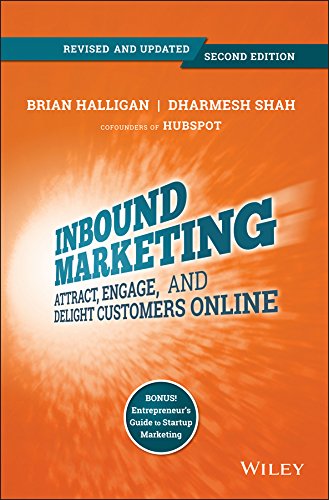
inbound marketing

Inbound Marketing by Brian Halligan Book Summary

Reading Time: 2 minutes

Top Three Quotes

Version 1.0.0
  • “To win in the age of Google, you have to stop shouting and start listening.”
  • “Content is king, but context is God.”
  • “You can’t buy attention anymore. You have to earn it by creating something interesting and valuable.”

Book Theme

Inbound Marketing focuses on the transformative concept of inbound marketing, which emphasizes attracting customers through valuable content, search engine optimization (SEO), and social media engagement rather than traditional outbound marketing methods.

Why You Should Read This Book

This book is essential for marketers, entrepreneurs, and business owners looking to adapt to the digital age by understanding how to attract, engage, and delight customers through modern, cost-effective marketing techniques.

Key Ideas or Arguments

  1. Traditional marketing methods are becoming less effective; inbound marketing is the future.
  2. Creating high-quality, relevant content is crucial to attract potential customers.
  3. SEO and keyword strategies are foundational to getting found online.
  4. Social media platforms are essential for engaging with audiences and building brand awareness.
  5. Lead nurturing and email marketing help convert visitors into customers.
  6. Analytics and metrics are vital for tracking success and optimizing strategies.
  7. Personalization and understanding the buyer’s journey enhance customer experience.
  8. Blogging is a cornerstone of inbound marketing success.
  9. Calls-to-action (CTAs) and landing pages are critical for capturing leads.
  10. Inbound marketing is about building trust and providing value, not hard selling.

Book Outline

  • Getting Found Online
  • Converting Visitors into Leads
  • Converting Leads into Customers
  • Making Better Marketing Decisions

Key Takeaways

Inbound marketing is about creating value for your audience, leveraging digital tools to attract and engage them, and building lasting relationships that drive business growth.

Key Techniques

  • Keyword research and SEO optimization for content creation.
  • Developing a content calendar for consistent blogging.
  • Using analytics tools to measure and refine marketing efforts.
  • Creating compelling CTAs and optimized landing pages.

Author’s Qualifications

Brian Halligan and Dharmesh Shah are the co-founders of HubSpot, a leading marketing and sales software company. Their expertise in digital marketing and entrepreneurship provides a solid foundation for the principles shared in this book.

Comparison to Similar Books

Compared to books like Content Rules by Ann Handley and Epic Content Marketing by Joe Pulizzi, “Inbound Marketing” offers a more structured, step-by-step guide to building an inbound strategy from scratch.

Target Audience

  • Marketing professionals
  • Small business owners
  • Entrepreneurs
  • Content creators
  • Social media managers
  • SEO specialists
  • Business students

Critical Response to Book

The book has been widely praised for its actionable advice and practical insights, making it a go-to resource for digital marketers. Critics have highlighted its clarity and relevance in the modern marketing landscape.

One Sentence Takeaway

Inbound marketing is about earning attention through valuable content and meaningful engagement, making it the most effective way to connect with today’s consumers.

Inbound Marketing by Brian Halligan Book Summary Read More »

focus

Focus: The Future of Your Company Depends on It by Al Ries Book Summary

Reading Time: 2 minutes

Top Three Quotes

Version 1.0.0
  • “When you try to be everything to everyone, you end up being nothing to anyone.”
  • “The more variations you add to your brand, the weaker it becomes.”
  • “Focus is the key to success in a world of infinite choices.”

Book Theme

The central theme of the book Focus is the critical importance of focus in business strategy. Al Ries argues that companies succeed when they concentrate their efforts on a singular, well-defined niche or market position rather than diversifying excessively.

Why You Should Read This Book

Al Ries provides actionable insights and compelling arguments for the power of focus in achieving long-term business success. This book is essential for business leaders, marketers, and entrepreneurs looking to streamline their strategies and avoid the pitfalls of over extension.

Key Ideas or Arguments Presented

  • Focus is the cornerstone of a successful business strategy.
  • Over-diversification dilutes brand strength and market positioning.
  • Companies must identify and dominate a single niche.
  • Expanding product lines can lead to brand confusion and diminished value.
  • Specialization fosters expertise and builds customer trust.
  • Market leadership is achieved through a focused approach rather than being a jack-of-all-trades.
  • Businesses should avoid chasing short-term trends that conflict with their core focus.
  • Focus applies not only to products but also to messaging, target audience, and operational priorities.

Book Outline

  • The Power of Focus
  • Why Companies Lose Focus
  • The Dangers of Diversification
  • Case Studies in Focus
  • Building a Focused Brand
  • The Future of Focus

Key Takeaways

  • Focus is a strategic imperative for long-term success.
  • Businesses that prioritize simplicity and specialization outperform their more diversified competitors.
  • Maintaining focus requires discipline and a willingness to forego short-term opportunities that conflict with the core mission.

Key Techniques

  • Conducting a “focus audit” to identify areas of overextension.
  • Using the “one-word test” to determine a brand’s core essence.
  • Developing a clear and narrow value proposition.

Author’s Qualifications

Al Ries is a renowned marketing strategist and author, best known for co-authoring Positioning: The Battle for Your Mind. With decades of experience in branding and marketing, Ries has advised leading global companies and shaped modern marketing principles.

Comparison to Similar Books

Target Audience

  • Entrepreneurs seeking to build strong, sustainable businesses.
  • Marketing professionals focused on brand development.
  • Business leaders looking to refine their strategic priorities.
  • Students of business and marketing.
  • Small business owners navigating competitive markets.
  • Consultants advising companies on growth strategies.
  • Corporate executives aiming to avoid the pitfalls of over-diversification.

Critical Response to the Book

Focus has been widely praised for its clarity and practical advice. Critics have highlighted its compelling case studies and its relevance in an increasingly complex business landscape. Some have noted that its message is particularly vital for startups and small businesses.

One Sentence Takeaway

Focus is the ultimate competitive advantage in a crowded and complex marketplace.

Focus: The Future of Your Company Depends on It by Al Ries Book Summary Read More »