Last updated March 2026
Top Three Quotes
- “Persistent, consistent, and frequent stories, delivered to an aligned audience, will earn attention, trust, and action.”
- “Marketing is our quest to make change on behalf of those we serve, and we do it by understanding the irrational forces that drive each of us.”
- “The most important lesson I can share about brand marketing is this: you definitely, certainly, and surely don’t have enough time and money to build a brand for everyone. You can’t. Don’t try. Be specific. Be very specific.”
Book Theme
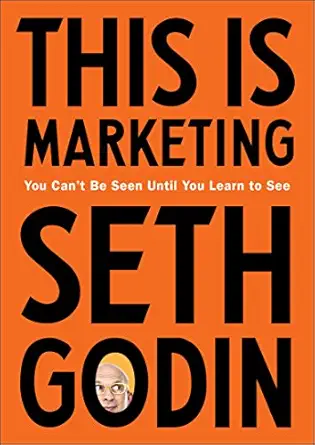
This Is Marketing reframes marketing as the generous, ethical practice of helping people change for the better. Instead of chasing mass attention or short-term hacks, Seth Godin argues that modern marketing is about serving a clearly defined smallest viable audience, understanding their worldview, telling true stories that resonate, and earning trust over time by doing work that actually matters.
Why You Should Read This Book
- It gives you a clear philosophy for ethical, human-centered marketing in an age of ad fatigue and algorithm-driven noise.
- It helps you stop trying to reach “everyone” and instead focus on a specific audience you can truly serve and delight.
- It connects strategy and day-to-day decisions: who you serve, what you offer, how you position it, and how you show up consistently.
- It distills decades of Seth Godin’s marketing ideas into one coherent, accessible guide for working marketers.
- It is especially helpful if you already know basic tactics and want a deeper, principled lens for deciding what to do (and what to stop doing).
Key Ideas and Arguments Presented
- Marketing is about change, not hype. The real job of marketing is to create meaningful change for specific people, not just to get clicks, views, or short-lived attention.
- Focus on the smallest viable audience. You do not need everyone; you need a small group of people for whom your work is incredibly valuable and who can sustain your business or mission.
- People like us do things like this. Behavior is driven by worldview, identity, and group norms, so effective marketing aligns with the story people already tell themselves about who they are and what their people do.
- Tell stories, build connections, and design experiences. Features and specs are secondary; what people really respond to are stories that make sense to them and experiences that reinforce those stories.
- Trust and permission are core marketing assets. Instead of interrupting strangers, earn permission to talk to people who want to hear from you and protect that trust by being relevant and generous.
- Treat different people differently. Mass-averaged messaging leads to bland work; segment by worldview and desire so you can craft specific messages and offers for specific groups.
- Positioning and price are part of the story. Deciding who your product is for and who it is not for, and how you price it, shapes how people perceive its value, status, and fit.
- Tribes and culture change matter more than one-off campaigns. Marketing is leading a group of people who share an idea or identity, helping them move together toward a desired change.
- Funnels are journeys, not tricks. Awareness, consideration, and action are stages in a relationship; pushing people through a funnel without empathy or value erodes trust.
- Because marketing works, it is a responsibility. The ability to shape culture and behavior means marketers have an obligation to use their influence with integrity, not manipulation.
Book Outline
The book is organized into short, idea-dense chapters that build a complete view of modern marketing. Key chapters include:
- Not Mass, Not Spam, Not Shameful – why old-school interrupt-and-shout marketing is broken and what must replace it.
- The Marketer Learns to See – understanding culture, noticing needs, and seeing opportunities for change.
- Marketing Changes People Through Stories, Connections, and Experience – why story and experience drive action.
- The Smallest Viable Market – focusing on a tiny audience you can actually serve well.
- In Search of Better and Beyond Commodities – how customers define “better” and how to escape commodity status.
- The Canvas of Dreams and Desires – mapping what your audience really wants and fears.
- People Like Us Do Things Like This – identity, status, and group norms.
- Trust and Tension Create Forward Motion – why people act and how to introduce honest, productive tension.
- Status, Dominance, and Affiliation – understanding status-driven motivations.
- A Better Business Plan – reframing strategy around who it is for and what change it creates.
- Semiotics, Symbols, and Vernacular – using language and symbols your audience recognizes as their own.
- Treat Different People Differently and Reaching the Right People – segmentation and focused outreach.
- Price Is a Story – why pricing communicates value and status.
- Permission and Remarkability in a Virtuous Cycle – earning permission by being worth talking about.
- Trust Is as Scarce as Attention and The Funnel – how relationships actually develop.
- Organizing and Leading a Tribe – turning customers into a community and movement.
- Case Studies and Marketing Works, and Now It Is Your Turn – real-world examples and a call to action.
- Marketing to the Most Important Person – centering the customer and the change you promise them.
Key Takeaways
- Marketing is the act of making positive change for the people you seek to serve, not the act of shouting at everyone.
- Trying to reach everyone leads to average products and average messaging; focusing on the smallest viable audience leads to depth, loyalty, and word-of-mouth.
- People buy based on worldview, identity, and status; your stories, symbols, and experiences must match the way they already see themselves and their group.
- Trust and permission are more valuable than reach; once someone trusts you and wants to hear from you, marketing becomes a service instead of an intrusion.
- It is easier and smarter to design products and services for a particular audience than to build something and then hunt for anyone who might buy it.
- Marketing is a long-term practice of showing up, keeping promises, and leading a tribe, not a one-time campaign or growth hack.
- A strong brand is willing to say “this is not for you” to people outside its tribe so it can more powerfully serve those inside it.
- Because marketing shapes culture, marketers have a responsibility to use their skills ethically and for work they are proud of.
Key Techniques
- The five-step marketing process: invent something worth making, design it for a specific small group, tell a story that matches their worldview, spread the word in ways they welcome, and keep showing up consistently.
- Smallest viable audience design: define the smallest group of people who can sustain your work, based on shared beliefs and desires, and tailor everything to serve them deeply.
- The “who is it for, what is it for” test: clarify exactly who your product is for and what change it is supposed to create for them before you worry about tactics.
- The three-part story structure: story of self (why you care), story of us (shared values and identity), and story of now (why the change matters today and what action to take).
- Positioning with simple maps: plot competitors along two important axes (such as price vs. quality or simplicity vs. flexibility) to see where you can occupy a distinct, underserved position.
- Creating honest tension: surface the gap between where your audience is and where they want to be, then offer your product or service as a credible path to close that gap.
- “People like us” segmentation: define your audience in terms of identity and shared beliefs rather than demographics, then speak and act in ways that clearly signal “this is for people like us.”
- Permission marketing: invite people to opt in, deliver valuable and relevant messages over time, and treat each interaction as a chance to deepen trust instead of just to close a sale.
- Tribe building: give your audience ways to connect with you and with each other, highlight member stories, and communicate a clear vision so they can feel part of a movement, not just a customer list.
Author’s Qualifications
Seth Godin is a bestselling marketing author, entrepreneur, and teacher who has shaped how modern marketing is understood and practiced. He has written more than a dozen influential books, including Permission Marketing, Purple Cow, Tribes, and Linchpin, which have been translated into many languages and widely adopted by marketers and business leaders.
He founded Yoyodyne, one of the first online direct marketing companies, which was acquired by Yahoo, where he served as vice president of direct marketing. He also created the altMBA and other education programs that teach leadership and marketing to professionals worldwide, and he writes a long-running, widely-read daily blog on marketing and change.
Godin’s combination of hands-on entrepreneurial experience, decades of writing and teaching, and industry recognition make him a credible and influential voice on what effective marketing looks like today.
Comparison to Similar Books
- Compared to Building a StoryBrand by Donald Miller, which gives a clear messaging framework to structure your brand story, This Is Marketing sits one level higher and focuses on who you serve, what change you promise, and how to earn trust so that any story you tell is grounded in the right strategy.
- Compared to Contagious by Jonah Berger, which analyzes why ideas and products go viral, Godin is less focused on virality and more focused on serving a focused tribe over time; spreading ideas matters, but only after you know which people you exist to help.
- Compared to Influence by Robert Cialdini or other persuasion-focused books, Godin acknowledges persuasion but insists that marketers use these tools inside a larger commitment to generosity, permission, and long-term trust.
- Within Seth Godin’s own work, This Is Marketing acts like a synthesis and update of ideas from Permission Marketing, Purple Cow, and Tribes, combining remarkability, permission, and tribe-building into one coherent modern marketing philosophy.
Target Audience
- Working marketers and brand strategists who want to move beyond tactics and campaigns to a more strategic, ethical practice.
- Entrepreneurs and startup founders who need to find and delight their first true fans without massive ad budgets.
- Small business owners who want to build loyal local or niche communities instead of competing on price alone.
- Business and marketing students who want a modern, human-centered complement to traditional marketing textbooks.
- Nonprofit, cause, and social impact leaders who need to mobilize people around ideas and behavior change, not just products.
- Experienced marketers who feel burned out on manipulative tactics and want a more meaningful, sustainable way to practice their craft.
Critical Response to the Book
- The book became an instant New York Times and Wall Street Journal bestseller, signaling strong interest and resonance with readers.
- Many reviewers and practitioners praise its humane, ethical view of marketing and its focus on empathy, trust, and service rather than manipulation.
- It is frequently recommended on lists of modern must-read marketing books as a mindset- and philosophy-setting text.
- Some critics note that it feels like a collection or synthesis of Godin’s earlier work and that it can be high-level rather than a step-by-step tactical manual.
- Overall, the response has been that it is more valuable as a compass and source of insight than as a how-to guide for specific channels or tools.
One Sentence Takeaway
Marketing that works and feels right is the disciplined, generous practice of choosing a specific group of people, understanding the change they seek, and serving them so well and so consistently that trust, stories, and culture shift in the process.