Last updated March 2026
After my Toastmasters icebreaker speech, the next project in the Pathways program is Write a Speech with Purpose. That is the speech you will find below. While the formal purpose of this project is to inform, the talk also reflects my ongoing effort to become more comfortable speaking when I do not have everything perfectly planned or memorized.
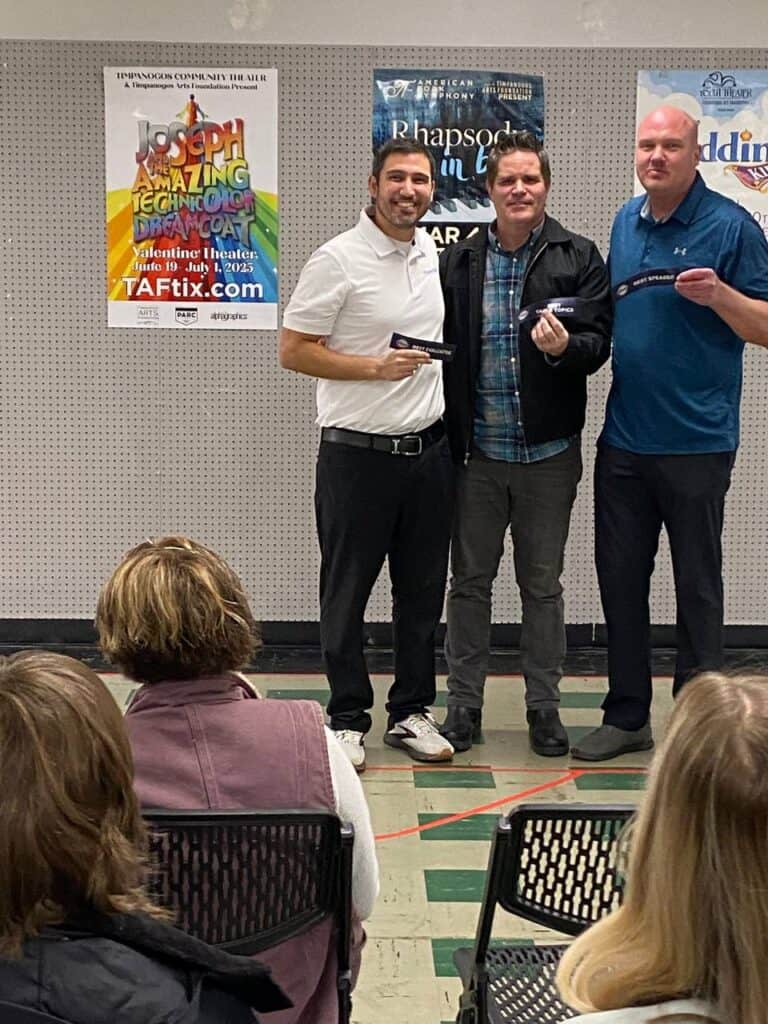
One of my biggest public speaking challenges is poor working memory. I often pause while searching for the right word or thought, which makes speaking without notes especially difficult. For this speech, I allowed myself to use my phone as a reference rather than forcing full memorization. During the writing and practice process, I also experimented with using AI-generated images and a grid-style layout to break the speech into visual cues. This structure helped prompt my memory, reduce cognitive load, and ultimately reduce a bit of my nervousness.
I have also included a link to the PDF version showing the table-style layout I used while practicing and delivering this Toastmasters speech.
Introduction
With reckless abandon for self-preservation, Dave made a pinky promise that somehow turned into today’s purposeful Toastmasters speech.
He brings decades of digital-marketing experience, and he’s currently navigating unemployment and the unexpected plot twists that followed a major heart attack.
Dave is powered by an amazing, supportive wife, the three best daughters a dad could ask for, and—this year—his favorite title ever: Grandpa.
It was April 19, 2023. My mom’s birthday, and about a year and a half since she passed away from a heart attack.
I had just climbed two flights of stairs and was getting ready for bed when I felt pressure and uneasiness in my chest. My thought was that it might be difficult to fall asleep. My wife’s thought was that we should go to the ER.
She convinced me when she said that if I started feeling better on the way there, we could come back.
So, a quick ER tip. If you want immediate help and avoid waiting in lines, mention that you think you’re having a heart attack. A medical NASCAR pit crew is immediately in action.
I learned that there is an enzyme protein called troponin that is released into the bloodstream when there’s a cardiac event. Less than 0.04 is normal, meaning no heart attack. My troponin levels were 337. Several doctors commented that they had never seen levels that high.
I also learned that what I had is called a widow maker heart attack. Only 12% of people who experience this type of heart attack outside of a hospital survive. I didn’t know it at the time, but I was also about to pay $250 for my ambulance ride from American Fork to Provo.
After being wheeled out of the ambulance, the next thing I remember is being barely awake in a spacious operating room. I could hear doctors talking, and one of them mentioned four stents. I looked down my shirt and didn’t see anything, which confused me. I could feel that my right arm was in some kind of clamp, and I couldn’t move it.
Overall, for something that seemed like such a big deal, it didn’t feel like it. There was nearly no pain, nothing like what you see on TV, and I can no longer even find the tiny incision that was on my wrist.
But wait — there’s more.
That year, I went to the ER four more times. Twice because I was convinced I was having another heart attack. It turned out my troponin levels were still coming down from the original event.
The other two visits were because of nosebleeds.
Let me explain that adventure.
After the heart attack, I was on two blood thinners. The nosebleeds would start out of nowhere and just gush.
I might be the only guy who has sent his wife to the store for tampons, has a size preference, and knows the frustration of bleeding through one. I had these stashed everywhere. And yes, I cut the string off to salvage what little dignity I had left.
Eventually, they put a rhino rocket in one nostril, which is a special kind of hell I have vowed to never experience again. A rhino rocket is what happens when a tampon and a torpedo have a baby.
Then came cauterization.
One nostril didn’t hurt at all, which completely blindsided me. When I later had the other nostril cauterized, it was the worst pain I’ve ever felt. Not all cauterizations are created equal.
Somewhere in the middle of all this, I also had three cellulitis flare-ups. Warm to the touch, swollen, and potentially dangerous if not treated quickly. These burning skin infections can flare up from even tiny injuries. It was one of many reminders that although the heart attack hit one organ, my entire body was impacted.
As the months passed, I learned that a quarter of my heart was dead. Not two sizes too small like the Grinch. Dead. That explained my decreased energy and increased sensitivity to stress.
I’m still very much in the middle of this story. And while I’ve received small moments of clarity along the way, I’m still trying to answer the bigger questions. What comes next? How do I support my family now? And what am I supposed to do with this second chance?
There’s no happily-ever-after I can give you yet. But as I pause here, there are two lessons worth sharing.
Lesson One: Share Your Experience
My mother-in-law started retaining water, and because of what I’d gone through, we recognized it as a cardiac warning before her doctor did. It likely saved her life. Sometimes the experience you’d never choose becomes the knowledge someone else desperately needs.
Lesson Two: Let Your Body Vote
After losing the job I’d held for 27 years, and with my new health limits, I wasn’t sure what to do next. I’d always felt like I should continue my education, but at 50, an MBA felt too late and not particularly helpful.
My therapist asked, “When you think about that decision, does your body lean forward or backward?”
I leaned forward. It’s been a life hack ever since.
During 2023, I even started writing my own version of the Twelve Days of Christmas. I lived through:
- one widow maker heart attack
- two nose cauterizations
- three bouts of cellulitis
- four stents
- five trips to the ER
And I still didn’t find clarity — at least not the big kind I keep hoping for.
But here’s what I did find.
You don’t wait for clarity to show up.
You show up, and clarity meets you along the way.