Two hundred blog posts is not a milestone I set out to reach. It is proof of a habit that formed over time.
I did not start with a goal of publishing 200 posts. I started because I had ideas I wanted to share, concepts I wanted to test, and questions I wanted to explore. Somewhere along the way, consistency turned into real momentum.
This is what 200 blog posts taught me about digital marketing, discipline, ego, and the long game.
Lesson 1: The process matters more than the outcome
There is a philosophy from Nick Saban about focusing on the process and not the outcomes which can become distractions. When you obsess over outcomes, you create pressure. When you commit to the process, outcomes take care of themselves.
That mindset shaped this entire journey.
I was far more interested in what was next than in what had already been accomplished. I cared about simplifying aspects of marketing so I could better understand and communicate that to others. I cared about providing true value and insights.
Lesson 2: Traffic takes longer than you think
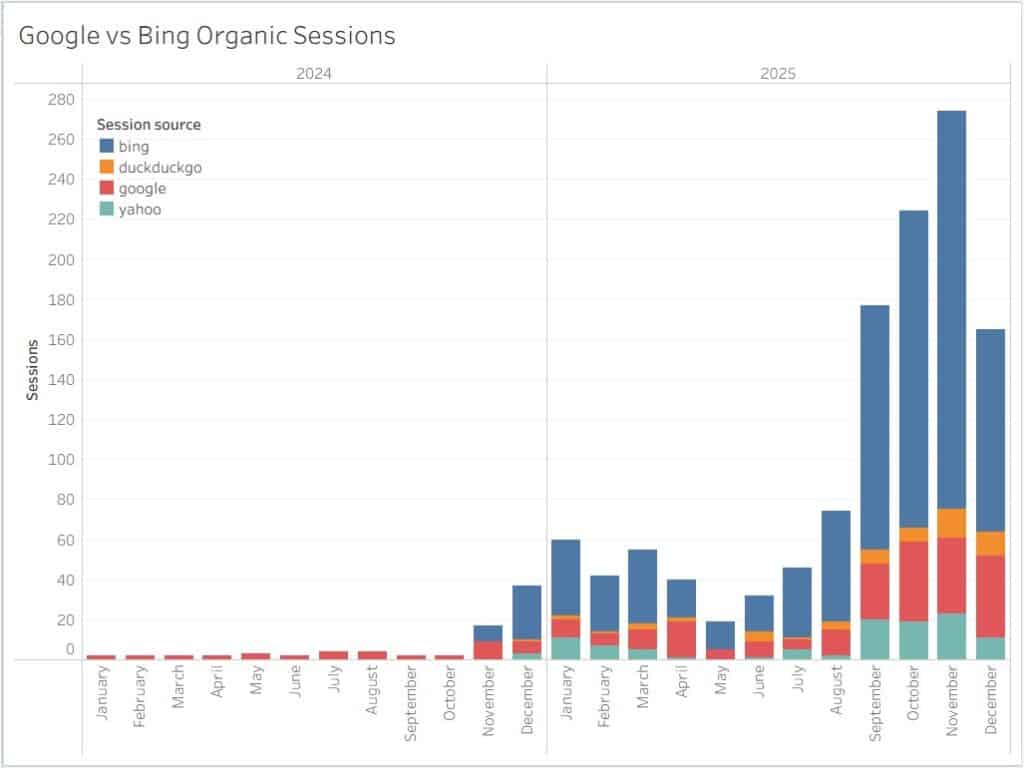
About seven to eight months into consistent publishing, I saw my first real traffic spike. It did not happen in month one. It did not happen in month three. It took time.
You truly have to fall in love with the process because the results lag.
If you obsess over metrics too early, you will quit before compounding has a chance to work.
This chart tells the real story. Traffic did not respond immediately, but it did respond eventually. The early months were quiet. The work was still happening. The results simply had not caught up yet.
Lesson 3: Metrics will humble you
As traffic began to grow, I felt proud. Then I started digging deeper into the data.
I discovered bot traffic. I discovered internal traffic. I discovered that not all growth was as “real” as I had initially believed.
It felt like a blow to the ego.
But it was also a gift. It forced me to care more about clean data than inflated numbers. It forced me to improve tracking, filters, and channel clarity. It reminded me that vanity metrics are fragile.
Lesson 4: Consistency is not optional
I have heard many times that it does not matter how often you publish, as long as you are consistent. After 200 posts, I believe that is true.
Consistency also reveals whether the passion is real.
It is less about frequency and more about respect for time. Respect for the time it takes search engines to trust you. Respect for the time it takes your thinking to mature. Respect for the time it takes to develop a voice.
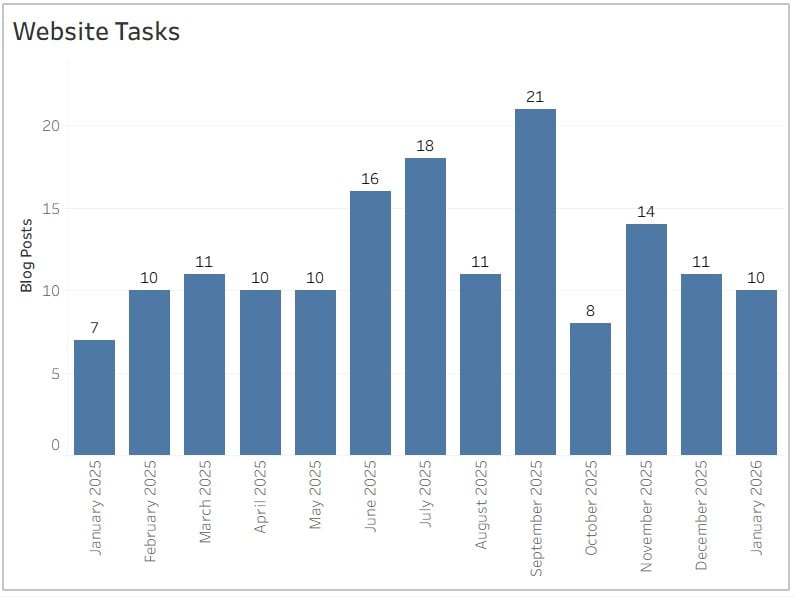
Consistency is easy to talk about but harder to visualize. This chart shows my publishing cadence by month. Some months were heavier than others, but the important part was always returning to the work.
This chart reflects the real work behind the scenes. Not a single spike, but a pattern of consistent effort over time.
Lesson 5: Digital marketing is too big for one person, but curiosity does not scale down
For decades, I have considered myself a digital marketer. The reality is that digital marketing is not a lane. It is an ecosystem.
SEO, paid media, analytics, website optimization, martech, email, strategy, customer data. No single person can master every area at the highest level.
The challenge is that I genuinely love all of it.
The monthly theme structure became my way of introducing discipline. It forced me to identify pillars. It forced me to ask whether I truly had something valuable to say in each area. It forced strategic tradeoffs.
That structure improved the quality of the website and clarified where my depth is strongest.
Lesson 6: I was not ignoring the crowd. I was immersed in my own ideas
I did not intentionally avoid what others were publishing. I was too focused on what I was building to care.
I have a few voices I respect. I pay attention on LinkedIn when something meaningful stands out. But I was never motivated to chase the latest movement or position myself at the front of whatever was trending.
I am fairly introverted, even online. I do not feel compelled to perform. I feel compelled to create and improve.
There is risk in that approach. You can miss tactical best practices. You can miss popularity trends. But you also protect originality. You build from first principles. You create what you would want to read.
Lesson 7: Your best evolves
One of the things I have always loved about digital marketing is that nothing is ever finished. Nothing is permanent. You can always tweak, refine, and improve.
My best last year is not my best today. And my best today will not be my best a year from now.
Publishing 200 posts did not mean getting everything right. It meant creating something I could improve.
Iteration is not a flaw in digital marketing. It is the point.
Final Reflection
If I learned anything from publishing 200 posts, it is this: you cannot shortcut compounding.
You cannot fake consistency. You cannot rush trust. You cannot build depth without time.
You have to fall in love with the process before the results show up. Usually it’s just the onlooker that considers something an overnight success. The one involved who was grinding day-after-day wouldn’t say so.
Two hundred posts did not make me an expert. They made me better than I was when I started.
And if you do, the numbers eventually take care of themselves.
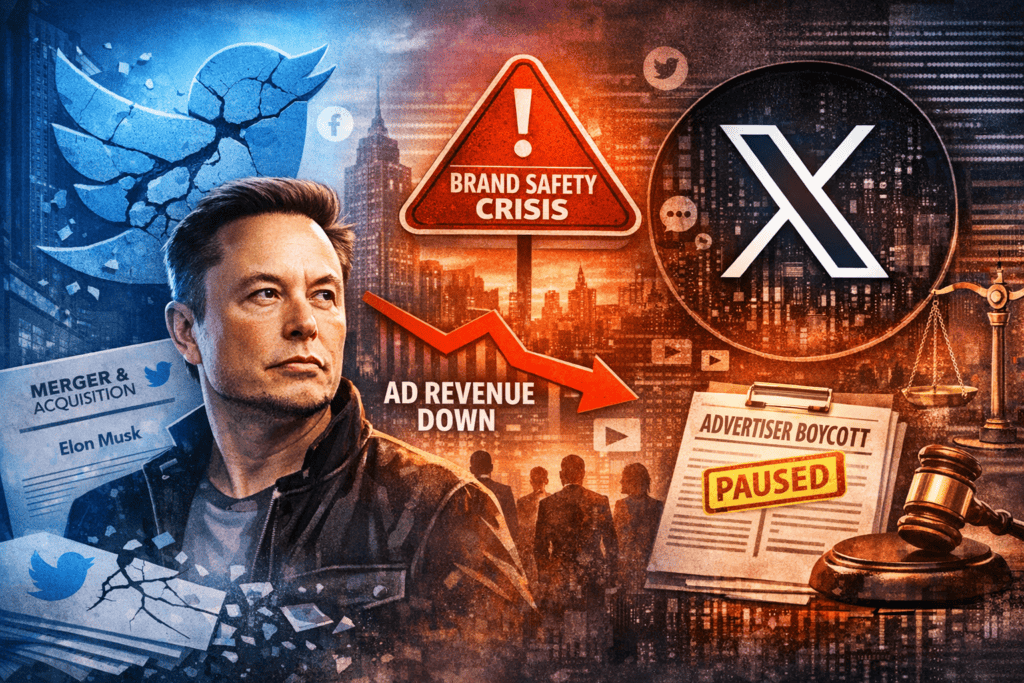
In 2022, Elon Musk turned an acquisition attempt into a public spectacle: he made an unsolicited bid to buy Twitter, the board deployed a poison pill, the parties signed a deal, litigation followed when he tried to exit, and the transaction ultimately closed in late October 2022.
The marketing lesson is not only about platform volatility.
It is about how quickly advertiser trust can collapse when governance, moderation, verification, and brand identity shift at the same time, and how hard it is to rebuild once brands decide the downside risk is not worth the reach.
Company Involved and Marketing Topic
Company involved: Twitter, Inc., later reorganized under X Corp. The platform was historically advertising-led: Twitter reported in its 2021 annual filing that advertising services were 89 percent of revenue.
Marketing topic: Branding, crisis response, and advertising trust.
Public Reaction or Consequences
Advertiser anxiety was visible before the deal even closed. In an open message to advertisers on the eve of closing, Musk argued he did not want the platform to become a “free-for-all hellscape” and positioned it as a “common digital town square,” implicitly acknowledging that ad dollars depend on controlled risk.
After the acquisition, several changes compounded marketers’ concerns. Ad market data and reporting described deep pullbacks soon after the takeover, including steep declines in ad spending and a broad pause by top advertisers. Verification and checkmark changes increased impersonation risk for brands. The Twitter-to-X rebrand added confusion and threatened long-built brand equity. In 2024, X escalated conflict with advertisers through a lawsuit alleging an unlawful boycott tied to brand safety standards.
Why It Matters Today
• Brand safety is now treated like supply chain risk: measurable, modeled, and acted upon quickly when governance changes raise adjacency concerns.
• Marketer trust metrics shifted in a durable way. Kantar reported historically low trust and perceived brand safety for X, plus a net 26 percent of marketers planning to reduce spend on X in 2025.
• Platform identity can change faster than marketing planning cycles. The abrupt Twitter-to-X rebrand is a reminder that naming and creative conventions can be disrupted quickly.
• AI integration raises new questions about data use and distribution power. By 2025, Musk’s AI company acquired X and framed the value around shared data, models, compute, distribution, and talent. In early 2026, reporting described further consolidation via a SpaceX and xAI deal.
Takeaways and Notable Quotes
Takeaways for marketers:
1) Treat platform stability as a core buying variable. If policies and leadership direction swing overnight, price that volatility into spend and brand safety requirements.
2) Build an exit-ready paid and organic playbook. Use pre-approved criteria for pausing and reallocating when trust signals drop.
3) Protect distinctive brand assets. The Twitter-to-X transition shows how much value lives in name recognition and cultural habits, and how quickly those can be disrupted.
Notable quotes and data:
• “the bird is freed” from Musk when the deal closed.
• Kantar reported only 4 percent of marketers believe ads on X provide brand safety, and marketer trust in ads on X fell from 22 percent in 2022 to 12 percent in 2024.
One sentence takeaway: When a platform’s leadership, policies, and identity change at once, marketers stop buying reach and start buying risk reduction.
Full Case Narrative
Twitter entered 2022 as an advertising driven social platform with global cultural influence and a revenue model heavily dependent on brand advertisers. Most of its revenue came from advertising, and marketer trust in content moderation, adjacency controls, and platform governance played a direct role in media buying decisions. Large brands and agencies evaluated Twitter not only on audience reach, but also on brand safety signals, enforcement policies, and third party measurement support.
In April 2022, Elon Musk disclosed a significant ownership stake and made an unsolicited offer to acquire the company. Twitter’s board responded with a shareholder rights plan designed to slow or deter a hostile takeover attempt. On April 25, 2022, Twitter accepted a merger agreement at 54.20 dollars per share. The proposed acquisition quickly became both a financial and governance story, with public debate around spam accounts, platform transparency, and content moderation philosophy. By July 2022, Musk issued a termination notice, and Twitter filed suit in Delaware to enforce the agreement, turning the acquisition into a high profile legal and reputational battle.
For marketers, uncertainty during this period was not abstract. Platform governance and moderation direction directly affect where ads appear and what content they may appear next to. As the dispute and public criticism escalated, advertisers and agency groups began reassessing platform risk. Brand safety frameworks used by major advertisers rely on predictable policy enforcement, third party verification partners, and consistent rule application. Signals that those systems might change created hesitation in media planning and brand placement decisions.
When the transaction closed in late October 2022, reporting described immediate leadership changes, staffing reductions, and rapid product and policy shifts. Several major advertisers paused or reduced spend shortly after closing, citing brand safety and policy clarity concerns. Agency holding companies and brand safety organizations issued updated guidance to clients about risk controls, adjacency filters, and campaign monitoring on the platform. Industry reporting later described a significant decline in United States advertising revenue following the acquisition, reinforcing how sensitive advertiser behavior is to governance and moderation signals.
In July 2023, Twitter rebranded as X, replacing its long standing name and bird logo with a new identity tied to a broader “everything app” vision. From a marketing perspective, this represented a major brand equity reset. The Twitter name carried strong global recognition and established advertiser associations. The X rebrand introduced both strategic flexibility and brand recognition risk, requiring advertisers and agencies to reevaluate platform positioning, audience expectations, and long term fit within media mixes.
Tensions between platform leadership and advertiser groups continued into 2024, including legal action by X against an advertiser trade group and several brands related to coordinated brand safety standards and alleged boycotts. These conflicts highlighted a structural reality for marketers. Platforms depend on advertiser trust and spend, while advertisers depend on platform safety controls and policy transparency. When that balance is strained, marketing investment becomes more volatile and more diversified across channels.
Subsequent consolidation involving X, xAI, and related companies further shifted how analysts and marketers evaluated the platform. The integration narrative emphasized data, distribution, and ecosystem leverage rather than traditional social media advertising alone. For marketers, the case illustrates how platform ownership, governance philosophy, and brand positioning changes can quickly alter advertiser risk models, media allocation decisions, and brand safety requirements.
What Happened Next?
Marketer confidence stayed fragile for years. Kantar findings pointed to continued pullback intent and very low perceived brand safety. The advertiser relationship moved from cautious engagement to public legal conflict through a 2024 antitrust lawsuit. Strategically, the ownership thesis evolved as X was acquired by Musk’s AI company in 2025, framing the platform as a data and distribution asset for AI development. In early 2026, reporting described another consolidation step involving SpaceX and xAI, reinforcing that the platform’s direction is tied to a broader AI and infrastructure narrative, not only social media advertising.
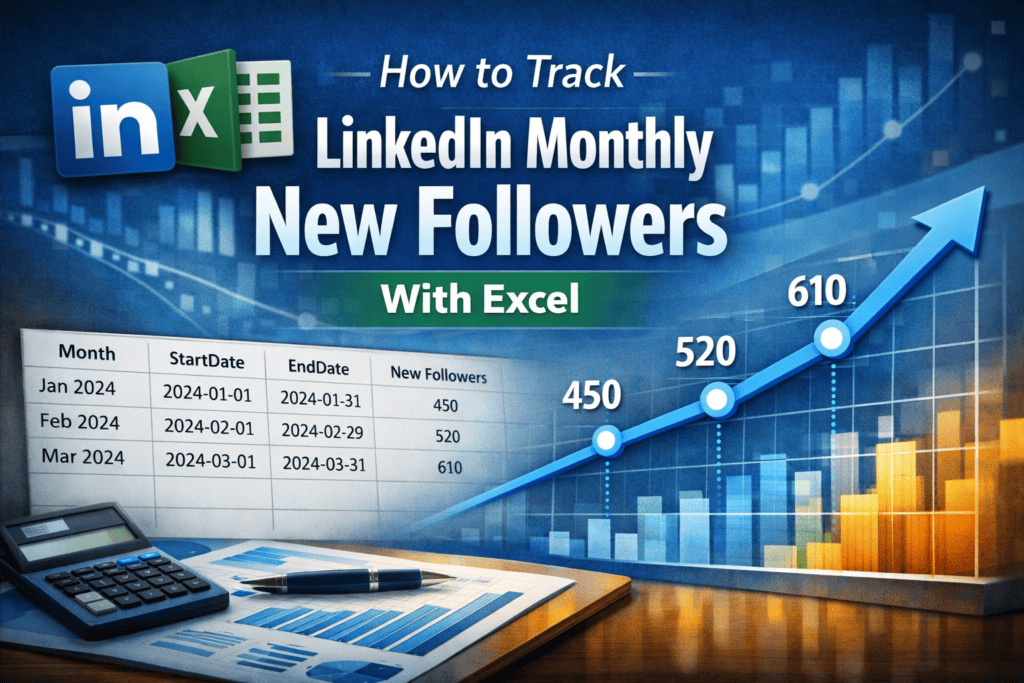
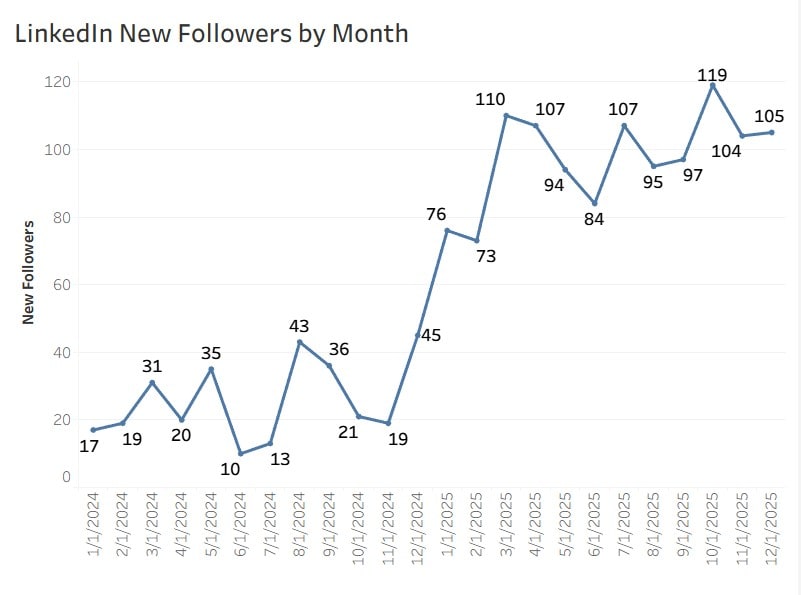
Quick summary: LinkedIn does not provide an export for personal follower analytics, but the Creator Audience analytics view supports custom date ranges. By generating monthly links with Excel formulas, you can capture cumulative new followers by month and build a trend dataset for dashboards and reporting.
LinkedIn’s Creator Audience view can show cumulative follower growth over custom date ranges, and it often provides a deeper lookback window than other profile metrics (which frequently only go back about a year). This quick Excel hack helps you generate a clickable URL for every month so you can capture monthly new followers in minutes and build a trend dataset for Tableau, Excel charts, or reporting.
In this tutorial, you will:
1. Create a simple Excel table with month start and end dates
2. Automatically generate correct month boundaries, including leap years
3. Build a monthly LinkedIn Creator Analytics link for each month
4. Capture monthly new follower totals from the cumulative chart
Important note about this method
This is not an officially documented LinkedIn export feature. It is a repeatable workflow based on how LinkedIn’s Creator Audience analytics URL parameters behave in the browser. LinkedIn can change these parameters or the analytics experience at any time. Use this as a practical workaround for building your own dataset.
What you need
1. A LinkedIn account with access to Creator Analytics
2. A desktop browser (recommended)
3. Excel or Google Sheets (Excel formulas below)
4. A place to record monthly results (a spreadsheet is perfect)
Step 1: Confirm you can access the Creator Audience analytics view
Open LinkedIn in a desktop browser while logged in, then paste this into your address bar:
If you can see an audience analytics view, you are in the right place. If you do not have access, you may need to enable Creator Mode or you may not have this feature available in your account.
Step 2: Understand the URL pattern we will generate in Excel
LinkedIn’s Creator Audience analytics supports custom date ranges via URL parameters. The key parameters used in this workflow are:
startDate=YYYY-MM-DD
endDate=YYYY-MM-DD
timeRange=custom
lineChartType=cumulative
We will use Excel to generate a monthly link for each month so you can open the link, confirm the date range, and capture the cumulative new follower value for that month.
Step 3: Set up your Excel table
Create a new Excel sheet with these column headers:
A: Month B: StartDate C: EndDate D: Link E: New Followers (entered manually)
In cell B2, enter the first month start date you want to track. Example:
2024-01-01
Make sure columns B and C are formatted as dates.
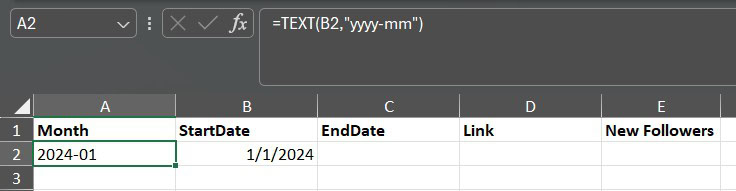
In cell A2, generate your Month label from the StartDate. This helps with sorting and makes the table easier to scan while you build it.
Option 1 (best for Tableau sorting):
=TEXT(B2,”yyyy-mm”)
Option 2 (more readable):
=TEXT(B2,”mmm yyyy”)
You can copy the Month formula down after you fill your StartDate column in the next step.
Step 4: Generate the next month StartDate automatically
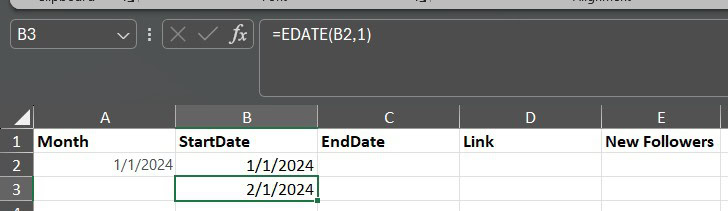
In cell B3, enter this formula:
=EDATE(B2,1)
Copy B3 down to generate future months. This advances by exactly one calendar month and handles year changes automatically.
Step 5: Generate the month EndDate automatically
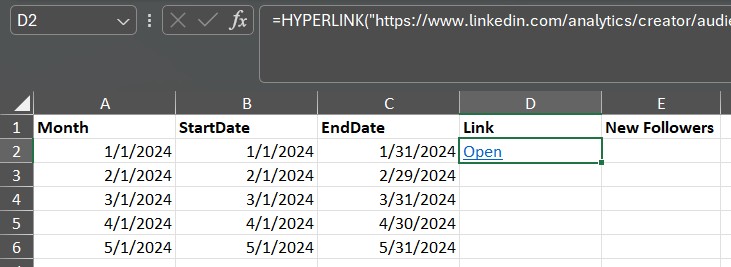
In cell C2, enter this formula:
=EOMONTH(B2,0)
Copy C2 down for all rows. This automatically returns the last day of each month, including February 29 during leap years.
Step 6: Create a clickable monthly analytics link
In cell D2, use this formula to generate a clean, clickable link labeled Open:
Confirm the date range matches the month you are tracking
Confirm the chart is in cumulative mode
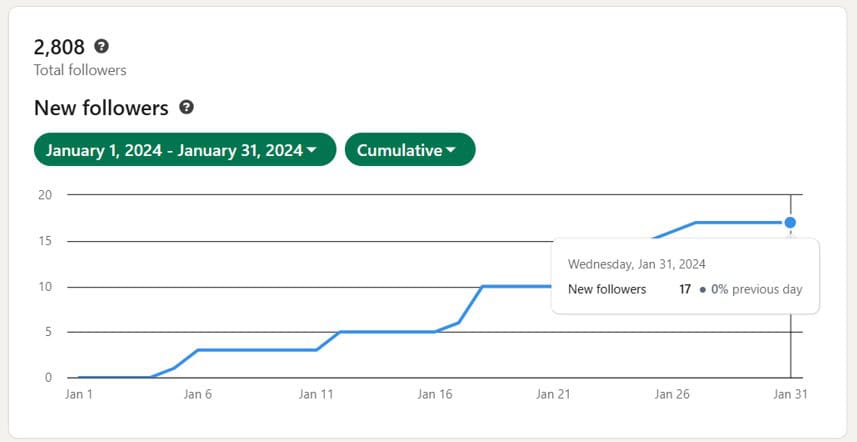
Hover the last point on the chart and record the cumulative new follower value
Enter that value in column E (New Followers)
Recommended tracking protocol
To keep your dataset consistent, run this process on the first day of each month for the prior month. Example: capture January’s value on February 1. If you do it mid-month, your interpretation of month-to-month changes becomes less clean.
How to use the dataset
Once you have monthly values, you can:
1. Create a line chart of New Followers by Month
2. Add a rolling 3-month average to smooth spikes
3. Compare follower growth to your posting frequency (if you track it)
4. Use the dataset in Tableau for a dashboard and blog content
Common troubleshooting
1. Excel shows numbers like 45322 instead of a date
This usually means the cell is formatted as a number. Change the column format to a date (Home menu, Number format, choose Short Date or Date).
2. The link opens but the date range does not look right
Make sure your StartDate and EndDate cells are true dates, and confirm the TEXT format in the formula is exactly yyyy-mm-dd.
3. You cannot access the Creator Audience analytics view
Your account may not have Creator Analytics enabled or available. Try enabling Creator Mode and then revisit the URL.
4. You do not see cumulative mode
LinkedIn occasionally changes analytics UI elements. If the view still shows follower growth but the cumulative toggle looks different, capture the monthly total using the last visible value in the chart.
Limitations to understand up front
LinkedIn personal profile analytics are not designed for exporting and trending. This method works best for follower growth because the Creator Audience view can provide a deeper history window than other profile metrics. Other personal profile metrics may not support consistent month-by-month extraction and may only be visible for shorter windows.
If you build a dashboard from this, document your capture schedule and save occasional screenshots so you have a clear audit trail for how the dataset was created.
Frequently asked questions
Does LinkedIn provide an official export for follower analytics?
No. Personal profile analytics do not currently support any export options. This method uses the Creator Audience analytics view with custom date ranges.
Does this work for company web pages?
Company web pages have built-in analytics exports. This method is most useful for personal profiles where export is not available.
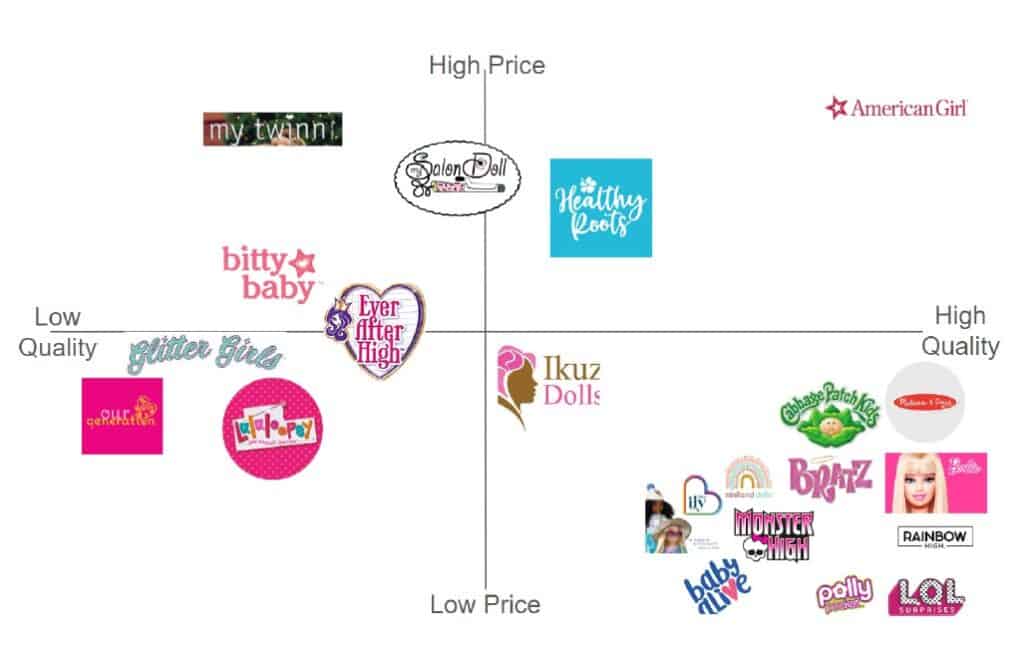
I have three daughters who are each brilliant in their own way. While none of them are planning a marketing career, my oldest, Chloe, created a doll industry market entry proposal for her March 2024 college marketing class that genuinely impressed me. It is thoughtful, research driven, and more practical than many real world marketing proposals I have seen, so with her permission I am sharing it here.
Executive Summary
In this presentation we will discuss how different brands have approached the doll
industry and how we can learn from it to create our own brand. We will find that
hair quality, articulation, and the story behind the dolls are what keep customers
interested and hold a doll’s value.
Introduction
Dolls have been around for a very long time, some dating all the way back from
2000 BC. These wooden dolls would lead us to where we are today- immersed in a
world filled with dolls of all kinds. Entering the market of dolls is tricky, due to the
wide variety and exhausted amount of types. In this report, the goal is to examine
our competition and find where we can best position ourselves.
Background
As we dive into our competition to see where best to position ourselves, we will be
finding an average price, and also an average quality put on a scale of 1 to 10 (1
being very cheaply made and 10 being very high quality).
Competition
Monster High Dolls
Average Price: $27
Average Quality: 8.5
Summary: Designed for upper aged girls, monster high dolls allow
tweens to move from the princesses and into a more mature doll.
LalaLoopsy Dolls
Average Price: $35
Average Quality: 7
Summary: These dolls are designed for younger girls and have fun
bright colors with each doll designed towards a hobby. They are very
unique looking.
American Girl Dolls
Average Price: $150
Average Quality: 10
Summary: These dolls have a wide variety of ages they can appeal to due to the historic stories attached to each doll, and they are made of durable material.
Barbie Dolls
Average Price: $25
Average Quality: 10
Summary: With an iconic brand and well known name, Barbie is easily
one of the best selling doll brands of today. They make dolls that are
suited to a wide variety of ages from young girls to adults who love to
collect.
Melissa and Doug Dolls
Average Price: $32
Average Quality: 10
Summary: This brand is notorious for good quality toys for young ages,
their dolls are no different, Little girls will love this
doll.
Disney ILY 4Ever Dolls
Average Price: $29.99
Average Quality: 8
Summary: Fun Disney paraphernalia put onto dolls can be any little Disney fanatics dream. With lots of accessories, these dolls bring Disney to the next level.
Baby Alive Dolls
Average Price: $20
Average Quality: 9
Summary: Made of soft material and well weighted, these cute cartoon baby dolls are perfect for little girls and good for mom’s who can’t stand the life-like dolls.
Bratz Dolls
Average Price: $30
Average Quality: 9
Summary: These fashion forward and edgy dolls are quite
controversial. Mom’s don’t like the thought of their young girls being
flooded with ideas of “slutty fashion”.
Miniland Dolls
Average Price: $30
Average Quality: 9
Summary: With a light vanilla scent, these baby dolls are durable and
diverse.
Our Generation Dolls
Average Price: $35
Average Quality: 6
Summary: These cheaper dolls are a great
knock-off version of American Girl Dolls. For
those looking for a cheaper option, they have
come to the right place.
Healthy Roots Dolls
Average Price: $85
Average Quality: 9
Summary: Designed with young black girls in mind, this doll brand
features curly synthetic hair and diversity amongst other doll brands.
Ikuzi Dolls
Average Price: $40
Average Quality: 8
Summary: A wide variety of doll types, Ikuzi offers diversity in both the
kinds of dolls and what they look like.
L.O.L. Surprise! Dolls
Average Price: $20
Average Quality: 10
Summary: Lots of fun accessories and stories. These
dolls are very popular with girls today.
Glitter Girls Dolls
Average Price: $37
Average Quality: 7
Summary: Designed for young girls, so they are made of durable
plastic. Fun fashion with a touch of glitter.
Polly Pockets
Average Price: $20
Average Quality: 9
Summary: Small plastic dolls with lots of accessories, Polly Pockets are perfect for tween aged girls.
Rainbow High Dolls
Average Price: $24
Average Quality: 10
Summary: These dolls each have a color they represent and come with
lots of accessories.
Ever After High Dolls
Average Price: $45
Average Quality: 7
Summary: Based on fairy tale characters, these dolls have a fun nostalgia linked with their backstory with cute movies attached.
My Twinn Dolls
Average Price: $120
Average Quality: 7
Summary: These dolls are now discontinued,
but are good to mention, due to their
uniqueness. A girl could send in a picture of themselves, and the
company would personally design a “twin” for them.
My Salon Dolls
Average Price: $113
Average Quality: 8
Summary: These dolls are known for having real hair! For the girls that
love to style and wash hair, these are the dolls for
them.
Bitty Baby Dolls
Average Price: $80
Average Quality: 7
Summary: These dolls are soft and a good size, although they are
pricey considering they are just a regular baby doll.
Cabbage Patch Dolls
Average Price: $35
Average Quality: 9
Summary: Cabbage patch dolls are a long standing
brand because they have branded their product as
“adoptable”. These soft huggable bodies and yarn
hair warms your heart.
Results
Discussion and Recommendations
Based on the research that I have done, customers are more likely to spend money
on a doll when there is a story attached to it and there is a unique aspect. If the doll
is like any other, a customer won’t spend the money. Quality is important, but if
you’re above an 8 then you are pretty safe. Another observation is that customers
are very picky on the quality of their hair. When a customer complains about the
quality of the doll, they either mean the articulation or the hair.
My recommendation is that we find a niche aspect we can bring to the doll world
and put the majority of our money towards good articulation and hair.
Future Actions
As a company, I propose we make a line of collectible dolls for adult women. We can give each doll a unique background or history and focus our efforts on giving them fun outfits and lovely hair. Dolls are worth more and keep their value better when they have good quality and are beautifully made.
Conclusion
To conclude, as a company entering the doll industry, the research we have done
and analysis we have found, we have a good understanding of how best to find an
audience and keep them captivated.
Lessons Learned
This project was really eye opening as to what a marketer does. My Dad does digital
marketing and for years I have wondered what exactly he does every day. I feel this
project allowed me to see a little bit more into what my Dad does. I didn’t expect to
learn as much as I did with this. Reading through customer reviews and seeing the
different kinds of dolls available made me realize how much information is really
out there if you are going into a certain industry and want to make a new product.
I don’t think I will ever be a marketer, but doing this project gave me some new
found respect for those that do. I always assumed marketing was just a little artsy
business major, but I now understand how much analysis and thought goes into
simply putting out a product.
Something else I found interesting, is that my original thought as to what was going
to keep customers interested in dolls was not what it turned out to be. I thought
that the clothing and accessories were going to be what kept audiences captivated,
but it was their hair, articulation, and stories. It was fun to feel like I was learning
something new about a subject I have known about for years.
Overall, this was a fun project that allowed me to get hands on with the marketing world.
1. Meta doubles down on AI infrastructure, with direct implications for ad delivery
What changed: Meta reported strong Q4 2025 results and framed 2026 as a major AI investment year, including sharply higher capital spending to build AI capacity.
Key players: Meta, Facebook, Instagram, WhatsApp.
Why it matters: If Meta keeps improving AI-driven delivery, creative selection, and recommendation feeds, expect continued volatility in organic reach, more algorithmic distribution, and a higher premium on creative testing discipline.
Implications: Audit your creative pipeline for speed and variation. Expect performance gains to concentrate in accounts with strong creative iteration, clean conversion signals, and stable measurement.
What changed: Credible reporting accelerated around OpenAI testing or exploring ad models for ChatGPT, raising the core tension between monetization and user trust.
Why it matters: If ChatGPT becomes an ad channel, marketers will need a new playbook. Ad adjacency to answers creates brand safety and credibility risk, and measurement expectations may not match search or social.
Implications: Treat early formats as brand safety first. Plan for conservative measurement, careful creative, and tight governance, especially for high-trust categories.
What changed: Reporting centered on a US ownership and governance structure designed to keep TikTok operating while addressing data and security concerns.
Key players: TikTok, ByteDance, US regulators, potential US operating partners.
Why it matters: Channel continuity is not the same thing as channel stability. Even if TikTok stays available, data handling, API access, measurement partners, and governance controls can shift.
Implications: Keep TikTok in the mix, but protect the business with diversification. Make sure creators, landing pages, and audience capture are portable to Reels and Shorts.
4. Google Ads opens the door to prediction market advertising under strict conditions
What changed: Google updated policy to allow ads for US prediction markets for eligible, regulated entities with certification requirements.
Key players: Google Ads, CFTC-regulated markets, certified advertisers.
Why it matters: This is another sign that Google expands monetizable categories while building compliance gates that favor established, regulated players.
Implications: If you operate in regulated verticals, expect more policy-driven constraints, more certifications, and higher friction in creative and landing page compliance.
5. YouTube pushes deeper into commerce with shoppable ads on connected TV
What changed: YouTube continued expanding shopping formats, including shoppable experiences tied to connected TV viewing.
Key players: YouTube, Google Merchant Center, retail and direct-to-consumer advertisers.
Why it matters: This tightens the loop between video reach and purchase intent. If it scales, it changes how you evaluate YouTube from awareness channel to measurable commerce contributor.
Implications: Make sure your product feed and creative are ready. Plan tests that measure incremental lift, not just clicks, especially on cross-device journeys.
6. Email and lifecycle marketing tools accelerate AI feature releases
What changed: Email platforms announced more embedded AI, including send-time optimization, subject line generation, and personalization workflows.
Key players: Campaign Monitor and competitors across the email and automation ecosystem.
Why it matters: The competitive advantage in email is shifting toward operational excellence and testing velocity. AI features can help, but only if you have clean segmentation, strong offers, and disciplined measurement.
Implications: Use AI for iteration speed, not strategy. Guard brand voice, validate uplift with holdouts, and keep deliverability fundamentals front and center.
7. Google clarifies what not to do when trying to optimize content for AI answers
What changed: Google spokespeople pushed back on the idea that you should rewrite content into small chunks specifically for AI outputs.
Key players: Google Search, SEO community, content teams.
Why it matters: AI discovery does not replace the need for comprehensive, helpful content. Over-optimizing for a guessed AI preference can degrade user experience and weaken authority signals.
Implications: Maintain strong information architecture, clear topical coverage, and originality. Focus on usefulness first, then make content scannable without turning it into fragments.
8. SEO volatility continues, even without a headline update announcement
What changed: Volatility trackers flagged sharp swings in rankings late January, reinforcing the reality of continuous algorithm changes and unconfirmed updates.
Key players: Google Search, third-party volatility tools, SEO teams.
Why it matters: If the baseline is continuous adjustment, waiting for “the update to finish” becomes a broken model. The better model is constant content quality, technical stability, and measurement discipline.
Implications: Track by intent category and business outcomes, not just rankings. When volatility hits, diagnose content gaps and quality issues before changing architecture or internal linking.
9. Demand Gen keeps evolving, and Maps placement control became a planning topic
What changed: Google Ads introduced (or expanded) channel control for Demand Gen to include Google Maps, signaling continued maturation of Demand Gen as a multi-surface paid format.
Key players: Google Ads, performance teams, creative teams.
Why it matters: More placement control can reduce waste and improve targeting fit, but it also increases the need for better creative strategy and cleaner measurement comparisons across surfaces.
Implications: Treat Demand Gen like a real channel with a test plan. Define what success means, segment learnings by placement, and validate value with lift studies or tighter experiments.
10. Bot traffic as a planning factor is moving from fringe to baseline analytics hygiene
What changed: More marketers are treating bot and invalid traffic as a first-order measurement issue, not an edge case, because it distorts conversion rates, attribution, and CRO testing.
Key players: Analytics teams, paid media teams, fraud and verification vendors, websites with lead-gen funnels.
Why it matters: If bot traffic is inflating sessions or events, you can end up optimizing creative, audiences, and landing pages toward noise and wasting spend while “improving” dashboards.
Implications: Tighten filters and validation. Compare server-side logs and analytics. Watch spikes in direct, unknown referrers, and low-engagement sessions. Protect experiments by excluding suspicious traffic where possible.
Blockbuster, once the king of video rentals, failed to adapt to the digital revolution and paid the ultimate price. In 2000, Blockbuster infamously passed on buying Netflix for $50 million, dismissing the then-small DVD-by-mail upstart as a niche play.
A decade later, Blockbuster went bankrupt as Netflix (and emerging streaming technology) stole its customers and rendered the video rental model obsolete.
This case is a classic cautionary tale of a market leader’s failure to innovate and put customers first, and it holds enduring lessons for modern marketers navigating disruption.
Company Involved
The brand at the center is Blockbuster. For years, Blockbuster was synonymous with home movie rental, operating thousands of video stores worldwide at its peak. Its story intersects with Netflix, the then-fledgling competitor that Blockbuster once had a chance to acquire – a chance that, in hindsight, could have changed the course of media history.
Marketing Topic
Strategy: business model innovation and failure to adapt. Digital Disruption: technological change overturning an industry. Customer Experience: convenience and removing friction like late fees.
Public Reaction or Consequences
Initially, many consumers remained loyal to Blockbuster, but frustration was growing. Late fees were a huge pain point – Blockbuster made $800 million a year from late fees around 2000, but that policy bred customer resentment. Netflix capitalized on this by offering no late fees and easy-by-mail rentals, winning praise from movie lovers who were tired of punitive charges. In response, Blockbuster launched a heavily advertised “No More Late Fees” campaign in 2005, but the fine print revealed sneaky fees (like restocking charges) that led to public backlash and legal action from 47 state attorneys general. The media lampooned Blockbuster’s half-hearted changes, and consumers increasingly saw the brand as out-of-touch. By the time Blockbuster filed for bankruptcy in 2010, the public narrative was clear: the once-dominant giant had failed to give people what they wanted – and paid dearly for it.
Why It Matters Today
Disruption can hit any industry: Blockbuster’s downfall shows how quickly digital innovation can upend market leaders, a warning that echoes today amid AI and other emerging tech upheavals.
Customer-centric innovation wins: The case highlights the importance of removing friction and focusing on customer experience (Netflix’s no-fee, on-demand model) in building loyalty.
Adapt or perish: In a fast-changing landscape, even big brands must continually reinvent their strategy. Blockbuster’s fate underscores that clinging to old models instead of disrupting yourself is a recipe for irrelevance.
3 Takeaways
1. Never stop innovating in the face of change. If you don’t disrupt your own business model, a competitor will – as Blockbuster learned the hard way.
2. Put customer experience over short-term profit. Profiting from customer pain points (like late fees) breeds backlash and opens the door for friendlier alternatives.
3. Don’t underestimate new competitors or channels. Dismissing emerging trends (online rentals, streaming) as “hype” can blind you to shifting consumer expectations and cost you your crown.
Notable Quotes and Data
John Antioco (Blockbuster CEO, 2000): Netflix was a “niche business” and “the dot-com hysteria is completely overblown.” (explaining his rejection of a Netflix buyout)
Marc Randolph (Netflix cofounder): “If you are unwilling to disrupt yourself… someone else will disrupt your business for you.”
$800 million in late fees (2000): the annual revenue Blockbuster earned from late charges, at the cost of massive customer frustration.
Full Case Narrative
In the 1990s, Blockbuster was an entertainment powerhouse. The chain had a ubiquitous presence – at its peak in 2004, Blockbuster ran over 9,000 stores worldwide, with $6 billion in annual revenue. Renting movies was a weekly ritual for many families, and Blockbuster enjoyed near-monopoly status in the home video market. However, by the end of that decade, storm clouds were gathering in the form of new technology and shifting consumer habits.
Netflix’s Emergence: In 1997, a small startup called Netflix began offering DVD rentals by mail. Netflix’s founders, Reed Hastings and Marc Randolph, pitched their model as a convenient alternative to driving to a store – a way to get movies without late fees or hassles. Initially, Netflix was very niche: early adopters of DVD players and cinephiles willing to wait for discs by mail. By 2000, Netflix was still unprofitable and relatively small, but it was growing. That year, Hastings and Randolph approached Blockbuster about a buyout. Famously, they offered to sell Netflix to Blockbuster for just $50 million – essentially inviting Blockbuster to absorb their online rental service and run it while Netflix would handle the digital side. Blockbuster’s CEO at the time, John Antioco, laughed off the idea. He and his team saw Netflix as an insignificant player and felt DVD-by-mail was no real threat to their lucrative storefront business. Antioco’s stance was summed up by his remark that “dot-com hysteria” was overblown hype. With the dot-com bubble bursting in 2000, this dismissive attitude wasn’t entirely crazy – but it was short-sighted. Blockbuster declined the offer, leaving Netflix to forge ahead on its own.
The Missed Opportunity: Blockbuster’s decision not to buy Netflix has become legendary in business circles – a what-if scenario as iconic as any. At the time, Blockbuster was a giant and Netflix a minnow. Blockbuster’s confidence bordered on complacency. It’s worth noting that even Netflix’s founders didn’t fully realize how big their idea would become; they themselves had set a relatively low price on their company. Yet, they understood something fundamental that Blockbuster didn’t: customers hated late fees and loved convenience. Netflix’s subscription model (one monthly fee for unlimited rentals, no due dates or late fees) directly attacked Blockbuster’s biggest pain point. In 2000 alone, Blockbuster earned around $800M from late fees, but that revenue came at the cost of customer goodwill. By refusing to adapt their model (or buy a competitor that had), Blockbuster essentially handed Netflix a golden opportunity.
Blockbuster Strikes Back (Too Little, Too Late): As Netflix gained traction through the early 2000s, Blockbuster eventually realized this wasn’t just a fad. In 2004, Blockbuster launched an online DVD subscription service to compete with Netflix, and later a hybrid online-and-store program called “Total Access.” They even started advertising “No More Late Fees” in 2005, acknowledging the negative sentiment late fees caused. However, these moves were either half-hearted or costly missteps. The “No Late Fees” campaign became a PR fiasco – it turned out Blockbuster would still charge customers if they kept a movie more than a week or so (by selling the movie to them and charging a restocking fee on return). This fine print felt like a bait-and-switch. Dozens of state Attorneys General pounced, investigating the advertising as deceptive. Blockbuster ended up settling with 47 states and paying fines to cover refunds. The incident not only hurt Blockbuster’s reputation, but also underscored an important difference in philosophy: Netflix built goodwill by eliminating late fees entirely, while Blockbuster couldn’t quite let go of that crutch.
Around the same time, Blockbuster’s internal strategy was in turmoil. The company’s leadership and shareholders were divided on how aggressively to pursue the new online model. Blockbuster’s CEO John Antioco did push for the online platform and the end of late fees, recognizing the need to change. But these changes cut into short-term profits, upsetting shareholders. Activist investor Carl Icahn led a revolt over Antioco’s spending on new initiatives and what he viewed as the CEO’s high compensation. The conflict led to Antioco’s departure in 2007. The new CEO, James Keyes (formerly of 7-Eleven), took a much more cautious approach. Keyes believed Blockbuster’s strength was its physical presence and that many customers still preferred in-store browsing. In one interview, he even expressed skepticism about streaming and digital on-demand video, comparing it to people still preferring bookstores for new releases. Under Keyes, Blockbuster scaled back its aggressive online efforts – effectively relinquishing the nascent online rental war to Netflix.
The Netflix Ascendancy: Meanwhile, Netflix kept innovating. In 2007, Netflix introduced video streaming for subscribers, just as broadband internet was becoming common. This move proved prophetic: while still offering DVDs, Netflix prepared for a future beyond physical discs. Blockbuster, on the other hand, was hamstrung by its brick-and-mortar legacy. It did make a foray into streaming by acquiring a small service (Movielink) in 2007, but by then Netflix’s brand and user base were far ahead. Redbox kiosks also entered the scene, undercutting Blockbuster’s rentals with $1-a-night DVD vending machines. Blockbuster’s massive store network – once an advantage – became a liability as foot traffic declined. The company had long-term leases and high overhead costs that Netflix and Redbox didn’t bear.
By 2010, the situation was dire. Blockbuster’s revenue was plummeting and the company was burdened with nearly $1 billion in debt. Stores were closing by the hundreds. That year, Blockbuster’s stock was delisted from the NYSE, and in September 2010 the company filed for Chapter 11 bankruptcy protection. It was an astonishing fall for a company that just a few years prior had been on top. In the bankruptcy auction, a winning bid of $320 million from Dish Network bought Blockbuster’s remaining assets in 2011 – a tiny fraction of Blockbuster’s former multibillion-dollar valuation.
Reflection – Why Blockbuster Failed: There are many reasons often cited for Blockbuster’s demise. Some say it was simply outdated technology meeting new tech (VHS and DVD rentals giving way to streaming). Others point to mismanagement and missed opportunities. In truth, it was a combination. Blockbuster failed to anticipate how quickly consumer preferences were changing. The convenience and simplicity offered by Netflix’s subscription model addressed unmet customer needs (no due dates, no driving to the store, personalized recommendations online). Blockbuster did too little, too late to counter that. Strategically, Blockbuster was wed to a business model – retail storefronts – that had been hugely profitable, and it hesitated to disrupt that cash cow. Ironically, Netflix’s founders initially wanted to partner with Blockbuster to combine the best of both worlds (online + stores). Blockbuster’s rejection of that idea, and later half-measures, meant that Netflix eventually beat Blockbuster at both convenience and content delivery.
Crucially, Blockbuster’s marketing and branding strength (everyone knew the name and their blue-and-yellow tickets) couldn’t save it when the value proposition no longer appealed. All the Super Bowl ads and slogans (“Make it a Blockbuster Night!”) weren’t enough to overcome the fact that Netflix offered a fundamentally better customer experience. This case underscores that effective marketing isn’t just about campaigns – it’s about aligning to what customers want and where the market is headed. Blockbuster’s story has become a parable in business schools and marketing circles about the perils of complacency.
Timeline
1985: Blockbuster is founded and quickly grows into a video rental titan through the 1990s.
2000: Netflix offers to sell itself to Blockbuster for $50 million; Blockbuster’s CEO rejects the deal, viewing Netflix’s online model as trivial.
2004: Blockbuster reaches its peak with 9,100 stores and $6 billion in revenue worldwide. The company launches an online DVD rental service to compete with Netflix.
2005: Blockbuster advertises “No More Late Fees.” The campaign backfires when fine print reveals hidden fees; 47 states take legal action, forcing Blockbuster to modify ads and refund customers.
2007: Netflix introduces streaming video for subscribers, accelerating the shift to online viewing. Blockbuster’s longtime CEO John Antioco resigns under investor pressure; James Keyes becomes CEO and emphasizes store-based strategy while downplaying the threat of streaming.
2010: With revenue in freefall and nearly $1 billion in debt, Blockbuster files for bankruptcy protection. Its store count drops rapidly as outlets close nationwide.
2011: Dish Network acquires Blockbuster out of bankruptcy for $320 million and attempts to integrate the brand into its services. Blockbuster’s remaining company-owned stores continue to shut down.
2019: The once-mighty chain is reduced to a single independent Blockbuster store (in Bend, Oregon) still operating as a nostalgic holdout – the last relic of an era.
What Happened Next?
After bankruptcy, Blockbuster never recovered as a national brand. Dish Network initially kept about 1,700 stores open and experimented with using the Blockbuster brand for on-demand video, but these efforts fizzled amid heavy competition. By 2014, Dish had closed all remaining corporate-owned Blockbuster stores. The last store in Bend, Oregon – a locally franchised outlet – survived by embracing nostalgia and community support (it even became the subject of a 2020 Netflix documentary about itself). Blockbuster’s marketing today is essentially nonexistent, aside from occasional social media nostalgia posts and the odd “remember when?” viral content. In 2023, a cryptic revival buzz sparked when Blockbuster’s website briefly went live again, but as of now no real comeback has materialized.
On the flip side, Netflix grew into a streaming behemoth with hundreds of millions of subscribers worldwide, and it now produces award-winning original content. Netflix’s marketing emphasizes innovation and personalization – the very values Blockbuster had struggled to adopt. The contrast between the two companies’ trajectories couldn’t be more stark. For modern marketers, Blockbuster’s demise remains a vivid reminder that even legendary brands can vanish if they fail to keep up with consumer trends and tech disruption.
One Sentence Takeaway
Even a dominant market leader can fall when it stops innovating and ignores evolving customer needs – Blockbuster’s fate is a lesson to never grow complacent.