case study oreo dunk in the dark

Case Study: Oreo’s “Dunk in the Dark” – Real-Time Marketing That Won the Super Bowl

Reading Time: 6 minutes

Brief Summary

During Super Bowl XLVII on February 3, 2013, a sudden 34-minute power outage plunged the stadium into darkness. Oreo’s social media team immediately seized the moment: within minutes they tweeted an image of a single Oreo cookie on a dark background with the caption “Power Out? No problem. You can still dunk in the dark.”

This quick-witted real-time response quickly went viral, earning thousands of social shares and extensive media coverage. The incident is celebrated as one of the most iconic examples of agile, creative social media marketing.

Company Involved

Oreo is a popular sandwich cookie brand owned by Mondelēz International (formerly Kraft/Nabisco). In this case study, Oreo’s marketing and social media agencies played key roles. The work was led by Leo Morejon and a 15-person team at the digital agency 360i, in coordination with partners such as Wieden+Kennedy, Mediavest, and Weber Shandwick. This multi-agency “war room” was assembled to support Oreo during the Super Bowl, preparing to respond to any breaking moment in real time.

Marketing Topic

This case exemplifies real-time social media marketing and “newsjacking” during live events. Rather than relying on a traditional Super Bowl TV ad, Oreo capitalized on an unexpected cultural event (the power outage) to amplify its brand message. The campaign demonstrates how brands can use social media and agile content strategies to engage audiences instantly, aligning marketing communications with current events as they unfold.

Public Reaction or Consequences

The public reaction was overwhelmingly positive. Oreo’s tweet was celebrated for its humor and timing, and it rapidly became a viral sensation. In the hour after posting, the tweet received over 10,000 retweets and 18,000 likes, with similar high engagement on Facebook. Media outlets around the world praised the stunt – some called it “one of the most buzz-worthy ads of the Super Bowl” even though it was not a paid commercial. The campaign earned Oreo millions of free media impressions (estimated at over USD 525 million) and hundreds of news headlines globally. It also won industry awards: Oreo and its agency 360i received a Cannes Silver Lion for Best Use of Digital Direct Marketing and a Bronze Lion for Best Viral Advertising. Overall, consumers saw Oreo as a clever and agile brand, and many marketers studied the case, often referring to an “Oreo moment” when discussing real-time social marketing.

Why It Matters Today

This event remains a landmark example of the power of real-time marketing and social media engagement. It showed that even a small, reactive post can achieve massive impact if it is timely and on-brand. Marketers today still reference Oreo’s blackout tweet as a benchmark: being prepared to respond in seconds to trending events can greatly boost visibility and brand affinity. The “Dunk in the Dark” case is frequently taught in marketing courses as evidence that bold creativity and speed can turn unexpected situations into marketing victories. In an era of second-screen viewing and instant communication, Oreo’s success highlights why brands invest in social listening and prepared “war rooms” to capture cultural moments.

3 Takeaways

1. **Speed and Relevance Matter:** Oreo’s team was ready to move within minutes. Being prepared to react instantly to real-world events can capture audience attention more effectively than pre-scheduled ads.

2. **Simplicity is Powerful:** A short, witty message paired with a clear visual (the Oreo cookie) resonated widely. Even minimal text – just a few words – made the tweet memorable and highly shareable.

3. **Preparation Pays Off:** The Oreo team had trained for real-time marketing (for example, through prior campaigns like “Daily Twist”) and set up an on-site command center. This preparation – including planning alternate versions of the tweet – enabled them to execute flawlessly under pressure.

Notable Quotes and Data

“Power Out? No problem. You can still dunk in the dark.” – Oreo’s tweeted caption (Feb 2013)

“It was the tweet heard around the world, with over 15,000 retweets…” – Digiday recounting the campaign

“It definitely makes the brand seem like a more clever, more interesting, sharp brand.” – Marketing professor Jonah Berger on Oreo’s real-time marketing

15,000 retweets; 20,000 Facebook likes; USD 525 million in earned media impressions

Cannes Lions 2013: Silver (Digital Direct Marketing), Bronze (Viral Advertising)

Full Case Narrative

On February 3, 2013, during Super Bowl XLVII in New Orleans, a power outage suddenly darkened the stadium. As nearly 70 million viewers tuned in, Oreo’s social media team quickly recognized a unique opportunity. Within minutes of the outage, the Oreo Twitter account posted an image of a lone Oreo cookie against a dark background, captioned with the now-famous line: “Power Out? No problem. You can still dunk in the dark.” This quick, tongue-in-cheek response turned a brief unexpected event into a marketing moment.

The Oreo team had anticipated the need to react rapidly. They had set up a Super Bowl “war room” with writers, designers, and strategists on standby. According to reports, the group even prepared alternate tweet images ahead of time (one in team colors for each Super Bowl finalist). When the blackout occurred around 8:46 p.m., the team met the challenge in under two minutes. The timely post immediately drew attention, showing how pre-planning and an empowered social team can capitalize on breaking news.

The tweet went viral almost instantly. As Wired reported, it accumulated nearly 15,000 retweets and 20,000 Facebook likes within an hour:contentReference[oaicite:7]{index=7}. Fans and journalists enthusiastically shared the image; Tumblr users even proclaimed “Oreo won the Super Bowl blackout.” This real-time engagement far exceeded the exposure of many traditional ads. Oreo’s social followers spiked (about 8,000 new Twitter followers and tens of thousands of Instagram followers in the days following), and thousands of user-generated photos of Oreo cookies flooded social networks.

This success was built on Oreo’s already-strong digital presence. The brand had spent the year leading up to the Super Bowl on creative social projects (including a 100-day “Daily Twist” campaign celebrating its 100th anniversary). As 360i’s CEO later explained, Oreo had “muscle memory” for commenting on culture because of that work:contentReference[oaicite:8]{index=8}:contentReference[oaicite:9]{index=9}. The blackout tweet, while spontaneous in feel, was actually the result of careful strategy and rehearsal. The combination of speed, cultural relevance, and a message aligned with Oreo’s brand identity made the stunt legendary.

The campaign won instant acclaim. Industry judges awarded Oreo two Cannes Lions for the effort, and marketing experts frequently cite the tweet as a defining example of modern advertising. In hindsight, the “Dunk in the Dark” campaign is often described as a turning point, illustrating how a nimble social strategy can match or outperform expensive ad buys. The immediate success cemented Oreo’s reputation as an innovative, consumer-savvy brand and influenced how companies plan Super Bowl marketing.

Timeline

Feb 3, 2013: During Super Bowl XLVII in New Orleans, a 34-minute power outage occurs in the third quarter. At about 8:48 p.m., Oreo’s social media team tweets its blackout image (“You can still dunk in the dark”).

Feb 3, 2013 (minutes later): The tweet begins to spread rapidly. By 9:00 p.m., social metrics show over 10,000 retweets and 18,000 likes, and the post is being shared by media outlets and fans worldwide:contentReference.

Feb 4, 2013: News articles and blog posts highlight Oreo’s tweet as a brilliant real-time marketing move. Social media analysis shows a significant increase in Oreo’s followers and engagement. The campaign becomes a trending topic.

June 2013: At the Cannes Lions Festival, Oreo (and 360i) wins a Silver Lion (Digital Direct Marketing) and a Bronze Lion (Viral Advertising) for the blackout tweet campaign.

2013–2025: The “Dunk in the Dark” tweet remains a teaching example in marketing and a benchmark for real-time social strategies. Oreo continues creative social campaigns, and other brands attempt similar real-time responses during events (often citing the Oreo example).

What Happened Next?

Following the Super Bowl success, Oreo’s marketing team built on its social momentum. The brand continued to engage consumers with creative content (such as holiday-themed posts and interactive apps) that leveraged its high profile. The concept of real-time marketing gained traction in the industry: brands set up dedicated teams and war rooms for events, hoping to replicate Oreo’s agility. Some succeeded with witty social posts, while others learned that timing and relevance are critical. Meanwhile, Oreo’s tweet entered advertising lore; marketers frequently reference the “dunk in the dark” moment as inspiration. The campaign also influenced Oreo’s parent company, Mondelēz, to keep prioritizing digital and social initiatives.

One Sentence Takeaway

Quick, clever social media posts that tap into current events can achieve tremendous engagement and brand impact, often far surpassing traditional ads.

Sources and Citations

Angela Watercutter, “How Oreo Won the Marketing Super Bowl With a Timely Blackout Ad on Twitter,” Wired (Feb 2013)

Valens Research, “Dunk in the Dark – A single tweet is all this brand needed to win the Big Game,” (2016)

Shareen Pathak, “The definitive oral history of the Oreo ‘You can still dunk in the dark’ Super Bowl tweet,” Digiday (Feb 2017)

Morten Strand, “The Impact of Real Time Marketing: How to Implement Real Time Market Research,” Digital Marketing Magazine (Apr 2015)

Leo Morejon, “Oreo Super Bowl Blackout Tweet: A Case Study (2025 Edition),” LeonardoM.com (2025)

Case Study: Oreo’s “Dunk in the Dark” – Real-Time Marketing That Won the Super Bowl Read More »
google adsense balance

Making Sense and Cents from Google AdSense

Reading Time: 3 minutes

When I first added Google AdSense to my website, it wasn’t about chasing ad revenue. I wanted to understand how it really worked—how websites earn money from ads, what trade-offs exist, and whether it’s even realistic to make enough to cover basic website costs.

This post comes from more than a year of experimenting, learning, and slowly improving my website to see what’s possible.

It actually took me three tries to get approved for Google AdSense. After each rejection, I devoted more time to creating meaningful content that was better organized and implementing more SEO best practices. Google doesn’t provide much detail for why you’re not approved, but looking back, I knew I didn’t yet have the quality or depth required. That process turned out to be one of the most valuable parts of the journey.

How AdSense Earnings Are Calculated

Google AdSense earnings are primarily based on two components: clicks and impressions.

Clicks × CPC (Cost Per Click): You earn money every time a visitor clicks on an ad, and the amount depends on what advertisers in your niche are willing to pay.

Impressions × CPM (Cost Per Thousand Impressions): Even if no one clicks, you can still earn a small amount for each ad displayed on your pages.

The estimated earnings formula looks like this:

Estimated Earnings = (Clicks × CPC) + ((Impressions / 1000) × CPM)
  

For most new websites, the majority of revenue comes from clicks, with a much smaller portion coming from impressions. AdSense reports this automatically, but breaking it down helps you understand what really drives your income. However, even if you do earn consistently, Google will not send payment until your account balance reaches the payout threshold—$100 USD in most countries. That means you must accumulate at least $100 in total earnings before receiving your first payment.

My AdSense Journey in Numbers

Here’s a look at my own performance over several months. These figures include estimated earnings, page views, and the resulting Page RPM (revenue per thousand page views).

MonthEstimated EarningsPage ViewsPage RPM
July 2025$0.12157$0.76
August 2025$0.90685$1.31
September 2025$1.67979$1.71
October 2025$2.111,213$1.74

Across these months, my website averaged roughly $1.40–$1.70 per thousand page views. That’s typical for a newer website without heavy ad optimization or niche targeting.

The Math Behind $100 a Month

One of the biggest questions I had early on was: how much traffic would I need to earn just $100 in a month?

The formula is simple:

Required Page Views = (100 / RPM) * 1000
  

Using my average RPM of about $1.70, here’s what that looks like:

RPMPage Views Needed for $100
$1.50≈ 66,667
$5.00≈ 20,000
$10.00≈ 10,000
$25.00≈ 4,000

At my current rate, I’d need nearly 59,000 monthly page views to reach $100. That’s a humbling but eye-opening number. It shows that while AdSense can generate passive income, it takes serious traffic to make it meaningful.

The Trade-Off: Ads vs. Audience Experience

Of course, there’s a trade-off. I could increase my RPM by adding more ad placements or using more aggressive formats, but every extra ad makes the user experience worse. Pop-ups, sticky banners, or excessive in-content ads may boost short-term revenue but risk annoying visitors and reducing trust.

For me, it’s a balance. I want to understand ad performance and potential, but not at the cost of driving readers away. Knowing that I’d need tens of thousands of page views to make even $100 a month helps keep expectations realistic—and priorities focused on building value first, not clutter.

Lessons Learned After a Year with AdSense

1. Getting approved requires patience and quality content. Google doesn’t want thin or incomplete websites.

2. Most small sites earn only a few dollars a month at first. RPM varies by niche, region, and ad type.

3. The biggest factor you control is your content. More useful, searchable, and shareable content means more qualified traffic—and that’s the foundation for every other monetization option.

4. AdSense can teach you a lot about digital advertising economics, even if you never make much money from it. For me, the insights have been the real value


After a year of experimentation, I’ve come to see Google AdSense as a learning tool rather than a paycheck. It’s shown me exactly what’s possible—and what it really takes—to turn traffic into income without compromising the experience for readers.

Making Sense and Cents from Google AdSense Read More »

content marketing made easy

Content Marketing Made Easy by John Nemo Book Summary

Reading Time: 3 minutes

Top Three Quotes

  1. “Information + Entertainment = Infotainment.”
  2. “Content has become the currency you use to buy attention.”
  3. “People buy based on emotion, not logic—and your content must make them feel something.”

Book Theme

Content Marketing Made Easy centers on how to attract, engage, and convert your ideal audience through personality-driven, emotionally resonant content. It explains content marketing as both art and science—earning attention by giving value before asking for anything in return.

Why You Should Read This Book

Read Content Marketing Made Easy if you want a practical, story-rich, and highly actionable guide to modern marketing. Nemo translates decades of experience into a relatable framework anyone—entrepreneurs, freelancers, coaches, or marketers—can apply to build a loyal audience using blogs, podcasts, videos, and social media.

Key Ideas and Arguments Presented

  • Content = Currency – Attention must be earned through valuable, entertaining content.
  • Infotainment Wins – Combine useful information with engaging storytelling.
  • Emotion Drives Decisions – People buy based on emotion and justify later with logic.
  • Personality is Power – Infuse your unique voice into your content to stand out.
  • Niche Focus – “The riches are in the niches.” Hyper-targeted audiences convert best.
  • Value First Marketing – Offer free, high-quality content before making any ask.
  • Storytelling Converts – Real stories create emotional connections and memorability.
  • Automation and Systems – Use funnels, email sequences, and scheduling to scale impact.
  • The One-Question Survey – Ask audiences directly what they want most from your content.
  • Repurpose on Purpose – Reuse and reshape strong content across multiple formats.

Book Outline

  • Chapter 1: Step Zero – What is Content Marketing and How Does it Work?
  • Chapter 2: Seamless Selling – Content That Converts
  • Chapter 3: Idea Factory – How to Come Up With Content Your Audience Will Go Bananas For
  • Chapter 4: Gone Fishin’ – How to Set Up a Sales Funnel Using Content
  • Chapter 5: Create vs. Curate – Which One Should You Do?
  • Chapter 6: Simply Irresistible – How To Create Magnetic Content
  • Chapter 7: The Secret Sauce Nobody Else Can Replicate
  • Chapter 8: You Have To See It To Believe It
  • Chapter 9: Can We Talk? Listen To This Advice
  • Chapter 10: The Single Best Content Marketing Tool I’ve Ever Seen
  • Chapter 11–17: Strategies on social media, repurposing, automation, ROI, and next steps.
  • Afterword: Encouragement and reflection on faith, purpose, and storytelling.

Key Takeaways

  • Great content blends emotion, entertainment, and education.
  • Marketing today is about earning trust, not demanding attention.
  • Personal storytelling humanizes brands and attracts the right clients.
  • Asking your audience what they want outperforms guessing.
  • Content marketing is a repeatable system, not random inspiration.
  • Automation allows you to scale personal connection without burnout.
  • Success follows consistency and authenticity, not viral moments.

Key Techniques

  • Infotainment Formula: Information + Entertainment = Engagement.
  • One-Question Survey: “What do you want to know most about [topic]?”
  • Niche Targeting: Create audience-specific content with tailored language.
  • Value Ladder Funnel: Start with free, helpful content → build trust → offer paid products.
  • Repurposing System: Transform one strong idea into blogs, videos, and social posts.
  • Story Framework: Use personal experiences and customer stories to teach and sell.
  • Automation Tools: Calendars, autoresponders, and outsourcing to streamline workflow.

Author’s Qualifications

John Nemo is a bestselling author, LinkedIn marketing expert, and founder of Nemo Media Group. With a background in journalism and public relations, he has helped thousands of entrepreneurs, coaches, and businesses build lead-generating content strategies through his books, podcasts, and online courses.

Comparison to Similar Books

Comparable to:

However, Nemo’s tone is more conversational, faith-based, and deeply personal, combining step-by-step marketing guidance with motivational storytelling.

Target Audience

  • Entrepreneurs and solopreneurs
  • Coaches and consultants
  • Small business owners
  • Digital marketers and content creators
  • Freelancers building personal brands
  • Nonprofits and ministries wanting authentic engagement
  • Corporate professionals transitioning to independent work

Critical Response to the Book

Readers and influencers—including Chris Brogan, John Lee Dumas, and Bob Burg—praise the book for its authenticity, humor, and clarity. It is often cited as a refreshing antidote to over complicated marketing jargon, emphasizing real human connection and storytelling that sells naturally.

One Sentence Takeaway

Content marketing succeeds when you stop selling and start connecting – creating valuable, emotionally engaging stories that build trust, relationships, and results.

Content Marketing Made Easy by John Nemo Book Summary Read More »

the new science of customer relationships

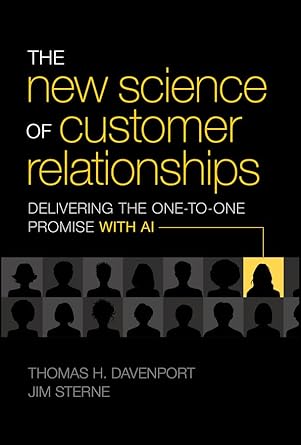
The New Science of Customer Relationships by Thomas H. Davenport and Jim Sterne Book Summary

Reading Time: 3 minutes

Top Three Quotes

  • “Technology alone will not create better customer relationships—it’s the culture and structure that must evolve with it.”
  • “Generative AI may finally deliver on the decades-old one-to-one marketing promise, but only if companies put the customer’s interest first.”
  • “Trust is the foundation for creating value on both sides of any customer relationship.”

Book Theme

The New Science of Customer Relationships explores how artificial intelligence and data science are transforming customer relationships. It examines the gap between decades of marketing promises (like personalization and one-to-one marketing) and the reality of limited progress, proposing a new, evidence-based discipline called customer science—the use of AI, analytics, and organizational change to build trust-based, individualized customer engagement.

Why You Should Read This Book

  • Understand how AI and generative AI can realistically personalize marketing, sales, and service.
  • See why organizations—not technology—are the main barriers to effective customer relationships.
  • Learn how leading companies are already succeeding with AI-driven personalization.
  • Discover a practical roadmap for using AI ethically while protecting customer trust and privacy.
  • Gain insight from two of the most respected authorities in analytics and marketing technology.

Key Ideas and Arguments Presented

  1. The one-to-one marketing dream remains unfulfilled—most firms still use mass tactics despite decades of customer data.
  2. Generative AI now makes it technically possible to personalize at scale, but organizational culture and data integration lag behind.
  3. Customer science combines rigorous data analysis, controlled experimentation, and continuous learning to improve relationships.
  4. Data quality and definition issues (like who “the customer” really is) are the biggest obstacles to customer insight.
  5. Better AI, data, and ethics must work together to transform marketing from manipulation to mutual value creation.
  6. AI agents and automation can handle routine interactions, freeing humans for empathy-driven work.
  7. Hyper-personalization requires collaboration across departments—marketing, sales, service, and analytics.
  8. Ethics and transparency are essential; trust is the new competitive advantage.
  9. The customer of tomorrow expects seamless, respectful, and intelligent interactions.
  10. True personalization is not a one-time project but a sustained scientific process.

Book Outline

  • The Broken Promise of Customer Data and Technology – Why decades of innovation failed to produce real personalization.
  • The Future Is Here, but Unevenly Distributed – Case studies of companies succeeding with AI-driven customer engagement.
  • Better AI: Generative AI as a Catalyst for Change – How GenAI transforms customer relationships.
  • Better Data – Data strategy and quality as the foundation of customer science.
  • Better Personalization and Hyper-Personalization – How to tailor marketing for individuals.
  • Better Customer Voice Analysis and Action – Using AI to listen and respond effectively.
  • Better Task Automation with AI Agents – Automating repetitive customer tasks with intelligence.
  • Better Customer-Facing Operations – Integrating marketing, service, and operations for unified CX.
  • Better Customer Analytics and Data Science – Modern analytics for predictive, personalized insight.
  • Better Ethics – Navigating privacy, bias, and trust in AI-powered marketing.
  • The Customer of Tomorrow – Visionary outlook on how AI will reshape the customer experience.

Key Takeaways

  • Technology progress has outpaced organizational readiness.
  • Generative AI can finally make scalable personalization possible—but only when supported by ethical data use.
  • Customer trust is non-negotiable; value creation must serve both sides.
  • Customer science is a continuous cycle of experimentation, data integration, and improvement.
  • The future of marketing lies in transparent, data-driven empathy—using AI to understand, not exploit.

Key Techniques

  • Customer Science Framework: A continuous process of data collection, AI-driven analysis, and behavioral experimentation.
  • Hyper-Personalization Process: Combining structured and unstructured data for real-time, individualized offers.
  • AI Agent Integration: Deploying intelligent agents to handle routine customer interactions.
  • Voice of Customer (VoC) AI: Using sentiment and speech analytics to guide proactive responses.
  • Ethical AI Governance: Establishing policies that prioritize privacy, fairness, and long-term value.

Author’s Qualifications

Thomas H. Davenport: Distinguished Professor at Babson College, MIT Fellow, Senior Advisor to Deloitte, and author of over 25 books including Competing on Analytics. Recognized globally as one of the top voices in AI and data-driven business strategy.

Jim Sterne: Digital analytics pioneer, founder of the Marketing Analytics Summit, author of 12 books on marketing and AI, and advisor to leading global organizations on generative AI adoption.

Comparison to Similar Books

Comparable to Competing on Analytics (Davenport) and The One-to-One Future (Peppers & Rogers), this book blends AI innovation with practical business insight. Unlike purely technical AI guides or marketing casebooks, The New Science of Customer Relationships provides a scientific, ethical, and cross-functional framework for modern marketing transformation.

Target Audience

  • Marketing executives adopting AI
  • Data and analytics professionals
  • Customer experience and CRM leaders
  • Business strategists and consultants
  • Technology executives and product managers
  • Entrepreneurs in AI-driven industries
  • Academics and students studying digital transformation

Critical Response to the Book

Early readers and industry reviewers praise the book for being both visionary and grounded, offering a realistic path to personalization after decades of hype. It’s recognized as a must-read guide for aligning AI innovation with customer trust and long-term business value.

One Sentence Takeaway

The New Science of Customer Relationships reveals how organizations can finally fulfill the long-promised vision of one-to-one marketing through AI, data, and ethics—by putting customer trust and value at the heart of every decision.

The New Science of Customer Relationships by Thomas H. Davenport and Jim Sterne Book Summary Read More »

,
top social media scheduling tools

Hootsuite vs Buffer vs Late: Comparing the Top Social Media Scheduling Tools

Reading Time: 3 minutes

With social media algorithms changing and automation tools multiplying, choosing the right scheduler can save hours every week and prevent costly workflow bottlenecks.

Social media scheduling has evolved far beyond simply “queue up a post and forget.”

The tools now include visual calendars, team workflows, analytics, integrations with other marketing technology, and even developer APIs. In this comparison, we’ll look at three key platforms: Hootsuite (the long-established full-suite tool), Buffer (modern and lightweight), and Late (a newer API-driven platform built for teams and developers).

Each serves a distinct niche in terms of budget, integrations, and posting frequency. Use the table below to find the right fit for your workflow and price point.

Hootsuite vs Buffer vs Late — At-a-Glance Comparison

Quick links: Hootsuite • Buffer • Late

CriteriaHootsuiteBufferLate
Starting PricePaid plans start around $99/month (annual billing) for entry tier.Free plan available; paid plans around $6/month per social channel on Essentials.Free tier available. Paid tiers: $19/month (“Build”), $49/month (“Accelerate”), up to $999/month (“Unlimited”).
Free TierNo permanent free tier; focuses on paid plans.Yes — up to 3 channels and limited posts on the Free plan.Yes — Free plan available with limited features.
Users / SeatsMultiple seats available on Team and Enterprise plans.Users unlimited on Team/Agency plans; pricing tied to channels.Unlimited team members included on all paid tiers.
Profiles / Channels SupportedFacebook, Instagram, LinkedIn, X/Twitter, TikTok, YouTube, Pinterest, and more.Facebook, Instagram, LinkedIn, TikTok, YouTube, Pinterest, X/Twitter, Bluesky, and others.10 major platforms (X, Instagram, TikTok, LinkedIn, Facebook, YouTube, Threads, Reddit, Pinterest, Bluesky).
Posting Frequency / LimitsUnlimited scheduling on paid plans; limits by account on entry tiers.Free: 10 posts per channel. Paid: unlimited scheduled posts per channel.Build plan: 120 posts/month. Higher tiers remove posting limits.
Core FeaturesPublishing scheduler, visual calendar, bulk upload, social inbox, analytics, reporting, and team approvals.Queue scheduling, analytics, Canva and Dropbox integration, team collaboration, Buffer AI content assistant.Full scheduling + analytics, powerful REST API, automation (n8n workflows), and unlimited team collaboration.
Integrations / AutomationOver 100 integrations via app directory (Salesforce, HubSpot, Canva, Zapier, Make, and more).Integrates with Canva, Dropbox, Google Drive, Zapier, IFTTT, and Make for automation.Native REST API, n8n node for automation, built for developers and agencies managing multiple clients.
Analytics & ReportingComprehensive analytics dashboards on paid tiers with export options and team insights.Basic to advanced analytics depending on plan, focused on engagement and post performance.Cross-platform analytics built into dashboard; API access for data exports.
Best ForMid-size to enterprise teams needing deep integrations, reporting, and collaboration.Solopreneurs and small businesses seeking a clean interface and simple pricing.Developers, agencies, and automation-focused marketers needing API flexibility.
Notes / CaveatsHigh cost; check seat and account limits before committing.Per-channel pricing can scale quickly as number of profiles grows.Newer entrant compared to incumbents; best fit if you value automation and technical control.

How to Choose the Right Tool

1. Budget and scale. If cost is a key concern, start with Buffer’s free tier or Late’s Build plan. Hootsuite is powerful but significantly more expensive for smaller teams.

2. Team size. For larger teams with defined approval workflows, Hootsuite shines with multi-seat management. Late also supports unlimited team members at all tiers.

3. Integrations and automation. If you rely on tools like Zapier or n8n, Late has the most flexible API setup. Hootsuite’s app directory is vast, while Buffer covers the essentials and connects easily to creative tools like Canva.

4. Posting volume. Heavy content calendars benefit from unlimited posting on Hootsuite or higher Buffer plans. Late’s higher tiers also remove post caps for agencies scheduling across multiple clients.

5. Analytics depth. For enterprise-grade reporting, Hootsuite leads. Buffer’s insights work well for SMBs, while Late’s analytics are API-friendly for custom dashboards.

Conclusion

Each of these tools fills a different role in the modern social media stack:

  • Hootsuite – Enterprise reliability and integrations, but at a premium cost.
  • Buffer – Simple, affordable, and approachable for everyday marketers.
  • Late – Modern, API-driven platform ideal for developers, agencies, and automation enthusiasts.

As social media scheduling becomes more connected to the broader marketing tech ecosystem, the right choice depends on how you plan to scale. Test each platform’s free trial or tier before committing, and weigh the total cost of users, profiles, and integrations — not just the base price.

Learn more: Hootsuite.com • Buffer.com • GetLate.dev

Hootsuite vs Buffer vs Late: Comparing the Top Social Media Scheduling Tools Read More »

95 percent of marketing leaders feel pressure to demonstrate roi

How Marketers Are Measuring AI ROI and Where They Struggle

Reading Time: 4 minutes

Challenges in Measuring AI ROI

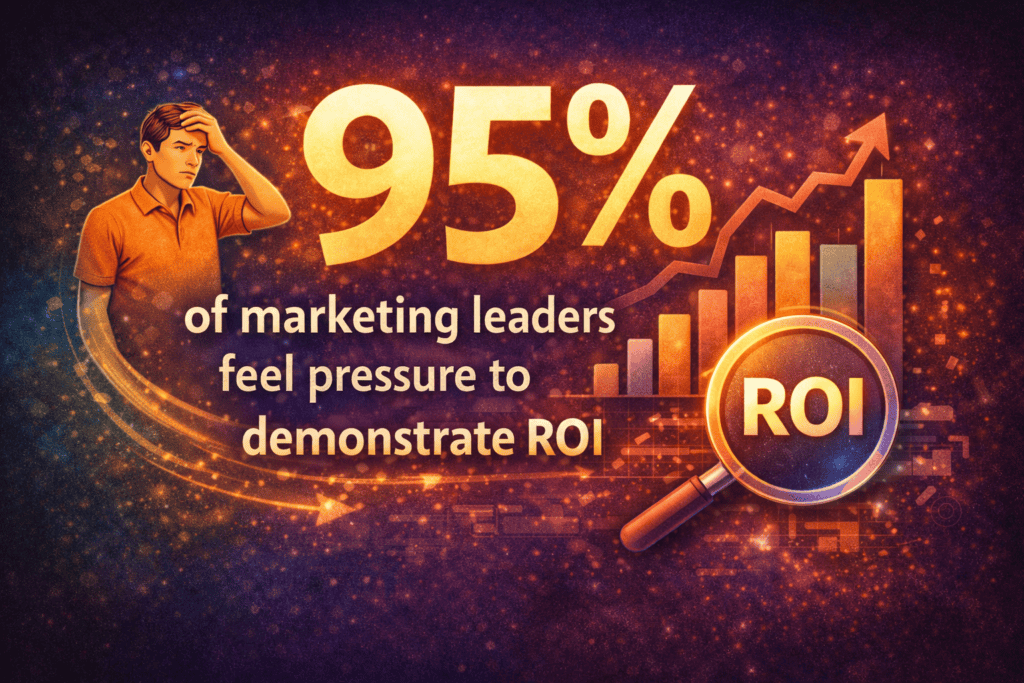
Marketers report intense pressure to prove AI’s value even as traditional metrics fall short. In fact, a recent survey found 95% of marketing leaders feel pressure to demonstrate ROI. Yet AI’s benefits often lie in efficiency gains or long-term insights, not immediate sales. For example, one consultant notes AI yields “efficiency, innovation, and risk reduction,” which are “hard to quantify in dollars”.

Likewise, IBM points out that many AI impacts are indirect and long-term, so short-term ROI is often elusive. This mismatch means “traditional analytics ROI metrics…fail to capture AI’s true value proposition”. Marketing veteran Jessica Apotheker (BCG CMO) bluntly observes that “most people are not seeing ROI from [AI] investment yet at scale”.

In practice, marketers struggle with multi-touch attribution (which channel “earned” revenue), defining soft costs (time and talent spent), and avoiding “vanity metrics” (like sheer content volume). In short, AI’s benefits often span multiple campaigns and customer journey stages, making a single ROI number hard to pin down.

Examples of Measurable Success

Despite the challenges, several case studies report clear lifts after adopting AI in marketing:

  • Advertising Optimization: A Nielsen and Google study of more than 50,000 brand campaigns and more than 1 million performance campaigns found AI-powered ad solutions significantly outperformed manual campaigns. For example, AI-driven YouTube ads achieved about 17 percent higher ROAS (return on ad spend), AI search Broad Match keywords drove about 15 percent higher ROAS, and Performance Max campaigns saw about 8 percent higher ROAS versus traditional methods. In total, combining AI-powered formats such as video reach and view campaigns boosted sales effectiveness by about 23 percent.
  • Email Personalization: Generative AI personalization can dramatically improve engagement. One retail case (Michaels Stores) increased personalized email campaigns from 20 percent to 95 percent of sends. This jump lifted click-through rates by 25 percent for email and 41 percent for SMS. More generally, AI-driven email personalization has been shown to boost revenue up to about 41 percent and click-through rate by about 13 percent. Bloomreach reports plus 41 percent revenue and plus 13.4 percent CTR.
  • Lead Scoring and CRM: AI predictive scoring also delivers value. One company using machine learning based lead scoring reported about a 25 percent larger sales pipeline and ultimately a 76 percent win rate on deals. By letting AI rank leads, conversion rates jumped compared to old methods. Pipeline growth and win rate lifts translate into clear revenue gains.
  • Process Automation: In related marketing and commerce functions, AI can yield large time savings. For instance, a direct to consumer retailer used generative AI to automate customer support responses, cutting time to first response by 80 percent and shaving about 4 minutes off each ticket resolution. While support is downstream of marketing, this efficiency freed teams to focus on higher value marketing activities.

Each of these examples ties AI investment to concrete metrics, such as higher ROAS or CTR, larger pipelines, and faster process times. This shows how ROI can be measured when the right KPI is chosen.

To see how AI efforts could pay off for your own marketingm try my free AI Content ROI Calculator.

Emerging Best Practices

Experts recommend new frameworks and tools for quantifying AI’s impact rather than relying on old metrics alone. A leading practice is to combine different measurement approaches: use ROI where applicable, but also track efficiency and prediction gains. Instead of just “revenue gained,” measure how AI cuts campaign analysis time, such as reducing a report run from hours to minutes, or improves forecast accuracy.

Gartner advises building an AI “portfolio” of use cases, from quick wins (measured by time or cost saved) to transformational initiatives (valued for long-term growth), and pilot each with clear targets. This might mean setting concrete goals like “increase model-driven ROI forecasts by 25 percent” or “cut data prep time by 50 percent” when testing a new AI tool.

On the tooling side, AI-driven analytics platforms are emerging. Marketers use unified measurement tools that blend marketing mix modeling and multi-touch attribution with incremental lift tests. For example, platforms like Rockerbox ingest all channel data and apply machine learning to allocate credit across touchpoints. Similarly, predictive analytics tools such as Pecan AI let teams forecast a campaign’s future ROAS and customer lifetime value within days. These systems make ROI more visible by simulating outcomes and testing scenarios up front. In practice, marketers are increasingly using “AI for attribution” to allocate budgets more effectively and “AI for prediction” to estimate campaign returns before full rollout.

Other best practices include investing in talent and data. Skilled analysts and clean data often deliver ROI faster than technology alone. As CMSWire notes, companies showing positive AI analytics ROI have built internal capability as much as buying tools.

Finally, incremental testing, such as A/B tests or hold out groups, is recommended to prove AI lift. By comparing similar audiences with and without an AI intervention, teams can attribute real revenue impact to the AI feature, much as Nielsen did for Google’s AI ads. In short, today’s best practice is to pilot AI projects with clear success metrics, both financial and operational, and use advanced analytics such as marketing mix modeling, machine learning attribution, and lift testing to tie AI-driven changes to concrete business outcomes.

References

  1. Nielsen study confirms Google’s AI-powered ad solutions drive higher ROI (Adgully summary)
  2. How AI is redefining marketing, today and tomorrow (Nielsen Insights)
  3. How Bloomreach Delivers True End-to-End Personalization (Bloomreach Blog)
  4. How BrewDog increased revenue using personalized email campaigns with Bloomreach (Case Study)
  5. River Island’s Email Marketing Success (Bloomreach Case Study)
  6. Why Marketing — and Not IT — Must Lead the AI Transformation (CMSWire)
  7. From Productivity to Impact: Unlocking the True Potential of AI in Marketing (Gartner)
  8. Marketing Teams Are Bringing Their Own AI — And It’s Changing Everything (CMSWire)

How Marketers Are Measuring AI ROI and Where They Struggle Read More »