ai sentiment analysis

Why AI Finally Makes Sentiment Analysis Worth Using

Reading Time: 5 minutes

In the past, analyzing customer comments and reviews was hit-or-miss at best.
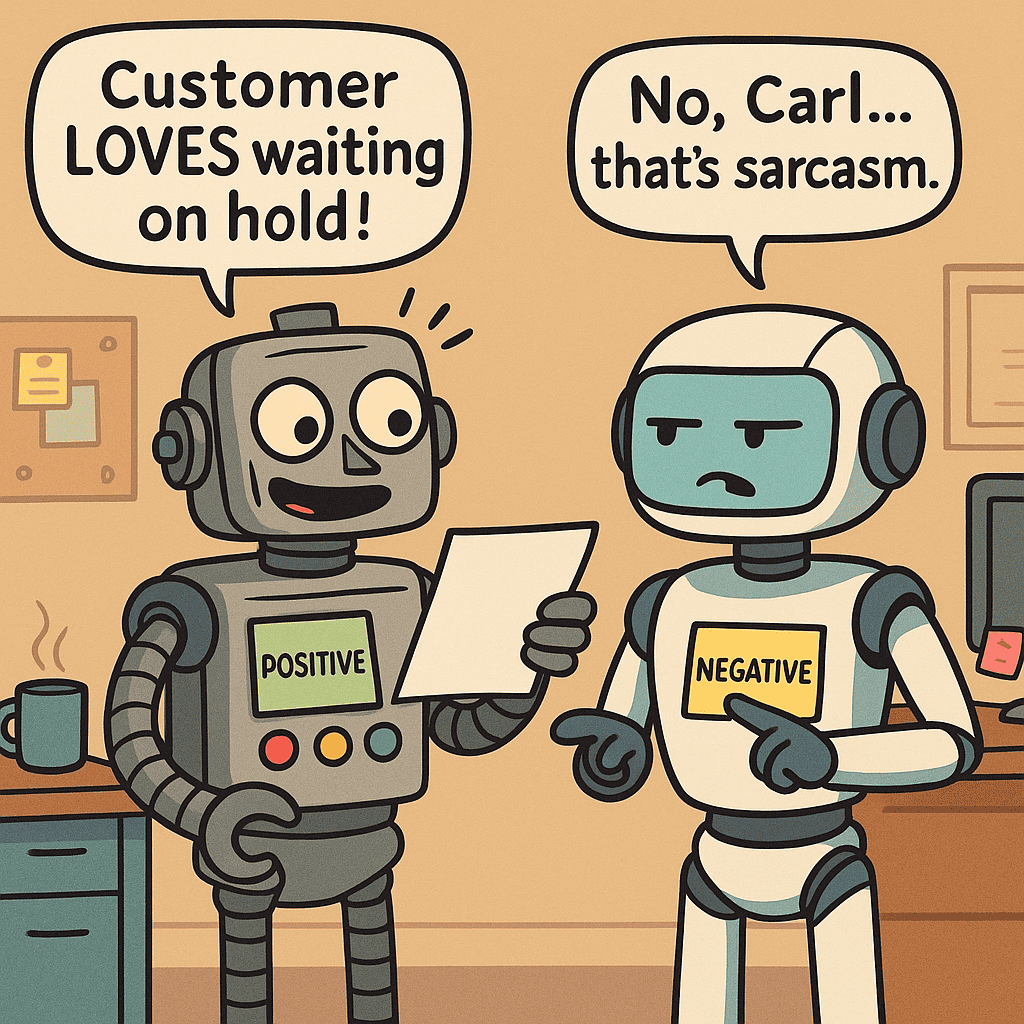
Early sentiment analysis tools often misread the emotional tone of unstructured text, especially when confronted with nuance. Sarcasm could be mistaken for sincere praise, and industry-specific terms could trigger false alarms. For example, insurance feedback might mention a “total catastrophe” or “flood loss” – terms that sound negative – even when the customer’s actual sentiment about their agent was positive.

Today, thanks to advances in artificial intelligence (AI), we can finally more reliably categorize unstructured sentiment data, grasping the true intent behind words.

The Challenge with Unstructured Sentiment (Before AI)

Human language is complex, and understanding sentiment isn’t as simple as counting positive or negative words. Some of the biggest hurdles historically included:

  • Sarcasm and Irony: Sarcasm flips language on its head – “I just love being on hold for an hour,” one might say, meaning the opposite. Older sentiment algorithms struggled with this. They took words at face value, so positive words in a sarcastic sentence could trick them into a positive classification when the sentiment was actually negative. Likewise, genuinely appreciative comments with a few “negative” words (e.g. “our agent was a lifesaver during this total catastrophe”) could be mislabeled as negative. Without understanding context or tone, these tools were easily foiled by irony and sarcasm.
  • Domain-Specific Language and Ambiguity: Words mean different things in different contexts. A phrase that sounds negative in one industry might be neutral or positive in another. Sentiment analysis has long been domain-dependent – the same words or expressions can indicate opposite sentiments in different domains. For instance, calling a video game “sick” is praise (slang for “awesome”), but a naive model might flag it as negative (thinking “sick” = ill/bad). Similarly, insurance or disaster-relief contexts include words like “damage,” “loss,” or “catastrophe” which describe events, not customer satisfaction.
  • Limited Context Understanding: Older approaches often relied on simple rules or keyword lists. They struggled with negation (“not bad at all” could be misread as negative due to the word “bad,” when the sentiment is mildly positive). They also analyzed each sentence in isolation, missing the broader context that humans use to interpret meaning.

These challenges left marketers and analysts with unreliable results – sarcastic complaints tagged as positive sentiment, mixed messages, and the need for manual review. Fortunately, AI has turned this around.

How AI Transformed Sentiment Analysis

Modern AI-driven sentiment analysis isn’t your 2010s “bag-of-words” algorithm. It’s far more sophisticated, which means far more accurate. Here’s what changed and why sentiment categorization is now markedly better:

  • Context is King: Today’s AI language models analyze text in context, not as isolated words. They evaluate the entire sentence (or even multiple sentences) to derive meaning. This means they catch nuances like negation and tone shifts.
  • Advanced NLP Techniques: Breakthroughs in deep learning – particularly transformer-based models – have given sentiment analysis a giant leap forward. These models “read” text in a human-like way, considering nuance and even world knowledge.
  • Learning from Huge Data (including Sarcasm and Slang): Modern AI is trained on vast amounts of text – from tweets and reviews to discussion forums. This exposure means the AI has “seen” countless examples of sarcasm, slang, and domain-specific usage.

One additional factor: cutting-edge sentiment tools can be fine-tuned to specific industries or contexts, allowing them to accurately interpret language that general models would still get wrong.

What AI Still Gets Wrong

Modern sentiment tools are dramatically better, but not infallible. A few limitations worth knowing:

Confidence matters: Good sentiment tools return a probability score, not just a label. If your tool isn’t surfacing confidence levels, you’re missing important signal about when to trust the output and when to take a second look.

Mixed sentiment: “The food was amazing, the service was a disaster” often gets flattened to a single label. Nuanced, multi-topic feedback still trips up many models.

Subtle sarcasm in short text: The same research on sarcasm detection that AI proponents cite also shows LLMs still require multi-step reasoning to reliably catch it. Short social posts remain harder than longer reviews.

Niche and low-resource domains: Fine-tuning helps, but models trained on general text can still misread highly specialized industry language they haven’t seen enough of.

Domain Adaptation and Customization: Cutting-edge sentiment tools can be fine-tuned to specific industries or contexts, allowing them to accurately interpret unique industry language.

Real-World Examples: Old vs. New Sentiment Categorization

CommentOld Approach SentimentModern AI Sentiment
“I absolutely loved waiting an hour on hold.”Positive (misread literally)Negative (sarcasm detected)
“Great job, team. You broke it again.”Positive (misread “great”)Negative (clearly sarcastic)
“Just perfect… now nothing works.”Positive (focus on “perfect”)Negative (understood irony)
“Thanks a lot, now I’m locked out of my account.”Positive (saw “thanks”)Negative (understood frustration)
“Yeah, everyone loves seeing errors first thing in the morning.”Positive (misled by “loves”)Negative (sarcasm about errors)
“Oh great, another meeting that could have been an email.”Positive (misread “great”)Negative (weary sarcasm)
“Our house was destroyed in a flood – a total catastrophe – but our agent was incredible through it all.”Negative (keying on “catastrophe”)Positive (praise for the agent)
“My car was totaled, yet the claims process was fantastic.”Negative (focus on “totaled”)Positive (satisfaction with service)
“This party was sick!”Negative (took “sick” literally)Positive (understood slang for “amazing”)
“Not bad at all for a Monday.”Negative (saw “bad”)Positive (recognized the negation as a mild praise)

Table: Ten example comments that would confuse old sentiment analysis but are correctly understood by modern AI. The old approach often relied on literal word sentiment, while new AI models grasp context, sarcasm, and slang to infer the true tone.

Why This Matters for Marketing and CX Professionals

  • You Get True Customer Insights: Sarcasm, jokes, and snarky comments won’t fly under the radar as false positives. Your Voice of Customer analysis becomes trustworthy.
  • Better Decision-Making: You can measure sentiment trends with confidence, making your reports actionable and reliable.
  • Adaptability Across Channels and Industries: Whether it’s product reviews, support tickets, or survey responses, AI adapts to the context and industry language.
  • Efficiency Gains: Teams no longer need to manually re-read comments to detect misclassifications, enabling faster action on real sentiment trends.

If your current sentiment tool only returns a positive or negative label with no confidence score attached, that’s the first thing worth re-evaluating.

Conclusion: From Hit-or-Miss to a Genuinely Useful Signal

We’ve entered a new era where unstructured sentiment data – the messy, honest, and nuanced text that customers produce – can be analyzed with a level of accuracy that was unheard of a few years ago. The tools have gotten genuinely good. But “genuinely good” isn’t the same as “done.” Mixed feedback, niche language, and short sarcastic posts still require human judgment to interpret correctly. The right frame isn’t that AI has replaced the analyst – it’s that AI has made the analyst’s job more tractable. You’re no longer drowning in manual review. You can now focus your attention where the signal is ambiguous rather than spending it on the obvious cases.

For marketers, customer experience professionals, and anyone working with feedback or social data, this is a game-changer. You can now take the pulse of customer sentiment with confidence, knowing that the insights reflect reality. AI has finally made the voice of the customer readable at scale – even when customers are being sarcastic, indirect, or industry-specific.

References

  1. Ingrid Fadelli (2023). “Can large language models detect sarcasm?” TechXplore.
  2. Kapiche (2024). “Sentiment Analysis: Guide for Businesses in 2024.” Kapiche Blog.
  3. Fang Yao & Yan Wang (2020). “Domain-specific sentiment analysis for tweets during hurricanes (DSSA-H): A domain-adversarial neural-network-based approach.” Computers, Environment and Urban Systems, 83, 101522
  4. Ben Yao, Yazhou Zhang, Qiuchi Li, & Jing Qin (2024). “Is Sarcasm Detection a Step-by-Step Reasoning Process in Large Language Models?” arXiv:2407.12725.

Why AI Finally Makes Sentiment Analysis Worth Using Read More »

the historical evoluation of ai

A Historical Evolution of Artificial Intelligence (AI)

Reading Time: 4 minutes

In the past several decades, artificial intelligence (AI) has evolved from theoretical concepts to an integral part of our daily lives. Below is a timeline highlighting some of the most significant milestones in AI history, from its mid-20th century origins to the breakthroughs of the modern era.

1950
October

Alan Turing Proposes the Turing Test

Alan Turing publishes “Computing Machinery and Intelligence,” introducing the idea of an “imitation game” (now known as the Turing Test) to evaluate a machine’s ability to exhibit human-like intelligence.

1956
Summer

The Term “Artificial Intelligence” Is Coined

At the Dartmouth workshop in the summer of 1956, John McCarthy and fellow researchers officially coin the term “artificial intelligence,” marking the birth of AI as a distinct field of study.

1966
1966

First Chatbot – ELIZA

Joseph Weizenbaum develops ELIZA, an early natural language processing program that simulates conversation. Many users are surprised by its human-like responses, making ELIZA a landmark experiment in human-computer interaction.

1969
1969

Shakey the Robot

Researchers at Stanford Research Institute introduce Shakey, the first general-purpose mobile robot able to perceive and navigate its environment. Shakey’s integration of computer vision and planning algorithms breaks new ground in robotics and AI.

1974
1974

The First “AI Winter”

Following years of hype and unmet expectations, the mid-1970s see a steep decline in funding and interest in AI research. A critical 1974 report by Sir James Lighthill leads to budget cuts, ushering in the first “AI winter” period of slowed progress.

1980
1980s

Rise of Expert Systems

Throughout the 1980s, AI research shifts toward “expert systems” – software designed to mimic the decision-making of human experts. These systems gain commercial success (especially in corporate and medical domains), spurring renewed investment and the formation of AI research communities like the AAAI.

1997
May 11

Deep Blue Defeats Chess Champion

IBM’s Deep Blue supercomputer defeats reigning world chess champion Garry Kasparov in a six-game match. It marks the first time a computer has beaten a human world champion, demonstrating the rapidly advancing power of AI in strategic reasoning.

2011
February

IBM Watson Wins on “Jeopardy!”

IBM’s Watson question-answering AI system competes on the TV quiz show “Jeopardy!” and beats two of the show’s greatest champions. Watson’s ability to interpret natural language questions and retrieve answers in real-time highlights major strides in AI’s language understanding and information processing.

2012
2012

Deep Learning Breakthrough

An AI system (AlexNet) built on deep neural networks wins the 2012 ImageNet image recognition contest by a startling margin. This breakthrough brings neural networks and “deep learning” into the mainstream, revolutionizing AI approaches to vision, speech, and beyond.

2016
March

AlphaGo Conquers the Game of Go

Google DeepMind’s AlphaGo program defeats Go champion Lee Sedol, a feat once thought decades away due to Go’s complexity. Mastering this ancient board game through advanced neural networks and reinforcement learning, AlphaGo’s victory is hailed as a milestone demonstrating AI’s potential to tackle incredibly complex problems.

2020
June

OpenAI’s GPT-3 Astonishes

OpenAI releases GPT-3, a language model with an unprecedented 175 billion parameters capable of producing remarkably human-like text. GPT-3’s performance across writing, question-answering, and other tasks shows a dramatic leap in AI’s natural language generation abilities.

2022
November

AI Goes Mainstream with ChatGPT

OpenAI deploys ChatGPT, a conversational AI chatbot that attracts over a million users within its first week. ChatGPT’s ability to engage in human-like dialogue and assist with a wide range of questions and tasks brings generative AI into everyday use for millions, sparking mainstream excitement about AI’s possibilities.

2023
March

GPT-4 and the Future of AI

OpenAI launches GPT-4, a new multimodal AI model that accepts both text and image inputs while producing even more sophisticated outputs. The rapid progress of AI models like GPT-4 fuels discussions worldwide about AI’s potential benefits and the importance of ensuring responsible, ethical AI development as we look to the future.

2024
March

Claude 3 and AI Self-Awareness

Anthropic releases the Claude 3 model family, including Claude 3 Opus, which surprises researchers with its ability to reflect on its own behavior during evaluations — suggesting a new level of meta-cognition in AI reasoning.

2024
March

European Union Passes AI Act

The EU formally adopts the Artificial Intelligence Act, the first comprehensive legal framework to regulate AI across the continent. It introduces a tiered, risk-based system and sets a global precedent for responsible AI governance.

2024
April

OpenAI Introduces Sora for AI Video

OpenAI unveils Sora, a powerful text-to-video model capable of generating realistic, minute-long video clips from natural language prompts, expanding the creative possibilities of generative AI into visual storytelling.

2024
May

OpenAI Launches GPT-4o

OpenAI debuts GPT-4o, a faster, more accessible multimodal model capable of reasoning across text, image, and audio. GPT-4o becomes available to free ChatGPT users, dramatically expanding public access to cutting-edge AI capabilities.

2024
June

Apple Intelligence Announced

Apple unveils “Apple Intelligence,” a suite of on-device generative AI tools integrated into iPhones, iPads, and Macs. The launch emphasizes user privacy, signaling a shift toward personal AI assistants with secure, hybrid processing.

2024
August

EU AI Act Takes Effect

The European Union’s AI Act officially takes effect, requiring companies to comply with new transparency and safety regulations for high-risk AI systems, marking a significant step in global AI policy enforcement.

2025
January

DeepSeek-R1 Disrupts AI Access

A Chinese startup launches DeepSeek-R1, an open-source language model offering GPT-4-level performance. Its free release and efficient design spark a surge in global downloads and challenge assumptions about AI model exclusivity.

2025
February

ChatGPT Deep Research Mode Debuts

OpenAI introduces a new “Deep Research” mode in ChatGPT, enabling users to request detailed, source-backed reports. This feature blurs the line between human and AI research capabilities, offering autonomous, multi-step synthesis tools.

2025
May

Google Veo 3 and Generative Video Ethics

Google unveils Veo 3, a state-of-the-art generative video model capable of creating hyper-realistic scenes from text. Its realism prompts widespread discussions about misinformation, authenticity, and synthetic media safeguards.

2025
May

Anthropic Releases Claude 4

Anthropic releases Claude 4, featuring extended autonomous capabilities and sustained task handling for hours without human input. Its enhanced reasoning and long context memory highlight the ongoing shift toward AI agents.

2025
July

Creative Labor Wins AI Protections

After a prolonged strike, voice actors secure a groundbreaking contract guaranteeing consent and compensation for AI use of their voices. This milestone sets global precedent for artist rights in the age of generative content.

2025
August

OpenAI Releases GPT-5

OpenAI launches GPT-5, a major step toward tool-using, agentic AI. The model excels at reasoning, software development, and multi-step tasks, marking a transition from conversational assistants to full-fledged digital collaborators.

A Historical Evolution of Artificial Intelligence (AI) Read More »

website optimization settings you should know

Website Optimization Settings You Should Know — What to Enable, What to Skip, and Why

Reading Time: 3 minutes

Whether you are running WordPress, another CMS, or a custom website, the tools and toggles in your hosting dashboard and optimization plugins can make a big difference – for better or worse. What many site owners do not realize is that turning on everything often leads to broken layouts, slower performance, or plugin conflicts. This guide explains which optimization settings deliver real gains in speed and stability, which ones are risky, and why.

No-Brainer Optimizations (Turn ON)

  • ✅ Collapse Whitespace – reduces HTML size; no layout or SEO impact.
  • ✅ Extend Cache and Extend Cache PDFs – improves browser reuse of assets.
  • ✅ Pre-Resolve DNS – resolves external domains early (fonts, analytics) for small wins.
  • ✅ Remove Comments and Remove Quotes – trims HTML safely.
  • ✅ Trim URLs – cleans up and shortens asset URLs on HTTPS websites.
  • ✅ Move CSS Above Scripts and Move CSS to <head> – improves how quickly your page looks styled by ensuring CSS loads before scripts.
  • ✅ Canonicalize JavaScript Libraries – uses well-cached CDN libraries (like jQuery).
  • ✅ Minify JavaScript – removes whitespace and comments without changing behavior.
  • ✅ Insert Image Dimensions – stabilizes layout (improves CLS).
  • ✅ Lazy Load Images – defers below-the-fold images for faster perceived speed.

Situational Tweaks (Optional)

  • ⚙️ Include JavaScript Source Maps – helpful for debugging; can be off in production.
  • ⚙️ Rewrite Style Attributes with URLs – use only if background images go missing after a migration or CDN change.
  • ⚙️ Convert Meta Tags – harmless but rarely impactful.

Usually Leave OFF (Proceed with Caution)

  • 🚫 Combine CSS and Combine JavaScript – modern browsers already handle multiple requests efficiently; combining can break load order or styles.
  • 🚫 Inline CSS and Inline JavaScript – bloats HTML and interferes with caching; minimal benefit.
  • 🚫 Flatten CSS Imports and Fallback Rewrite CSS URLs – can change style order or break background paths.
  • 🚫 Convert to WebP (animated or lossless), Recompress or Resize Images, Sprite Images – let a dedicated image plugin manage compression and formats.
  • 🚫 Combine Heads – multiple <head> tags suggest a deeper template issue; do not mask it.
  • 🚫 Deduplicate Inlined Images – most sites do not inline large images, so the benefit is negligible.

Optimization Setting Summary

SettingCategoryRecommendationWhy
Collapse WhitespaceHTML✅ OnSmall size reduction; zero risk.
Extend CacheCaching✅ OnImproves browser reuse of assets.
Extend Cache PDFsCaching✅ OnBetter caching for downloadable PDFs.
Pre-Resolve DNSNetworking✅ OnResolves external domains sooner.
Remove CommentsHTML✅ OnTrims HTML safely.
Remove QuotesHTML✅ OnSafe attribute cleanup.
Trim URLsHTML✅ OnLeaner URLs on HTTPS.
Move CSS Above ScriptsCSS✅ OnEnsures styling appears quickly.
Move CSS to <head>CSS✅ OnBest practice for rendering.
Canonicalize JS LibrariesJS✅ OnCDN-cached libraries load faster.
Minify JavaScriptJS✅ OnRemoves whitespace and comments only.
Insert Image DimensionsImages✅ OnReduces layout shifts (CLS).
Lazy Load ImagesImages✅ OnDefers below-fold requests.
Include JS Source MapsJS⚙️ OptionalUseful for debugging only.
Rewrite Style Attrs with URLsCSS⚙️ OptionalUse if backgrounds break post-migration.
Convert Meta TagsHTML⚙️ OptionalMarginal benefit.
Combine CSSCSS🚫 OffCan break order or conditional styles.
Combine JavaScriptJS🚫 OffHigh break risk from load-order changes.
Inline CSSCSS🚫 OffBloats HTML; worse caching.
Inline JavaScriptJS🚫 OffBloats HTML; minimal gains.
Flatten CSS ImportsCSS🚫 OffMay alter cascade or responsive behavior.
Fallback Rewrite CSS URLsCSS🚫 OffRisk of broken paths or backgrounds.
Convert to WebP (Animated or Lossless)Images🚫 OffLet your image plugin handle formats.
Inline ImagesImages🚫 OffBloats HTML; hurts caching.
Recompress ImagesImages🚫 OffAvoid double compression or quality loss.
Resize Images or Resize Mobile ImagesImages🚫 OffLet responsive images handle this.
Sprite ImagesImages🚫 OffOutdated; can misalign icons.
Combine HeadsHTML🚫 OffFix template, do not post-process.
Deduplicate Inlined ImagesImages🚫 OffLittle impact on most sites.

Performance and SEO Checklist

  • Compression: Enable GZIP or Brotli; confirm HTTP/2 or HTTP/3.
  • Caching stack: Avoid duplication; prefer browser and server cache, keep plugin caching simple.
  • CDN: Add Cloudflare (free) for global delivery and SSL simplicity.
  • Database cleanup: Run WP-Optimize or Advanced Database Cleaner to purge revisions, transients, and orphaned meta.
  • Security and backups: Schedule off-server backups; add Wordfence or iThemes Security.
  • Mobile UX: Run Google’s Mobile-Friendly Test; fix tap targets and spacing.
  • Analytics: Verify GA4 beacons after SSL setup.
  • Search Console: Re-verify HTTPS properties; resubmit sitemap; fix mixed content if any.

How to Test Changes Safely

  1. Toggle one optimization at a time; hard-refresh in an incognito window.
  2. Watch for layout shifts, console errors, broken forms, or missing images.
  3. Measure before and after with PageSpeed Insights or GTmetrix.
  4. If something regresses, revert the last toggle and clear caches.

Website Optimization Settings You Should Know — What to Enable, What to Skip, and Why Read More »

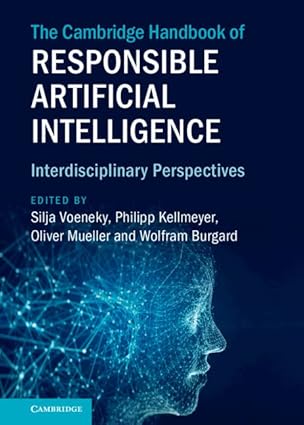
the cambridge handbook of responsible artificial intelligence

The Cambridge Handbook of Responsible Artificial Intelligence — Summary and Takeaways

Reading Time: 4 minutes

Source: The Cambridge Handbook of Responsible Artificial Intelligence by Cambridge University Press
Date Published: October 2022
Audience: Lawyers, business leaders, policymakers, and tech teams using AI
Data Sources Cited: European courts, EU AI Act plans, GDPR rules, WHO health guidelines, and research from MIT and Stanford.

This handbook covers the big legal and ethical problems AI creates. It looks at product safety, data privacy, medical uses, business rules, and fair competition. You will learn about new laws like the EU AI Act. You will understand who gets blamed when AI makes mistakes. And you will get clear steps to use AI the right way.

Actionable Tips

Nine quick wins for marketers and business leaders using AI:

  1. Sort your AI tools by risk level. Use the EU AI Act as your guide, even if you are in the US. High risk means it affects jobs, key systems, or critical services.
  2. Write down how your AI makes choices. Good records protect you in court. AI is a black box, so clear docs are your best defense.
  3. Explain your AI results in simple words. GDPR says people must understand what you do with their data. Machine learning makes this hard, but you still must try.
  4. Do a privacy check before you use AI on lots of personal data. GDPR Article 35 says you must do this for high-risk work. No exceptions.
  5. Keep humans in charge. AI should help people make choices, not replace them. This matters most when safety or rights are at stake.
  6. Watch your pricing AI closely. Regulators worry that AI can fix prices on its own without people knowing. If you use pricing tools, check them often.
  7. Get ready for changing rules. You will need to review your AI tools often. Save money or get insurance for high-risk AI. New laws say this is coming.
  8. Budget for regulatory capital now. Europe is testing a system where companies must set aside money before using high-risk AI. If your AI causes no harm after review, you get the money back. Set aside 10 to 20 percent of AI project costs as compliance insurance.
  9. Audit pricing algorithms for collusion risk. AI can learn to match competitor prices without any human telling it to. This breaks antitrust laws even if nobody programmed it. If you use dynamic pricing in e-commerce or SaaS, check quarterly. Compare your price changes to competitors. Document that you are not watching them. Hire a lawyer to review.

Pro Tip: Build your AI rules now. Do not wait for new laws. Starting early shows regulators you care. It also saves you money later.

Key Stats and Sources

  • World data storage hit 20 zettabytes in 2018. By 2025, it may reach 160 zettabytes. That is ten times more. More data helps AI but makes rules harder to write.
  • The EU AI Act sorts AI into four risk levels. High-risk tools must pass outside checks. Very bad uses, like government social scores, are banned completely.
  • AI can beat doctors at some tasks. One test showed AI beat 136 out of 157 skin doctors at finding skin cancer. This shows AI works well but also raises big questions about who is responsible.
  • Rules change fast. Always check the newest laws and stats before you make big choices.

Examples You Can Steal

  • Luxembourg said yes to the Webtaxi app. The app sets taxi prices using AI. But it helps customers too. This shows regulators look at both good and bad effects.
  • Germany went after Facebook for breaking privacy rules in its terms. This shows how fair competition laws and privacy laws now overlap. Watch both.
  • Siemens got approval for an AI tool that reads chest scans. It makes reports for doctors. Medical AI must follow safety rules and new AI laws. That is two sets of rules.

How To Apply This Fast

  • Today: Make a list of every AI tool you use. Write down what each one does, what data it uses, and who makes choices based on it. Use a simple spreadsheet. This list is your starting point.
  • This month: Build an AI team. Get people from legal, tech, and business. Have them sort your AI by risk level using EU rules. Find where you need better records, clearer explanations, or more human checks. Meet every month as rules change.

Bold Claims and Counterpoints

  1. Claim: AI can secretly team up to fix prices without people knowing.
    Counterpoint: This is really hard to do. Experts think people worry too much. But research is still going.
  2. Claim: GDPR rules about data use clash with how AI works. AI needs freedom to learn new things.
    Counterpoint: These rules stop spying on people. You can still build AI within clear limits. It takes balance, but it can work.
  3. Claim: You cannot truly hide who health data belongs to. Blood tests and heart scans are too unique.
    Counterpoint: Perfect hiding is hard, but good security steps can protect people enough for most uses.

Metrics That Matter

  • Watch these numbers to know if your AI is working right:
  • How many AI tools you have sorted by risk. Goal is all of them in six months.
  • How many privacy checks you did for high-risk AI. Match this to your AI list to find missing ones.
  • How well people understand your AI choices. Ask users or test your explanations.
  • How often people change AI choices. Write down why. This helps you make AI better.
  • How many complaints you get about AI. Fewer complaints means you are doing better.

What Is Missing or Caveats

  • This book has lots of legal talk but not much help for small businesses. Most tips are for big companies or banks and hospitals.
  • Rules change fast. Some parts may get old quickly. The EU AI Act is still being written. Each country will do it differently.
  • The book does not talk much about working across countries. This matters for global companies. It focuses on Europe. It skips China and US rules.
  • Not much here for marketers. The book talks more about doctors, banks, and factories. Less about product tips or personalized ads.

One-Sentence Takeaway

Build your AI rules now, not later, because fixing problems after you get in trouble costs way more money and time.

References and Resources

The Cambridge Handbook of Responsible Artificial Intelligence — Summary and Takeaways Read More »

case study ebay ad spend experiment

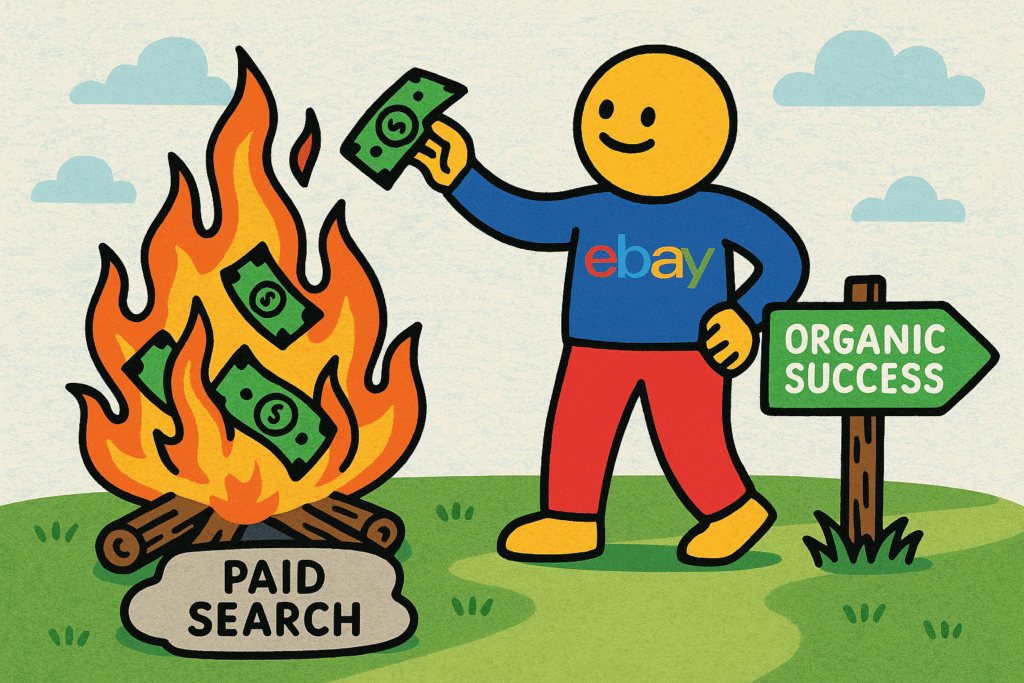
Case Study: eBay Turns Off Google Ads and Nothing Changes

Reading Time: 7 minutes

Brief Summary

In a bold marketing experiment, eBay temporarily halted its paid search ads on Google to measure what would happen. The result?

The eCommerce giant discovered that free organic search listings generated almost the same click traffic as its costly Google ads.

This finding shocked the industry because it suggested eBay was paying millions for ads that didn’t bring in many new customers.

The case highlights the importance of testing advertising ROI and reminds marketers that sometimes organic search can capture demand without extra ad spend.

Company Involved

eBay is a global eCommerce marketplace founded in 1995, known for its auctions and vast product catalog. By the early 2010s, eBay was not only a top online retailer but also one of the biggest spenders on Google’s advertising. This made the company uniquely positioned – and motivated – to investigate whether its substantial investment in paid search ads was truly worthwhile.

Marketing Topic

  • Advertising
  • Strategy
  • Search Engine Optimization (SEO)

Public Reaction or Consequences

eBay’s findings, published in collaboration with economists at UC Berkeley and the University of Chicago, sparked widespread discussion in the marketing world. Industry experts were astonished – if a top advertiser like eBay saw “no measurable benefits” from certain Google ads, what did that mean for the billions spent on search marketing? Some marketers applauded eBay for questioning “business as usual” and using scientific rigor to test advertising ROI. The study concluded that “substitution between paid and unpaid traffic was nearly complete” – in other words, when eBay turned off its paid ads, customers simply clicked the organic result instead.

Google responded by pointing out that results can vary. Google’s own research claimed 89% of ad clicks are incremental, meaning those visits would not occur without ads. This contrast set off debate: eBay’s case suggested that well-known brands might be overpaying for ads, while Google urged advertisers to run their own experiments rather than assume all ads are ineffective. Many marketers began reconsidering their ad budgets and attribution models, and the eBay experiment quickly became a case study discussed in marketing conferences and even classrooms.

Why It Matters Today

  • AI-driven ad buying: Automated bidding algorithms can optimize for clicks and conversions, but without human oversight they might overspend on keywords that don’t drive incremental sales. eBay’s case shows that even advanced systems need a reality check on true ROI.
  • Marketing attribution: Modern attribution models are sophisticated, yet the core lesson remains: correlation is not causation. Marketers must distinguish between customers acquired due to ads versus those who would buy anyway (as eBay did through its testing).
  • Search optimization vs. ad spend: The experiment underscores the value of SEO and brand equity. A strong organic presence can yield “free” traffic – saving millions in ad spend. In today’s budget-conscious environment, maximizing organic reach before paying for ads is more critical than ever.

3 Takeaways

  1. Test for incremental impact: Don’t take ad performance at face value. Use controlled experiments (geo holdouts, A/B tests) to see if ads truly add sales or just cannibalize organic traffic.
  2. Prioritize new customer acquisition: eBay found its ads mainly influenced new or infrequent users, not loyal repeat buyers. Focus your paid search budget on audiences who wouldn’t visit otherwise, and don’t waste spend chasing customers you already have.
  3. Bolster SEO for core keywords: If your brand already ranks high organically, paying for the top ad spot may be redundant. Invest in SEO so that your site captures demand naturally – and reserve paid ads for areas where you need the boost.

Notable Quotes and Data

  • “No measurable benefits.” The eBay study reported that its search ads had “no measurable short-term benefits” for well-known brand terms – customers clicked the free organic link instead.
  • 99.5% organic replacement: When eBay turned off its brand keyword ads, 99.5% of the traffic that the ads would have generated still came to eBay via organic search results.
  • $0.25 per $1 ROI: The experiment showed that eBay got only about $0.25 in revenue for each $1.00 spent on search ads, meaning the vast majority of its paid search budget was wasted.

Full Case Narrative

Background: By 2012, eBay was spending massive sums on Google AdWords – advertising on generic product terms as well as on its own name. However, some within eBay (including a team of internal economists) wondered whether these ads were truly driving additional sales or simply capturing clicks from people who would have come to eBay anyway. John Wanamaker’s famous adage came to mind: “Half the money I spend on advertising is wasted, I just don’t know which half.” To find out which half was which, eBay embarked on a bold experiment.

The Experiment: eBay partnered with academics to design a large-scale field test of paid search advertising. In early 2012, they turned off brand keyword ads (like ads for searches containing “eBay”) on certain search engines and in certain regions. They also halted non-branded search ads (generic keywords such as “camera” or “vacuum cleaner”) for a randomly selected 30% slice of U.S. users over 60 days. By comparing user behavior in markets with no eBay ads to markets where ads continued as normal, eBay could isolate the true causal impact of its search ads.

Key Findings: The results were striking. For searches where eBay’s organic listing already appeared prominently (e.g. someone Googling “eBay”), the paid ads were essentially superfluous. The researchers found that “almost all of the forgone click traffic and attributed sales were captured by natural search” once the ads were turned off. In fact, eBay revealed that the clicks it lost by not advertising were almost entirely made up by clicks on the unpaid organic link. In plain terms, if eBay didn’t pay for an ad, the customer still found their way to eBay via the next available (free) link.

When it came to generic product searches, the lift from ads was minimal. Shutting off ads on broad, non-branded terms led to only a 0.66% change in sales – a difference so small it was statistically insignificant. As the study put it, “on average, US consumers do not shop more on eBay when they are exposed to paid search ads. In other words, overall sales stayed about the same whether eBay ran those Google ads or not.

However, there were a few important exceptions:

  • New or infrequent users: The ads did have some effect on people who were not regular eBay shoppers. First-time buyers and very infrequent customers were slightly more likely to make a purchase if they saw a search ad, whereas frequent eBay users’ behavior was “unaffected by the presence of paid search advertising. In fact, the more purchases a user had made on eBay in the past, the less impact the ads had. This implies that the incremental value of ads came largely from new customer acquisition, not from the loyal base.
  • Competitive scenarios: The researchers acknowledged that if eBay didn’t bid on certain keywords, a competitor could step in. For instance, if someone searches for an eBay product (say “eBay shoes”) and no eBay ad appears, a rival retailer’s ad might grab that click. In theory, brand ads can serve a defensive role – the only time a brand ad truly adds value is if it prevents a competitor (e.g. Adidas) from “hijacking” a search for your brand (e.g. Nike). Thus, some companies might still buy their own keyword to block others, even if the direct sales impact is negligible.

The study’s publication served as a wake-up call across the industry. It highlighted the danger of attributing sales to ads that didn’t truly cause them – many of eBay’s ad clicks were from loyal buyers who would have purchased regardless. Without careful analysis, a marketing team might have wrongly credited those sales to advertising, vastly overestimating the ads’ effectiveness. These findings prompted many companies to rethink their search engine marketing investments.

Some large advertisers quietly reduced or even stopped bidding on their own brand names after seeing eBay’s results, reasoning that their loyal customers would find them organically. Meanwhile, smaller businesses and lesser-known brands viewed the findings with caution. If a company lacks eBay’s name recognition, appearing in sponsored results might be crucial to visibility. Even the eBay researchers noted that paid search could be more valuable for companies without a strong brand or organic presence. Google, for its part, encouraged advertisers to use tools like AdWords experiments to measure effectiveness for themselves, emphasizing that “outcomes differ among advertisers. Still, eBay’s case has forever raised skepticism about blindly pouring money into search ads without evidence of incremental gain.

What Happened Next?

In the aftermath, eBay reportedly scaled back its spending on paid search ads that merely duplicated its organic traffic. For example, eBay realized it didn’t need to pay Google for an ad when someone searches “eBay” – since eBay’s own organic result would be at the top for free. Instead, the company refocused its search marketing budget on more targeted areas. eBay continued to run ads for certain product keywords and competitive categories where it didn’t dominate the organic results, and especially for campaigns aimed at acquiring new users (where the data showed ads had some positive effect).

Over time, eBay also diversified its marketing strategy beyond just Google search. The company put more resources into SEO – making sure eBay listings and pages rank well in organic search so that shoppers find them easily without paid ads. It also expanded efforts in email marketing, social media, and affiliate partnerships, and even developed its own internal advertising for sellers (Promoted Listings on the eBay platform). The overarching strategy for eBay became clear: spend advertising dollars where they truly bring in additional business, and avoid “vanity” ad buys that simply pay for traffic eBay would get anyway.

The industry at large felt eBay’s influence. In the years since, many big advertisers have become more sophisticated about testing ad effectiveness. Concepts like incrementality and causal lift are now common parlance – marketers want to know not just if an ad gets clicked, but if it leads to extra sales beyond baseline. eBay’s pioneering experiment helped shift the focus toward data-driven marketing and accountability. To this day, its bold test is cited whenever questions arise about the real ROI of digital ads.

One Sentence Takeaway

Don’t assume your ads are driving new sales – as eBay proved, you might be paying for clicks you’d get anyway, so always test and trust the data.

Sources and Citations

Fisman, Ray. “Did eBay Just Prove That Paid Search Ads Don’t Work?” Harvard Business Review, March 11, 2013.

Thompson, Derek. “A Dangerous Question: Does Internet Advertising Work at All?” The Atlantic, June 13, 2014.

Barr, Alistair. “EBay study questions value of Google’s main ad service.” Reuters, March 13, 2013.

Case Study: eBay Turns Off Google Ads and Nothing Changes Read More »

case study van halen no brown mms

Case Study: Van Halen’s “No Brown M&M’s” Clause – A Legendary Lesson in Attention to Detail

Reading Time: 9 minutes

Brief Summary

Van Halen’s 1980s tour contract famously included an odd requirement: no brown M&M’s in the backstage candy bowl.

At first glance it looked like rock-star excess, but this quirk had a serious purpose. The band used the brown candies as a test for attention to detail. If a venue missed that line, they likely overlooked critical technical requirements.

In one incident, a venue that ignored the rule suffered tens of thousands of dollars in damage due to unsafe staging. This case became legendary, proving that a seemingly trivial detail can be a warning flag for bigger problems and a master class in quality control.

Company Involved

Van Halen – an American hard rock band formed in 1972 – is at the center of this story. Known for their flamboyant lead singer David Lee Roth and elaborate live shows, Van Halen was one of the biggest touring acts of the late 1970s and 1980s. Their massive concerts, featuring spectacular lighting and effects, set new standards for production complexity. The band’s insistence on professionalism and safety, as evidenced by the infamous M&M clause, became as much a part of their legacy as their music.

Marketing Topic

  • Strategy
  • Customer Experience

Public Reaction or Consequences

When news of the “no brown M&M’s” clause leaked out (notably after a 1980 concert in Pueblo, Colorado where the band found brown candies and trashed the dressing room), it quickly became music industry lore. At the time, the media portrayed Van Halen as prima donna rockstars – throwing a tantrum over candy. Headlines focused on the band causing up to $85,000 in damage after spotting a few brown M&M’s. This narrative of “spoiled rockers” reinforced the public’s image of outrageous tour demands and even had promoters shaking their heads.

However, when David Lee Roth later revealed the truth behind the clause, public perception shifted. What was once mocked as egotistical became praised as ingenious. Fans and business observers alike came to appreciate the clever safety measure hidden in plain sight. The story turned into an urban legend with a positive twist – a go-to example of why details matter. In the long run, Van Halen’s brand didn’t suffer; if anything, the tale added to the band’s mystique and demonstrated their commitment to delivering a safe, top-quality show. It also sparked widespread discussion, turning a backstage anecdote into a cultural touchstone for attention to detail in any industry.

Why It Matters Today

  • Attention to Detail Is Timeless: In today’s complex marketing campaigns and projects, a minor oversight (like a broken link or a small print error) can snowball into a major issue. Van Halen’s candy test underscores how crucial it is to sweat the small stuff to prevent big problems.
  • Trust and Compliance: Modern marketers juggle strict regulations (from data privacy to brand safety). A “brown M&M” test – a simple check embedded in processes – can verify that partners, platforms, or team members are following guidelines. It’s a clever way to ensure compliance before a campaign goes live.
  • Customer Experience and Safety: Whether it’s a live event or a digital product launch, the audience only sees the end result. Hidden quality-control measures (like Van Halen’s clause) help deliver a seamless and safe customer experience. In an age of instant social media feedback, catching mistakes early safeguards a brand’s reputation and consumers’ trust.

3 Takeaways

  1. Small Details, Big Signals: Never dismiss a seemingly trivial detail – it might be signaling a larger problem. Van Halen’s brown M&M’s were a tripwire indicating whether a venue read the entire playbook. Marketers should identify their own “tripwires” (for example, a specific requirement in a brief or contract) to quickly gauge if partners and teams are truly paying attention.
  2. Embed Quality Checks in Your Strategy: The genius of this case is how a fun detail doubled as a safety check. Likewise, build checkpoints into your marketing projects – from test emails to preview environments – that ensure every requirement is met. A well-placed test (like a hidden instruction in a project outline) can save you from disaster by revealing who has done their due diligence.
  3. Protect the End-User Experience: Van Halen’s ultimate goal wasn’t candy control; it was to prevent a technical failure that could ruin the show for fans (or even put them at risk). In marketing, every detail that affects your audience’s experience – no matter how minor – is worth controlling. Consistency and safety in execution uphold your brand’s promise. A campaign might have great creative, but if the landing page is broken or customer data isn’t handled properly, the whole effort can collapse. Ensuring all details are right means delivering on what you promised your audience.

Notable Quotes and Data

  • “If any brown M&M’s were found backstage, the band could cancel the entire concert at the full expense of the promote. (Van Halen’s contract rider put promoters on notice: a single candy could cost them millions.)
  • “David Lee Roth was no diva; he was an operations master. In Van Halen’s world, a brown M&M was a tripwire.” (Authors Chip and Dan Heath, emphasizing the clever strategy behind the infamous clause.)
  • At one show, the stage sank through the arena floor, causing about $80,000 in damage, because staff “didn’t bother to look at the weight requirements” in Van Halen’s rider. (The cost of not paying attention: a concrete example of the havoc a skipped detail can wreak.)

Full Case Narrative

Background: By the late 1970s, Van Halen had exploded into one of rock’s biggest acts. Their tours were massive productions – the band would roll into town with nine 18-wheeler trucks of gear when most bands used three. They pioneered bringing big-budget rock shows to smaller markets that had never seen such scale. The result? A 50+ page technical contract rider detailing every requirement, from electrical specifications to the size of doorways needed to fit their equipment. This document read “like a version of the Chinese Yellow Pages,” Roth quipped, because of its thoroughness. It had to be exhaustive – safety and show quality depended on every line.

The Clause: Buried deep in Van Halen’s rider, amid instructions about amps and lighting rigs, was Article 126: “There will be no brown M&M’s in the backstage area, upon pain of forfeiture of the show, with full compensation.” In plain terms, the venue had to provide a bowl of M&M candies with all the brown ones removed, or the band could cancel the show and still be paid in full. This bizarre demand sat quietly among critical tech specs – exactly where David Lee Roth wanted it. The logic was simple: if the promoter missed the M&M clause, what else did they miss? As Roth later explained, “Just as a little test” they included that odd line to make sure every detail of the rider was noticed. It was, as he put it, a canary in a coal mine – an easy-to-spot indicator of whether the venue’s team truly read the entire contract.

Why They Did It: Van Halen’s shows weren’t just pyrotechnic extravaganzas; they were logistical tightropes. A minor oversight (say, a ceiling beam that couldn’t bear the weight of the lighting rig) could mean catastrophe – collapsing stages, electrical fires, or serious injuries. In fact, many older venues simply weren’t built for the strain of a Van Halen showed. Roth knew that if he strolled into the dressing room and saw even one brown M&M in the candy dish, it was an immediate red flag. It meant the promoter might have skimmed over the safety precautions. As Roth said, “If I saw a brown M&M in that bowl… well, line-check the entire production. Guaranteed you’re going to arrive at a technical error. … Guaranteed you’d run into a problem. Sometimes it would threaten to just destroy the whole show.” In other words, finding brown candy was a signal to stop the music and double-check everything – from power supplies to stage supports – before any real harm was done.

The Pueblo Incident: The infamous proof of this system’s value came during a show at Colorado’s Pueblo arena in 1980. The venue was a small university coliseum that had just installed a new rubberized basketball floor. Crucially, the rider included weight requirements for the staging that this new floor could not handle – something the promoter either ignored or overlooked. When Van Halen arrived, Roth found brown M&M’s in his dressing room bowl, in direct violation of the contract. He knew immediately that the crew had not read the fine print. According to Roth’s retelling, he acted out a dramatic “Who spilled these?” routine and then went on a rampage – dumping buffet food, overturning tables, and even kicking a hole in a door. He caused about $12,000 in (intentional) damages backstage – partly to drive home the point that the contract hadn’t been respected.

The real disaster was waiting in the wings. As the crew inspected the stage, they discovered the oversight: the venue’s shiny new floor couldn’t support the weight of Van Halen’s massive stage setup. Sure enough, the staging sank through the floor, gouging a huge hole and wrecking the playing surface. The price tag for that mistake? Roughly $80,000 in damage to the arena floor. Media reports later (mis)attributed the entire $80k–$85k fiasco to Van Halen’s “tantrum” over brown M&M’s, not realizing that most of the destruction came from the venue’s negligence. As Roth wryly quipped afterward, “Who am I to get in the way of a good rumor?”. The band got its vindication – the brown M&M trick did its job by exposing a lurking danger before anyone got hurt onstage.

Aftermath and Revelation: For years, the brown M&M story was whispered in music circles as an example of outrageous demands. It added to Van Halen’s notorious reputation and was often listed alongside the wildest rock star riders. But behind the scenes, Roth’s strategy was a success: Van Halen avoided technical disasters by smoking them out early. The band continued to enforce meticulous standards and as a result, their tours ran like clockwork. Finally, in the mid-1990s, David Lee Roth decided to set the record straight. In his 1997 autobiography Crazy from the Heat, Roth revealed the true motive, explaining that the M&M clause was a deliberate safety test rather than a bout of vanity. This confession transformed the brown M&M tale from a silly rock anecdote into a teachable lesson. Business leaders, authors, and project managers seized on it as a perfect metaphor. As one analysis put it, “Roth was no diva; he was an operations master” who understood how to ensure quality control.

Legacy: Today, the “no brown M&M’s” rider lives on as a legendary case study in paying attention. Van Halen’s insistence on detail has been applauded in industries far from rock music – from manufacturing to software development – as an example of building tripwires to catch mistakes early. In the music world, the incident led many promoters to take contract riders more seriously, knowing that even a tiny omission could have big consequences. Van Halen itself continued to thrive; the band’s over-the-top shows in later years (and reunion tours) were successful and incident-free, partly thanks to the kind of rigor that little candy clause exemplified. What started as a misunderstood quirk is now almost folklore – a reminder that in any high-stakes venture, the devil is truly in the details.

Timeline

  • 1980: Van Halen’s concert at Pueblo’s Massari Arena in Colorado becomes the “brown M&M” incident – the band finds brown candies, Roth destroys the dressing room, and the venue’s floor sustains ~$80k damage due to ignored stage specs. The story makes local headlines and contributes to Van Halen’s wild reputation.
  • 1982: Van Halen’s exhaustive 53-page tour rider (for the Hide Your Sheep tour) explicitly includes the “M&M (Absolutely no brown ones)” clause in the catering section, warning promoters of dire penalties if breached. This hidden detail serves as the band’s quality assurance test at every show.
  • 1997: David Lee Roth publishes Crazy from the Heat, publicly revealing the rationale behind the no-brown-M&M clause. He confirms it was never about candy preferences – it was a clever safeguard to ensure venues followed all safety and technical requirements. The revelation reframes the tale as smart practice rather than rock star excess.

What Happened Next?

After the truth came out, Van Halen’s brown M&M gambit became a textbook example for managers and marketers worldwide. The band itself moved on to new chapters (with Roth departing in 1985 and later rejoining), but their commitment to precision on tour persisted. They continued to include detailed requirements in contracts, and promoters – now wise to the brown M&M story – knew to take every line seriously. In the broader industry, other artists quietly adopted the Van Halen approach, embedding their own subtle checks to avoid nasty surprises. For Van Halen, there was no lasting damage; in fact, their brand was enhanced by the saga. Decades later, they could fill stadiums with a reputation not only for amazing performances but also for setting the bar on production standards. The no brown M&M’s rule has entered pop culture legend, ensuring that Van Halen will always be remembered not just for rock anthems, but for one of the smartest “gotchas” in business lore.

One Sentence Takeaway

Even the smallest detail can be a big safety net – Van Halen’s no-brown-M&M rule shows that meticulous attention to detail is often the secret to preventing disaster and delivering excellence.

Sources and Citations

Jones, Steve. “No Brown M&M’s: What Van Halen’s Insane Contract Clause Teaches Entrepreneurs.” *Entrepreneur*, Mar 24, 2014.

Gimbel, Tom. “The Significance of Van Halen’s Brown M&M’s Rule.” *Inc.com*, May 31, 2018.

Tharakan, Kurian. “No Brown M&Ms — The Hidden Genius in Van Halen’s Contract Clause.” *Medium*, May 30, 2023.

“Van Halen’s Brown M&Ms – Their Key To Rock and Roll Safety.” *Safety Dimensions Blog*, quoting David Lee Roth’s *Crazy from the Heat* (1997).

Wardlaw, Shauna. “David Lee Roth Explains Van Halen’s ‘No Brown M&M’s’ Rule.” *Ultimate Classic Rock*, Feb 17, 2012.

Case Study: Van Halen’s “No Brown M&M’s” Clause – A Legendary Lesson in Attention to Detail Read More »