Source:MarTech Intelligence Report: Customer Data Platforms — A Marketer’s Guide (Third Door Media / MarTech.org) Date Published: November 2024 Audience: Marketers evaluating or implementing customer data platforms (CDPs). Data Sources Cited: Vendor surveys, industry analyst insights, and case studies from CDP providers.
This guide provides an in-depth overview of the CDP market, including platform capabilities, selection criteria, vendor comparisons, and implementation best practices. It is part of an annually updated series of MarTech Intelligence Reports.
Actionable Tips
Define clear business use cases for a CDP before evaluating vendors. Know whether you need better personalization, data unification, or audience segmentation.
Engage IT and marketing together early in the CDP evaluation to align requirements, budgets, and data governance needs.
Prioritize integration capabilities. A CDP’s value depends on how seamlessly it connects to your CRM, ad platforms, and analytics stack.
Evaluate vendor support and onboarding resources. A CDP without proper training and technical support will slow adoption.
Consider scalability. Choose a platform that can handle your current data volume and projected growth over the next 3–5 years.
Look at real-time capabilities. The faster data flows into and out of the CDP, the more effective your personalization and campaign execution will be.
Pro Tip: Run a pilot program with a single use case (e.g., abandoned cart retargeting) before fully committing to a vendor.
Key Stats and Sources
According to industry surveys cited in the report, 62% of marketers say customer data management is their top challenge, and CDP adoption has grown by more than 25% year-over-year. MarTech and vendor case studies highlight increased ROI through improved personalization and reduced data silos.
Examples You Can Steal
A retailer used a CDP to unify offline and online purchase data, enabling more accurate customer lifetime value scoring. Another brand leveraged real-time CDP data to trigger personalized email offers within minutes of site abandonment.
How To Apply This Fast
Today: Audit your current data sources (CRM, website analytics, ad platforms) to identify gaps and overlaps that a CDP could help solve.
This month: Meet with IT and marketing stakeholders to draft your top three use cases and create an evaluation checklist for potential vendors.
Bold Claims and Counterpoints
Claim: CDPs eliminate all customer data silos. Counterpoint: They reduce silos significantly, but complete elimination depends on disciplined data governance and consistent integration.
Claim: Every enterprise marketer needs a CDP. Counterpoint: Smaller teams may achieve sufficient results with existing CRM or marketing automation platforms.
Claim: Real-time CDP data guarantees better personalization. Counterpoint: Speed helps, but without a solid personalization strategy, real-time data alone won’t improve outcomes.
Metrics That Matter
Track unified customer profiles created, percentage of data sources integrated, segmentation accuracy, campaign engagement lift, and time-to-insight improvements after implementation.
What Is Missing or Caveats
The guide highlights leading vendors but may not fully capture emerging CDP startups. It also emphasizes U.S. market data, so international teams should validate applicability. Cost estimates vary widely and may not reflect all implementation complexities.
One-Sentence Takeaway
A CDP can unify data and unlock personalization, but its success depends on defined use cases, cross-team alignment, and disciplined execution.
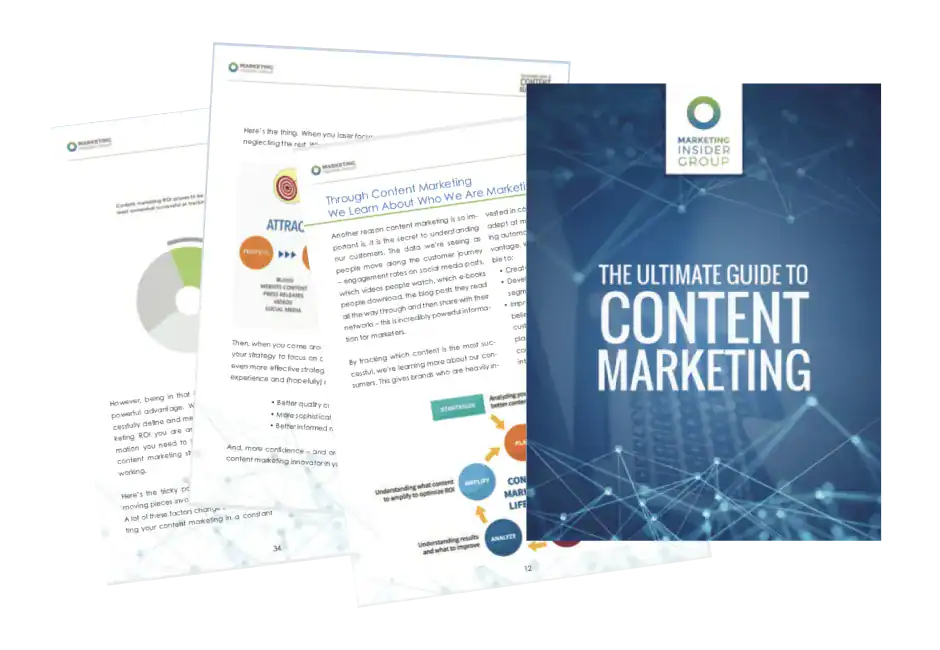
Source:The Ultimate Guide to Content Marketing Date Published: October 2024 Audience: marketers who are building or refining a content strategy Data Sources Cited: Content Marketing Institute, Demand Metric, Gartner, Neil Patel, and others
The guide frames content marketing as a growth engine when it is strategy led, personalized, measured against business outcomes, and supported by a content hub.
Actionable Tips
Build a content hub. Centralize your best content in one branded home to improve discovery, SEO, and perceived authority. Keep it updated so it stays useful.
Set clear priorities. Pick one or two outcomes at a time such as qualified leads or retention rather than trying to do everything at once.
Personalize. Use customer data and marketing automation to deliver relevant content. Irrelevant content loses attention quickly.
Atomize big assets. Repurpose a major piece into smaller formats such as short posts, clips, and visuals to extend reach and ROI.
Measure what matters. Tie metrics to business goals such as conversion and retention rather than only traffic. Set benchmarks and refine.
Activate advocates. Involve employees and customers to add authenticity and reach. Peer trust outperforms brand messaging.
Key Stats and Sources
Examples cited in the guide include claims such as content marketing driving more leads at lower cost, higher conversion rates, and budget benchmarks reported by Content Marketing Institute and Demand Metric. Always verify percentages against the latest studies for your industry.
Examples You Can Steal
Organize a topic hub that links a research post to a how-to video and a related case study. Repurpose a webinar into three short posts and a checklist. Invite internal experts to answer the top five customer questions as quick articles.
How To Apply This Fast
Today: choose one priority, pick one flagship asset to atomize into three small pieces, and create a simple hub page section that groups your best related content.
This month: add basic personalization rules, define two business-tied metrics, and schedule a monthly hub refresh.
Bold Claims and Counterpoints
Claim: successful teams allocate about forty percent of the marketing budget to content. Counterpoint: start with a level you can measure and justify, then scale with ROI and capacity.
Claim: a centralized hub is foundational. Counterpoint: the hub only works if you maintain it and connect it to distribution and measurement.
Claim: atomization maximizes ROI. Counterpoint: not every piece deserves a full spin-down. Prioritize assets with proven interest and search demand.
Metrics That Matter
Match metrics to goals. For audience growth track share of conversation and engaged time. For pipeline track conversion to subscriber and lead quality. For loyalty track repeat purchase and content-driven retention signals.
What Is Missing or Caveats
Benchmarks vary by industry and stage. The guide promotes hubs, personalization, and higher content budgets, but smaller teams may need phased adoption and a sharper focus on a few formats they can execute well.
One-Sentence Takeaway
Make content a strategy led system with a maintained hub, focused goals, personalization, and business tied metrics, then improve it continuously.
In the late 1990s, Amazon.com transformed online shopping by introducing a personalized recommendation engine that suggests products based on each customer’s behavior.
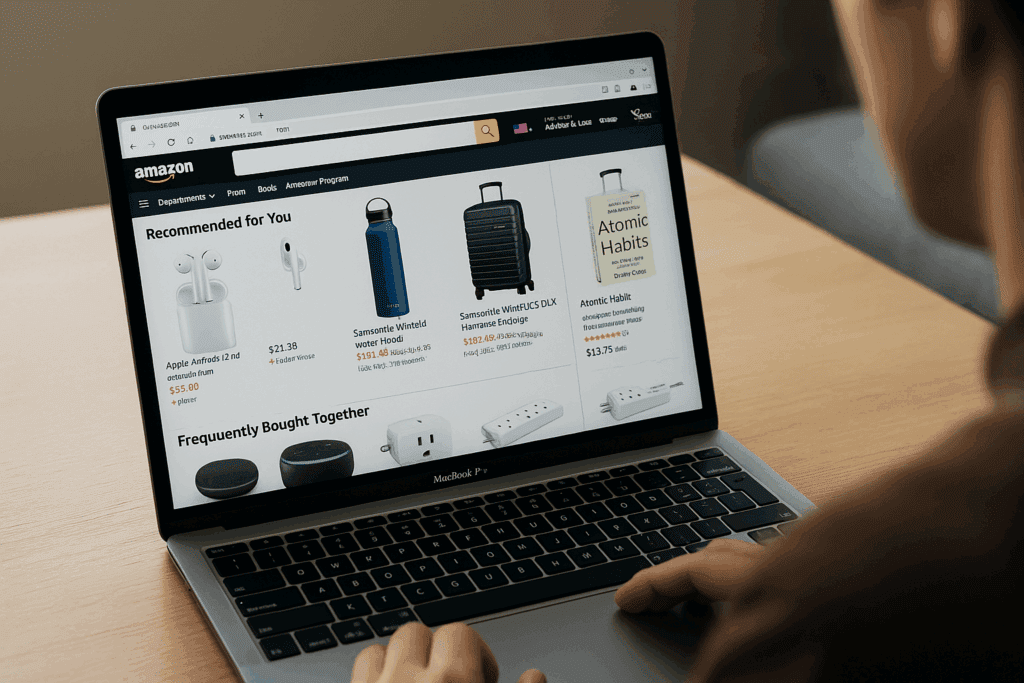
This “Customers who bought X also bought Y” approach revolutionized eCommerce, making it easier for users to discover products and for Amazon to increase sales. Over the years, Amazon’s AI-driven recommendations became increasingly sophisticated, contributing up to 35% of the company’s revenue.
This case study examines how Amazon’s recommendation strategy evolved through innovation and trial-and-error, the public’s reaction including a notable controversy, and the lessons modern marketers can learn about personalization, data, and trust.
Company Involved
Amazon.com is the Seattle-based eCommerce and cloud computing giant founded by Jeff Bezos in 1994 and known for its customer-centric ethos and relentless innovation in online retail.
Marketing Topic
Personalization
Customer Experience
Data Ethics
Public Reaction or Consequences
Overall, customers have embraced Amazon’s recommendations as a convenient way to discover new products. The personalized suggestions, from “Frequently Bought Together” add-ons to “Recommended for You” items, often feel helpful rather than intrusive, and they quietly encourage shoppers to spend more. However, there have been moments of public concern. Some users jokingly share odd or overly personal recommendations on social media, highlighting the creepiness factor when algorithms seem to know too much. Privacy advocates have also questioned how much data Amazon collects to power these features.
A more serious incident occurred in 2017, when Amazon’s algorithm was found suggesting combinations of products that could be used to create explosives after a news investigation in the United Kingdom. The “Frequently Bought Together” feature had inadvertently grouped legal chemical ingredients that, in combination, could form a bomb. This revelation sparked media backlash and raised alarms about the lack of human oversight in algorithmic recommendations. Amazon responded by reviewing and tweaking its recommendation presentation to prevent such dangerous pairings. The company emphasized its commitment to customer safety and noted that all products must comply with applicable laws. While the issue was quickly addressed and did not cause lasting damage to Amazon’s brand, it stands as a cautionary tale of unintended consequences.
Despite isolated controversies, the public’s overall response has been positive. Many consumers now expect personalized recommendations as a standard part of the online shopping experience. Amazon’s success normalized the idea that a retailer knows you well enough to suggest what you might want next. This expectation has since spread beyond Amazon to virtually every major eCommerce or content platform, illustrating how Amazon’s early bet on personalization shaped consumer behavior. The key lesson from public reaction is that useful personalization can delight customers, but companies must be vigilant about privacy, relevance, and appropriateness to maintain trust.
Why It Matters Today
Personalization is now the norm: Amazon’s case cemented personalization as a core marketing strategy. In today’s AI-driven market, customers expect tailored experiences from product recommendations to curated content and companies that deliver relevant suggestions enjoy higher engagement and loyalty. Amazon showed that treating each customer uniquely at scale is possible and profitable.
Data-driven strategy and ROI: This case highlights how leveraging customer data can dramatically improve revenue. Marketers now cite Amazon when arguing for investments in AI and analytics because Amazon’s recommendation engine drives roughly a third of its sales. The case underscores that mining purchase history and behavior patterns ethically can boost cross-selling, upselling, and customer lifetime value.
Balancing personalization with trust: Amazon’s journey is also a lesson in data ethics and algorithm oversight. In an era of GDPR, CCPA, and growing privacy concerns, marketers must ensure personalization does not cross the line into invasiveness or danger. Amazon largely avoided creepy personalization scandals by focusing on helpful use of data, but the 2017 incident showed that even well-intended algorithms need human checks. Modern marketers must combine automation with judgement, ensuring that personalization remains a positive force.
Continuous innovation: Finally, Amazon’s case remains relevant because it is about continuous improvement. From collaborative filtering to neural networks and now generative AI, Amazon keeps evolving its approach. This reminds marketers to stay innovative and adaptive. The tools and techniques for personalization today might change tomorrow, but the goal of delighting the customer remains.
3 Takeaways
1. Personalization pays off: Relevant recommendations can significantly boost sales and customer satisfaction. Amazon proved that tailoring the shopping experience to individual tastes is not just a nice-to-have. It became a competitive advantage that drives 30 percent plus of revenue. Marketers should invest in understanding their customers deeply and delivering the right suggestion at the right time.
2. Test, learn, and iterate: Amazon’s recommendation engine succeeded through constant experimentation and refinement. The team did not get it perfect on the first try. Early features flopped, and even successful algorithms had hidden flaws that were later fixed. The breakthrough came from a culture of A/B testing and data-driven decision-making. Marketers should foster a similar test-and-learn approach, using customer feedback and metrics to guide improvements.
3. Keep customer trust at the center: Personalization should enhance the customer’s experience, not exploit it. Transparency, relevance, and safety are key. Amazon’s misstep recommending bomb ingredients illustrated how automated suggestions can go awry without safeguards. The case teaches that marketing algorithms need ethical guidelines and oversight. When implementing personalization, always ask: Is this in the customer’s best interest.
Notable Quotes and Data
Nearly 35 percent of Amazon’s revenue is generated by its recommendation engine, according to industry research. This oft-cited statistic highlights the massive impact of Amazon’s personalized marketing on its bottom line.
“We will listen to customers, invent on their behalf, and personalize the store for each of them, all while working hard to continue to earn their trust.” Jeff Bezos, Amazon founder, 1999 shareholder letter.
“In my experience, innovation can only come from the bottom. Those closest to the problem are in the best position to solve it.” Greg Linden, early Amazon engineer.
Full Case Narrative
In the mid-1990s, Amazon was a young online bookstore with a bold vision: to become Earth’s most customer-centric company. Founder Jeff Bezos believed the internet allowed each shopper to have a unique, personalized experience, famously saying that if he had millions of customers, he should have millions of different storefronts for them. Early on, Amazon experimented with basic recommendation features to bring this vision to life. The first attempt, a tool called BookMatcher, asked customers to rate books to get suggestions. However, it did not work very well, requiring over 20 ratings to generate any recommendations, which often turned out obvious or off-target bestsellers. The system was also straining under the growing user load. In short, Amazon’s initial foray into personalization was a flop, but it laid the groundwork for something much bigger.
Enter Greg Linden, a young Amazon software engineer with a passion for data mining. In the late 1990s, Linden started a side project to build a better recommendation engine: one that could work quickly with minimal input. He worked in his spare time to prototype a new system called Instant Recommendations. Rather than requiring dozens of explicit ratings, it could make suggestions after just a few purchases or product views. Linden’s prototype was fast and scalable, prioritizing performance so recommendations could be updated in real time. When Amazon undertook a major website redesign, his team with support from a manager named Dwayne polished the interface and slipped Linden’s recommender into production. For a while, the old and new systems ran in parallel, but as expected, Instant Recommendations proved far more useful, and the clunky BookMatcher was soon retired. This bottom-up innovation, developed by an engineer rather than directed by executives, would evolve into the backbone of Amazon’s personalization strategy.
One of the first places Amazon saw a big impact was the shopping cart. Around 1998, Linden had an idea: what if Amazon’s site showed you additional items while you were checking out, based on what is in your cart. Traditional retailers have always relied on impulse buys in checkout lanes, so why not digital recommendations. Linden hacked together a cart recommendation feature and demoed it. Initially, a senior Amazon executive opposed the idea, worrying that suggestions might distract customers from completing their purchase. Undeterred, Linden ran an A/B test to let the data speak. The results were unmistakable: showing recommendations at checkout increased sales by a wide margin. With that evidence, Amazon launched the feature sitewide with urgency. It was an early lesson that smart recommendations could boost revenue without derailing the customer experience. As Greg Linden later noted, sometimes front-line innovation trumps managerial instinct, and you have to trust those close to the data and the customer to experiment.
Behind Amazon’s successful recommendation engine was a technical breakthrough. In the early 2000s, most companies experimenting with recommendations used user-based collaborative filtering, meaning they tried to match you with similar customers and recommend items those people bought. Amazon’s tech team, however, found this approach did not scale well as its customer base grew into the millions. Updating and comparing countless user profiles was too slow and computationally expensive. Instead, Amazon’s engineers flipped the approach to item-to-item collaborative filtering. In simpler terms, the algorithm focuses on the relationships between products, not people. For any given item, Amazon’s system automatically identifies other items that are frequently bought by the same customers. If you buy item A, and a lot of those buyers also bought item B or C, then B and C are related to A in the eyes of the algorithm. By precomputing these item-to-item similarities, Amazon could quickly generate recommendations on the fly by looking at the customer’s current item or recent purchases. This method was far more scalable and often more accurate in producing relevant suggestions. In 2003, Amazon engineers Greg Linden, Brent Smith, and Jeremy York published a paper explaining this item-based filtering approach. Years later, that paper was recognized with a Test of Time award for its enduring influence on the field. The takeaway for Amazon was that a combination of big data and clever math could recreate the personal touch of a sales clerk who knows what shoppers with similar tastes tend to buy.
Of course, the recommendation engine was not perfected overnight. Amazon spent years refining the algorithms to improve quality. One major adjustment, made in the mid-2000s, involved correcting a statistical bias. Originally, the related-item calculations did not account for the fact that some customers just buy a lot of stuff. These heavy buyers could skew the results, making unrelated popular items seem falsely related simply because big spenders happened to purchase many things. Amazon’s data scientists eventually recognized this flaw and tweaked the formula to discount the influence of those high-variance shoppers. This fix significantly improved recommendation relevance. It is a reminder that even successful algorithms need tuning and human vigilance to keep getting better. Amazon’s personalization team continued to add new data signals as well. Beyond just co-purchase patterns, they incorporated browsing history, item ratings, and contextual info like seasonality or trending products. Over time, the recommendations became richer and more multifaceted: not only “customers who bought X also bought Y,” but also “Inspired by your browsing history,” “Recommended for you in category,” and so on. By the mid-2000s, Amazon’s site was practically littered with recommendation widgets, on the homepage, product pages, the cart, confirmation pages, and follow-up emails. This was very intentional. Amazon recognized that every touchpoint was an opportunity to present something the customer might buy, a chance to upsell or cross-sell while genuinely helping the customer discover relevant products. An internal motto emerged: never miss an opportunity to make a helpful recommendation.
The impact of this strategy was dramatic. Amazon realized that recommendations not only increased immediate basket sizes but also improved customer retention. Shoppers who consistently find things that interest them are more likely to return to Amazon for future purchases. Over the years, Amazon has reported that a huge portion of sales comes from these personalized suggestions. Analysts estimate 30 to 35 percent of Amazon’s retail revenue is driven by its recommendation engine. Jeff Bezos once described the effect as accelerating the process of discovery for customers, effectively shortening the time it takes for people to stumble upon something they want. Instead of wandering a physical store or doing broad web searches, Amazon’s algorithms put curated options in front of you. For example, a customer shopping for a digital camera might immediately see recommended accessories like tripods or memory cards, top-rated lenses other photographers bought, or even alternative camera models that are popular. This not only increases the odds of a larger sale, but it also enhances the customer experience by making Amazon feel like a one-stop shop that understands your needs. Over time, Amazon’s personalization grew so sophisticated that it started to feel like the platform was anticipating what you might want next, almost like a knowledgeable store clerk or a friend who knows your tastes. An analysis found dozens of different recommendation slots on Amazon’s homepage app, each tailored with different logic to maximize the chances of conversion. By investing heavily in machine learning, data infrastructure, and experimentation, Amazon built what many consider the gold standard of recommendation systems in retail.
However, even gold standards have their glitches. One prominent hiccup in Amazon’s story came in September 2017. Following a thwarted terror attack in London, reporters discovered that Amazon’s algorithm was bundling bomb-making ingredients in recommendations. For example, if someone added a certain chemical to their cart, the “Frequently Bought Together” section might suggest other chemicals and supplies that, together, could create an explosive. This was an eerie and alarming example of an algorithm simply optimizing for sales without understanding context or appropriateness. The public and media reaction was swift. Amazon acted quickly to remove such combinations and issued a statement underscoring that all products must comply with guidelines and that they were reviewing the site to ensure products are presented in an appropriate manner. The incident highlighted a crucial point: algorithms have no common sense. They will recommend whatever boosts click-through and revenue unless humans set boundaries. For Amazon, it was a reputational scare that fortunately did not escalate. Internally, it likely prompted the team to introduce new safeguards, perhaps filtering out certain products from being recommended together or adding oversight for products with legal or safety implications. The lesson for marketers is clear. When deploying AI and personalization at scale, always consider the edge cases and potential misuse. What makes business sense in aggregate might be problematic in specific contexts.
Meanwhile, Amazon kept pushing its recommendation engine into new realms. As the company diversified into digital content like Kindle e-books and Prime Video, into groceries like Whole Foods and Amazon Fresh, and into voice assistants like Alexa, it brought personalization along for the ride. On Amazon’s video platform, for example, recommendation algorithms suggest what to watch next, much like Netflix. Initially, Amazon’s Prime Video struggled to achieve the same level of finesse in suggestions as its retail store did for products. In 2014, a team in Amazon’s Personalization group began overhauling the Prime Video recommender using deep learning techniques. After several years of research and development, they achieved a breakthrough. In 2019, Amazon’s Consumer leadership announced that a new AI-driven algorithm had delivered a twofold improvement in Prime Video recommendation quality, calling it a once-in-a-decade leap in performance. This showed that even after decades, Amazon is still finding new ways to improve personalization by applying modern neural network models to complement collaborative filtering approaches. Similarly, Amazon’s foray into voice with Alexa opened another front: figuring out how to recommend products conversationally when a user says, for instance, “Alexa, I need some batteries.” By 2020, Amazon even started offering its internal personalization technology as a service to other businesses via AWS Personalize, essentially letting any retailer or app developer use Amazon-like recommendation algorithms without having to build them from scratch. It is ironic and impressive. A tool that began as a secret sauce for selling more books is now a cloud product in its own right.
Through all of this, Amazon has remained laser-focused on the customer. The company’s culture is famously data-driven, but also guided by the principle of earning and keeping customer trust. Amazon’s use of personalization has generally avoided the creepy factor that plagues some others. Amazon achieved this by keeping recommendations mostly on-site or in Amazon-branded emails where they feel like helpful suggestions in context, rather than chasing customers around the web with retargeting ads that feel invasive. They also give users control. Amazon’s site has options to fine-tune your recommendations, remove items from your browsing history, or turn off certain personalized emails. In short, Amazon’s case shows that personalization thrives when it is customer-centric, genuinely enhancing the user’s ability to find what they want, and not just a naked ploy to upsell.
Timeline
1997: Amazon debuts its first recommendation feature, BookMatcher, which suggests books based on user ratings. It struggles due to requiring many ratings and often just recommends popular titles.
1998: Engineer Greg Linden develops a new Instant Recommendations engine as a side project, focusing on speed and minimal input. Amazon launches it during a site redesign, and it soon replaces BookMatcher as the main recommendation system.
1999: Amazon implements shopping cart recommendations, impulse suggestions at checkout. Despite initial internal resistance, an A/B test proves it boosts sales, and the feature rolls out to all customers.
2001: Amazon files a patent for its item-to-item collaborative filtering technology as it refines the algorithm for scalability and relevance. Personalized product recommendations become a key part of Amazon’s site navigation and emails.
2003: Amazon’s Personalization team publishes a paper on item-to-item collaborative filtering. This approach, focusing on product-to-product similarities, allows Amazon to make real time recommendations even with a massive customer base. Years later, the paper is honored as a Test of Time paper for its lasting influence.
Mid-2000s: Ongoing improvements are made to the recommendation engine’s math. The team corrects a bias where heavy purchasers distorted item correlations, leading to a notable quality boost in suggestions. Amazon also expands recommendation widgets across the site and launches “Customers Who Bought X Also Bought Y” and “Frequently Bought Together.”
2010s: Amazon’s growth into new categories sees its recommendation engine applied to music, video, and more. In 2014, Amazon begins using deep learning for recommendations, and by 2019 achieves a major improvement in Prime Video suggestions with advanced AI models. In retail, recommendations continue to drive a significant portion of sales.
September 2017: Controversy. British media report that Amazon’s auto recommendations grouped together ingredients for making a bomb, following a terror incident. Amazon quickly removes the suggestions and updates its algorithms and policies to prevent such combinations. The event draws attention to the ethical design of recommendation systems.
2020 and beyond: Amazon introduces AWS Personalize, offering its recommendation algorithms as a service to other businesses. Personalization remains central to Amazon’s marketing. The company starts using generative AI to create more nuanced, context-aware recommendations and personalized content descriptions. By 2025, Amazon’s personalization spans voice, physical stores, and continues to evolve with new technologies.
What Happened Next
Amazon’s recommendation engine never stopped evolving, and its story is a testament to continuous innovation. After solidifying its dominance in online retail, Amazon’s personalization tactics were emulated by competitors worldwide. Rather than resting on its laurels, Amazon pushed forward on multiple fronts.
Resilience and trust: In the wake of the 2017 bomb-recommendation scare, Amazon took measures to avoid similar incidents. While details are private, the company likely improved its filtering of sensitive items and gave its algorithms context awareness. The quick mitigation helped Amazon maintain customer trust. There was no lasting boycott or regulatory action, partly because Amazon was proactive and because people understood this was a mistake, not malice.
Holistic personalization: Amazon expanded the scope of its recommendation engine beyond just products you might buy. The company realized that personalization could improve the entire customer journey. This includes personalized search results, personalized deals, and personalized content on Amazon’s homepage and marketing communications. By integrating its vast data with machine learning, Amazon created a retail experience that feels uniquely tuned to each user.
From tool to product: A notable next chapter is how Amazon turned its internal capability into a service for others. Amazon Web Services launched Amazon Personalize, allowing developers to plug into Amazon’s recommendation algorithms as an API. Essentially, Amazon is monetizing its expertise in personalization by selling it to third parties who want Amazon-grade recommendations without having to build them from scratch.
Future innovations: As of the mid-2020s, Amazon is infusing AI at an even deeper level into its recommendation systems. The company has spoken about using advanced NLP and generative AI to tailor product descriptions and titles to individual shoppers. They are also exploring multi-modal recommendations, especially as voice shopping grows. The recommendation engine of the future might converse with you via Alexa, or use AR to suggest how furniture would look in your room. The common thread: Amazon never sees personalization as done. It is an ongoing journey, with the next stop being AI that can understand context even better.
Today, Amazon’s marketing and product strategy is inseparable from its recommendation engine. The company continues to achieve strong sales growth and high customer retention, and a lot of that can be credited to the seamless, personalized experience that keeps customers engaged and shopping. Amazon’s recommendation engine, once a novel feature, is now a core part of its brand promise: we know what you like, and we will help you find it.
One Sentence Takeaway
Personalization can be a powerhouse for growth, but only if you continually earn customer trust while using data to genuinely enhance their experience.
“A confused customer buys nothing.” This old marketing maxim holds true in the data: when people are overwhelmed or confused by too many options, they often make no choice at all.
In marketing psychology, this is known as choice overload or the paradox of choice. The human brain has a limited capacity for decision-making, and too many options create friction leading the potential buyer to abandon the decision.
In practical terms, simplifying your offerings and messaging can dramatically improve customer response.
Too Many Options, No Decision (The Paradox of Choice)
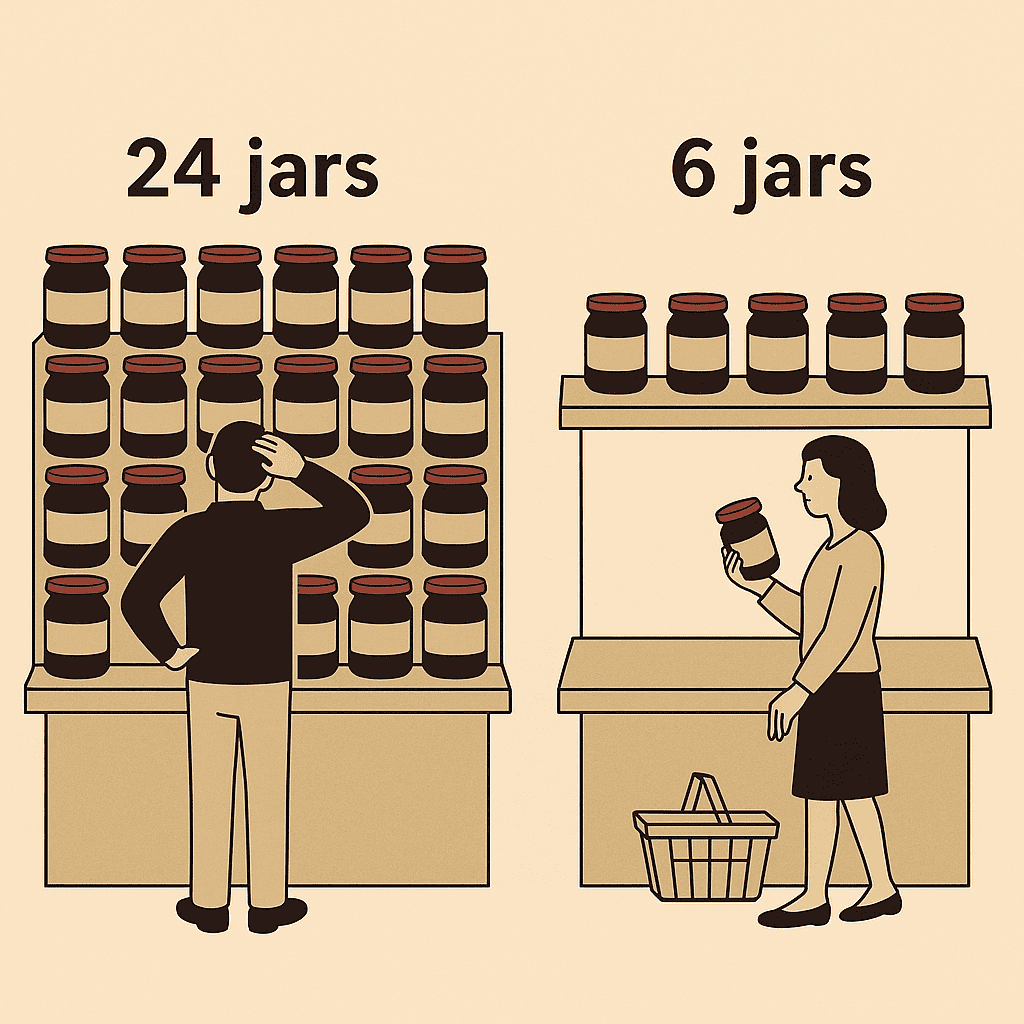
One of the most famous demonstrations of choice overload is the jam experiment by psychologist Sheena Iyengar. In a gourmet market, Iyengar set up a tasting booth that offered 24 flavors of jam on some days and only 6 flavors on other days. The results were striking: the larger 24-jam display attracted more browsers, but only 3% of those who stopped by ended up buying any jam. In contrast, the smaller 6-jam display led to purchases from 30% of tasters. In other words, shoppers were 10× more likely to buy when only six choices were available, compared to when they had two dozen options. This counterintuitive result – more choice yielding fewer sales – is a classic example of the paradox of choice in action.
This effect isn’t limited to trivial decisions like jam flavors. Even high-stakes choices can suffer from over-choice. A study of nearly 800,000 employees’ retirement plans found that the more investment fund options a 401(k) plan offered, the lower the employee participation rate overall. Plans offering just a “handful” of funds had significantly higher enrollment, whereas plans with 10 or more options saw participation drop sharply. In fact, as the number of fund choices in the plan went up, employees increasingly failed to choose any – a classic analysis paralysis that left many not enrolling at all. These findings underscore a key point: when faced with excessive complexity or too many alternatives, people often default to the status quo (choosing nothing) because it feels safer than making a “wrong” choice.
Real-World Examples: Less Choice, More Sales
Smart companies have learned that simplifying choice can boost sales and customer satisfaction. Retailers and product brands have seen tangible gains from pruning their offerings:
Wal-Mart’s discovery:“Folks can get overwhelmed with too much variety. With too many choices, they actually don’t buy,” observed Duncan MacNaughton, a Wal-Mart merchandising executive. After the 2008 recession, many retailers (including Wal-Mart) reduced their assortment of products, finding that trimming slow-moving items made shopping less confusing and actually increased sales in those categories. Fewer products on the shelf meant customers could find what they wanted faster, leading to higher conversion rates.
Procter & Gamble’s shampoo simplification: P&G famously cut its Head & Shoulders shampoo line from 26 different variants down to 15. The result? Sales jumped by 10% for the streamlined product line. By eliminating nearly half of the choices (many of which were redundant or low-sellers), P&G made the purchase decision easier for shoppers, and more people ended up buying the shampoo.
Cutting to profitability: In another case, a pet products company (“Golden Cat”) axed its 10 poorest-performing cat litter products. Freed from the clutter of too many similar choices, customers gravitated to the remaining options and the company’s profits surged 87% after the cutback. Similarly, warehouse retailer Costco carries a deliberately limited selection in each category, and has seen higher per-product sales by focusing customers on a few quality options. These examples show that reducing choice can eliminate buyer confusion and directly drive up revenue.
The takeaway for marketers is clear: offering every possible flavor, feature, or configuration might seem customer-friendly, but it can backfire if the customer gets overwhelmed. Often, it’s better to curate your offerings – focus on the most valuable and distinct choices – rather than bombard customers with an over-assortment that dilutes their ability to decide.
The 3-Option Rule in Pricing Pages (Finding the Sweet Spot)
Nowhere is the “less is more” principle more evident than in SaaS pricing web pages. If you’ve noticed, many software companies present exactly three pricing plans (e.g. Basic, Pro, Enterprise) side by side. This is by design. Presenting three options hits a psychological sweet spot: it’s enough variety to cater to different needs, but not so many as to overwhelm. In fact, multiple studies have confirmed that three is often the magic number for pricing tiers:
Price Intelligently study: In an analysis of 512 SaaS companies, those with 3 pricing tiers achieved about 30% higher average revenue per user than companies that offered 4 or more tiers. More tiers did not mean more revenue – instead, having too many plans tended to confuse customers and dilute the impact of each option.
ConversionXL A/B test: Reducing the number of pricing options can boost conversion rates substantially. One study found that when SaaS companies moved from 4 price tiers down to 3, their conversion rates increased by an average of 27%. Removing that fourth option helped more buyers pull the trigger, rather than freezing up over analysis of four different plans.
HubSpot benchmark data: Broad industry data backs this up. Companies with three pricing plans have roughly 40% higher conversion rates on their pricing pages compared to those offering five or more choices. Beyond three options, every additional plan tends to add more friction than benefit.
Why do three-tier structures perform so well? Psychologically, they create a clear “good-better-best” comparison that humans can process intuitively. With three choices, many customers will gravitate to the middle option (a well-known compromise effect), or confidently choose the tier that best fits their needs. In contrast, five or six pricing options can create analysis paralysis. The differences blur together and the effort to compare them feels daunting, increasing the odds that the customer gives up. One well-known SaaS company, Intercom, discovered this the hard way: after years of adding more and more plans for different use cases, their sign-ups were stalling. When Intercom consolidated from six pricing tiers down to three, they saw an immediate 17% jump in conversions on their website. Simplifying the choice made it much easier for customers to decide, “Yes, I’ll go with this plan,” instead of bouncing away to think it over.
The lesson for pricing (and product packaging in general) is that you should prioritize clarity over quantity. Offer enough choices to segment your audience, but not so many that the differences become confusing. Three well-differentiated options (often labeled in a way that highlights a “most popular” or recommended choice) tend to maximize conversion efficiency in many markets. As one SaaS pricing report put it succinctly: more tiers often create a “paralyzing paradox of choice” that sends potential customers running for the exit.
Keep It Simple in Calls-to-Action and Messaging
Choice overload isn’t just about product options or pricing plans – it also applies to your marketing messages and calls-to-action (CTAs). If your web page or email presents multiple competing actions for the user (“Download our whitepaper! Check out our blog! Sign up for a demo!” all at once), you risk confusing and losing them. The same principle of focus yields better results in communication.
Consider email marketing: Having one clear CTA in an email tends to dramatically outperform emails with several different links or buttons. According to Campaign Monitor data, emails limited to a single call-to-action got up to 371% more clicks than emails that crowded in multiple CTAs. That’s an astonishing lift in engagement simply by not distracting the reader with too many choices of where to click. It appears that when readers see just one prominent action to take, they’re far more likely to take it, whereas multiple buttons or links lead them to hesitate or ignore them all. This aligns perfectly with the adage we started with: if you confuse them, you lose them. Each additional choice or piece of information in a marketing message is another chance to lose the customer’s attention or sow doubt.
The key for any marketing communication – whether it’s a landing page, an advertisement, or a sales email – is to decide what you want the customer to do most, and focus them like a laser on that. Trim away extraneous offers and secondary options that might pull them off the path. In web design, this might mean featuring one primary button (e.g. “Start Your Free Trial”) in a bold color and removing other lesser links or menu items on that page. In copywriting, it means crafting a single, crystal-clear value proposition rather than dumping every feature and detail at once. By reducing cognitive load and guiding the customer’s eyes and mind to one focal point, you make it easy for them to act.
Conclusion: Simplify to Amplify
From consumer products to SaaS software to email campaigns, the pattern is consistent: simplicity sells. When in doubt, cut the clutter – be it trimming down a product lineup or streamlining the choices in a marketing offer. The data and examples above show that a well-curated set of options outperforms an abundance of options. Customers feel more confident in their decision when they aren’t bogged down comparing dozens of alternatives or wading through complicated messaging. As Sheena Iyengar advised after studying choice overload for years: “Less is more.” Companies that embrace this mantra have seen higher conversions, higher sales, and happier customers.
In practical terms, take a hard look at your own marketing and product presentation:
Are you giving your audience just enough options to find a fit, but not so many that they freeze up?
Is your pricing page clean and limited to a few plans that are easy to compare?
Does each campaign or page have one primary CTA that stands out, or are you asking the customer to consider multiple actions at once?
By focusing your offerings and communications, you respect your customer’s time and mental energy. You make their decision simple. And a simpler decision is a faster decision – one that is more likely to end in a “yes, I’ll buy”. In the end, reducing choice reduces confusion, and reducing confusion increases conversions. The confused customer buys nothing, but the confident, unconfused customer is far more likely to buy something. Keep it concise, keep it clear, and watch your marketing metrics climb.
Bottom line: When it comes to guiding customer decisions, less truly can be more – more sales, more sign-ups, and more satisfied customers with less mental friction in getting there. By strategically limiting choices and simplifying your message, you make it easy for customers to choose you.
Sources
Iyengar, Sheena. The Art of Choosing (TED Talk) – Research on choice overload and its effects on consumer decision-making.
Schwartz, Barry. The Paradox of Choice – Psychology of why too many options can lead to decision paralysis.
MarketingProfs (2010): “Don’t Confuse the Customer: Limit Choices, Make More Sales” – Wal-Mart merchandising insights on reducing product variety to boost sales.
Inc.com (2018): Examples of P&G and others cutting product lines resulting in higher sales/profits.
SaaStock (2023): “The SaaS Pricing Trap: When Too Many Tiers Kill Conversions” – Data showing optimal three-tier pricing (Price Intelligently, ConversionXL, HubSpot benchmarks) and case studies like Intercom.
Campaign Monitor via Amra & Elma (2025): Statistic on single-CTA emails getting 3× higher click rates than multi-CTA emails.
Intradiem Blog (2014): “A confused customer buys nothing” – on the importance of clarity in customer experience.
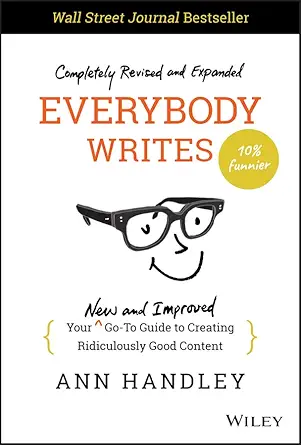
The core theme of Everybody Writes is that everybody is a writer in today’s digital world, and writing is both a practical skill and a powerful marketing tool. Handley argues that good writing is the foundation of effective content, communication, and connection.
Why You Should Read This Book
You should read Everybody Writes because it offers a clear, funny, and practical framework for improving all your content—from emails to landing pages to social posts. Whether you’re a marketer, entrepreneur, or professional, the book equips you with the skills to communicate clearly, tell authentic stories, and build trust with your audience.
Key Ideas and Arguments Presented
Writing is a habit, not an art—anyone can get better with practice.
All communication (emails, posts, blogs) counts as writing.
Content succeeds when it blends utility, inspiration, and empathy.
“The Ugly First Draft” is essential—write poorly first, then refine.
Clarity and brevity matter more than flashy words.
Brand voice should be consistent, but tone can adapt to context.
Storytelling makes your customer the hero, not your product.
Publishing is a privilege—content must respect the reader’s time.
Writing evolves with culture; authenticity and inclusivity matter more today.
Tools and processes (like the Writing GPS framework) can turn messy drafts into polished, effective work.
Book Outline
The book is organized into seven parts:
Part I: Writing Rules – how to write better and enjoy it more
Part II: Grammar and Usage – rules worth keeping (and breaking)
Part III: Voice Rules – finding and using your brand voice
Part IV: Story Rules – crafting authentic marketing stories
Part V: Publishing Rules – sharing responsibly and credibly
Part VI: 20 Things Marketers Write – practical writing for formats like email, social media, landing pages, and more
Part VII: Content Tools – helpful resources to improve your process
Key Takeaways
Good writing is accessible to everyone; it just takes practice.
Your words represent you and your brand; clarity is power.
Empathy for the reader is the foundation of great content.
Storytelling connects more than information ever will.
Consistency in voice builds trust and recognizability.
Key Techniques
The Writing GPS Framework: A 17-step process with three stages (Go, Push, Shine) to guide content creation.
The Ugly First Draft (TUFD): Write freely before editing.
“Dear Mom” Technique: Write as if explaining to someone who loves you but isn’t in your field.
Humor and Analogies: Use surprising comparisons and wit to engage readers.
Author’s Qualifications
Ann Handley is a pioneer in digital marketing and content strategy, Chief Content Officer at MarketingProfs, and a globally recognized keynote speaker. She has decades of experience helping businesses and individuals elevate their writing and content marketing.
Similar to Content Rules (which Handley co-authored), but this is a hands-on guide for daily writing tasks.
Target Audience
Marketing professionals
Content creators and copywriters
Entrepreneurs and small business owners
Social media managers
Students and professionals in business communication
Anyone who wants to improve their everyday writing
Critical Response to the Book
The book has been widely praised as funny, insightful, and indispensable. Seth Godin calls it essential for learning the craft of professional writing, while Joe Pulizzi places it alongside On Writing as required reading. Reviewers highlight its humor, clarity, and practicality, making it a modern classic for marketers and writers alike.
One Sentence Takeaway
Everybody can write better—and in today’s world, everyone must.
Volkswagen’s acclaimed “Clean Diesel” marketing campaign backfired disastrously when it was revealed in 2015 that the company had deliberately cheated on emissions tests.
The German automaker had promoted its diesel cars as low-emission, eco-friendly vehicles only for regulators to discover a hidden software “defeat device” that made them appear clean in tests while they actually emitted up to 40 times the legal pollution on the road.
The ensuing scandal (dubbed “Dieselgate”) led to a global outcry, billions in fines and recall costs, and a crisis of trust that tarnished Volkswagen’s reputation as an industry leader in innovation and sustainability.
Company Involved
Volkswagen is the company at the center of this story. A leading German automaker – at one point the world’s second-largest car manufacturer – Volkswagen (VW) had built its brand on engineering prowess and even owned luxury marques like Audi (also implicated in the diesel saga). VW’s ambitious “Clean Diesel” initiative was intended to showcase its technological leadership and commitment to environmental innovation, until it unraveled in scandal.
Marketing Topic
Advertising
Branding
Honesty
Public Reaction or Consequences
The public and media response to Volkswagen’s deception was swift and severe. The scandal dominated headlines worldwide as “Dieselgate,” and customers felt deeply betrayed by a brand that had marketed itself as eco-conscious. Volkswagen’s stock price plunged almost 20% in the first trading day after the news broke, and the company’s market value and goodwill evaporated virtually overnight. Consumers and commentators openly mocked VW’s prior advertising: the company’s proud slogan “Das Auto” (“The Car”) was derisively twisted into “Das Cheater,” and Audi’s tagline “Truth in Engineering” was parodied as “Engineering the Truth” by disillusioned customers. This popular outrage reflected how severely Volkswagen’s actions violated public trust.
Beyond reputational damage, the concrete consequences were immense. Governments around the globe launched investigations, and regulators in the U.S. and Europe ordered massive recalls of VW and Audi diesel models. In the United States, Volkswagen’s sales nosedived – in November 2015 (not long after the revelations) VW’s U.S. sales fell 25% compared to the previous year. The company soon faced a cascade of lawsuits and record-breaking fines. Top executives resigned under pressure, including VW’s longtime CEO Martin Winterkorn. Within months, Volkswagen agreed to settlements totaling over $15 billion in the U.S. alone to buy back or fix nearly half a million affected cars and compensate owners. Worldwide, about 11 million diesel vehicles were ultimately identified as having the cheating software. The scandal triggered broader scrutiny of the auto industry’s environmental claims, with many observers likening its impact on corporate credibility to a corporate earthquake.
Why It Matters Today
Greenwashing and Authenticity: Volkswagen’s case is a cautionary tale about “green” marketing gone wrong. In today’s era of climate awareness and ESG (Environmental, Social, and Governance) accountability, consumers and regulators are quicker than ever to call out false environmental claims. VW’s downfall heightened skepticism toward corporate sustainability messaging – brands now must back up eco-friendly promises with genuine action, or risk severe backlash.
Trust in the Age of Transparency: The Dieselgate saga underscored that trust is a marketer’s most precious asset. In the age of social media and instant information, any deception can be exposed and go viral overnight, inflicting lasting damage. Volkswagen’s collapse in credibility showed that once customer trust is broken, it’s extraordinarily hard to rebuild, no matter how big your advertising budget. Modern audiences reward transparency and punish dishonesty, making ethical marketing an imperative.
The Cost of Ethical Lapses: This case remains relevant as a dramatic example of how ethical lapses can carry massive financial and legal consequences. Today’s marketers operate in a landscape of stricter regulations (such as tougher emissions standards and advertising guidelines) inspired in part by scandals like Volkswagen’s. The case reinforces that unethical marketing or product claims can lead to multi-billion dollar penalties and criminal investigations – a sobering reminder in an era of heightened corporate accountability.
3 Takeaways
1. Never make promises you can’t keep. A bold unique selling proposition (USP) means nothing if the product itself doesn’t deliver. Volkswagen’s “clean diesel” pitch was compelling, but it proved to be a disingenuous promise built on cheating. The company’s collapse shows that no amount of slick marketing can save a false claim. It will eventually crumble and take your brand’s credibility with it.
2. Trust is hard to win and easy to lose. Volkswagen learned the hard way that decades of brand loyalty can be destroyed in an instant by a breach of integrity. Once customers feel deceived, winning them back is an uphill battle. No campaign or PR effort can quickly undo the damage of lost trust. Marketers must treat honesty and consumer trust as sacred, because a reputation shattered by scandal may take years (and enormous resources) to rebuild – if it can be rebuilt at all.
3. “Green” marketing must be genuine (avoid greenwashing). Touting environmental benefits is powerful, but only if they’re true. Misleading the public about eco-friendly qualities is a recipe for disaster in the long run. Volkswagen’s ads claimed its diesels dramatically cut emissions, yet in reality the cars emitted far above legal limits. The backlash from this deceit shows that today’s savvy consumers (and regulators) will ferret out the truth. The lesson: align your marketing with actual product performance and values, especially when positioning something as environmentally beneficial – otherwise expect severe fallout.
Notable Quotes and Data
“Our company was dishonest with the EPA, and the California Air Resources Board and with all of you, and in my German words: we have totally screwed up.” – Michael Horn, Volkswagen America CEO (admitting the scandal)
“By duping the regulators, Volkswagen turned nearly half a million American drivers into unwitting accomplices in an unprecedented assault on our atmosphere.” – Sally Yates, U.S. Deputy Attorney General (condemning VW’s actions)
11 million – The number of Volkswagen and Audi diesel vehicles worldwide that were equipped with the emissions-cheating software. (Volkswagen ultimately paid over $25 billion in fines, settlements, and buybacks in the years following the scandal.)
Full Case Narrative
Background: By the late 2000s, Volkswagen was eager to shake up the automotive market with its diesel technology. Diesel engines, long popular in Europe, had a tarnished reputation in the U.S. for being noisy and dirty. VW saw an opportunity: if Americans could be convinced that clean diesel was real, the company could carve out a larger U.S. market share and meet tightening environmental regulations, all while offering drivers high fuel efficiency and performance. In 2009, Volkswagen launched a massive marketing offensive to rebrand diesel. It rolled out a campaign called TDI Truth & Dare, complete with a dedicated website and Super Bowl commercials, aiming to educate consumers that VW’s new TDI diesel cars were eco friendly without sacrificing power. The company’s ads were clever and upbeat, for example, one TV spot featured three elderly ladies, the Golden Sisters, giddily talking about dirty topics, only to reveal they were playfully referring to low emissions and clean diesel technology. Volkswagen even enlisted its rally driver Tanner Foust to showcase diesel’s pep, and boasted of a Guinness World Record 58 mpg achievement in a VW Jetta TDI.
These marketing efforts painted a picture of a revolution in car fuel, diesel, but clean and fun. And initially, the strategy seemed to work brilliantly. Over the next several years, VW’s diesel models garnered critical praise and even environmental awards. The Clean Diesel vehicles were marketed as meeting the strictest emissions standards in all 50 states, reducing harmful pollutants by 90 percent, and giving consumers guilt free driving with great mileage. Volkswagen’s green branding grew so strong that the company, traditionally known for iconic gas models like the Beetle, won accolades for sustainability. In fact, VW had burnished its image by adopting rigorous environmental goals early on; it was the first automaker to commit to the ISO 14001 environmental standard and even won an international sustainability award in 2014. By 2015, Volkswagen was on the verge of becoming the world’s largest automaker, and its diesel cars were selling in record numbers, with over 550,000 clean diesel VWs and Audis sold to American consumers since 2008.
The Deception Uncovered: Behind the scenes, however, the reality was very different. Unknown to car buyers and most VW employees, Volkswagen’s engineering and management had made a fateful decision back in 2006 to 2007: when they realized their new diesel engines could not meet U.S. emissions standards and satisfy cost and performance goals, they chose to cheat rather than come clean. VW had secretly installed sophisticated software in its diesel cars’ engine control units. This defeat device could detect when a vehicle was undergoing an official emissions test, for example, sensing the car was on a lab dynamometer. During tests, the software would put the engine in a special low emission mode to ensure it passed regulations. But once the car returned to normal driving on the road, the emissions controls were virtually turned off to restore full power and fuel economy, causing the vehicle to emit far more pollutants than allowed. This duplicitous software tweak meant VW could advertise the best of both worlds, great mileage, peppy performance, and clean emissions, when in truth the cars only ran clean in lab conditions.
From 2009 to 2015, Volkswagen managed to keep this deception under wraps. The ruse started to unravel thanks to independent researchers and regulators. In early 2014, a small non profit group, the International Council on Clean Transportation, commissioned West Virginia University to test real world emissions of diesel cars. The WVU researchers found startling discrepancies: on the road, VW’s clean diesel Jetta and Passat were belching out nitrogen oxide pollutants at levels 30 to 40 times higher than regulatory limits, even though they passed lab tests. This anomaly raised red flags at the California Air Resources Board and the U.S. Environmental Protection Agency. Over more than a year, CARB and EPA pressed Volkswagen for an explanation. VW engineers allegedly feigned ignorance and even performed a limited recall claiming to fix the issue in late 2014, but the problem persisted. Finally, under threat that EPA would withhold approval for its 2016 models, Volkswagen leadership admitted in early September 2015 that it had installed defeat devices in its diesel cars.
The Scandal Erupts: On September 18, 2015, U.S. regulators publicly announced that Volkswagen had violated the Clean Air Act by rigging emissions tests. The news exploded across global media. Within days, VW went from hero to pariah in the court of public opinion. The company issued a blanket apology and halted sales of new diesel models. Volkswagen’s U.S. CEO, Michael Horn, candidly stated, we have totally screwed up, during an event that week, and Volkswagen AG’s CEO Martin Winterkorn declared he was endlessly sorry for the betrayal, he resigned shortly thereafter. The scandal broadened as other countries began examining VW diesels; authorities in Europe and Asia initiated their own probes, and the term Dieselgate caught on to describe the fiasco.
Customers who had bought into VW’s green promises felt cheated. Clean diesel owners suddenly learned their cars were emitting smog forming pollutants at astonishing levels, up to 4,000 percent the legal limit of nitrogen oxides in real driving. Environmental groups pointed out the public health implications: these excess emissions contributed to respiratory problems and smog, undercutting VW’s eco friendly claims. The media and late night comedians skewered Volkswagen’s hypocrisy, turning the company into a punchline. In one striking example, Time magazine’s cover replaced VW’s logo with a toxic cloud. Social media lit up with outrage, as well as support for regulators to punish the wrongdoing.
Immediate Fallout: The impact on Volkswagen was dramatic. In the week after the story broke, VW’s stock price in Frankfurt plummeted roughly 30 percent, erasing tens of billions of dollars in market capitalization. Consumers started shunning the brand, Volkswagen’s U.S. sales for the month of November 2015 dropped 25 percent year over year, and in some European markets, VW’s sales stalled as well. Volkswagen swiftly set aside €6.7 billion, about $7.3 billion, to cover potential costs, but many analysts suspected the final bill would be much higher. The scandal also sent shockwaves through the broader auto industry. Other manufacturers’ stocks fell in sympathy, and there were widespread calls for more rigorous emissions testing across the board. It became clear that VW’s deception had not only damaged its own brand, but also undermined trust in diesel technology and corporate environmental claims generally.
Regulatory and legal consequences mounted quickly. In the U.S., the Department of Justice launched a criminal investigation, and the Federal Trade Commission filed a lawsuit accusing Volkswagen of false advertising for its Clean Diesel campaign. By early 2016, Volkswagen was negotiating one of the largest consumer class action settlements in automotive history. Meanwhile, environmental regulators in Europe ordered Volkswagen to recall millions of vehicles to remove or update the software. Some countries temporarily banned the sale of affected VW models until fixes were in place. Top executives faced personal accountability: several Volkswagen engineers and managers were indicted or arrested in the U.S. and Germany. This included an American based VW compliance manager who was sentenced to seven years in prison for his role in the cover up. Perhaps most notably, long serving CEO Martin Winterkorn resigned in disgrace in September 2015, and later he, along with other VW leaders, was charged by German authorities with fraud for failing to stop the scheme.
Crisis Management and Response: Volkswagen’s initial response to the crisis was widely criticized as slow and evasive. In the first days, the company issued generic apologies but provided little detail, fueling public frustration. However, as the pressure intensified, VW attempted to course correct its PR strategy. In November 2015, about two months into the scandal, Volkswagen’s U.S. division took out full page ads in dozens of American newspapers to say sorry directly to customers. The plain text ads bore the headline We are working to make things right, acknowledging the company’s failure and asking for patience as they developed a fix. In these open letters, VW promised to regain customer trust and announced a goodwill package for owners of affected cars, including $500 Visa gift cards, an additional dealership credit, and free roadside assistance. This gesture, while small relative to the scale of the damage, was aimed at staunching customer anger and preventing defection to other brands.
At the same time, Volkswagen began the technical work of remedying the cars. The company’s engineers scrambled to engineer software updates or modifications to bring the cars into compliance, though this proved challenging without harming performance. In the U.S., regulators eventually approved fixes for some models, but many owners opted for buybacks instead, taking Volkswagen’s offer to repurchase the cars at pre scandal market value. By mid 2016, a U.S. federal court approved a civil settlement in which Volkswagen agreed to spend up to $14.7 billion to buy back or repair around 475,000 2.0L VW and Audi diesel cars and to compensate owners and invest in environmental mitigation. This unprecedented settlement included $10 billion for consumer buybacks and repairs and an additional $4.7 billion earmarked for environmental initiatives, such as promoting zero emission vehicles and pollution remediation. In a separate agreement, VW later pleaded guilty to criminal charges in the U.S. and paid a $2.8 billion criminal fine in 2017, underscoring the severity of the fraud. All told, when including Canada and the rest of the world, Volkswagen’s financial penalties and remediation costs have exceeded $30 billion over the years, a staggering sum even for a giant automaker.
Throughout 2016 and 2017, Volkswagen worked to rebuild its reputation under new leadership. The new CEO, Matthias Müller, vowed to instill a more ethical culture and cooperate fully with authorities. VW’s marketing communications shifted tone as well. The company abandoned its long time global slogan Das Auto, judging it too arrogant for a firm trying to show contrition. Instead, Volkswagen’s branding became more modest and customer focused. Internal communications from late 2015 show VW’s leaders emphasizing humility and the need to listen to customers and regulators in a way the company had not before.
Reflection, Why It Failed: In hindsight, Volkswagen’s Clean Diesel campaign was doomed because it was built on a lie. The marketing itself was highly effective, maybe too effective, as it convinced not only consumers but also many within the company that VW was a champion of eco friendly innovation. This created a dangerous echo chamber. By prioritizing image over honesty, Volkswagen set itself up for catastrophe the moment the truth emerged. The case illustrates a fundamental principle in marketing ethics: a great campaign cannot compensate for a bad product or bad behavior. Eventually, reality catches up. In VW’s case, the disconnect between the promise, low emissions, high trust, and the reality, willful emissions cheating, was so stark that it not only destroyed an entire marketing initiative, but also severely damaged the company’s overall credibility. The scandal also highlighted issues in VW’s corporate culture, an environment that some reports described as pressuring employees to achieve ambitious targets at all costs, perhaps contributing to the rationalization of unethical decisions.
For marketers, Dieselgate underscores the potential unintended consequences when a campaign crosses ethical lines. Volkswagen had sought to position itself as a forward thinking, trustworthy brand for the environmentally conscious consumer. Ironically, their fraudulent actions produced the opposite effect, a collapse of trust that became a textbook example of corporate greenwashing. In marketing textbooks and business schools, the VW case is now studied alongside infamous failures like New Coke or Enron’s misrepresentations, except Volkswagen’s tale is one of deliberately misleading on environmental integrity, which strikes a particularly sensitive chord in an era of climate change awareness.
Timeline
2009: Volkswagen launches its “Clean Diesel” TDI models in the U.S., backed by the extensive “TDI Truth & Dare” marketing campaign to convince American consumers that diesel can be clean and efficient.
May 2014: Researchers from West Virginia University publish a study finding that VW’s diesel cars emit far more NOx in real driving than in lab tests.
September 18, 2015: U.S. EPA publicly accuses Volkswagen of installing defeat devices to cheat emissions tests in about 482,000 diesel cars. The scandal erupts globally.
September 21–23, 2015: Volkswagen’s stock price plunges nearly one-third in two days as investors react to the crisis. CEO Martin Winterkorn resigns.
October–November 2015: Investigations expand. VW runs its first apology ads and offers a $1,000 goodwill package to affected U.S. owners.
June 28, 2016: Volkswagen agrees to a historic civil settlement in the U.S., including up to $14.7 billion to buy back or fix 2.0L diesel cars and compensate owners, plus investments in environmental mitigation.
January 2017: Volkswagen pleads guilty to fraud and obstruction of justice and agrees to pay $2.8 billion in criminal fines.
2018–2019: Legal fallout continues. VW pivots to electric vehicles and undertakes marketing reforms to rehabilitate its image. By 2019, VW’s global sales have bounced back to record levels.
What Happened Next?
After the initial crisis, Volkswagen undertook a long journey to rebuild trust and transform its business. Key changes started at the top: new CEO Matthias Müller, and later Herbert Diess, reorganized VW’s management, bringing in new compliance officers and emphasizing an open, values driven culture to prevent future ethical breaches. The company implemented stricter internal controls and gave its ethics and legal teams more clout. As noted, Volkswagen also made a symbolic break from the past by dropping its tagline Das Auto, which company leaders felt implied an arrogance that was no longer tenable. In its advertising and public statements, VW adopted a tone of humility and responsibility, focusing on winning back customers one step at a time.
Crucially, Volkswagen pivoted its business strategy toward electric vehicles in a bid to redeem its environmental credibility. In the years following Dieselgate, the company announced massive investments in electric mobility and set ambitious targets for new EV models. It launched an initiative called Electric for All, signaling a commitment to make electric cars mainstream. As part of this campaign, Volkswagen revealed plans to roll out 70 new electric models by 2028 and poured resources into developing its ID series of electric cars. The automaker even invested about $800 million to build a new EV production plant in Chattanooga, Tennessee, a tangible move to show it was serious about zero emission vehicles. VW’s marketing now highlights these electric models, like the ID.4 SUV and ID.Buzz van, and positions the company as forward looking and sustainability focused. This dramatic strategic shift from clean diesel to electric is often seen as Volkswagen’s effort to turn its darkest crisis into an impetus for positive change.
In terms of performance, Volkswagen gradually recovered in many markets. By 2018 and 2019, the company actually achieved record global sales volumes, thanks to growth in China and a strong overall product lineup, including SUVs and new generations of vehicles. This indicated that the scandal, while devastating, was not fatal, Volkswagen remained a dominant player in the auto industry. However, the comeback was not uniform: in the U.S., VW’s market share took years to rebound, and diesel passenger cars essentially disappeared from its American showrooms, Volkswagen agreed to a ban on selling diesels in the U.S. for a period as part of its settlements. The company decided that regaining consumer confidence was more important than trying to push diesel in skeptical markets, so it doubled down on electrification and on polishing its once blemished image.
Volkswagen’s efforts to rehabilitate itself have included continued apologies and outreach. The company has run marketing campaigns highlighting its heritage and commitment to making things right, and it frequently references its shift to cleaner technology as evidence of lessons learned. On social media and in public forums, VW has been markedly more transparent about its progress and setbacks. For example, the company’s officials regularly publish updates on compliance measures and environmental goals, acknowledging the Dieselgate episode as a turning point. This transparency is aimed at rebuilding trust through accountability.
From a corporate responsibility standpoint, Volkswagen has also funded environmental programs beyond what was legally required, such as initiatives to promote electric charging infrastructure and investments in renewable energy projects, partly to atone for the pollution caused by its cheating. These actions, along with the mandated mitigation funds, are gradually helping to offset the environmental damage of the excess emissions.
As of today, Volkswagen appears to have stabilized and learned some hard lessons. Its current marketing emphasizes reliability, innovation, and responsibility. The automaker still faces skepticism from some quarters, and occasional reminders of the scandal in press or court proceedings, but it has largely moved forward, focusing on becoming a leader in the electric vehicle transition. The company has publicly stated goals to achieve significant EV sales targets and carbon neutrality in the coming decades. In a sense, Volkswagen is attempting one of the biggest image overhauls in automotive history, from the company that synonymously cheated on emissions to a company that wants to define the future of clean transportation. Only time will tell if these efforts fully restore the trust it lost, but the early signs, strong sales of new models, positive reception to its electric ID lineup, and the absence of any further major scandals, suggest that VW is on a better path.
In sum, Volkswagen did recover financially and continues to be a global industry force, but the Dieselgate case remains a permanent cautionary chapter in its legacy. The company’s leaders have often stated that they will never forget the lessons of this crisis. The real measure of VW’s rehabilitation may lie in whether it can indeed avoid such ethical lapses going forward and live up to the sustainable, honest image it now strives to project. The industry at large, meanwhile, has been put on notice by this saga: in the digital age, deception can be ruinous, and authenticity is the currency that truly drives long term brand success.
One Sentence Takeaway
Even the most brilliant marketing campaign cannot cover up a lie. Volkswagen’s downfall shows that authenticity and trust are irreplaceable in marketing, and any short-term victory gained through deception will ultimately lead to a long-term disaster.