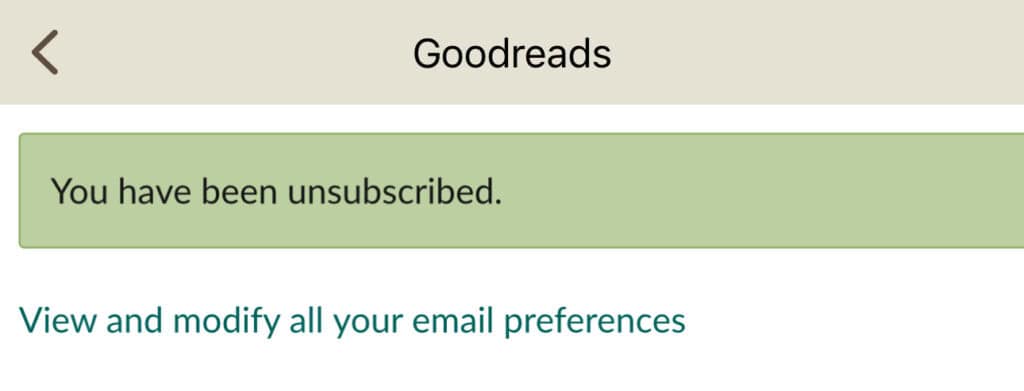
goodreads email unsubscribe process

The Unsubscribe Button Doesn’t Have to Be a Dead End
Reading Time: 3 minutes

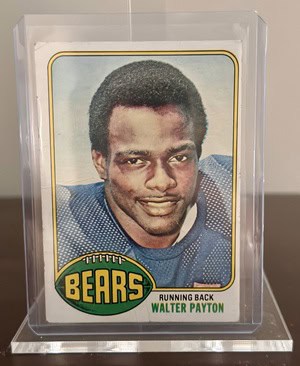
Walter Payton once said, “Never die easy. Why run out of bounds and die easy? Make that linebacker pay.”

This mindset of persistence applies to marketing as well. Yet, many marketers take the easy way out when it comes to email unsubscribes—they simply let users click the button and disappear. But what if there was a better way? The worst approach is unsubscribing the visitor immediately after they click the link, without even asking for confirmation—remember, effectiveness with people, efficiency with things.
Here are five key strategies to rethink your unsubscribe process and reduce unnecessary list churn.

1. Offer Downgrade Options

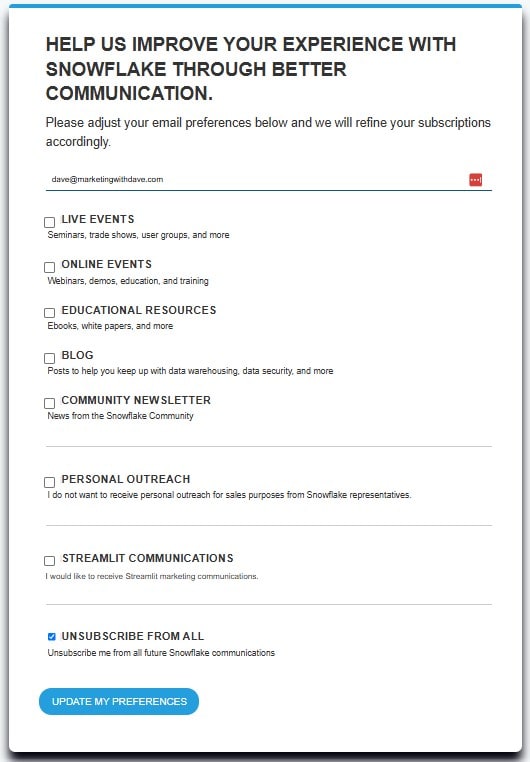
Instead of a full unsubscribe, provide alternatives. Let users reduce the frequency of emails, switch to a digest format, or unsubscribe from only specific topics rather than everything. This helps retain engagement while respecting user preferences.
2. Ask for Quick Feedback

A short one-question survey can reveal why someone is unsubscribing. Include checkboxes for common reasons, such as:

  • Too many emails
  • Content is not relevant
  • Email address has changed
  • Other (with an optional text box)

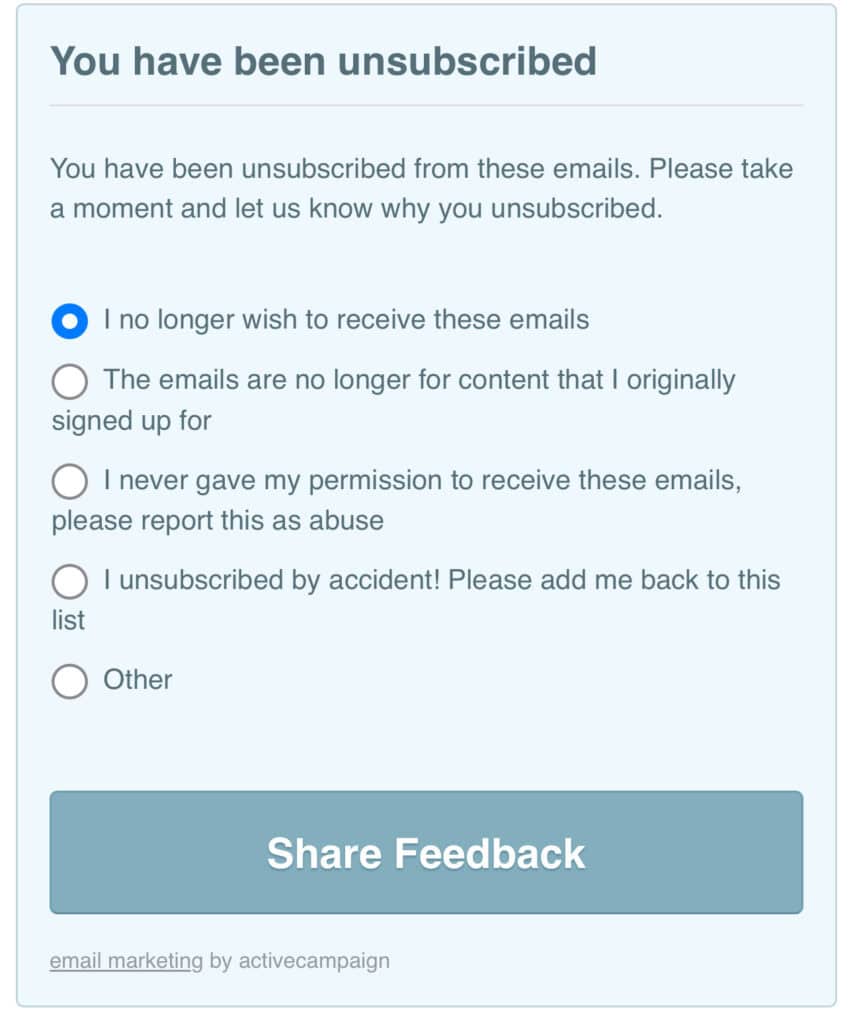
Surprisingly, email address changes happen often, yet most marketers never include this as an option. Giving users a way to update their contact information instead of unsubscribing could help retain valuable subscribers and not lose that data history. An email vendor, activecampaign, provides the following out of the box solution which is a common attempt to gather some insight to why someone unsubscribes.
3. Allow Temporary Unsubscribes

Some users might just need a break rather than a permanent opt-out. Include a “Pause Emails for 30 Days” option, so they can return when they’re ready. This reduces churn while respecting their inbox overload. Many companies will have a preference center where even if you are unsubscibed to all of their email, you still have an “account” and can update this at any time in the future.

4. Personalize the Unsubscribe Page

Instead of a generic “You’ve been unsubscribed” message, use dynamic content to remind the user of what they’re leaving behind. Highlight the value they’ve received, such as exclusive offers, curated content, or a summary of their past engagement. Sometimes, a little reminder of what they’re missing can make them reconsider.

5. Provide Alternative Engagement Channels

Not everyone wants to receive emails, but they might still want to stay connected. Offer alternative ways to engage, such as subscribing to SMS updates, joining a LinkedIn group, or following your social media pages. Giving options ensures they don’t disappear completely.

Unsubscribes Are Not the End of the Relationship

By implementing these strategies, you can transform your unsubscribe process from a dead-end into an opportunity for retention and re-engagement.

Most unsubscribe flows are designed for legal compliance, not customer retention. The companies that win long term understand that reducing friction does not mean removing strategy.

The Unsubscribe Button Doesn’t Have to Be a Dead End Read More »
schema markup explained a complete guide for better seo

Schema Markup Explained: A Complete Guide for Better SEO

Reading Time: 2 minutes

What is Schema Markup?

Schema Markup, also known as structured data, is a type of meta data added to your website’s code to help search engines better understand and interpret your content. It enables the display of rich results (formerly known as rich snippets) in search engine listings, which can enhance visibility and potentially improve click-through rates.

Why is Schema Markup Important in 2025?

Schema continues to be a key ranking factor in SEO. As search engines become more AI-driven, structured data helps them deliver more relevant search results. Benefits of Schema Markup include:

  • Enhancing visibility in search results with rich results.
  • Providing accurate information to search engines for better indexing.
  • Helping voice search assistants better interpret website content.
  • Boosting local SEO by structuring business details clearly.

What Schema Markup Should You Implement First?

For most websites, the best approach is to start with high-impact Schema types:

  • Organization Schema – Defines company details like name, logo, and contact info. See an Organization schema example.
  • Person Schema – Ideal for personal brands or professionals. See a Person schema example.
  • Article Schema – Essential for blogs and news websites.
  • Product Schema – A must-have for eCommerce websites to display product details in search results.
  • Local Business Schema – Helps businesses with a physical location appear in local searches and Google Maps.

Other Schema Types to Consider

Beyond the essential ones, additional Schema types can provide value based on your website’s focus:

  • FAQ Schema – Formats frequently asked questions for better visibility in search.
  • How-To Schema – Useful for step-by-step guides.
  • Event Schema – Great for conferences, webinars, and meetups.
  • Review Schema – Enhances credibility by showing star ratings in search results.
  • Recipe Schema – Helps food bloggers optimize for recipe search results.

Best Practices for Implementing Schema

To maximize the benefits of Schema Markup, follow these best practices:

  • Use Google’s Rich Results Test to validate your markup.
  • Ensure the Schema data matches on-page content.
  • Regularly update your structured data to align with search engine changes.
  • Avoid adding unnecessary or incorrect Schema properties.

Final Thoughts

Schema Markup remains one of the best ways to improve SEO in 2025. By implementing the most relevant types, you can increase your website’s visibility, improve search rankings, and provide search engines with accurate, structured information about your content. Start with foundational Schema like Organization and Person, then expand based on the needs of your website.

Schema Markup Explained: A Complete Guide for Better SEO Read More »

boost your seo with organization schema markup an easy tutorial

Boost Your SEO with Organization Schema Markup: An Easy Tutorial

Reading Time: 2 minutes

What is Schema Markup?

Schema markup is a powerful tool that helps search engines understand your website better. If you want to enhance your site’s SEO and increase visibility, adding Home Page Schema Markup can be highly beneficial. This guide will walk you through the process step by step.

Why is Organization Schema Markup Important?

Organization Schema Markup is a structured data format that helps search engines recognize key details about your website, such as its name, URL, logo, social media profiles, and more. Implementing this on your home page can improve your site’s search appearance.

Adding structured data to your home page can:

  • Help search engines better understand your brand.
  • Enhance your search result listing with rich snippets.
  • Improve your website’s SEO performance.
  • Display key business information directly in search results.

How to Implement Organization Schema Markup

Follow these steps to add Organization Schema Markup to your site:

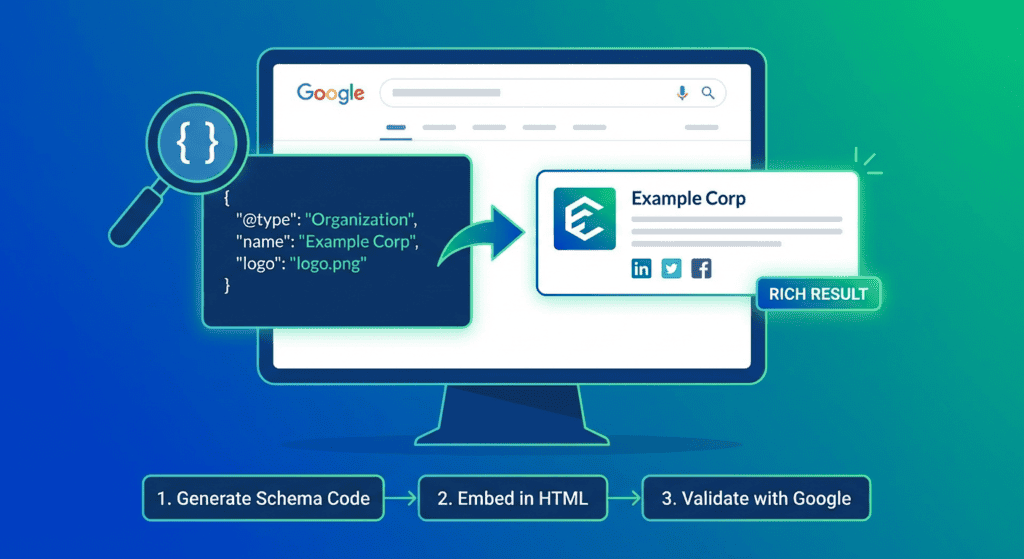
  1. Visit schema.org/Organization to understand the available properties and how they apply to your business.
  2. Copy the JSON-LD code below and customize it with your business details.
  3. Embed the code in the <head> or <body> section of your HTML.
  4. Validate your code using Google’s Rich Results Test.

Example of Organization Schema Markup

The following JSON-LD code provides the essential details for an organization. Some optional fields, such as physical address and additional contact points, can be included if applicable to your business. It’s best practice to not include any optional fields that do not apply.

<pre><code>&lt;script type="application/ld+json"&gt;
{
  "@context": "https://schema.org",
  "@type": "Organization",
  "name": "Marketing with Dave",
  "url": "https://www.marketingwithdave.com/",
  "logo": "https://www.marketingwithdave.com/wp-content/uploads/2024/12/marketing-with-dave-hero2.jpg",
  "contactPoint": {
    "@type": "ContactPoint",
    "email": "dave@marketingwithdave.com",
    "contactType": "customer service",
    "areaServed": "US",
    "availableLanguage": "English"
  },
  "sameAs": [
    "https://www.linkedin.com/in/davidnelson/",
    "https://twitter.com/davidnelson",
    "https://www.facebook.com/marketingwithdave"
  ]
}
&lt;/script&gt;</code></pre>

Final Steps

Once you have added the schema markup, test it using the Google Rich Results Test. If any errors appear, adjust your markup accordingly.

Boost Your SEO with Organization Schema Markup: An Easy Tutorial Read More »

marketing to millennials keep these 10 things in mind

Marketing to Millennials? Keep These 10 Things in Mind

Reading Time: 3 minutes

Understanding the Generations Marketers Are Targeting

Before diving into Millennials, it’s important to consider the broader generational landscape.

Each generation has its own set of preferences, behaviors, and values that shape how they engage with brands. While it’s tempting to generalize about a group spanning 15+ years, such broad strokes often miss key nuances.

Still, many marketers have successfully connected with Baby Boomers and other generations by understanding their evolving needs across different life stages.

  • Baby Boomers (1946-1964) – Prefer traditional media, value brand loyalty, and prioritize customer service.
  • Gen X (1965-1979) – Independent consumers, research-driven, skeptical of advertising, and value authenticity.
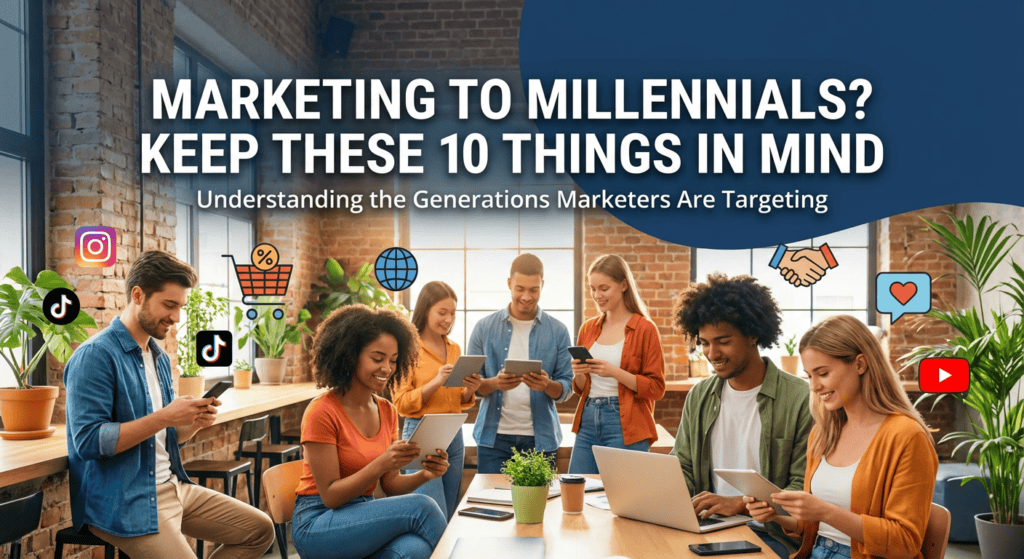
  • Millennials (1980-1996) – Digital natives who prioritize experiences, social proof, and brand values.
  • Gen Z (1997-2012) – The first fully digital generation, values inclusivity, short-form content, and purpose-driven brands.

Millennials have been a dominant consumer force for years, but they are now entering their peak earning and spending years. If your marketing strategy hasn’t adapted to their preferences, you may be missing out on a critical audience.

10 Key Considerations for Marketing to Millennials

1. Relationships Are a Significant Part of the Buying Process

Millennials value authenticity and connection with brands. They prefer personalized marketing, real customer stories, and engaging interactions over generic advertising. Companies that foster long-term relationships through community building and loyalty programs often perform better.

2. More Price Sensitive Than Their Predecessors

Compared to Baby Boomers and Gen X, Millennials are more price-conscious due to economic factors like student loan debt and wage stagnation. However, they are willing to pay more for quality, ethical sourcing, and sustainability. Discounts, rewards, and value-driven messaging resonate well.

3. The Most Mobile-Connected Generation

Millennials are always online, with smartphones as their primary device. Mobile-first design, fast-loading websites, and seamless app experiences are non-negotiable. If your brand isn’t optimized for mobile, you risk losing their attention.

4. Social Media Is Their Primary Source of News and Brand Discovery

Traditional advertising doesn’t work the same way on Millennials. They rely on social proof, user-generated content, and recommendations from influencers or peers. Platforms like Instagram, YouTube, TikTok, and LinkedIn (for professional content) play a major role in their buying decisions.

5. The Share Economy Provides Access Over Ownership

Millennials are less interested in ownership and more focused on access. Companies like Airbnb, Uber, and subscription-based services thrive because they align with Millennial values of flexibility, convenience, and experiences over possessions. Marketers should consider how their products or services fit into this preference.

6. More of a Mindset Than Just an Age Range

Unlike previous generations, Millennials don’t always fit into a single life stage. Some are homeowners, while others rent indefinitely. Some are career-driven, while others embrace gig work. Effective marketing speaks to values and behaviors rather than just age.

7. They Expect Brands to Stand for Something

Millennials care about brand purpose. They expect companies to take a stand on social and environmental issues. Brands that demonstrate authentic corporate responsibility—whether through sustainability efforts, inclusivity, or ethical sourcing—resonate more with this audience.

8. Video Content Is King

Text-based content still matters, but short-form videos, live streams, and interactive content are far more engaging for Millennials. Brands using TikTok, Instagram Reels, and YouTube effectively can capture more attention than those relying solely on blog posts or static ads.

9. They Demand a Seamless Omnichannel Experience

Millennials interact with brands across multiple channels—from social media to email to in-store experiences. They expect seamless transitions between online and offline experiences, with personalized recommendations, quick customer service, and easy purchasing options.

10. Word-of-Mouth and Peer Reviews Matter More Than Ads

Traditional ads have lost influence with Millennials. Instead, they trust peer recommendations, influencer marketing, and online reviews. Marketers should focus on user-generated content, referral programs, and community-driven marketing to build trust.

Final Thoughts

Millennials are a diverse and powerful consumer group that values authenticity, convenience, and social responsibility. Brands that understand their behaviors and preferences can build stronger connections and drive lasting loyalty.

Have you segmented or personalized your content using a generational cohort? What have you found most effective when marketing to Millennials? Share your thoughts in the comments!

Marketing to Millennials? Keep These 10 Things in Mind Read More »

google trends worldwide artificial intelligence

Top 10 Free SEO Resources

Reading Time: 3 minutes

Staying updated with the latest SEO tools and resources is crucial for enhancing your website’s visibility and performance. Here are the top 10 search engine optimization (SEO) tools that I use and love.

  1. Google Trends
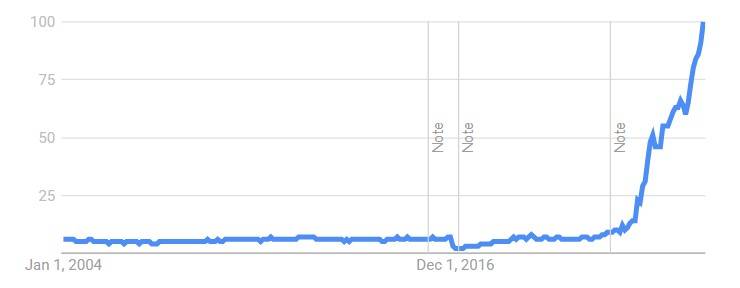
    Google Trends is a free tool that analyzes the popularity of search queries over time, helping identify trending topics.
    The image below is the worldwide trend for “artificial intelligence” from 2004 to the current date.

  2. Google Search Console
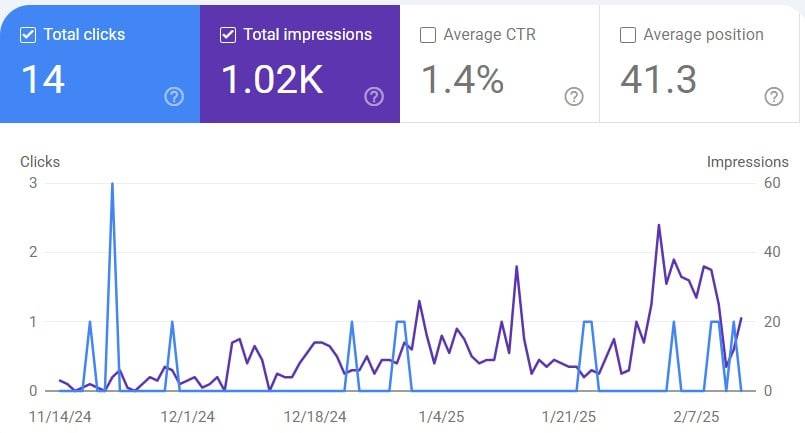
    Google Search Console is a free tool that helps monitor your website’s presence in search results, providing insights into search queries, indexing status, and potential issues.
    The image below is the performance dashboard. This feature rich tools also includes a performance report, URL inspection tool, coverage report, sitmap submission, and mobile usability report.

  3. Google Keyword Planner
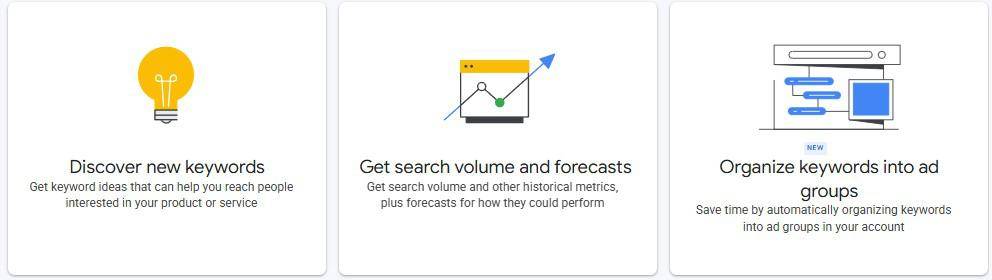
    Google Keyword Planner is a free tool although a Google Ads login is required that assists users in discovering new keywords and obtaining search volume forecasts. It enables businesses to identify relevant keywords for their campaigns, ensuring ads reach the appropriate audience. Additionally, the tool provides historical data and performance projections, aiding in effective keyword selection and budget planning.
    The image below shows your options upon login.


  4. Screaming Frog
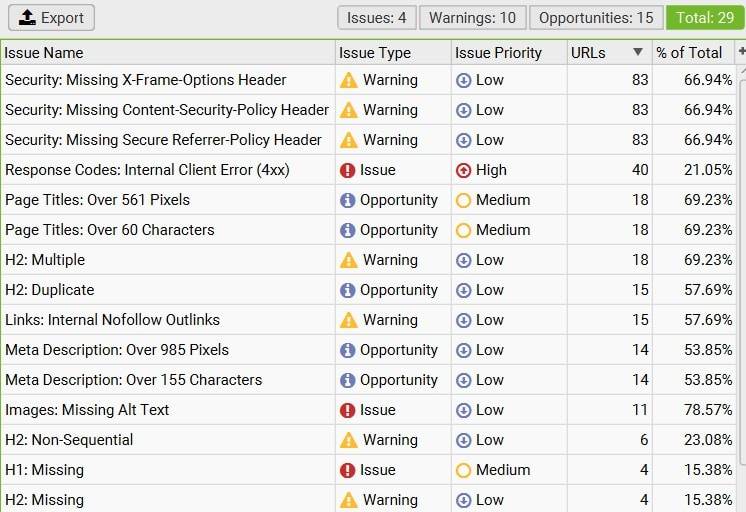
    Screaming Frog is a freemium (500 pages) website crawler that aids in identifying technical SEO issues, such as broken links and duplicate content.
    The image below shows issues resulting from a website scan. A sliver of what you can view, export, and optimize.


  5. Semrush
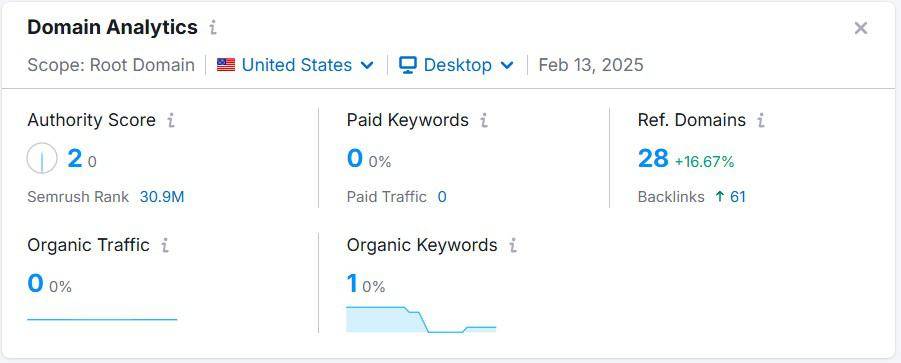
    Semrush is known for its robust competitor analysis capabilities, SEMrush provides insights into keyword rankings, site audits, and backlink tracking. In addition to their multiple subscription tiers offered, they do have a free plan.
    The image below shows the domain level analytics.


  6. Neil Patel
    Neil Patel’s SEO agency website contains multiple free tools including a website audit, Ubersuggest and AnswerThePublic.

  7. Moz
    Moz (SEOMoz before rebranding) contains multiple free tools and offers a suite of tools for keyword research, link building, and site audits, helping improve search engine visibility. They also offer free SEO training content.

  8. Sparktoro
    SparkToro is an audience research tool that provides insights into online behaviors, demographics, and the platforms your target audience engages with. The free plan that includes up to five searches per month, with access to the top 10 results for each search.

  9. Ahrefs
    Ahrefs is a comprehensive toolset for SEO, offering features like keyword research, backlink analysis, and site audits. They do have a handful of free SEO tools on their website and you can also have a blog post covering 10 things you can do in ahrefs for free.

  10. Seobility
    Seobility comprehensive SEO tool designed to help website owners and digital marketers optimize their sites for better search engine rankings. They offer a free version for a single domain and tracking 10 keywords.

Top 10 Free SEO Resources Read More »

how to use swot analysis for a winning marketing campaign

How to Use SWOT Analysis for a Winning Marketing Campaign

Reading Time: 2 minutes

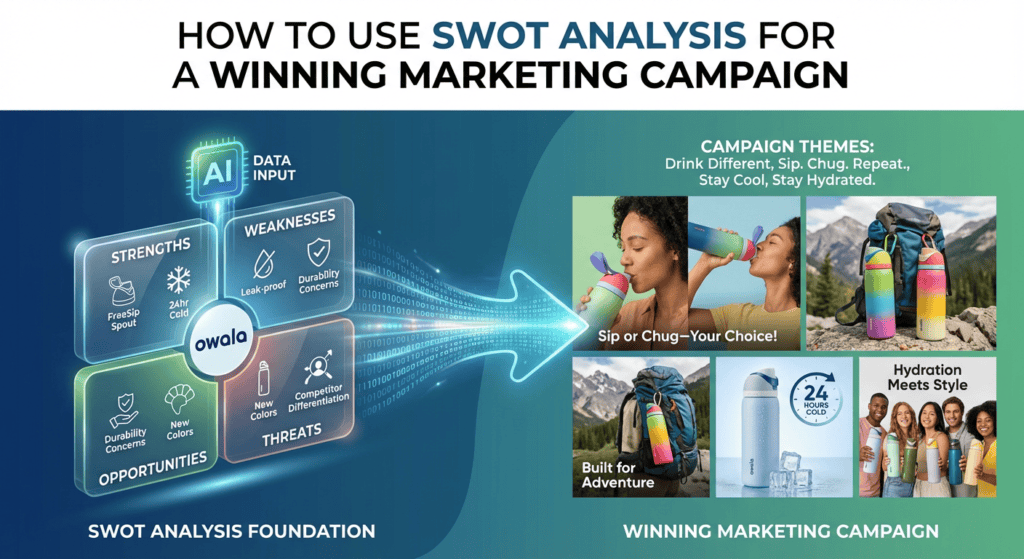
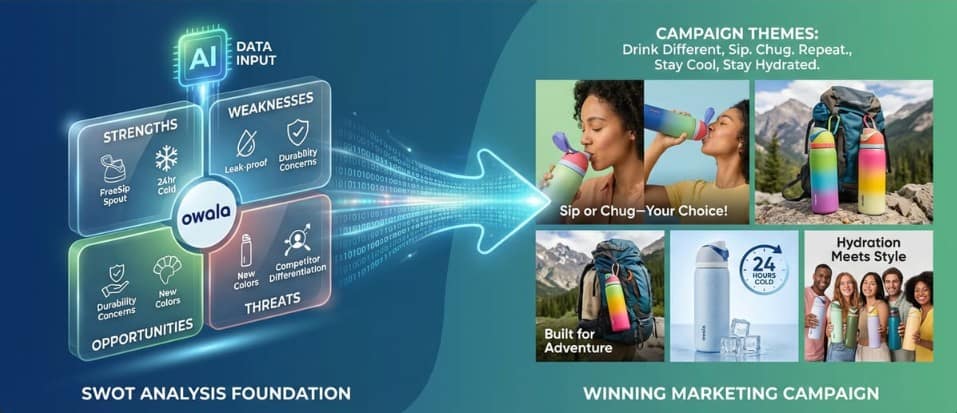
Once you’ve completed your SWOT analysis, see our Owala SWOT analysis for reference, the next question is, “Now what?” If you’re in marketing, you likely want to turn these insights into a campaign.

This is where AI can be a powerful tool—if given the right input. AI isn’t a mind reader; it thrives on detailed data. Our SWOT analysis provides exactly that, making it the perfect foundation for generating impactful campaign ideas. Here’s what we discovered.

Possible Campaign Themes

This SWOT analysis highlights what sets Owala apart from other water bottle brands. Here are four campaign themes that emphasize these unique strengths.

“Drink Different” – Emphasizing the FreeSip innovation.
“Sip. Chug. Repeat.” – Simple, repetitive, and catchy.
“Stay Cool, Stay Hydrated” – Focused on the 24-hour cold retention.
“The Water Bottle That Gets You” – Personalization, different colors, and easy use.

Six Ad Ideas

  1. Highlight the Unique FreeSip Spout
    Ad Copy: “Sip or chug—your choice! Owala’s patented FreeSip spout lets you drink your way. Leak-proof, stylish, and built for adventure.”
    Imagery: Close-up of the FreeSip spout in action (someone sipping vs. chugging). Split-screen showing a competitor’s traditional bottle vs. Owala’s innovative design.
  2. Address Durability Concerns While Reinforcing Portability
    Ad Copy: “Built for life’s adventures—Owala is leak-proof, durable, and always ready to go. Clip it, sip it, and never worry about spills.”
    Imagery: A traveler or hiker clipping an Owala bottle onto a backpack. A slow-motion shot of the bottle being dropped and staying intact.
  3. Overcome Cleaning Concerns with Ease-of-Use Messaging
    Ad Copy: “Hydration should be easy. Owala’s FreeSip spout is designed for effortless sipping AND simple cleaning—because your water bottle shouldn’t be a chore.”
    Imagery: A quick demo of how to clean the bottle (dishwasher-safe parts). A time-lapse of someone easily taking apart and reassembling the spout.
  4. Emphasize Cold Retention and Performance
    Ad Copy: “Stay cool all day—Owala keeps your drink ice-cold for 24 hours so you can hydrate longer, no matter where life takes you.”
    Imagery: A side-by-side comparison of ice cubes still intact in Owala after 24 hours. A person reaching for their Owala bottle after a workout, showing condensation on the bottle for a refreshing feel.
  5. Appeal to a Broader Demographic with New Color Variants
    Ad Copy: “Hydration meets style—find your perfect Owala in bold, bright, or classic neutral tones. Designed for every taste, every adventure.”
    Imagery: A flat lay of multiple Owala bottles in different colors. A diverse group of people, each with a bottle that fits their personality.
  6. Social Proof and Competitor Differentiation
    Ad Copy: “Move over, bulky water bottles—Owala is the sleek, leak-proof alternative designed for how YOU drink. Join thousands making the switch today!”
    Imagery: A side-by-side of Owala vs. a clunky competitor’s bottle. A happy customer review as an overlay with an image of someone using the bottle.

How to Use SWOT Analysis for a Winning Marketing Campaign Read More »