One of the most valuable elements on any web page for Search Engine Optimization (SEO) is the H1 title tag. This tag helps both search engines and users quickly understand what a page is about. However, despite its importance, H1 tags are often overlooked. Sometimes, they’re an afterthought—added hastily when a web page is built—or they’re simply not optimized for search intent and readability.
To maximize your website’s SEO potential, optimizing your H1 tags should be a core part of your strategy—not just an afterthought. Fortunately, artificial intelligence (AI) can streamline this process, helping you generate better H1 tags that are both keyword-rich and engaging.
Let’s walk through an AI-powered approach to refining your H1 title tags.
Step 1: Collect Your H1 Title Tags
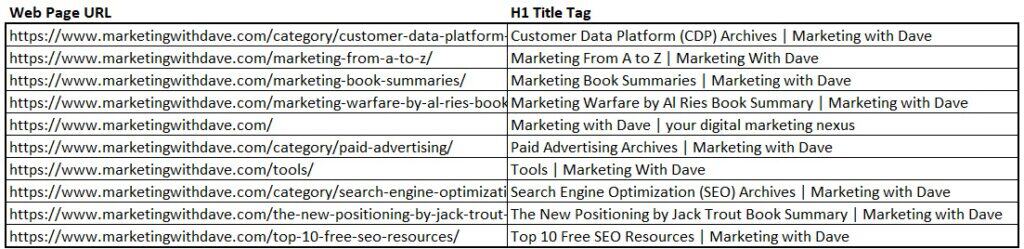
Before optimizing your H1s, you need to gather all existing H1 tags across your website. The easiest way to do this is by exporting them into a spreadsheet, which will allow for quick analysis and batch improvements.
How to Collect H1 Tags:
Use an SEO auditing tool like Screaming Frog (free for up to 500 pages) to crawl your website and extract H1 tags.
Alternatively, use tools like Ahrefs, Semrush, or Google Search Console to collect H1 data.
Export the data into a spreadsheet with two columns:
Web Page URL
H1 Title Tag
Step 2: Write Your AI Prompt
AI tools like ChatGPT, Claude, Gemini, or Google’s Bard can suggest optimized H1 tags if given the right prompt. The key is crafting a detailed and specific prompt to ensure high-quality results.
Example AI Prompt:
“As an SEO content expert, suggest improved, SEO-optimized H1 title tags for the following pages. Each title should be between 20-60 characters (never exceeding 70). Titles should be engaging, relevant to the content, and include primary keywords naturally. Exclude ‘| Marketing with Dave’ from the suggestions. Here are the existing H1 tags:”
Step 3: Review and Compare Your AI-Generated Suggestions
After running your prompt, AI will generate a list of alternative H1 title tags. The best approach is to compare AI-generated results from multiple tools like ChatGPT and Claude, as they may offer different perspectives.
Step 4: Implement, Tweak, and Test
AI can accelerate the brainstorming process, but it doesn’t fully replace human judgment. Since AI doesn’t understand your audience as well as you do, review each suggestion carefully and tweak it where necessary.
What to Look for When Choosing an H1 Title Tag:
Keyword Relevance – Does it include the right keywords for SEO?
User Intent Alignment – Does it match what visitors are looking for?
Clarity & Conciseness – Is it clear and under 60 characters?
Engagement Factor – Does it make someone want to read further?
Conclusion
AI is a powerful tool for optimizing H1 title tags, saving time while ensuring your titles are engaging and SEO-friendly. However, it’s not a replacement for human oversight. The best approach is to use AI-generated recommendations as a starting point, then refine them with your expertise and audience insights.
Although my example will focus on Google Ads, most paid advertising platforms offer an Ad Schedule feature, often defaulting to running your campaigns 24/7. While running ads continuously may seem logical, strategically segmenting your Ad Schedule is a best practice that can significantly enhance your campaign’s efficiency and effectiveness.
How to Find and Adjust Your Ad Schedule in Google Ads
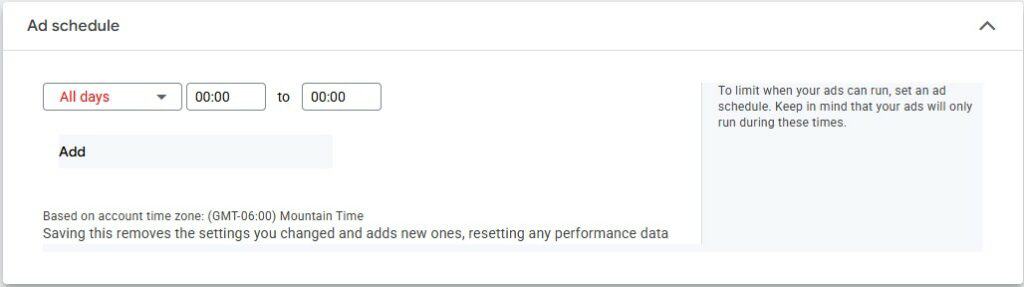
With Google Ads, during the campaign creation process, in Campaign settings, scroll to the bottom where there is a section titled More settings. Click on that to expand those options, and you will see your Ad schedule – not exactly designed so you don’t miss this.
Benefits of a Segmented Ad Schedule
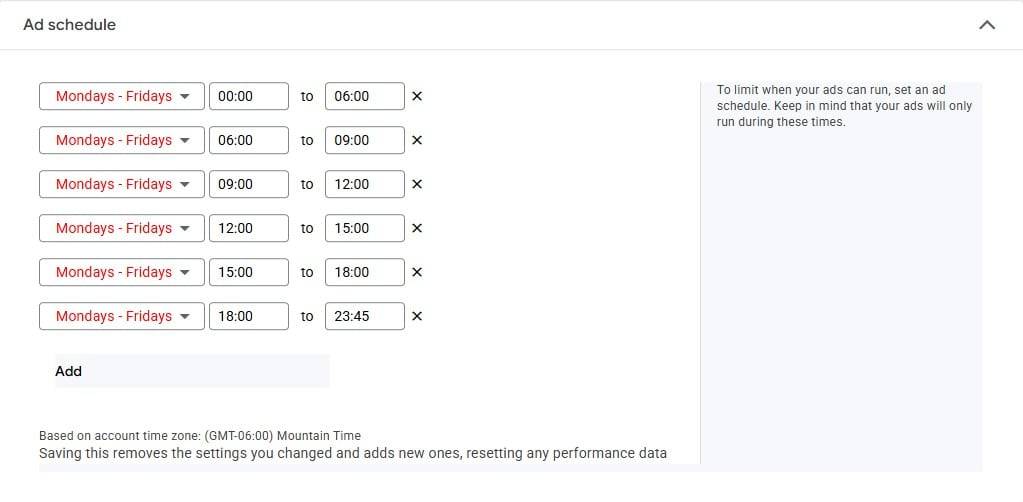
My recommended ad schedule runs Monday through Friday, segmented into six time blocks, ensuring better control over budget allocation and performance analysis. This setup prevents overspending in low-converting hours (like midnight resets), enables bid adjustments for peak traffic periods, and makes it easier to analyze trends across different times of the day.
1. Identify Positive and Negative Trends
Breaking your Ad Schedule into smaller time slots makes it easier to detect patterns in performance.
Negative Trend Example: You might notice that a significant portion of your daily budget is consumed between 12:00 AM and 1:00 AM, with minimal conversions. This may indicate the platform abusing your budget since your daily budget will start fresh after midnight.
Positive Trend Example: You may find that weekends generate fewer conversions, but the cost per conversion is significantly lower, making it justifiable to continue running ads on weekends with adjusted bidding strategies.
2. Overlay Key Metrics for Analysis
Segmenting your Ad Schedule allows you to analyze key performance indicators (KPIs) like impressions, clicks, conversions, and cost per click (CPC) during specific time frames.
3. Consider Audience Time Zones and Behavior
Your Google Ads account is set to a specific time zone, but your audience may be distributed across different regions.
If your account is configured in Pacific Time (California) but a large portion of your traffic comes from the East Coast (New York) or the United Kingdom, this will impact how you interpret ad performance.
Running ads 24/7 might not be necessary if most of your engagement comes from a specific region and time window.
4. Leverage Bid Adjustments
With a segmented Ad Schedule, you can apply bid adjustments to optimize ad spend for peak traffic times.
If Monday mornings generate the highest traffic and conversions, you can increase bids to capture more high-value clicks.
Conversely, if evenings show high spend but low conversions, you can reduce bids or turn off ads during that period.
5. Reduce Ad Fatigue and Improve Budget Allocation
By strategically running ads only during high-performance windows, you can:
Prevent ad overexposure.
Ensure your budget is spent on the most effective time slots.
Test different creative variations during different segments to keep engagement high.
Final Thoughts
Customizing your Ad Schedule is a powerful way to optimize campaign performance, reduce wasted ad spend, and better understand audience behavior. Start by testing weekdays vs. weekends, analyzing key metrics, and leveraging bid adjustments to maximize your ad budget. Over time, fine-tune your schedule based on data insights to continuously improve results.
Are you currently running a 24/7 ad schedule? Try segmenting your schedule and share your results!
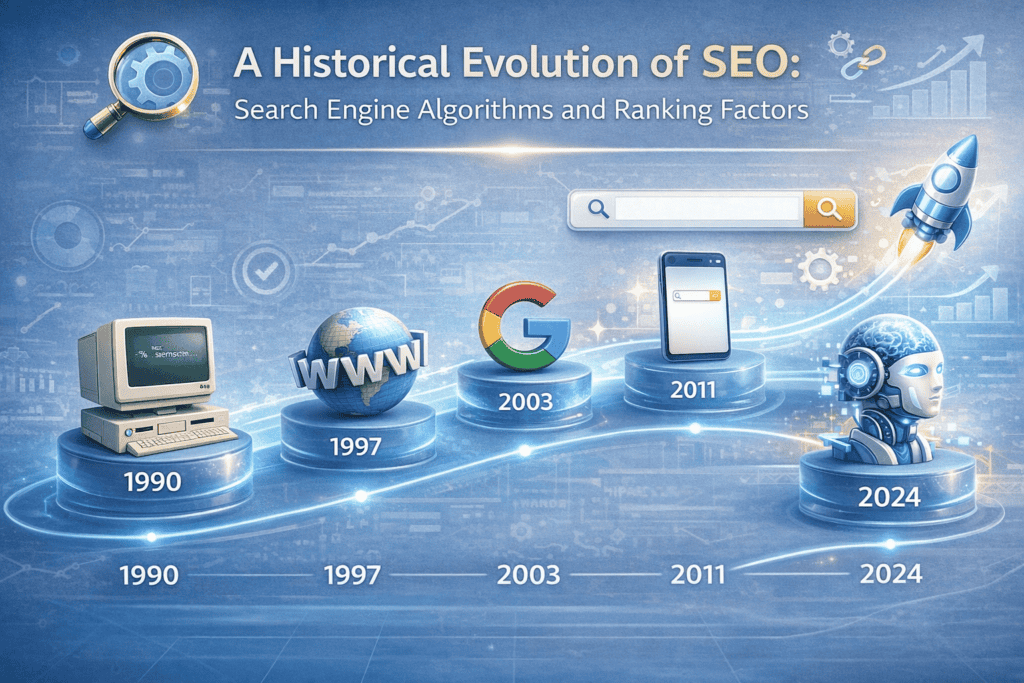
SEO has undergone a dramatic transformation since its inception, evolving from basic keyword stuffing to sophisticated algorithms that prioritize user intent. This timeline traces the pivotal milestones that shaped SEO practices, highlighting key shifts in search engine technology, optimization techniques, and the evolving landscape of digital marketing. By understanding this history, marketers can better navigate the present and future of SEO.
History of SEO & Web Browsers
2024
March – Google’s Core Update refines how AI-generated content is assessed, emphasizing high-quality, user-focused content.
2023
May 10 – Google I/O announces AI-powered Search Generative Experience (SGE), integrating AI-generated responses into search results.
2022
August 25 – The Helpful Content Update penalizes content created solely for search engines, prioritizing authentic, valuable information.
2021
June 15 – Google’s Page Experience Update introduces Core Web Vitals as ranking factors, focusing on site speed and user experience.
2019
October 25 – Google’s BERT update improves natural language understanding, helping the search engine interpret context better.
2018
September 4 – Google Chrome 69 launches with a major visual redesign and enhanced security features.
2017
March 26 – Google begins rolling out Mobile-First Indexing, prioritizing mobile-friendly sites in search rankings.
2015
April 21 – ‘Mobilegeddon’ update gives a ranking boost to mobile-friendly websites, reflecting the growing dominance of mobile search.
October 26 – Google confirms RankBrain, an AI-based ranking factor, which helps refine search queries and results.
2013
August 20 – Google’s Hummingbird algorithm improves semantic search and conversational queries.
2012
April 24 – Penguin update cracks down on manipulative link-building practices and spammy backlinks.
2011
February 23 – Panda update reduces the visibility of low-quality, thin, or duplicate content in search rankings.
2010
June 8 – Google Caffeine Update dramatically increases indexing speed, improving real-time search results.
2009
February 12 – Google introduces the canonical tag to help webmasters resolve duplicate content issues.
2008
September 2 – Google Chrome launches, introducing a new era of fast, streamlined web browsing.
2006
November 13 – Google acquires YouTube, revolutionizing video search and online content.
2005
January 18 – Google introduces the nofollow attribute to combat spammy link-building tactics.
2004
November 9 – Mozilla Firefox 1.0 launches, challenging Internet Explorer’s dominance.
2003
November – Google Florida Update shakes up SEO by penalizing keyword stuffing and outdated ranking tactics.
2002
February – Boston Update, Google’s first named algorithm update, introduces major ranking shifts.
1997
October 15 – The phrase “Search Engine Optimization” is first recorded in use, marking the birth of an industry.
1994
January – Yahoo is founded as one of the first major web directories.
1993
April 22 – Mosaic browser launches, helping popularize the web.
1990
September 10 – Archie, the first known search engine, is created to index FTP files.
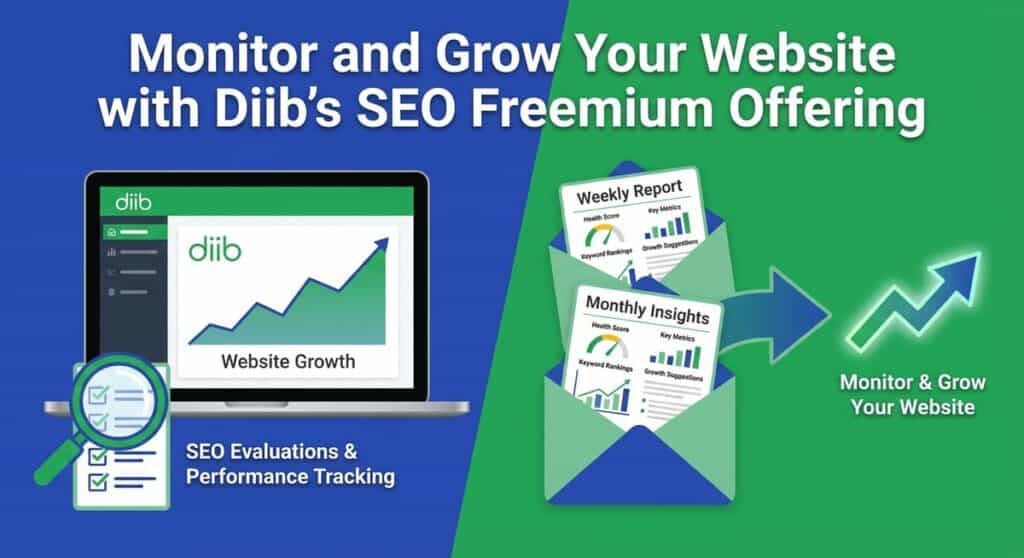
In today’s fast-paced digital landscape, keeping a close eye on your website’s performance is essential. As a longtime Diib user, I’ve seen firsthand how its freemium offering can transform your online strategy. Diib goes beyond basic analytics—it provides detailed SEO evaluations, robust performance tracking, and a host of actionable insights that help you pinpoint exactly where your website can improve. I especially value the regular, automated updates: the weekly and monthly emails deliver progress reports and real-time alerts on key website activities, ensuring I’m always on top of any emerging trends.
You can view an example of the Diib weekly report for my website, which includes a weekly health score, key performance metrics, visitor summaries, growth suggestions, keyword rankings, backlinks, and any identified website issues.
There is also a Diib monthly report that highlights performance metrics, device engagement, top channel sources, demographic insights, referring sites, average engagement rate, and the top countries and cities driving traffic, along with recommendations for improvement.
Together, these examples provide a clear picture of the actionable insights Diib offers, even though my website is still in its early stages and the reporting is not yet as expansive as it would be for a more established site.
In my page session tracking post, I covered what I consider the most important website analytics report: page sessions. Now, I want to cover what I believe is the second most valuable report—sessions by channel.
While my site is still early in its growth, the channel data is already enough to illustrate why this report matters. I also don’t have any Paid Search or Email traffic yet, which are common channels for most websites.
Historically, businesses focused on a single channel. That expanded into multi-channel marketing, and today, omnichannel is the goal. Success in all your channels requires regularly evaluating each channel’s performance.
When assessing traffic, keep these key factors, listed in least to most important, in mind:
Impressions – An indicator of your content being viewed (where available, such as in search or advertising reports) and a basic verification that data collection is functioning.
Visits – Shows that people are clicking and arriving at your site.
The Right Visitors – Not just any traffic, but those that fit your target audience.
Conversions – Typically a form submission, purchase, or engagement with key content like a video or PDF.
General Questions to Ask About Your Channel Data
Before diving into individual channels, consider these broader questions:
Does anything look inaccurate? Look for anomalies that might indicate tracking issues.
Are there seasonal trends? Does traffic spike around holidays, industry events, or specific times of the year like when school is/isn’t in session?
Can traffic spikes be linked to marketing campaigns, news, or other activities?
Which channels drive the highest engagement and conversions? High traffic doesn’t always mean high value.
Are your investments (time and money) in each channel yielding proportional returns?
Are there underperforming channels that need attention? Weak performance could signal issues with visibility, messaging, or targeting.
Industry Benchmarks for Channel Traffic
While every website’s traffic distribution varies based on industry, audience, and strategy, here are some commonly cited directional benchmarks:
Direct Traffic: ~15% (often influenced by brand recognition and offline marketing).
Organic Search: ~27% of total traffic (varies widely based on SEO efforts).
Paid Search Traffic: ~10% (varies based on ad spend and campaign strategy).
Referral Traffic: ~16% (depends on partnerships, PR, and external links).
Email Traffic: ~6% (highly dependent on list quality and campaign effectiveness).
Social Media Traffic: ~5% (higher for industries with strong social engagement).
These averages can fluctuate significantly:
B2B websites tend to rely more on direct and referral traffic.
eCommerce often sees more paid search and social traffic.
Media and entertainment benefit from increased social and referral traffic.
Ultimately, the best benchmark is your own historical data. Google Analytics’ Benchmarking Reports can provide industry-specific comparisons, but tracking your own trends over time is the best way to measure success.
Channel-Specific Insights and Questions
Direct Traffic
Visitors who type your URL directly or use bookmarks.
Industry Benchmark: ~15% of traffic.
Potential Issues: Can be inflated by tracking errors (e.g., missing UTM parameters in emails or incorrect redirects).
Key Insights: A high direct traffic percentage often indicates strong brand awareness. However, if it’s unusually high, check for tracking gaps.
Organic Traffic
Visitors from unpaid search engines like Google, Bing, and Yahoo!
Paid traffic from Google Ads, Bing Ads, etc.; Paid social includes Facebook, LinkedIn, etc.; Paid video includes YouTube, TikTok, etc.
Industry Benchmark: ~10% of traffic.
Key Insights: Keyword performance is crucial; high cost per click’s may indicate a need for better targeting.
Referral Traffic
Visitors from external websites.
Industry Benchmark: ~16% of traffic.
Key Insights: Monitor where your referral traffic originates. High-quality backlinks improve both referral traffic and SEO.
Email Traffic
Visitors from email or newsletter campaigns.
Industry Benchmark: ~6% of traffic.
Key Insights: Email UTM tracking is essential; missing tags can cause traffic to be misclassified as direct.
Other Traffic Sources
Affiliates
Key Insights: Strong for eCommerce; track partner performance.
Audio Ads
Key Insights: Emerging channel with varying engagement levels.
SMS & Push Notifications
Key Insights: Highly dependent on user opt-in rates.
Unassigned Traffic
One channel worth calling out explicitly, especially given recent changes in how people discover content, is Unassigned traffic. Historically, unassigned traffic was often treated as a red flag, typically caused by broken tracking, missing UTM parameters, or bot activity. While those issues still exist, unassigned traffic today can also include legitimate sessions that analytics platforms do not yet know how to classify.
An increasingly common example is traffic from AI and LLM tools such as ChatGPT and other conversational interfaces. These sessions can arrive with valid referrers, strong engagement, and clear user intent, yet still fall into Unassigned due to limitations in GA4’s default channel model.
If unassigned traffic is significant, do not assume it is invalid. Evaluate engagement metrics such as engagement rate, events per session, and time on site. High-quality behavior may indicate emerging acquisition channels rather than tracking errors. In some GA4 properties, custom channel group editing can address this. In others, that feature is not yet available, leaving analysts to rely on exploratory analysis or external reporting until the channel model evolves.
Final Thoughts
Analyzing traffic by channel is not just about where visitors come from. It is about understanding intent, engagement, and return on effort.
Channel reporting frameworks need to evolve as user behavior evolves. Discovery is no longer limited to search engines, social platforms, and traditional referrals. AI-driven tools are becoming a real top-of-funnel source, and analytics platforms are still catching up.
Use benchmarks as a reference, but prioritize your own historical trends and engagement quality. When traffic does not fit cleanly into existing channels, the answer is not always better tagging. Sometimes it is acknowledging that the channel model itself is lagging reality.
Consistently reviewing channel performance with this context in mind helps avoid false conclusions and supports better decisions, even when the analytics tooling is imperfect or lagging reality.
“Think spiderwebs, not funnels.” – A shift from linear to interconnected content marketing.
“Dare I say keywords are dead? To be competitive in modern SEO, you’ve got to do right by the customer.” – A focus on customer-centric content over keyword stuffing.
“The real villain in marketing isn’t bad content—it’s guesswork.” – The need for data-driven strategies.
Book Theme
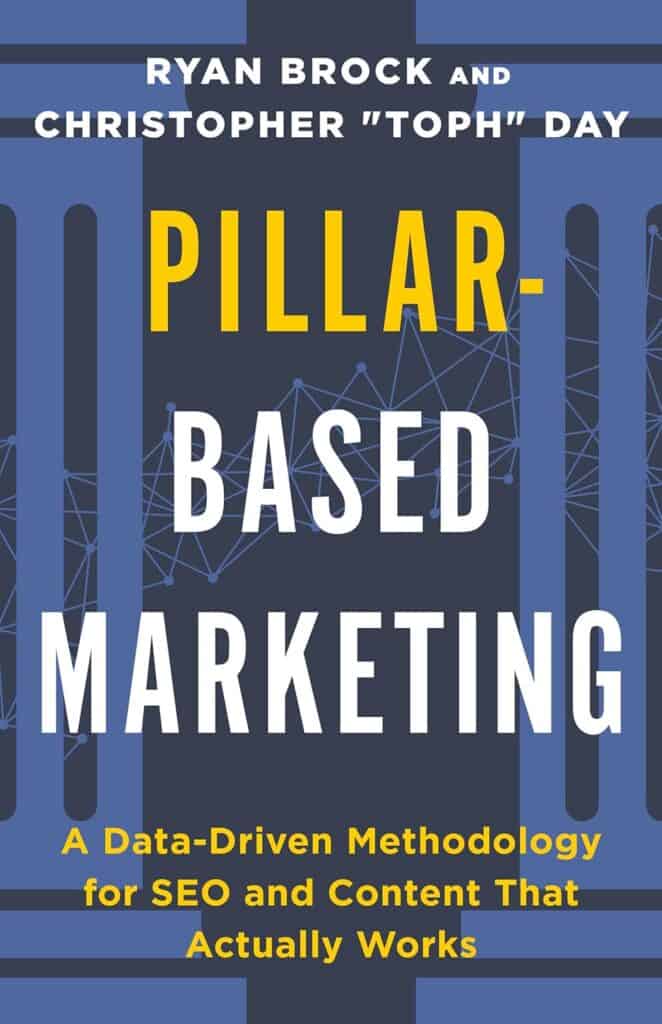
Pillar-Based Marketing is a content and SEO strategy that leverages deep data insights to create interconnected content that ranks consistently on Page One of search engines. The methodology is designed to replace guesswork in content marketing with a structured, scalable, and repeatable process.
Why You Should Read This Book
If you’re frustrated by the unpredictability of SEO and content marketing, Pillar-Based Marketing provides a proven, data-driven method to rank higher on search engines.
It challenges outdated content strategies and replaces them with a networked approach based on real customer search behaviors.
You’ll learn how to reduce wasted marketing spend by focusing on topics that truly matter to your audience.
It offers a step-by-step framework that any marketing professional can implement, making SEO success more predictable and scalable.
Key Ideas or Arguments
Traditional content marketing is broken – Most content never generates traffic due to outdated strategies.
Think in “Pillars” rather than individual pieces of content – Content should be structured around core topics, with supporting pieces linking back to them.
Keywords alone are not enough – Success comes from understanding customer intent networks rather than isolated keyword lists.
Organic search should be the foundation of a Go-To-Market strategy – Pillar-Based Marketing makes organic search a predictable, scalable revenue driver.
SEO needs a structured approach – Guessing what will rank is ineffective; structured, data-backed strategies win.
Content must be created in a connected ecosystem – Interlinking strategic content pieces increases visibility and engagement.
Paid ads are temporary; organic content is an appreciating asset – Investing in organic content provides long-term, compounding returns.
Marketing should be measurable and data-driven – Every piece of content should be backed by data insights that prove its effectiveness.
SEO success should be predictable – Pillar-Based Marketing offers a clear roadmap to Page One rankings in weeks, not months or years.
Aligning with customer search behavior is crucial – Understanding how customers naturally seek information is key to content strategy.
Book Outline
Section One: Why Pillar-Based Marketing?
Marketers Don’t Sleep
Marketing Is a Complete Waste of Money
The Real Villain: Guesswork
Think Spiderwebs, Not Funnels
Think Outside, Not Inside
The Birth of Pillar-Based Marketing
Section Two: How to Do Pillar-Based Marketing
Choosing Your First Pillar Topic
Building Your Pillar Strategy
Creating Your Pillar Content
Publishing Your Pillar Content
Measuring Your Impact
Key Takeaways
The traditional “funnel” model of marketing is outdated—customers interact with content in a web-like structure.
The Pillar-Based Marketing methodology provides a way to systematically create content that ranks and drives engagement.
By focusing on data-driven content creation, marketers can eliminate guesswork and build sustainable SEO success.
Key Techniques
Pillar Selection – Choosing core topics that align with search behavior and business goals.
Content Ecosystem Building – Structuring related articles, subtopics, and interlinked content for maximum reach.
SEO Data Mapping – Using real search behavior data to identify high-impact topics.
Performance Measurement – Tracking organic traffic, engagement, and business outcomes from Pillar-Based Marketing strategies.
Author’s Qualifications
Ryan Brock – Founder of Metonymy Media, a content marketing agency focused on data-driven content strategy.
Christopher “Toph” Day – CEO of DemandJump, a marketing technology company specializing in customer behavior analysis.
Both authors bring years of experience in digital marketing, SEO, and business growth, making them well-qualified to introduce Pillar-Based Marketing.
Comparison to Similar Books
Compared to “They Ask, You Answer” by Marcus Sheridan – Pillar-Based Marketing offers a more structured, data-backed approach rather than a purely conversational strategy.
Compared to “Content Inc.” by Joe Pulizzi – Pillar-Based Marketing is more focused on SEO and organic search strategies rather than content-driven entrepreneurship.
Compared to “SEO 2024” by Adam Clarke – While Clarke’s book covers SEO tactics, Pillar-Based Marketing provides a holistic content ecosystem strategy.
Target Audience Groups
Marketing executives and CMOs – Align marketing strategy with business goals and prove its impact.
SEO specialists and content strategists – Implement a scalable framework for sustainable search rankings.
Business owners and entrepreneurs – Build a cost-effective organic marketing engine that outperforms paid ads.
B2B marketers – Create high-value content ecosystems that attract and nurture leads.
Growth marketers – Leverage organic search as a long-term, compounding growth driver.
Marketing agencies – Differentiate with predictable, data-driven SEO success for clients.
Tech companies and SaaS brands – Drive inbound leads by ranking for high-intent search topics.
Critical Response to Book
Praise:
Demystifies SEO and content marketing – Pillar-Based Marketing provides a structured solution to SEO uncertainty.
Practicality and applicability – The framework is easy to follow and implement.
Thought leadership – The authors bring fresh insights into an evolving field.
Criticism:
Some case studies are too focused on B2B—B2C brands may need adaptations.
While Pillar-Based Marketing is data-driven, it still requires strong content execution.
One Sentence Takeaway
Pillar-Based Marketing replaces guesswork in content marketing with a structured, data-driven approach that systematically ranks content on Page One, ensuring sustained organic growth.