
toastmasters icebreaker

My Icebreaker Speach at Toastmasters
Reading Time: 4 minutes

It’s been many years since I first learned about Toastmasters. I think it was from a Manager Tools podcast. My takeaway was that it was like an AA meeting but focused on allowing anyone to give speeches to improve their public speaking skills. For a time, I was seeing a therapist who told me it was a non-negotiable requirement that I attend and so I did. Minus heights and snakes, I think all of my fears are front and center in these meetings.

The first speech that you give is called the Icebreaker. It’s a four to six minute speech that allows you to introduce yourself to the group and explain why you are attending Toastmasters so they can be supportive of your goals. My previous goal with any public speech was just to survive – I know, a bit dramatic. The bar is miles above that as I watch others speak with no notes, looking the audience in the eye and not going blank, and not hiding beyond a podium. My biggest speaking fears include profuse sweating, dry mouth, either going blank or my brain not recalling what to say next quick enough, and since my heart attack, needing to pace to avoid blacking out from my light headedness.

Well, on October 22, 2024 I gave my icebreaker speech. I have never practiced so hard for a speech and in the end, have five different talks written. I forgot to record the talk but I thought I would share the written version of it below. I struggled finding examples of Icebreaker talks before giving mine so perhaps this is helpful for someone.

With this being my icebreaker speech, I picked four topics to share more about who I am to finally introduce myself to this group.

TOPIC #1: Growing Up

  1. Construction: Starting at the age of 14, I spent my summers working with my dad doing construction. This was the starting point of me enjoying school more than summer vacations.
  2. Camaro: I love muscle cars. During my high school years, I owned a partially restored 1969 RS SS Camaro that was painted hugger orange. If this doesn’t mean anything, the best comparison I can think of is the Dukes of Hazzard car for comparison. My cool was much cooler. Fast off the line and slow to stop, this car was too light to be safe on the snow and ice. I ultimately sold the car and have missed it ever since.
  3. Mission: I served an LDS mission in New Zealand; If I am feeling nerdy, I will tell people I served in middle earth; I love the people, I love the food, and I love watching an All Blacks rugby game when possible.

TOPIC #2: Calculus

  1. I took calculus three times at three different colleges:
    1. First at UVSC (now called Utah Valley University).
    1. Second at BYU.
    1. Third at the University of Utah.
  2. Between a good enough calculus grade and a requirement to take the GMAT, I didn’t bother pursuing an MBA when I was younger.
  3. My oldest daughter found out that I could pursue an online MBA at Southern Utah University.
  4. They didn’t require a GMAT or care what my calculus grade was.
  5. My daughter registered me for class and I am now attending my fourth college as a 49 year-old student.

TOPIC #3 Divorce

  1. Married for 13 years and had three girls.
  2. After the divorce I drove to St. George twice a month for 10+ years to see them.
  3. My new wife and my ex-wife had high school choir together. My ex has a scrapbook photo of them at a Seattle McDonald’s while on choir tour with a caption that says “new friends”. Yes, my worlds collided that day.
  4. Exchanging the girls
    1. Early in the divorce, we were exchanging the girls and they had gotten in my car.
    1. As I was also getting in the car, I looked over my hood and could see my ex and her new husband smiling and waving at me.
    1. With no thought I reacted by flipping them off.
    1. I think they were as surprised as I was. Their smiles vanished and their waving slowed to a stop.
    1. Fast forward to today, and my current wife and I have stayed many nights at their place with the girls for Christmas and other family events. It’s amazing what can change with enough time.

TOPIC #4 Heart Attack

  1. My mom passed away from a heart attack in August 2021. She was literally on the go until her final breath.
  2. 599 days later on April 19, 2023, on my mom’s birthday, I had a widow maker heart attack.
  3. Only 12% who have this type of a heart attack outside of a hospital survive. I am truly blessed to still be here.
  4. A quarter of my heart is no longer working resulting in my decreased energy and a factor in my current unemployment.

Overall, I am not too sure what my future holds.

I don’t enjoy public speaking, struggle with social activities, and seem to get more introverted as I grow older.

Despite all of my awkwardness and fear, I feel motivated to be here and improve.

Thank you all for making me feel welcome and being so supportive.

My Icebreaker Speach at Toastmasters Read More »
the 100 absolutely unbreakable laws of business success

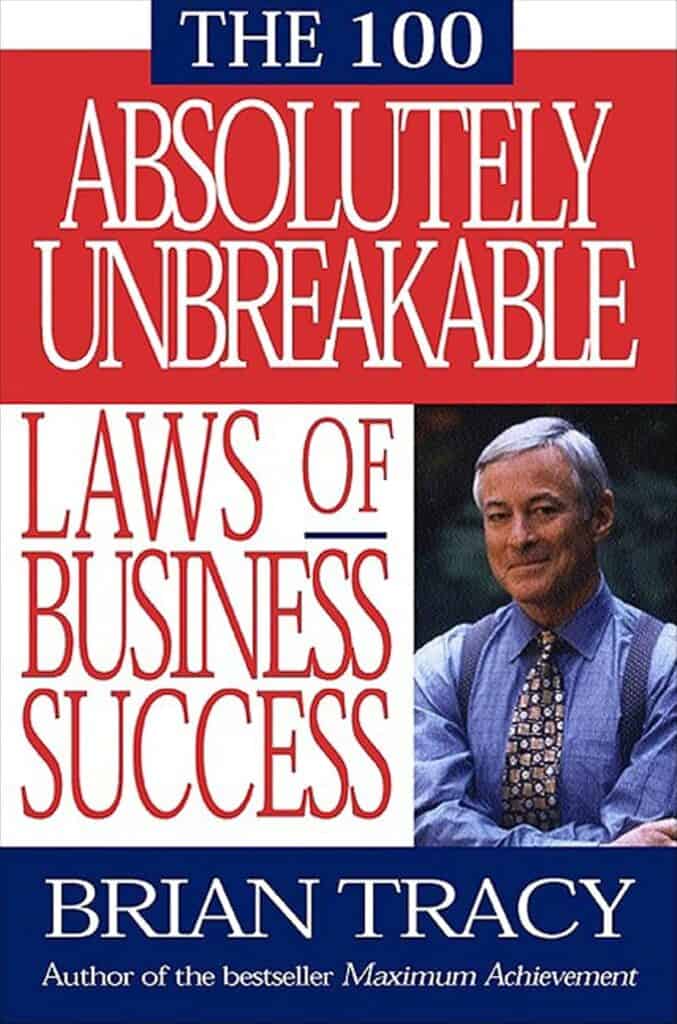
The 100 Absolutely Unbreakable Laws of Business Success by Brian Tracy Book Summary

Reading Time: 6 minutes

I highly recommend reading or listening to The 100 Absolutely Unbreakable Laws of Business Success by Brian Tracy. This book provides rapid fire practical principles and insights for success in business, leadership, personal development, and life.

Each law highlights key principles that, when followed, can lead to better decision-making, stronger leadership, improved customer relationships, and personal fulfillment aimed at achieving success in business and life. The book emphasizes laws related to productivity, leadership, finances, personal development, and decision-making.

Here are my notes to give you a better idea on what is covered and to hopefully motivate you to read his book.

The Laws of Life

  1. The Law of Cause and Effect: Everything happens for a reason; there is a cause for every effect.
  2. The Law of Belief: Whatever you believe, with feeling, becomes your reality.
  3. The Law of Expectations: Whatever you expect, with confidence, becomes your own self-fulfilling prophecy.
  4. The Law of Attraction: You are a living magnet; you attract people, situations, and opportunities that are in harmony with your dominant thoughts.
  5. The Law of Correspondence: Your outer world is a reflection of your inner world.

The Laws of Success

  1. The Law of Control: You feel positive about yourself to the degree to which you feel you are in control of your own life.
  2. The Law of Accident: Life is a series of random events and occurrences over which you have no control.
  3. The Law of Responsibility: You are completely responsible for everything you are, everything you have, and everything you become.
  4. The Law of Direction: Successful people have a clear sense of direction and purpose in life.
  5. The Law of Compensation: You are always fully compensated for what you do, no more, no less.

The Laws of Business

  1. The Law of Purpose: The purpose of a business is to create and keep a customer.
  2. The Law of Organization: A business organization exists to create and keep customers.
  3. The Law of Customer Satisfaction: The customer is always right.
  4. The Law of Quality: The quality of a product or service is the key determinant of the success of a business.
  5. The Law of Innovation: In business, innovation is the key to success, longevity, and competitive advantage.

The Laws of Leadership

  1. The Law of Integrity: Great leadership is built on integrity, honesty, and credibility.
  2. The Law of Courage: It takes courage to lead, to make tough decisions, and to persist in the face of challenges.
  3. The Law of Realism: Leaders deal in reality.
  4. The Law of Power: A leader’s power is derived from the trust, respect, and admiration of their followers.
  5. The Law of Example: Leaders lead by example in all aspects of their lives.

The Laws of Money

  1. The Law of Value: Your earning ability is a reflection of the value you provide to others.
  2. The Law of Wealth: Wealth is the result of the accumulation of value over time.
  3. The Law of Capital: Your most valuable resource is your earning ability.
  4. The Law of Time: Time is money. The way you use your time largely determines the amount of money you earn.
  5. The Law of Investing: Proper investing of time and money is essential for building wealth.

The Laws of Selling

  1. The Law of Sales: All successful businesses rely on selling their products or services.
  2. The Law of Need: Successful selling begins with identifying the customer’s needs.
  3. The Law of Persuasion: People are persuaded by reason, emotion, and credibility.
  4. The Law of Negotiation: Life is a series of negotiations; the ability to negotiate well determines your success.
  5. The Law of Relationships: People prefer to do business with those they know, like, and trust.

The Laws of Negotiating

  1. The Law of Desire: In every negotiation, one party wants something more than the other.
  2. The Law of Advantage: In negotiations, whoever prepares best has the advantage.
  3. The Law of Maximization: The more you ask for in negotiations, the more you will achieve.
  4. The Law of Timing: Timing is everything in negotiation.
  5. The Law of Integrity in Negotiations: Always act with integrity in your dealings.

The Laws of Time Management

  1. The Law of Clarity: Clear goals and priorities are essential for effective time management.
  2. The Law of Priorities: You must focus on the most important tasks first.
  3. The Law of Concentration: Success comes from sustained focus and concentration.
  4. The Law of Time Pressure: Work expands to fill the time available for its completion.
  5. The Law of Leverage: You can leverage time through delegation and efficiency.

The Laws of Personal Development

  1. The Law of Habit: Successful people are those with successful habits.
  2. The Law of Discipline: Discipline is doing what you should do, when you should do it, whether you feel like it or not.
  3. The Law of Persistence: Persistence in the face of adversity is a key determinant of success.
  4. The Law of Self-Confidence: Self-confidence is the foundation of all personal achievement.
  5. The Law of Self-Respect: How much you respect yourself determines how much others will respect you.

The Laws of Happiness

  1. The Law of Happiness: Happiness is achieved through continuous growth and fulfillment.
  2. The Law of Service: The more you serve others, the happier you will be.
  3. The Law of Relationships: The quality of your relationships determines the quality of your life.
  4. The Law of Contribution: The more you contribute to others, the more happiness you will experience.
  5. The Law of Gratitude: Happiness comes from being grateful for what you have.

The Laws of Achievement

  1. The Law of Success: Success is the result of hard work, determination, and learning from failure.
  2. The Law of Mastery: To achieve greatness, you must master your craft through deliberate practice.
  3. The Law of Influence: Your ability to influence others will determine your long-term success.
  4. The Law of Excellence: Excellence is a habit developed by focusing on continuous improvement.
  5. The Law of Opportunity: Every problem contains within it an opportunity to grow and improve.

The Laws of Decision-Making

  1. The Law of Clarity in Decision-Making: The clearer you are about your decision, the better your outcome.
  2. The Law of Alternatives: The more alternatives you have, the better your decision will be.
  3. The Law of Risk: Every decision carries some level of risk, but avoiding decisions is often riskier.
  4. The Law of Decision: Success in business and life comes from making decisions quickly and changing them slowly.
  5. The Law of Opportunity Cost: Every decision has a cost, and choosing one option means forgoing another.

The Laws of Problem-Solving

  1. The Law of Problem Definition: The more clearly you can define a problem, the easier it is to solve.
  2. The Law of Creativity: Every problem can be solved with creative thinking.
  3. The Law of Focused Attention: Focusing on a problem intently often leads to the best solution.
  4. The Law of Timing in Problem-Solving: Some problems solve themselves with time, while others require immediate action.
  5. The Law of Problem Ownership: You are responsible for solving your own problems and challenges.

The Laws of Communication

  1. The Law of Clarity in Communication: Clear communication leads to better understanding and fewer mistakes.
  2. The Law of Listening: Effective communication is 50% listening and 50% speaking.
  3. The Law of Feedback: Continuous feedback is essential for improving communication.
  4. The Law of Preparation: The more you prepare before communicating, the better the outcome.
  5. The Law of Empathy: The ability to put yourself in someone else’s shoes enhances your communication.

The Laws of Persuasion

  1. The Law of Reciprocity: People feel obligated to return a favor, and this can be used in persuasion.
  2. The Law of Scarcity: People value things more when they believe those things are scarce.
  3. The Law of Authority: People are more likely to be persuaded by those who are seen as credible or authoritative.
  4. The Law of Liking: We are more likely to be influenced by people we like or admire.
  5. The Law of Commitment: People are more likely to follow through on something if they’ve made a public commitment to it.

The Laws of Influence

  1. The Law of Reciprocity in Influence: Influence grows when you give more than you take.
  2. The Law of Consistency: People are more likely to follow through if they have been consistent in the past.
  3. The Law of Social Proof: People tend to follow the actions of the masses, especially when uncertain.
  4. The Law of Unity: Building strong unity and alignment within a group enhances influence.
  5. The Law of Transparency: The more open and transparent you are, the easier it is to influence others.

The Laws of Customer Service

  1. The Law of Satisfaction: A satisfied customer is the best source of repeat business and referrals.
  2. The Law of Customer Loyalty: It is easier and cheaper to retain existing customers than to acquire new ones.
  3. The Law of Delight: Exceeding customer expectations leads to customer delight and long-term loyalty.
  4. The Law of Responsiveness: The faster you respond to customer needs and complaints, the more loyal they will become.
  5. The Law of Relationship-Building: Strong relationships with customers are the foundation of long-term business success.

The Laws of Personal Power

  1. The Law of Self-Esteem: High self-esteem is the foundation of personal power and influence.
  2. The Law of Responsibility for Results: The more responsibility you take, the more power you have.
  3. The Law of Positive Expectancy: Optimistic people achieve more because they believe in positive outcomes.
  4. The Law of Self-Control: Personal power grows with self-discipline and emotional control.
  5. The Law of Courage in Personal Power: Courage enables you to take risks and seize opportunities that lead to greater personal power.

The Laws of Teamwork

  1. The Law of Cooperation: The most effective teams are built on mutual cooperation and collaboration.
  2. The Law of Contribution: Team members are motivated when they feel they are making valuable contributions.
  3. The Law of Group Synergy: A team working together can achieve more than the sum of individual efforts.
  4. The Law of Communication in Teams: Open and honest communication is essential for effective teamwork.
  5. The Law of Common Goals: Teams work best when everyone is aligned toward a shared goal or vision.

The Laws of Achievement

  1. The Law of Preparation in Achievement: Thorough preparation is the foundation of successful achievement.
  2. The Law of Priorities in Achievement: Focusing on the highest-value tasks brings the most significant results.
  3. The Law of Perseverance: Persistence in the face of obstacles is key to achievement.
  4. The Law of Accountability: Accountability increases the likelihood of achieving your goals.
  5. The Law of Gratitude in Achievement: Gratitude enhances your ability to achieve by fostering positivity and resilience.

The 100 Absolutely Unbreakable Laws of Business Success by Brian Tracy Book Summary Read More »

2024 best marketing and business books

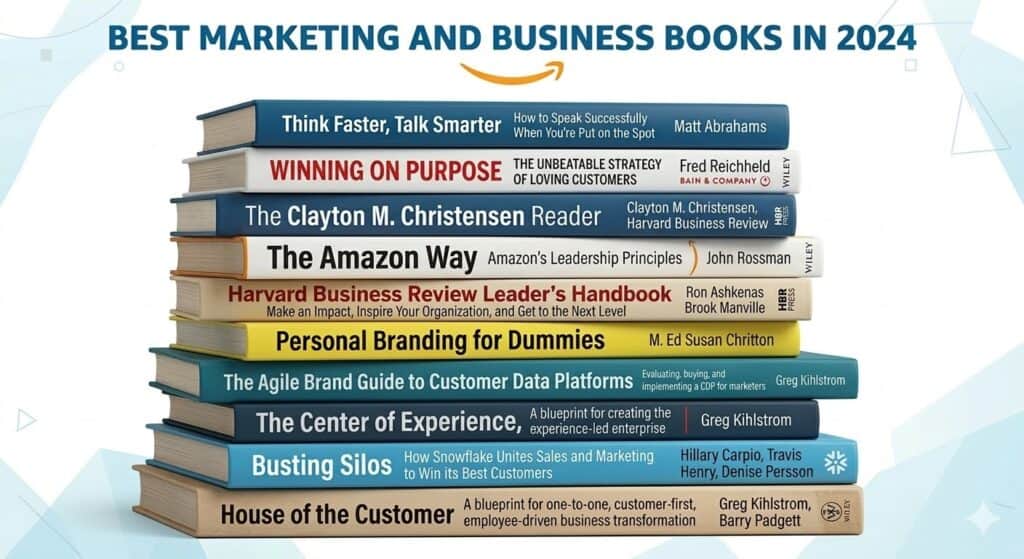
Best Marketing and Business Books in 2024

Best Marketing and Business Books in 2024 Read More »

2023 best marketing and business books

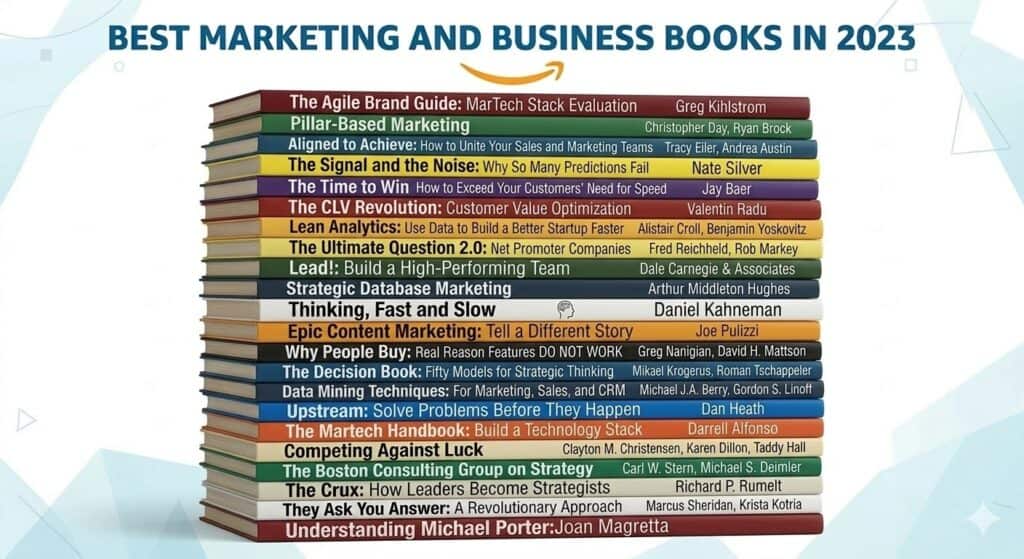
Best Marketing and Business Books in 2023

Reading Time: 2 minutes

Here are five star marketing or business books I have read in 2023.

  1. The Agile Brand Guide: MarTech Stack Evaluation
    • by Greg Kihlstrom
  2. Pillar-Based Marketing
    • by Christopher Day, Ryan Brock
  3. Aligned to Achieve: How to Unite Your Sales and Marketing Teams into a Single Force for Growth
    • by Tracy Eiler, Andrea Austin
  4. The Signal and the Noise: Why So Many Predictions Fail – But Some Don’t
    • by Nate Silver
  5. The Time to Win: How to Exceed Your Customers’ Need for Speed
    • by Jay Baer
  6. The CLV Revolution: Transform Your Ecommerce with Customer Value Optimization
    • by Valentin Radu
  7. Lean Analytics: Use Data to Build a Better Startup Faster
    • by Alistair Croll, Benjamin Yoskovitz
  8. The Ultimate Question 2.0: How Net Promoter Companies Thrive in a Customer-Driven World
    • by Fred Reichheld, Rob Markey
  9. Lead!: How to Build a High-Performing Team
    • by Dale Carnegie & Associates
  10. Strategic Database Marketing: The Masterplan for Starting and Managing a Profitable Customer-Based Marketing Program
    • by Arthur Middleton Hughes
  11. Thinking, Fast and Slow
    • by Daniel Kahneman
  12. Epic Content Marketing: How to Tell a Different Story, Break through the Clutter, and Win More Customers by Marketing Less
    • by Joe Pulizzi
  13. Why People Buy: The Real Reason Features and Benefits Selling DOESN’T WORK
    • by Greg Nanigian, David H. Mattson
  14. The Decision Book: Fifty Models for Strategic Thinking
    • by Mikael Krogerus, Roman Tschappeler
  15. Data Mining Techniques: For Marketing, Sales, and Customer Relationship Management
    • by Michael J.A. Berry, Gordon S. Linoff
  16. Upstream: The Quest to Solve Problems Before They Happen
    • by Dan Heath
  17. The Martech Handbook: Build a Technology Stack to Attract and Retain Customers
    • by Darrell Alfonso
  18. Competing Against Luck
    • by Clayton M. Christensen, Karen Dillon, Taddy Hall
  19. The Boston Consulting Group on Strategy: Classic Concepts and New Perspectives
    • by Carl W. Stern, Michael S. Deimler
  20. The Crux: How Leaders Become Strategists
    • by Richard P. Rumelt
  21. They Ask You Answer: A Revolutionary Approach to Inbound Sales, Content Marketing, and Today’s Digital Consumer
    • by Marcus Sheridan, Krista Kotria
  22. Understanding Michael Porter: The Essential Guide to Competition and Strategy
    • by Joan Magretta

Best Marketing and Business Books in 2023 Read More »

Book cover for 'Satan and His Lies Exposed' by Douglas M. Curran, featuring a black silhouette of a face against a red background, highlighting themes of spiritual warfare and truth.

Satan and His Lies Exposed Book Release

Reading Time: < 1 minute
Book cover for 'Satan and His Lies Exposed' by Douglas M. Curran, featuring a black silhouette of a face against a red background, highlighting themes of spiritual warfare and truth.

I wasn’t able to meet my father-in-law. Doug had a lot of writings including poems, songs, children’s stories and religious books. His flagship undertaking is a book called Satan and His Lies Exposed which I had the opportunity to edit and publish during a period of unemployment. I am excited to announce that this book is now released and available digitally on Amazon Kindle, paperback. and audiobook formats.

I am hoping this fulfills one of his dreams and perhaps can help his widowed wife with some financial assistance. If you are a Christian and want to better know our adversary and our advocate, or have questions about where we came from before this life, the purpose of our time on earth, or where we go after this life, you will love this book.

Please visit our Facebook page where we share more about the book.

View book cover animation

Satan and His Lies Exposed Book Release Read More »

marketing operations analytics

Marketing Operations Analytics

Reading Time: 3 minutes

I have listened to more than 13,000 podcasts, mostly focused on digital marketing. I recently came across a podcast called DemandGen Radio. Dave Lewis is the host and was reading a chapter from his Manufacturing Demand book. Interesting that I have had this book in my want to read list in Goodreads since 2013. If this is really the #1 book on lead management as is stated on the cover, a gross error on my part for not getting to it sooner.

So far, I have only listened to two episodes, #260 and #261, that was a two-parter called Marketing Analytics: Keeping Score of Your Success. Rarely do I take notes listening to a podcast, but this was brilliant and so much value was shared. I am sharing my notes and thoughts in hopes it’s beneficial to others.

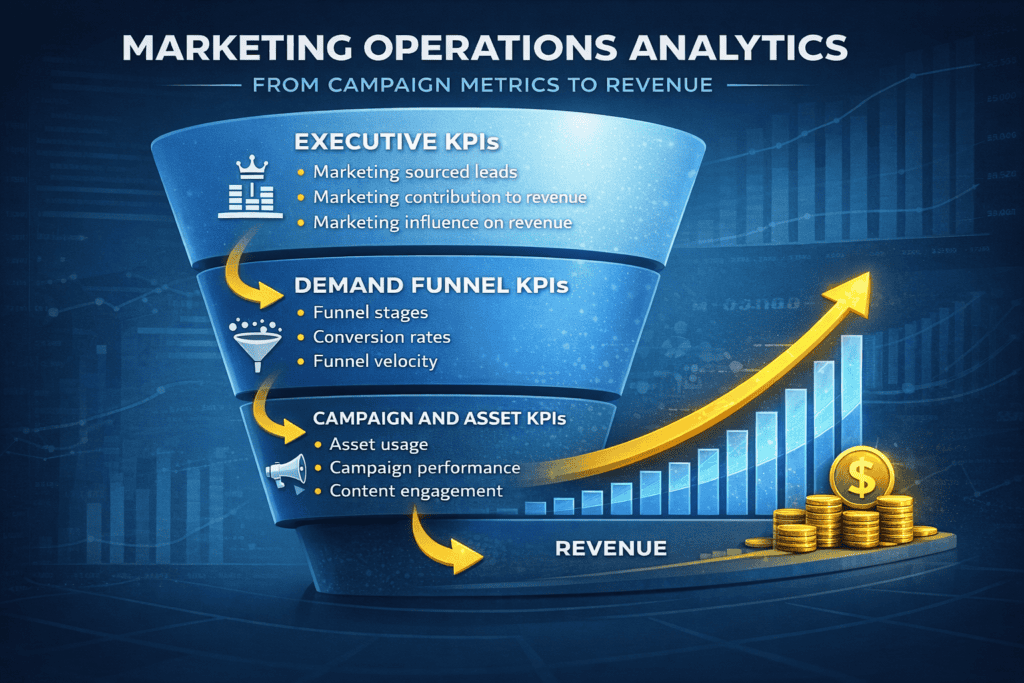
It seems like marketing is too often trying to prove they deserve a seat at the adults table instead of being at the kid’s table making arts and crafts. Perhaps that leads to oversharing when we finally get the opportunity, or sharing vanity metrics, or just not speaking the language of the boardroom. Instead of sharing marketing activities including impressions, likes, or our recent ribbon win for the prettiest booth, let’s share metrics that lead to financial outcomes. There are three major types of marketing analytics or key performance indicators (KPIs).

The first set of analytics metrics are Executive KPIs and they need to measure the entire demand generation spectrum.

Executive KPIs

  1. Marketing sourced leads and opportunities
  2. Marketing contribution to revenue
  3. Marketing’s influence on opportunities and revenue

The second set of analytics metrics are Demand Funnel KPIs and they measure the velocity and efficiency of our demand funnel.

Demand Funnel KPIs

  1. How many prospects at each stage of the funnel
  2. Conversion rate between each of these stages
  3. Average time in each stage – this tells us the velocity of the demand funnel
  4. Lead scoring distribution – how many A, B, C, D, and E leads and does this look anything like a bell curve
  5. Campaign performance – number of leads, what channel or lead source, opportunities, revenue

The third set of analytics metrics are Campaign and Asset Performance KPIs and they measure the success of our assets driving leads to a closed stage.

Campaign and Asset Performance KPIs

  1. Use of our assets – tracking downloads for PDFs or how much of the video was watched like 25%, 50%, 75%, 100%
  2. Closed/won asset utilization – what assets get read by prospects who eventually buy

The three most important things to track with any form submission are the channel, lead source, and offer. Probably the most common way to implement this tracking is to capture the UTM tracking parameters in the URL query string and make sure they are passed as hidden fields in the form submissions. That form submission is tied to the Salesforce campaign object or whatever makes sense using another CRM. It’s important to make sure you can track every stage and really everything from that first click to the close of the sale. Until you know you are accurately measuring from click to close, you have a leaky funnel and nothing should be shared until you have confidence in your data and know you won’t lost trust.

The closing part of the podcast shared the four Cs.
1. What you can count – This reminds me of two quotes. First by W. Edwards Deming who said “If you can’t measure it, you can’t manage it”. Second by Lord Kelvin who said “If you can not measure it, you can not improve it”. The last thought is one I hear often, just because you can count/measure/track it doesn’t mean you should.
2. What counts – Although the Executive KPIs clearly cover what counts, there are other metrics that we want to track within our marketing group like micro conversions. Not everything tracked needs to be shared.
3. What you can count on – how important it is to trust your data so others trust you. When trust is lost, just about all is lost.
4. How you communicate it – often marketing needs to do a better job at marketing marketing. We could learn something from our sales colleagues in sharing what is working and that we are critical to the company’s success.

Marketing Operations Analytics Read More »