Sigma Media Manager Review: WordPress Media Cleanup and Organization Tool
I bought Sigma Media Manager for two reasons.
First, I wanted to see if it could help solve one of the most annoying WordPress media workflow problems I keep running into: creating useful image metadata without turning every upload into manual cleanup work. After running into limitations with another tool, I was hoping Sigma Media Manager might handle missing alt text in a more useful way.
Second, I wanted to see if it could identify unused media files inside my WordPress library. I knew my website had old screenshots, replaced graphics, and unused visuals sitting around. I did not know how bad the problem was or how to fix it with minimal manual effort.
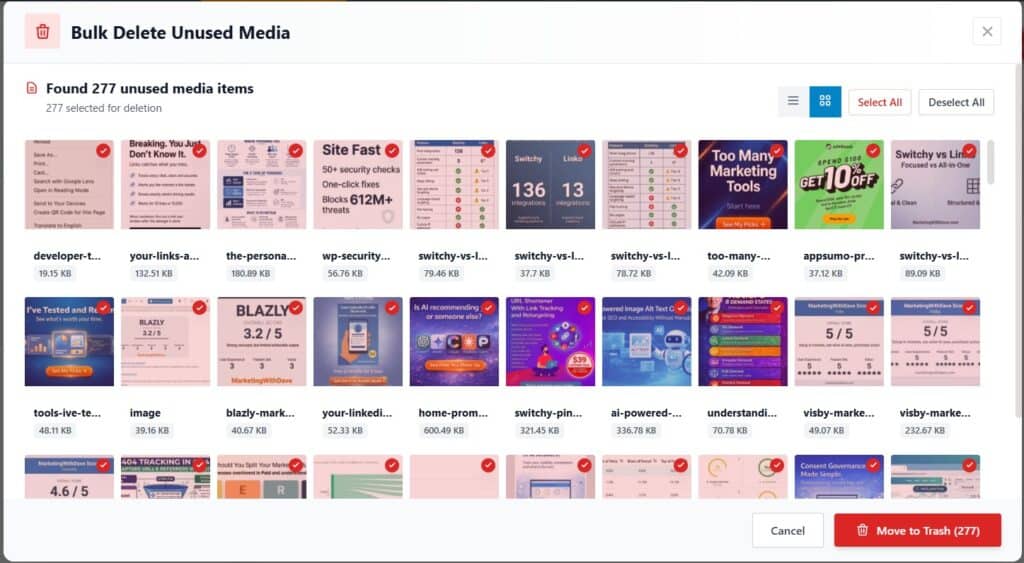
That is what made this review interesting. Sigma Media Manager immediately found 277 unused media items in my library, which was 38% of my total media library. That one feature delivered real value. But the AI metadata workflow, onboarding, and overall stability were much less convincing.
So this review is not simply about one cleanup feature. It is about whether Sigma Media Manager is ready to be a broader WordPress media management tool.
The rest of my experience was more complicated.
Sigma Media Manager has a strong concept, a broad feature set, and at least one feature that may justify the purchase by itself. But it was buggy, sluggish, and unfinished in several important areas. The result is a product I want to like more than I currently trust.
See the current AppSumo deal for Sigma Media Manager
Affiliate disclosure: If you purchase through my link, I may earn a small commission at no additional cost to you. I only share tools I have used myself.
The 30-Second Decision
Sigma Media Manager is a WordPress media library management plugin designed to help you organize, clean up, protect, optimize, and manage media files from one place.
The best parts of the product worked quickly and gave me immediate value. Bulk unused media detection and Smart Organize were genuinely useful. The broader feature set is also impressive, especially if you want one plugin that can potentially replace several smaller WordPress media tools.
The caution is execution. During testing, I ran into errors, slow loading, license issues, failed AI generation, and unclear workflow feedback. This is not a product I would blindly run across an entire media library without testing carefully first.
My current read: Sigma Media Manager has real potential, but the experience needs to become more stable before I would call it a polished WordPress media management solution.
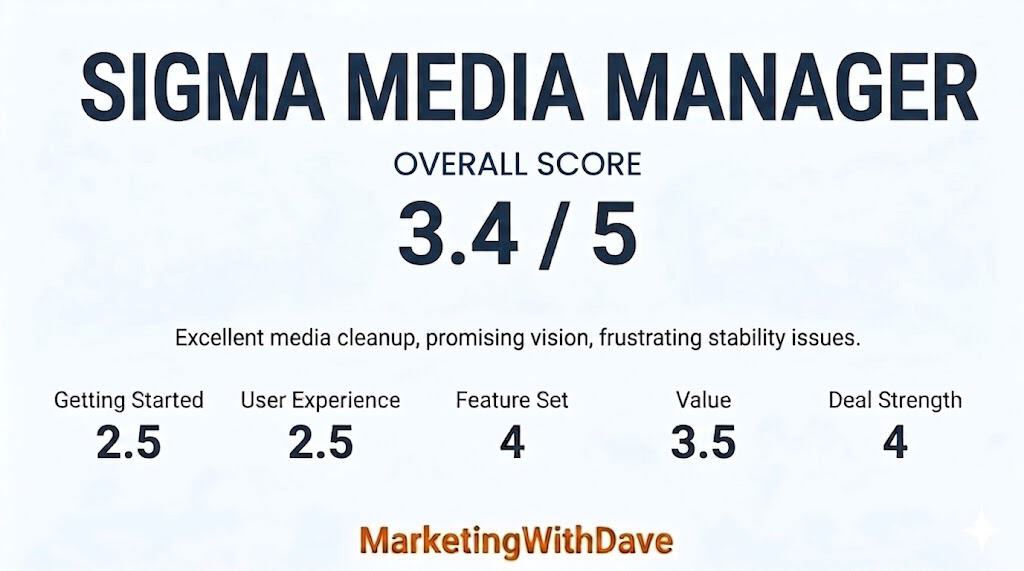
My Scorecard
Is Sigma Media Manager Right for You?
Sigma Media Manager is most relevant if you have a WordPress website with a messy or aging media library. That includes bloggers, affiliate marketers, publishers, agencies, course creators, membership websites, and anyone regularly uploading screenshots, graphics, PDFs, videos, or downloadable assets.
It is probably less urgent if your website is new, your media library is small, or you already have a clean media workflow in place.
The product is trying to solve several WordPress media problems at once: organization, unused file cleanup, AI metadata, media protection, cloud storage, and file management. That ambition is part of what makes it interesting. It is also why reliability matters so much.
What Sigma Media Manager Actually Helps You Do
Sigma Media Manager is not just a folder plugin. It is positioned as a broader WordPress media management tool that can potentially replace several smaller plugins.
Based on the product page and feature comparison, Sigma Media Manager can help with:
- Organizing WordPress media into folders.
- Sorting media by file type.
- Finding and deleting unused media files.
- Generating AI-powered media titles, captions, and descriptions.
- Managing access to protected media.
- Supporting cloud storage workflows.
- Reducing media library clutter.
The feature set is one of the stronger parts of the product. Their comparison page shows how ambitious the plugin is, especially compared with more narrowly focused media library tools.
View the Sigma Media Manager feature comparison chart
This is why I scored the feature set higher than the user experience. Sigma Media Manager has a lot of useful ideas. My concern is not the product vision. My concern is how consistently those features worked during testing.
The Features That Worked Best for Me
The strongest feature I tested was Bulk Delete Unused Media.
In seconds, Sigma Media Manager scanned my WordPress media library and identified 277 unused media items. Since my library had 723 total items, that meant 38% of my media library was not being used anywhere on the website.
This was the clearest win in my testing. I already knew my media library was bloated, but I did not have an easy way to measure the problem or clean it up confidently.
The other feature I liked was Smart Organize. With one click, Sigma Media Manager organized my media into basic folders by file type, including images, videos, and documents.
That may sound simple, but it was useful. It made the library easier to understand without requiring me to manually build a folder structure or move files one by one.
These two features gave me the best version of Sigma Media Manager: fast, practical, and immediately useful.
The Bigger Vision Behind the Product
The reason Sigma Media Manager is hard to dismiss is that the product vision is much bigger than the two features I liked most.
In a polished version of this product, Sigma Media Manager could become a central workflow for managing WordPress media. That matters because media libraries can become chaotic over time, especially on content-heavy websites.
Instead of using separate plugins for folders, unused media cleanup, media protection, AI metadata, and cloud storage, Sigma is trying to bring those workflows into one place.
When a plugin touches your media library, trust matters. When it offers bulk actions, trust matters even more. That is where my experience became more mixed.
Where the Experience Broke Down
After the initial cleanup and organization wins, I ran into enough issues that I became more cautious.
The plugin felt sluggish at times, especially when moving between the Media Manager area and the settings area. I also ran into errors while creating or loading folders, occasional license status issues, and server-related errors during normal use.
I do not need to list every technical error for the point to be clear. The product did not feel as stable as I would expect from a WordPress plugin that handles media organization, metadata, and bulk actions.
That matters because this is not a cosmetic plugin. If a tool is changing media records, organizing files, or deleting unused assets, the workflow needs to feel predictable and trustworthy.
AI Metadata Was Promising but Not Reliable
The AI metadata feature was one of the main reasons I bought Sigma Media Manager.
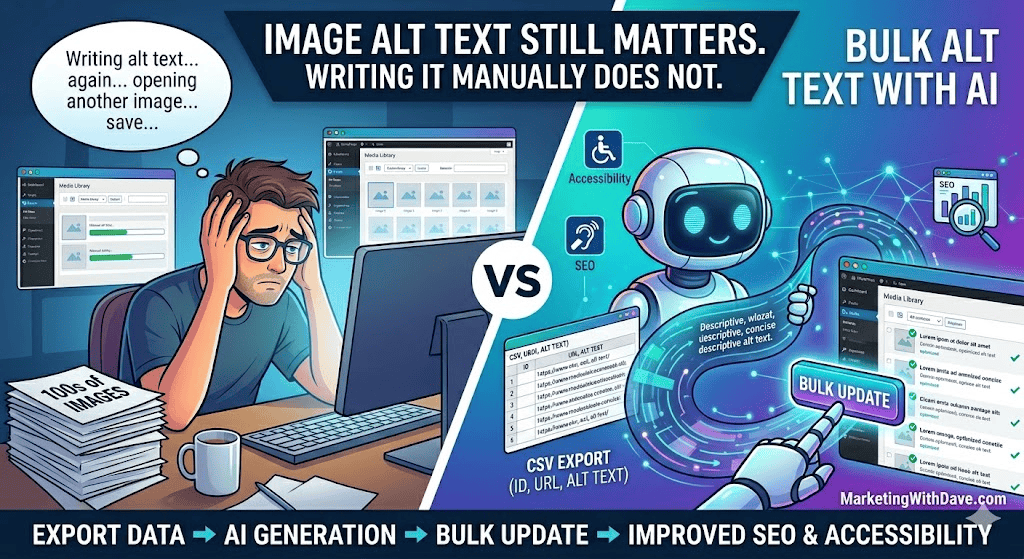
I was hoping it could help with the ongoing task of creating useful image titles, captions, descriptions, or alt text as new images are added to my website. That would be valuable because image metadata is easy to neglect, especially when publishing frequently.
In my test, I selected 30 images and used Sigma Media Manager’s free credits to generate titles. It successfully added titles to only 9 of the 30 images. The rest failed with API-related or JSON-related errors.
I also wanted more clarity after the AI process ran. Were the changes live immediately? Did I need to review or approve them? Where could I quickly confirm what changed? Could I skip files that already had existing metadata?
That last point is important. A media metadata tool should let users avoid overwriting existing metadata. Without that control, bulk AI generation becomes risky.
What I Skipped and Why
I did not test every Sigma Media Manager feature deeply.
Some features did not apply to my website, and some were not worth testing further after I ran into stability issues. That does not mean those features have no value. It means this review is based on my actual use case, not a complete lab test of every feature.
| Feature | Why I Skipped It |
|---|---|
| Advanced cloud storage | This could be valuable for larger or media-heavy websites, but I do not currently need to offload my media to third-party storage. |
| Password protection | This may be useful for membership websites, private downloads, or client portals, but it does not apply to my public content workflow. |
| Image compression | I already have an image optimization workflow that supports modern formats like WebP and AVIF while preserving image quality. I was not convinced Sigma Media Manager improved enough on that process to justify replacing it. |
| Full AI metadata workflow | I tested AI title generation, but the success rate was too inconsistent for me to trust it across a larger media set. |
What I Wish Was Better
Sigma Media Manager would be much stronger with better onboarding, clearer workflow feedback, and more reliable performance.
The biggest improvements I would like to see are:
- A clearer getting started guide.
- More reliable navigation between plugin areas.
- Better handling of folder creation and loading.
- Clear confirmation after AI operations run.
- An option to skip media items that already have metadata.
- More stable free credits API performance.
- Visible roadmap details.
- Clearer explanations before and after bulk actions.
I also found the setup experience less smooth than expected. I eventually found the download and installed the plugin, but the path was not as obvious as it should have been. For an experienced WordPress user, that was annoying but manageable. For someone new to WordPress plugins, this could create unnecessary friction.
Can One Feature Be Enough?
This is the most interesting question with Sigma Media Manager.
Can one feature justify buying a product?
Sometimes, yes.
For me, finding 277 unused media files in seconds was real value. That was not a theoretical benefit or a marketing claim. It solved a real problem on my website and gave me visibility I did not have before.
But that does not erase the issues. The best version of Sigma Media Manager would make the rest of the product feel as clear and useful as that cleanup feature did.
Right now, I see a product with strong potential, a useful feature set, and at least one excellent workflow, but also meaningful reliability concerns.
Bottom Line
Sigma Media Manager is useful, ambitious, and frustrating.
The best parts of the product are genuinely helpful. Bulk unused media detection gave me immediate value, and Smart Organize made my media library easier to understand with almost no effort.
The broader product vision is also strong. If Sigma Media Manager becomes more stable, it could replace several separate WordPress media tools and become a central part of a cleaner media workflow.
But my current experience does not justify a stronger recommendation. The AI metadata feature was unreliable in my testing, the plugin felt sluggish at times, and I ran into enough errors to limit my confidence.
My current score is 3.4 out of 5. I hopeful improvements and a higher rating are in the near future.
That score reflects a product with meaningful upside, a strong feature set, and a useful AppSumo offer, but also enough execution issues that I would test carefully before relying on it heavily.
If your WordPress media library is bloated, Sigma Media Manager may be worth trying for the cleanup and organization features alone. Just use AppSumo’s 60 day refund window wisely, test with a small batch first, and do not assume every feature is ready for heavy production use yet.
See the current AppSumo deal for Sigma Media Manager
This content is for educational purposes and reflects my experience, review of the product, and current publicly available deal information. Always evaluate tools based on your specific business needs, goals, and workflows before making a decision.
Looking for more marketing software reviews? See my full list of marketing tools and software I recommend.
Sigma Media Manager Review: WordPress Media Cleanup and Organization Tool Read More »