Search Engine Optimization (SEO)

Optimize your WordPress media library with Sigma Media Manager review, highlighting media cleanup, organization, and overall score for improved website performance.

Sigma Media Manager Review: WordPress Media Cleanup and Organization Tool

Reading Time: 7 minutes

I bought Sigma Media Manager for two reasons.

First, I wanted to see if it could help solve one of the most annoying WordPress media workflow problems I keep running into: creating useful image metadata without turning every upload into manual cleanup work. After running into limitations with another tool, I was hoping Sigma Media Manager might handle missing alt text in a more useful way.

Second, I wanted to see if it could identify unused media files inside my WordPress library. I knew my website had old screenshots, replaced graphics, and unused visuals sitting around. I did not know how bad the problem was or how to fix it with minimal manual effort.

That is what made this review interesting. Sigma Media Manager immediately found 277 unused media items in my library, which was 38% of my total media library. That one feature delivered real value. But the AI metadata workflow, onboarding, and overall stability were much less convincing.

So this review is not simply about one cleanup feature. It is about whether Sigma Media Manager is ready to be a broader WordPress media management tool.

Boost your marketing strategy with expert tips, tools, and insights from Marketing with Dave to grow your business online effectively.
277 unused media files identified in one scan.

The rest of my experience was more complicated.

Sigma Media Manager has a strong concept, a broad feature set, and at least one feature that may justify the purchase by itself. But it was buggy, sluggish, and unfinished in several important areas. The result is a product I want to like more than I currently trust.

See the current AppSumo deal for Sigma Media Manager

Affiliate disclosure: If you purchase through my link, I may earn a small commission at no additional cost to you. I only share tools I have used myself.

The 30-Second Decision

Sigma Media Manager is a WordPress media library management plugin designed to help you organize, clean up, protect, optimize, and manage media files from one place.

The best parts of the product worked quickly and gave me immediate value. Bulk unused media detection and Smart Organize were genuinely useful. The broader feature set is also impressive, especially if you want one plugin that can potentially replace several smaller WordPress media tools.

The caution is execution. During testing, I ran into errors, slow loading, license issues, failed AI generation, and unclear workflow feedback. This is not a product I would blindly run across an entire media library without testing carefully first.

My current read: Sigma Media Manager has real potential, but the experience needs to become more stable before I would call it a polished WordPress media management solution.

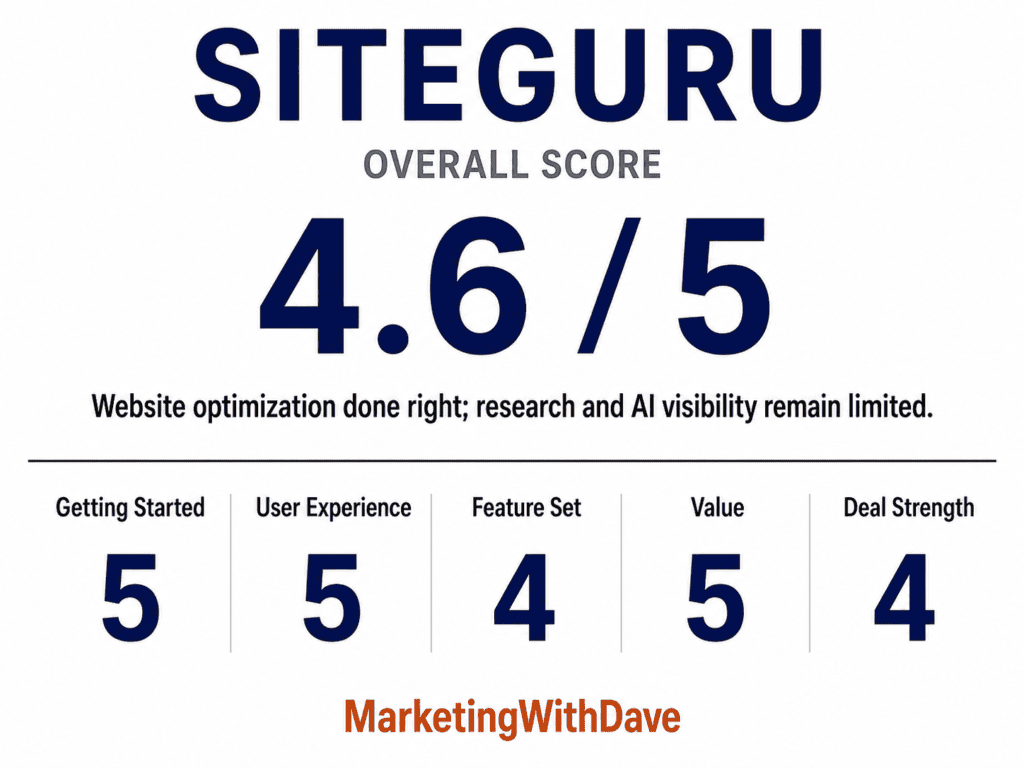
My Scorecard

Optimize your WordPress media library with Sigma Media Manager review, highlighting media cleanup, organization, and overall score for improved website performance.

See how I rate software tools

Is Sigma Media Manager Right for You?

Sigma Media Manager is most relevant if you have a WordPress website with a messy or aging media library. That includes bloggers, affiliate marketers, publishers, agencies, course creators, membership websites, and anyone regularly uploading screenshots, graphics, PDFs, videos, or downloadable assets.

It is probably less urgent if your website is new, your media library is small, or you already have a clean media workflow in place.

The product is trying to solve several WordPress media problems at once: organization, unused file cleanup, AI metadata, media protection, cloud storage, and file management. That ambition is part of what makes it interesting. It is also why reliability matters so much.

What Sigma Media Manager Actually Helps You Do

Sigma Media Manager is not just a folder plugin. It is positioned as a broader WordPress media management tool that can potentially replace several smaller plugins.

Based on the product page and feature comparison, Sigma Media Manager can help with:

  • Organizing WordPress media into folders.
  • Sorting media by file type.
  • Finding and deleting unused media files.
  • Generating AI-powered media titles, captions, and descriptions.
  • Managing access to protected media.
  • Supporting cloud storage workflows.
  • Reducing media library clutter.

The feature set is one of the stronger parts of the product. Their comparison page shows how ambitious the plugin is, especially compared with more narrowly focused media library tools.

View the Sigma Media Manager feature comparison chart

This is why I scored the feature set higher than the user experience. Sigma Media Manager has a lot of useful ideas. My concern is not the product vision. My concern is how consistently those features worked during testing.

The Features That Worked Best for Me

The strongest feature I tested was Bulk Delete Unused Media.

In seconds, Sigma Media Manager scanned my WordPress media library and identified 277 unused media items. Since my library had 723 total items, that meant 38% of my media library was not being used anywhere on the website.

This was the clearest win in my testing. I already knew my media library was bloated, but I did not have an easy way to measure the problem or clean it up confidently.

The other feature I liked was Smart Organize. With one click, Sigma Media Manager organized my media into basic folders by file type, including images, videos, and documents.

That may sound simple, but it was useful. It made the library easier to understand without requiring me to manually build a folder structure or move files one by one.

These two features gave me the best version of Sigma Media Manager: fast, practical, and immediately useful.

The Bigger Vision Behind the Product

The reason Sigma Media Manager is hard to dismiss is that the product vision is much bigger than the two features I liked most.

In a polished version of this product, Sigma Media Manager could become a central workflow for managing WordPress media. That matters because media libraries can become chaotic over time, especially on content-heavy websites.

Instead of using separate plugins for folders, unused media cleanup, media protection, AI metadata, and cloud storage, Sigma is trying to bring those workflows into one place.

When a plugin touches your media library, trust matters. When it offers bulk actions, trust matters even more. That is where my experience became more mixed.

Where the Experience Broke Down

After the initial cleanup and organization wins, I ran into enough issues that I became more cautious.

The plugin felt sluggish at times, especially when moving between the Media Manager area and the settings area. I also ran into errors while creating or loading folders, occasional license status issues, and server-related errors during normal use.

I do not need to list every technical error for the point to be clear. The product did not feel as stable as I would expect from a WordPress plugin that handles media organization, metadata, and bulk actions.

That matters because this is not a cosmetic plugin. If a tool is changing media records, organizing files, or deleting unused assets, the workflow needs to feel predictable and trustworthy.

AI Metadata Was Promising but Not Reliable

The AI metadata feature was one of the main reasons I bought Sigma Media Manager.

I was hoping it could help with the ongoing task of creating useful image titles, captions, descriptions, or alt text as new images are added to my website. That would be valuable because image metadata is easy to neglect, especially when publishing frequently.

In my test, I selected 30 images and used Sigma Media Manager’s free credits to generate titles. It successfully added titles to only 9 of the 30 images. The rest failed with API-related or JSON-related errors.

I also wanted more clarity after the AI process ran. Were the changes live immediately? Did I need to review or approve them? Where could I quickly confirm what changed? Could I skip files that already had existing metadata?

That last point is important. A media metadata tool should let users avoid overwriting existing metadata. Without that control, bulk AI generation becomes risky.

What I Skipped and Why

I did not test every Sigma Media Manager feature deeply.

Some features did not apply to my website, and some were not worth testing further after I ran into stability issues. That does not mean those features have no value. It means this review is based on my actual use case, not a complete lab test of every feature.

FeatureWhy I Skipped It
Advanced cloud storageThis could be valuable for larger or media-heavy websites, but I do not currently need to offload my media to third-party storage.
Password protectionThis may be useful for membership websites, private downloads, or client portals, but it does not apply to my public content workflow.
Image compressionI already have an image optimization workflow that supports modern formats like WebP and AVIF while preserving image quality. I was not convinced Sigma Media Manager improved enough on that process to justify replacing it.
Full AI metadata workflowI tested AI title generation, but the success rate was too inconsistent for me to trust it across a larger media set.

What I Wish Was Better

Sigma Media Manager would be much stronger with better onboarding, clearer workflow feedback, and more reliable performance.

The biggest improvements I would like to see are:

  • A clearer getting started guide.
  • More reliable navigation between plugin areas.
  • Better handling of folder creation and loading.
  • Clear confirmation after AI operations run.
  • An option to skip media items that already have metadata.
  • More stable free credits API performance.
  • Visible roadmap details.
  • Clearer explanations before and after bulk actions.

I also found the setup experience less smooth than expected. I eventually found the download and installed the plugin, but the path was not as obvious as it should have been. For an experienced WordPress user, that was annoying but manageable. For someone new to WordPress plugins, this could create unnecessary friction.

Can One Feature Be Enough?

This is the most interesting question with Sigma Media Manager.

Can one feature justify buying a product?

Sometimes, yes.

For me, finding 277 unused media files in seconds was real value. That was not a theoretical benefit or a marketing claim. It solved a real problem on my website and gave me visibility I did not have before.

But that does not erase the issues. The best version of Sigma Media Manager would make the rest of the product feel as clear and useful as that cleanup feature did.

Right now, I see a product with strong potential, a useful feature set, and at least one excellent workflow, but also meaningful reliability concerns.

Bottom Line

Sigma Media Manager is useful, ambitious, and frustrating.

The best parts of the product are genuinely helpful. Bulk unused media detection gave me immediate value, and Smart Organize made my media library easier to understand with almost no effort.

The broader product vision is also strong. If Sigma Media Manager becomes more stable, it could replace several separate WordPress media tools and become a central part of a cleaner media workflow.

But my current experience does not justify a stronger recommendation. The AI metadata feature was unreliable in my testing, the plugin felt sluggish at times, and I ran into enough errors to limit my confidence.

My current score is 3.4 out of 5. I hopeful improvements and a higher rating are in the near future.

That score reflects a product with meaningful upside, a strong feature set, and a useful AppSumo offer, but also enough execution issues that I would test carefully before relying on it heavily.

If your WordPress media library is bloated, Sigma Media Manager may be worth trying for the cleanup and organization features alone. Just use AppSumo’s 60 day refund window wisely, test with a small batch first, and do not assume every feature is ready for heavy production use yet.

See the current AppSumo deal for Sigma Media Manager

This content is for educational purposes and reflects my experience, review of the product, and current publicly available deal information. Always evaluate tools based on your specific business needs, goals, and workflows before making a decision.

Looking for more marketing software reviews? See my full list of marketing tools and software I recommend.

Sigma Media Manager Review: WordPress Media Cleanup and Organization Tool Read More »

Optimize your digital visibility with search, AI answers, and AI tools for better marketing results.

What Actually Drives Digital Visibility in 2026

Reading Time: 8 minutes

SEO, GEO, AIO.

If you spend any time in marketing right now, it can feel like a new acronym shows up every week. Some of these ideas are useful. Some are just repackaged concepts. And some create more confusion than clarity.

The real issue is not the acronyms themselves. It is losing sight of what actually drives visibility. This post is not about adding another term to the mix. It is about simplifying what matters and giving you specific actions you can take today.

Because the goal has not changed. You still need to get found, get mentioned, and continuously improve how you execute. The difference is that those outcomes now happen across more than one system, and the mechanics of each system have shifted significantly since 2024.

The shift from SEO alone to broader digital visibility

For years, SEO was the strategy. If your content ranked, you won visibility. That model still matters, but it is no longer complete.

People still search, but they are increasingly asking AI tools direct questions as part of the same journey. This shift is no longer theoretical. AI-generated answers are showing up more often, especially for longer and more complex queries, and when they do, they can reduce how often users click through to traditional search results.

At the same time, the relationship between search rankings and AI citations is weakening. Ranking highly still helps, but it does not guarantee that your content will be included in an AI-generated answer. In practice, search visibility and AI visibility are becoming related but distinct outcomes that require slightly different approaches.

At the same time, marketers are using AI internally to move faster and make better decisions.

Visibility is no longer tied to a single channel. It exists across search engines, AI-generated answers, and the systems you use to execute your work.

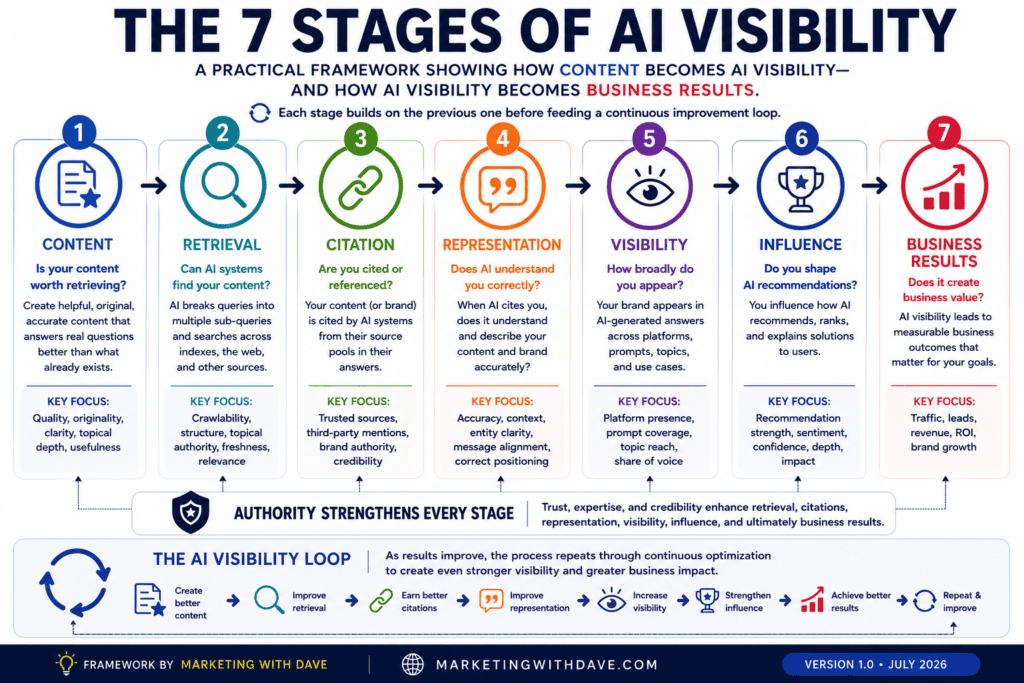
This is why it is more helpful to think in terms of three connected areas: SEO drives discovery, AI visibility influences whether your brand shows up in answers, and AI tools improve how you execute your marketing.

What the “SEO alphabet soup” gets wrong

Terms like GEO (Generative Engine Optimization) and AIO (AI Optimization) are starting to show up more often — along with AEO, LLMO, GSO, and half a dozen others. The challenge is that most marketers do not actually think in acronyms. They think in outcomes.

When you translate these terms into what they represent, things become much clearer. SEO is about being found in search engines. GEO is about being included in AI-generated answers. AIO is about using AI to improve execution.

The ideas themselves are not new. What is new is the environment they operate in. The risk is that the terminology can make simple concepts feel more complex than they need to be. Clarity is more valuable than clever naming.

SEO still drives discovery

SEO remains the foundation of digital visibility. It is still how people find your website when they are actively looking for answers — and Google still accounts for roughly 80% of global search query volume.

That foundation is built on things that are not new, but are still often overlooked:

  • Your website needs to be technically sound, easy to crawl, and easy to navigate.
  • Your internal linking should support discovery and context.
  • Your content should match search intent, not just target keywords.
  • Your authority should be reinforced through credible backlinks.

This is what drives qualified traffic. If this layer is weak, everything else becomes harder.

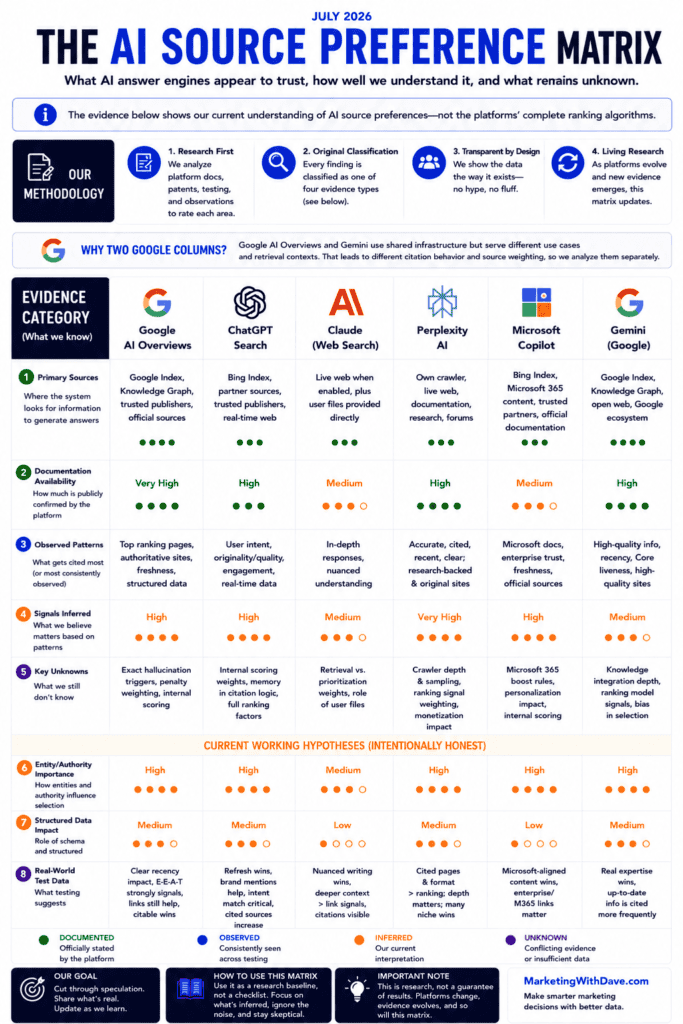
One nuance worth noting: the relationship between Google rankings and AI citations is decoupling. Ranking highly in traditional search still improves your chances of being cited — pages at position 1 have roughly a 58% chance of being cited by ChatGPT, dropping to 14% by position 10. A meaningful portion of frequently cited pages in AI answers have little or no traditional search visibility.

AI visibility shapes how your brand is mentioned

AI visibility is different from SEO, even though they are closely related. In search, you are competing for rankings. In AI systems, you are influencing whether your content is included in an answer.

When someone asks a question in an AI tool, they may never see a list of results. Instead, they see a summary, a recommendation, or a synthesized response. Your content can still play a role in that answer, but the mechanism is different — and several specific factors influence whether you get included.

Make sure AI crawlers can actually access your site

This sounds obvious, but it is the most commonly overlooked step. Check your robots.txt file for blocks on GPTBot, PerplexityBot, ClaudeBot, or Google-Extended. If you use Cloudflare, check its bot management settings — Cloudflare changed its defaults and may be blocking AI crawlers without you knowing. Also check that important content is server-side rendered and not hidden behind JavaScript or login walls.

Structure your content for extraction, not just browsing

AI systems pull short passages from pages and synthesize them. Content that presents clear ideas, well-organized sections, and credible information is easier to interpret and more likely to be referenced. Practically, this means:

  • Lead each section with a direct answer before providing context
  • Use clear heading hierarchies (H2, H3) with one topic per section
  • Include a well-structured FAQ section that mirrors how people actually ask questions
  • Add an explicit definitional sentence near the top of each page (AI systems weight the first 150–200 words heavily)

Add citations and data — they increase your chances of being cited

Princeton’s GEO research (published at KDD 2024) found that adding citations and statistics to content can boost AI visibility by up to 40%. This is among the highest-impact tactics identified. Link to authoritative external sources at the claim location, not just in a references section. Include specific data points where you have them.

Build external mentions and presence beyond your website

AI systems pull heavily from Reddit, LinkedIn, and YouTube — not just your own domain. Platforms like Reddit and YouTube are disproportionately represented in AI citations compared to most brand-owned websites. Brand mentions, thought leadership posts, and community participation on these platforms contribute to how AI systems perceive your authority. Unlinked brand mentions also appear to carry meaningful weight.

Consider an llms.txt file

Some sites are now adding an llms.txt file (similar in concept to robots.txt) to help AI systems understand their site structure and which pages are most authoritative. It is an emerging convention, not a universal standard yet, but worth considering for sites with a large content archive.

Keep content fresh

Freshness matters more for AI visibility than it did for traditional SEO, particularly on Perplexity and Google AI Mode. Content that has not been updated loses citation priority faster. A simple version note (“Last updated May 2026”) and periodic substantive updates to key pages can help maintain your visibility in AI answers.

What is important to understand about all of this is that it is influence, not control. You are not optimizing a ranking position in the same way. You are increasing the likelihood that your content is trusted and included.

AI tools improve execution

The third piece of this framework is internal. AI tools are changing how marketing work gets done.

They can support content workflows, speed up production, automate repetitive tasks, and help surface insights more quickly. Used well, they can make teams more efficient and more effective.

But AI tools are not a visibility channel by themselves. Using AI does not automatically lead to more traffic or more mentions. It simply improves how you execute.

That distinction matters, because it is easy to overestimate the impact of tools while under-investing in strategy.

The alignment core: what works across everything

At the center of all of this are three consistent factors: quality content, clear structure, and credible signals.

AI systems are not just evaluating pages. They are evaluating entities.
Consistent brand mentions, author identity, and presence across multiple platforms help reinforce credibility beyond a single web page.

These are the elements that support SEO performance. They are also the elements that increase the likelihood of being cited or summarized by AI systems. And they are what make AI tools more effective when you use them.

No matter how the landscape evolves, these fundamentals continue to show up. If your content is shallow, unclear, or difficult to interpret, it will struggle in every environment.

Before you jump to GEO, get the fundamentals right

One of the biggest risks right now is jumping straight into AI visibility tactics without a strong foundation.

If your content is not clear, not structured well, and not providing real value, focusing on GEO will not fix that. AI visibility builds on what is already there. It does not replace it.

Before you prioritize AI visibility, make sure:

  • Your content is clear and understandable to a reader who has no context
  • Your pages are well organized with logical heading structures
  • Your internal linking supports discovery across related topics
  • Your content includes real insight, original perspective, or first-hand data — not surface-level summaries
  • AI crawlers are not accidentally blocked on your site

Those are the things that carry across both search and AI systems.

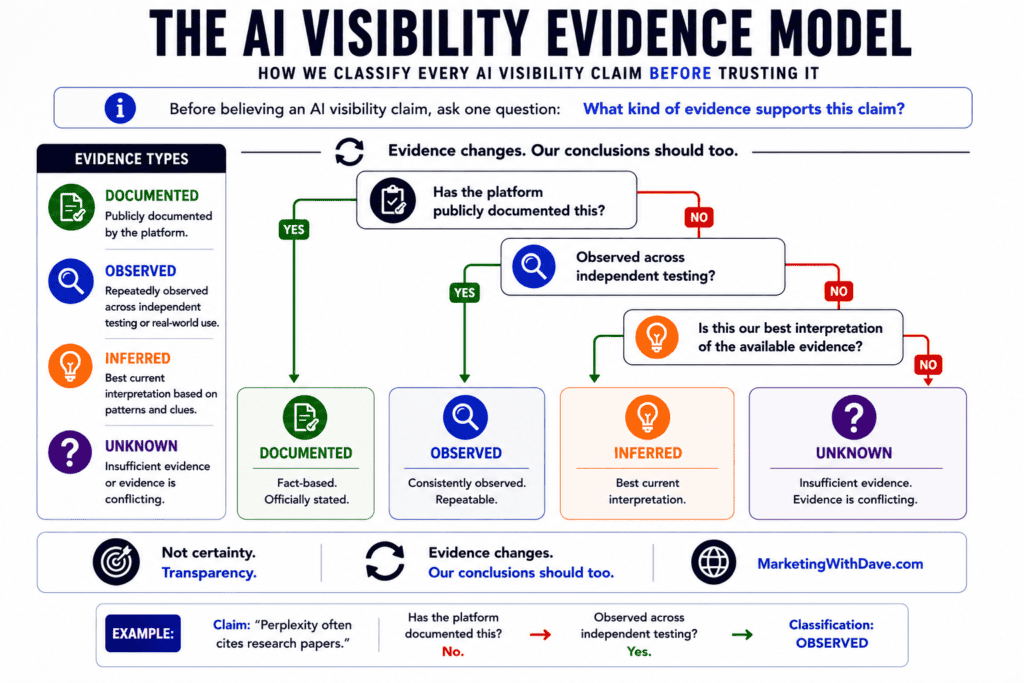
Why you should be careful with industry data

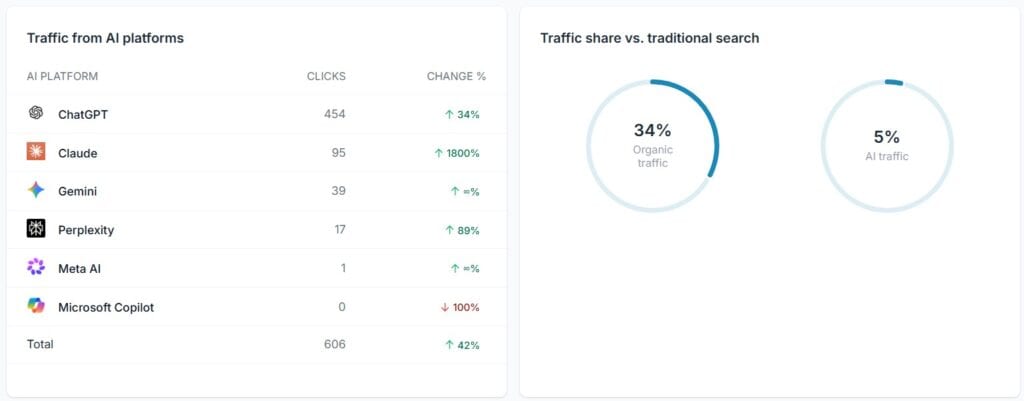
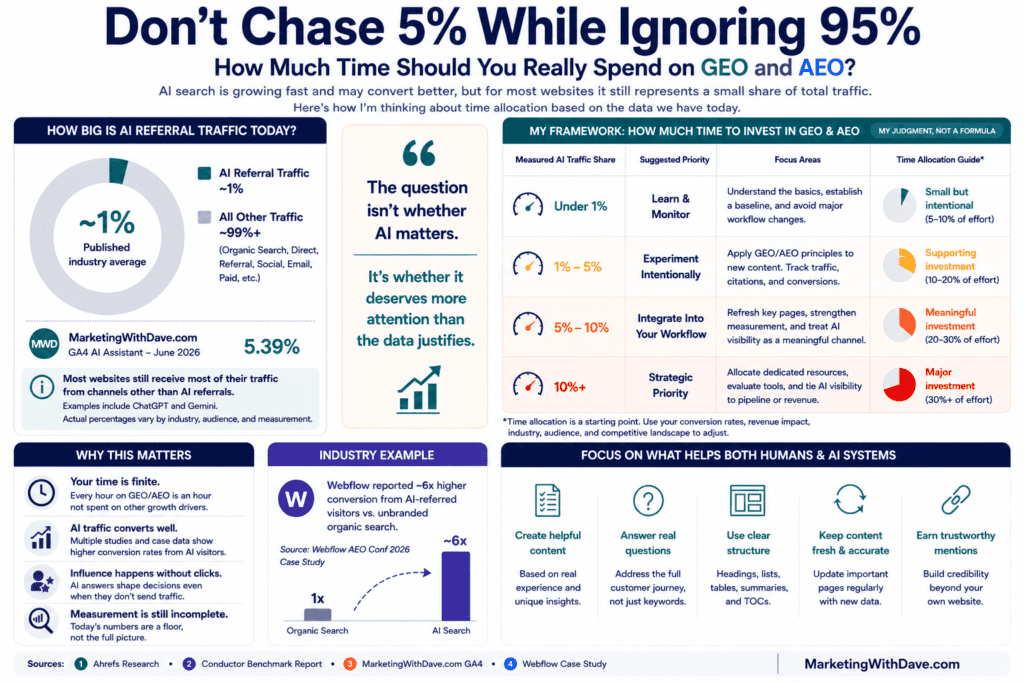
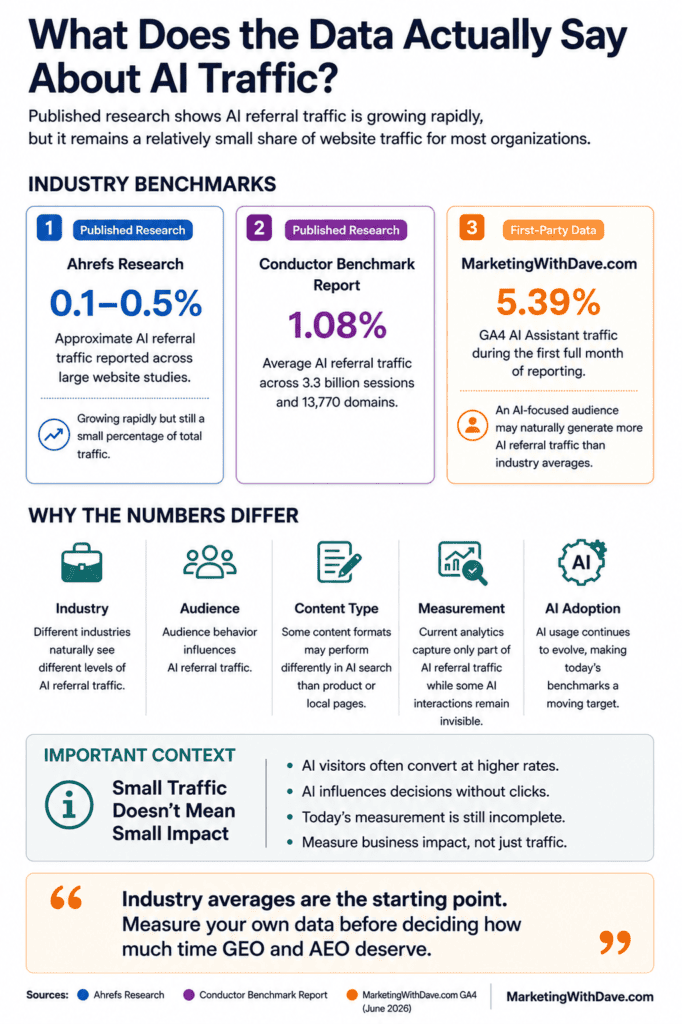
You may have seen recent charts showing how small AI-driven traffic is compared to Google organic. Across most industries, AI referral traffic sits around 1% of total website traffic versus organic search’s roughly 48% share.

But “industry average” does not equal “your reality.”

Your website is not the average. Your audience is not the average. Your content strategy is not the average.

That matters because I see more traffic from AI-driven sources than from Google on my own website. That does not invalidate industry data. It highlights its limitations.

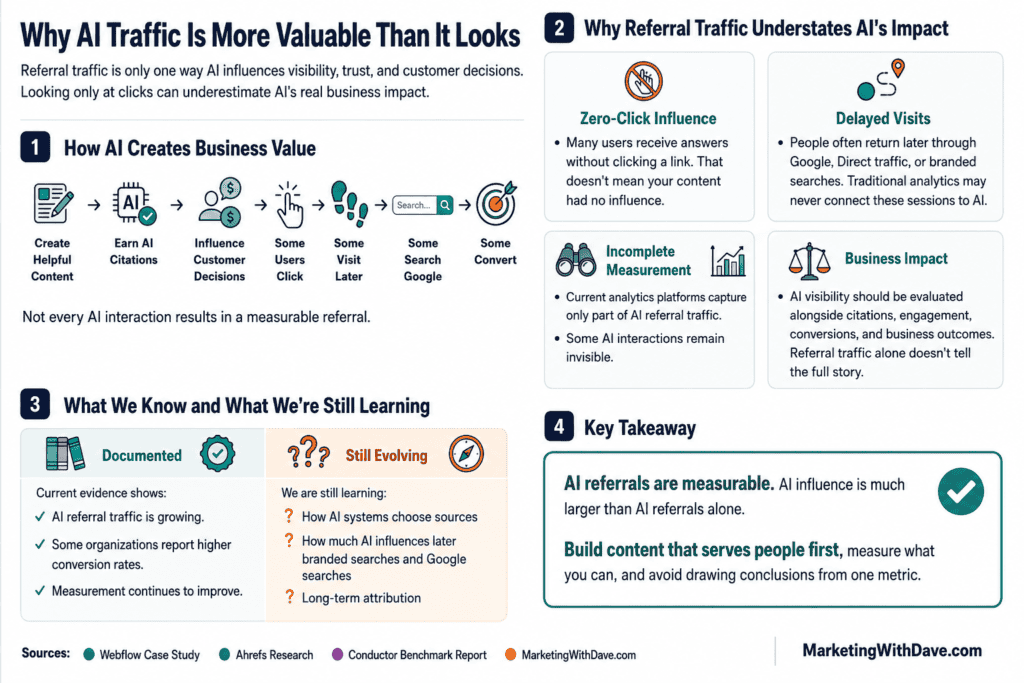
There is also a measurement problem. An estimated 70% of AI-sourced traffic arrives without referrer headers, making it invisible in standard analytics dashboards. If you are only reading your GA4 referral report, you are very likely undercounting how much AI is influencing your visitors. A good way to check: look at direct traffic trends alongside any AI visibility changes, and consider adding “How did you hear about us?” options that include AI tools to your contact or inquiry forms.

The better approach is to use industry data as context, while letting your own analytics guide your decisions.

How to measure AI visibility

Traditional SEO metrics — rankings, organic sessions, click-through rates — do not capture AI visibility. If you want to know whether your content is being cited, you need to track it separately.

Practical starting points:

  • Manual testing: Define 10–20 queries that are central to your content and test them regularly in ChatGPT, Perplexity, Google AI Mode, and Gemini. Note whether your brand is mentioned and where it appears in the answer.
  • Brand search trends: Monitor branded search volume in Google Search Console. Increases following AI mentions suggest influence even without direct referral clicks.
  • Direct traffic analysis: Users who encounter your brand in an AI answer often type it directly rather than clicking a link. Watch for unexplained direct traffic increases alongside any improvements in AI presence.
  • Dedicated tools: Platforms like BrandMentions, Semrush’s AI visibility features, and purpose-built tools like LLMrefs track citation rates across AI engines if you want more systematic monitoring.

A simple way to evaluate your content

Instead of focusing on acronyms, focus on outcomes. When you look at a piece of content, ask three questions:

  1. Can it be found? Is it technically accessible, well-structured, and targeting the right intent?
  2. Can it be understood and cited? Is it clear, well-organized, factually grounded, and does it include original insight or data?
  3. Can it be created and improved efficiently? Are you using your tools and workflows well enough to keep this content current?

If any of those answers are no, there is an opportunity to improve.

Final takeaway

You do not need to chase every new acronym that appears.

You need to understand what actually drives visibility.

SEO drives discovery. AI visibility shapes how your brand is included in answers. AI tools improve execution.

The advantage comes from aligning all three — and making sure the basics are solid before you layer on AI-specific tactics.

And before you follow any industry trend, make sure you understand what is actually happening on your own website.

What Actually Drives Digital Visibility in 2026 Read More »

Internal Linking Tools Audit Your Website. They Don’t Tell You What to Do.

Reading Time: 5 minutes

Internal linking is one of those search engine optimization (SEO) topics that sounds simple until you actually try to improve it.

I have over 200 blog posts on this website. I know internal linking matters. And I still cannot find a tool that tells me what I actually need to know: which specific web page should link to which other web page, where the link belongs, and why it makes sense.

So I tried to build one myself.

That experience made the gap in existing tools much clearer.

What most internal linking tools do well

Many tools are good at the auditing side of internal linking.

They can usually tell you things like:

  1. How many internal links exist on a web page or across a website.
  2. Whether a web page appears to be orphaned.
  3. Whether anchor text is repetitive, vague, or overly generic.
  4. Whether navigation and contextual linking appear healthy at a high level.
  5. Whether there are broad internal linking patterns worth reviewing.

That kind of reporting has value. It gives a quick snapshot, helps identify obvious problems, and creates a starting point for discussion.

But that is also where many tools stop.

Where many internal linking tools fall short

Most website owners do not need another dashboard telling them they have a score of 82 out of 100 or that they should improve their navigation structure. They need help making decisions.

That means answering questions such as:

  1. Which specific web page should link to which other web page?
  2. Why is that link relevant?
  3. Where on the web page should the link be placed?
  4. What anchor text would make sense in context?
  5. Which suggested links matter most if time is limited?

This is where many tools start to break down. They are good at summarizing the condition of a website. They are much weaker at bridging the gap between diagnosis and action.

Why I tried to build this myself

After running into the same wall with existing tools, I started exploring whether I could build a solution using AI-assisted development. The idea was straightforward: take my blog post data, generate embeddings to represent topical relationships between posts, and surface specific web page-to-web page linking recommendations based on semantic similarity.

In practice, it turned out to be significantly harder than it sounds. Getting the data organized was one challenge. Building the logic to translate similarity scores into actionable recommendations, with context about where on the web page a link belongs and what anchor text would fit, was another level entirely.

The technical pieces exist. Connecting them into something genuinely useful for a working website owner is where things break down fast.

That experience gave me a clearer picture of why existing tools stop where they do. The auditing side is relatively tractable. The decision-support side requires understanding content at a level that is much harder to automate well.

The problem with surface-level internal linking metrics

Some internal linking metrics are directionally useful. They can point to potential issues. But many become less helpful when they are presented as definitive measures of quality.

Take link counts, for example. A high number of internal links on a web page does not automatically mean the web page is well linked. Those links might be mostly navigation, footer, archive, or template links. They may not help a user discover the next best piece of content or help search engines understand topical relationships in any meaningful way.

Orphan web page detection can be genuinely useful. But even here, the insight is limited unless the tool helps answer the next question: which existing web page should link to that orphaned web page, and why?

Anchor text scoring has similar limitations. It is easy to say anchor text should be descriptive. That is true. But a real tool should go further and help identify what descriptive anchor text makes sense inside the actual sentence and context of the referring web page.

Even navigation-related recommendations can drift into generic advice. Suggestions like “improve website structure,” “add breadcrumbs,” or “add a search bar” may sound strategic, but they often do little to solve the specific editorial linking decisions that content-heavy websites struggle with most.

Why website owners need more than an audit

A website owner usually is not asking, “How many internal links do I have?”

The real questions are closer to these:

  1. Which web pages on my website are under-supported?
  2. Which existing web pages are the best candidates to support them?
  3. How do I add links in a way that feels natural and helpful?
  4. Which opportunities are worth acting on first?

That is a different problem than auditing. It is a recommendation problem. It is a prioritization problem. It is also a context problem.

Without context, internal linking advice stays abstract. With context, it becomes usable.

What a truly helpful internal linking system should do

If internal linking tools are going to become genuinely useful for website owners, they need to move beyond scoring and into decision support.

A more helpful internal linking system would do at least five things well.

  1. Identify the right source and destination web pages. It should not just say a web page needs more links. It should show which existing web pages are the strongest candidates to link to it.
  2. Explain why the recommendation exists. There should be a clear rationale, such as shared topic coverage, overlapping keyword intent, supporting subtopic relationships, or complementary user journeys.
  3. Suggest where the link belongs. A recommendation is far more useful when it points to a specific paragraph, heading, or section where the link would fit naturally.
  4. Offer anchor text guidance grounded in the web page content. Not generic anchor text rules. Actual suggestions that fit the language already on the web page.
  5. Prioritize recommendations based on likely impact. Not every link opportunity matters equally. A good system should help website owners understand which fixes are high value, which are nice to have, and which can wait.

The difference between auditing and decision-making

This is the core distinction that many tools miss.

Auditing tells you what exists. Decision-making tells you what to do next.

Auditing can tell you that a website has strong internal link density, no orphaned web pages, and descriptive anchor text across most web pages.

Decision-making tells you that a post about misleading data visualizations should probably link to a related post about poor chart design, and that the best placement is in the paragraph that introduces the risks of decontextualized reporting.

One is a score. The other is useful.

This is not just an SEO problem

Internal linking is not only about search performance.

Good internal linking improves website usability, increases content discovery, supports stronger journeys across a website, and helps people move from awareness to trust to action. It can keep visitors engaged longer, connect isolated insights, and surface relevant resources they would not otherwise find.

That is why surface-level scoring is not enough. Internal linking is part SEO, part information architecture, and part editorial judgment. Any tool that ignores those realities will only solve part of the problem.

What to look for in an internal linking tool

If you are evaluating internal linking tools, it helps to ask better questions than whether the dashboard looks polished or the score seems high.

Questions worth asking include:

  1. Does this tool help me make web page-to-web page linking decisions?
  2. Does it explain why a recommendation makes sense?
  3. Does it help me place the link in context?
  4. Does it distinguish between template links and meaningful contextual links?
  5. Does it save me real time, or just give me another report to interpret?

A tool that cannot answer those questions well may still be useful for orientation, but it is probably not solving the real internal linking problem.

The bigger opportunity

The future of internal linking tools should not be more colorful scorecards or more generic advice. It should be better judgment support.

I have not found a tool that does this well yet. I am still looking, and still experimenting with building something myself, though that has proven harder than expected. What I do know is that the gap is real and the need is not complicated to describe: website owners need help moving from “I know I should improve internal linking” to “here is exactly what to change and why.”

Until more tools bridge that gap, internal linking will remain one of those areas where the theory is easy, the dashboards look impressive, and the real work still falls back on the website owner.

I am still waiting for the tool that changes that. If you have found one, I would genuinely like to know.

Internal Linking Tools Audit Your Website. They Don’t Tell You What to Do. Read More »

Blazly Review: AI-Driven SEO and GEO Visibility Platform

Reading Time: 6 minutes

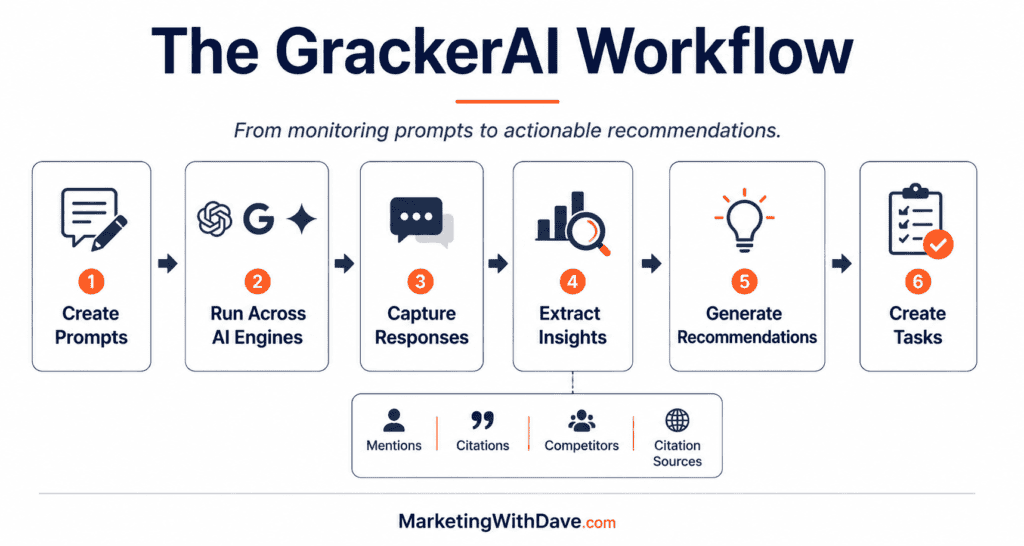
Blazly positions itself as an all-in-one AI SEO and GEO platform built to help you move from keyword to published content while also tracking AI visibility, competitor gaps, and GEO health.

That is a compelling pitch. It combines content generation, publishing, AI visibility analysis, competitor research, citation flow, GEO crawls, prompt tracking, and brand sentiment in one platform.

After spending time inside the product, my take is that Blazly is visually polished and clearly built by a responsive team, but many of the outputs felt more exploratory than actionable. There is real potential here, but in its current state I found more interesting ideas than clear decision support.

Blazly introduces strong concepts around AI visibility and GEO, but the outputs often stop short of clear, actionable next steps.

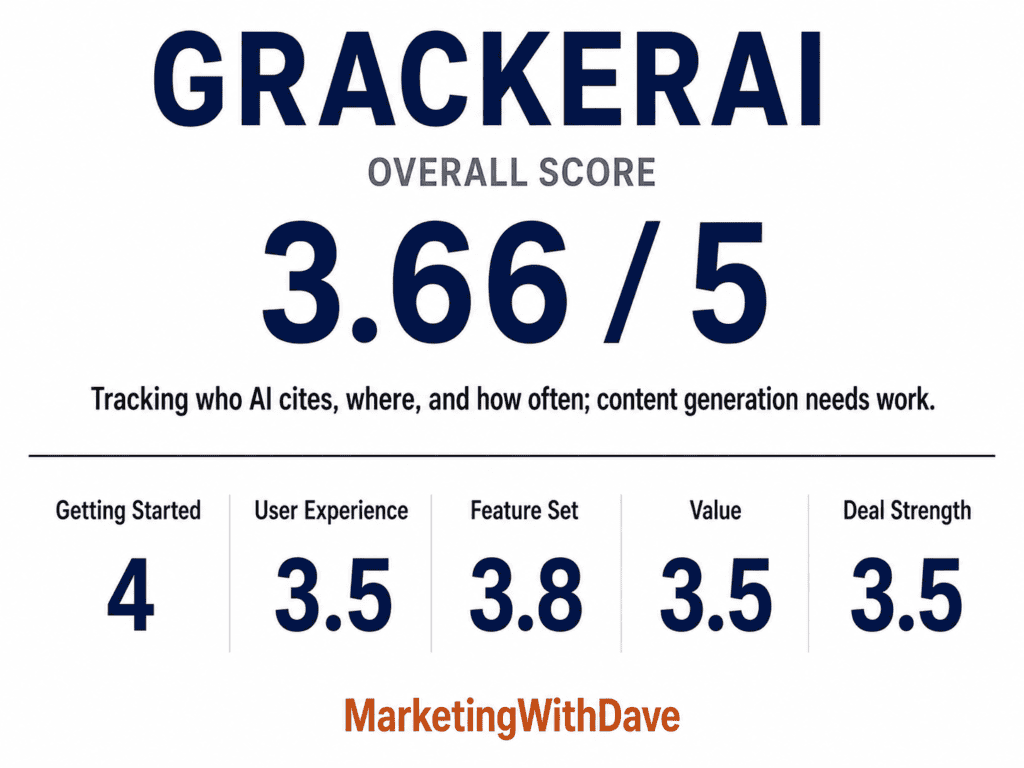
The overall score reflects both product quality and how compelling the current deal is.

A score in the 3 range reflects a product with solid ideas and usable features, but with clear gaps in execution or actionability.

See how this score is calculated

See the AppSumo Deal

Affiliate disclosure: If you buy through my AppSumo link, I may earn a small commission at no additional cost to you. I only share tools I believe are worth your time and consideration.

The 30-Second Decision

Best for: marketers, bloggers, content creators, and solopreneurs who want to explore AI SEO and GEO workflows in one platform and are comfortable testing an early-stage category.

Not ideal for: website owners who mainly want highly actionable insights tied directly to real rankings, measurable demand, and clear next steps.

Entry price: Tier 1 was listed at $79 lifetime on AppSumo.

Risk window: 60-day refund through AppSumo.

My take: Blazly has strong presentation, ambitious scope, and a founder who is highly engaged. The challenge is that several features looked more insightful than they felt useful in practice.

Try Blazly on AppSumo

What Blazly Is Trying to Do

Blazly is not just a writing tool. It is trying to be a broader AI SEO and GEO operating system.

Based on the AppSumo listing, the platform combines content generation, direct publishing to WordPress and Webflow, competitor visibility analysis across AI platforms, GEO crawls, internal linking analysis, AI citation flow, AI visibility tracking, prompt tracking, and brand sentiment analysis.

That breadth is part of the appeal. Instead of piecing together multiple tools, Blazly tries to put modern search, AI visibility, and publishing workflows in one place.

What I Liked

The first thing Blazly gets right is presentation. The product looks polished, modern, and easy to explore. Several features are packaged in a way that makes the platform feel substantial quickly.

I also came away with a positive impression of the team. Jerry was responsive, helpful, and open to feedback. That matters, especially in an early-stage category where the product is still evolving.

I also think the core direction makes sense. AI search visibility, citation patterns, and GEO-style website analysis are real areas of interest. Blazly is clearly trying to build for that future rather than only for yesterday’s SEO workflows.

Where the Product Started to Break Down

The main issue was not lack of features. It was the gap between interesting analysis and usable action.

My standard for tools like this is not whether the concepts are interesting, but whether the outputs help a website owner decide what to do next with confidence.

Several outputs felt difficult to validate against real demand, rankings, or user behavior in a way that made prioritization easy. The platform often answered, “Here is something interesting,” more clearly than it answered, “Here is what you should do next.”

Prompt Tracking Felt More Like Prompt Generation

In theory, prompt tracking sounds useful. If AI search increasingly behaves like prompt-driven discovery, understanding prompts could become a form of keyword research for LLMs.

In practice, what I saw looked more like synthetic prompt generation than true prompt intelligence. The outputs resembled traditional keyword rewrites and variations more than something I could clearly connect to validated user demand.

That does not make the feature useless, but it does change what it is. For me, it worked more like an idea generator than a dependable source of prioritization.

AI Citation and Sentiment Features Were Interesting but Hard to Act On

Blazly also includes AI citation flow and brand sentiment analysis. These are visually strong features that can surface which domains or platforms appear in AI responses and how the platform interprets brand sentiment across tools like ChatGPT, Gemini, Claude, Perplexity, and Grok.

The challenge is actionability. It is one thing to show a citation pattern, a diversity score, or a sentiment label. It is another to connect that output to a specific, defensible action that would improve visibility.

In my testing, that bridge often felt weak. I found myself learning what the platform thought was happening without gaining much confidence in what I should prioritize next.

The Internal Linking Feature Highlighted a Bigger Industry Gap

One of the more interesting parts of my testing was the internal linking analysis.

Blazly’s version looked polished and gave a quick snapshot of internal link structure, orphan pages, and scoring categories. But it mostly reinforced a broader problem I already see across this category: many internal linking tools are good at audits and weak at decisions.

Counting links, scoring navigation, and flagging orphan pages can be useful. But website owners usually need more than that. They need help deciding which web page should link to another web page, why the recommendation makes sense, and where the link belongs in context.

That deeper layer was still missing here.

Some Recommendations Felt More Speculative Than Proven

Another friction point was the recommendation layer itself.

For example, recommendations around ai.json and large AI-specific robots.txt additions may sound forward-looking, but they are not areas I currently see as proven, high-impact work for most website owners.

That matters because tools shape attention. When a product recommends implementation work that is still speculative, it risks pushing users toward busywork instead of higher-value improvements like clearer content structure, stronger internal linking, better positioning, and more useful web pages.

Setup and Ease of Use

The product is relatively easy to explore. The interface is modern, organized, and feature-rich. The bigger issue for me was not how to click through the platform. It was how much confidence to place in the resulting outputs.

I also ran into some friction around reliability and continuity. Certain analyses did not feel as persistent as they should be, and some features seemed to require rerunning or rebuilding when revisiting the web page.

That may sound minor, but it matters. A product like this needs to reduce friction, not create more of it.

Plans and Pricing

Tier 1 was listed on AppSumo at $79 lifetime and included 3 projects, 15 GEO, AEO, and SEO articles per month, 5 AI GEO landing pages per month, 10 strategy generator runs, 3 AI citation flow runs, prompt tracking, integrations, GEO health score, and AI content in your voice.

Higher tiers increase project limits, article limits, AI citation flow runs, competitor research, AI monitor analysis, AI visibility tracker, white-label reports, and CSV reports.

On paper, the pricing looks generous relative to the number of features included. The real question is not feature count. It is whether those features create enough practical value to become part of your workflow.

Check Current Pricing and Tiers

Why You Might Still Buy It

  1. You want to explore the AI SEO and GEO category without paying enterprise-level prices.
  2. You value breadth and want many experimental features in one place.
  3. You are comfortable using the tool as an exploratory layer rather than expecting fully mature decision support.
  4. You believe the team will continue improving the product quickly.

What to Watch Out For

  1. A long feature list does not automatically equal practical value.
  2. Several outputs felt difficult to validate in ways that made prioritization easy.
  3. Some recommendations appear more future-facing than validated.
  4. If you mainly want clear next actions, Blazly may feel less actionable than it first appears.
  5. If your website is content-heavy, you should pressure-test crawl depth and feature limits carefully.

Additional Context from the Founder

After I published my initial review, the founder shared more context around how several features are intended to work.

According to that explanation, prompt tracking is based on real prompts, citation flow is designed to help identify sources that influence AI answers, and some GEO recommendations are based on emerging concepts and internal testing rather than long-established standards.

That context is helpful and makes the product direction clearer.

Even with that added explanation, I still found it difficult to translate many of the outputs into clear, prioritized next steps for my website today. That remains the central reason for my score and overall conclusion.

Bottom Line

Blazly is easy to admire at first glance. It looks modern, covers a lot of ground, and clearly aims at a category that is growing in importance.

But after removing the presentation layer, my experience was that many features were more interesting than useful. The platform often surfaced ideas, labels, and scorecards without giving me enough confidence in what was truly actionable or worth prioritizing.

That does not make Blazly a bad product. It makes it an ambitious early-stage product in a category that still has a long way to go.

If you want a broad AI SEO and GEO sandbox with an engaged team behind it, Blazly may be worth exploring.

If you want a tool that consistently turns insight into action, I would go in with more caution.

Get Blazly Lifetime Access

Disclaimer

This content is for educational purposes and reflects my experience and research. Always evaluate tools based on your specific business needs, goals, and workflows before making a decision.

Looking for more marketing software reviews? See my full list of marketing tools and software I recommend.

Blazly Review: AI-Driven SEO and GEO Visibility Platform Read More »

How to Create Content That Gets Cited in AI Search

Reading Time: 5 minutes

Ranking a web page used to be the goal. Increasingly, it is only the starting point. AI search does not surface the best-ranked page. It surfaces the most useful passage. That distinction changes what good content actually looks like.

Traditional SEO still matters, but the bigger opportunity now is creating content that AI systems can retrieve, understand, and cite. That requires a different way of thinking about what you publish.

This shift changes the rules. It puts more pressure on clarity, structure, and usefulness. It also raises the bar for marketers who still write content as if ranking for a keyword is the only thing that matters.

Why Most Content Fails in AI Search

One of the clearest signals in AI search right now is how little content actually breaks through. Based on data shared in a Searchable webinar, roughly 62% of brands are not cited at all, about 15% of retrieved content earns a citation, and only around 5% actually reaches the user.

That matters because AI search is a filtering system. Content is not just competing to rank. It is competing to be selected. In that environment, weak structure, generic writing, and bloated content become even bigger liabilities.

At the same time, the opportunity is still meaningful. AI-referred visitors often convert at a much higher rate than traditional organic traffic. That means visibility may be shrinking, but intent is often stronger when your brand does get surfaced.

The Shift From SEO to AI Search

Search has moved from ranking web pages to selecting answers. That does not mean SEO is obsolete. It means the bar for what qualifies as useful content has changed.g

AI systems are not trying to rank everything. They are trying to choose the best answer.

Traditional SEO focused heavily on optimizing entire web pages, targeting keywords, building backlinks, and winning clicks. AI search still benefits from many of those foundations, but it often works at the passage level instead of the full web page level. It looks for sections that can answer a question clearly and credibly.

This is why the mental model matters. If you still think only in terms of web pages and rankings, you will miss how AI systems retrieve and surface information. The better approach is to think in terms of passages, intent, citations, and recommendations.

A Simple Framework for Content That Gets Cited

A clear way to approach this is through three elements: intent, information gain, and structure. Together, these create a practical framework for writing content that is more likely to be surfaced in AI-generated answers.

1. Intent

Intent is about answering the real question behind the query, not just matching the keyword. That distinction matters more than ever. A phrase may look informational on the surface, but the hidden user need can be something more specific, more commercial, or more action-oriented.

A similar pattern shows up constantly in marketing queries. Someone might search for “best email marketing tools,” but what they really want is a tool that fits their specific use case, budget, or team size. Content that simply lists tools is less useful than content that helps narrow the decision. That gap between the visible query and the actual need is where stronger content strategy starts.

2. Information Gain

Information gain is what you add beyond the baseline consensus. If every article says the same thing in slightly different words, there is very little reason for AI systems to surface yours. Originality does not have to mean controversy. It usually means adding useful detail, real experience, proprietary data, a stronger synthesis, or a more helpful example.

This is also where real expertise matters. Original testing, lived experience, case studies, and first-hand observations all strengthen content in a way generic summaries cannot.

In practice, this is where most content falls short. Across my own work, I consistently see content that ranks well but adds little beyond what already exists. It summarizes, but it does not contribute. The pieces that perform better are the ones that include a clear point of view, a real example, or a sharper explanation than what is already available.

3. Structure

AI systems retrieve passages, not entire web pages. That is why structure matters as much as the content itself.

Structure is the execution layer. Content should be written so individual sections can stand on their own as complete answers. In practical terms, that means using clear headings, concise sections, direct phrasing, and formats that are easy to parse.

Instead of rambling introductions or filler, the better approach is to answer the question quickly and then support that answer. The presentation also recommended tight sections under clear headings and called out simple formats like tables, bullets, and schema-supported structure as helpful for extractability.

What This Means for Your Content

Most content is written to rank. Very little is written to be cited. If your content still follows the old pattern of stretching topics to hit arbitrary length targets, leading with fluff, or summarizing what everyone else already says, it is likely underperforming in both traditional search and AI search.

The better approach is to write content that is easier to retrieve, easier to extract, and more worth citing. That usually means clearer answers, stronger organization, and more distinctive value.

It also means thinking beyond your own website. Another important point is that AI visibility is often influenced by third-party mentions, earned media, community discussion, and other off-site signals. In other words, what others say about your brand can matter as much as what you publish yourself.

AI search is not replacing SEO. It is building on top of it. Strong organic visibility still helps, but it is no longer the full picture. Brands that want to win in this environment need content that ranks well, reads well, and can be cited well.

That is a higher standard, but it is also a better one. It pushes content toward being more useful, more focused, and more credible.

If your content is not being cited, it is less likely to be seen. That is the real challenge of AI search. The brands that adapt will not just publish more. They will publish clearer answers, add more real value, and structure content in a way AI systems can actually use.

This is not a small tactical change. It is a meaningful shift in how strong content gets discovered.

If you are not sure where to start, pick one post that already ranks and ask a harder question: does this actually answer what someone is trying to do, or does it just match a keyword? Tighten the structure, sharpen the answer, and cut anything that does not add something the reader cannot find in the next result. That is the practical version of writing for AI search, and it is the same thing that makes content worth reading in the first place.

How to Create Content That Gets Cited in AI Search Read More »

AI-Powered Image Alt Text Optimization: Improve SEO and Accessibility Without Manual Work

Reading Time: 4 minutes

Image alt text still matters. Writing it manually does not.

If your website has dozens or hundreds of images, opening each one individually in the Media Library is not a realistic workflow. A better approach is to export the image records you need, use AI to generate baseline alt text in bulk, review the output, and update the records back into WordPress.

This walkthrough focuses on WordPress, but the core workflow applies more broadly to any content management system that allows export, bulk processing, and structured updates. The exact tools may vary, but the process stays the same: export the right fields, generate alt text in bulk, review the results, and apply the updates cleanly.

Why image alt text still matters

Alt text serves two practical purposes.

  1. Accessibility. Screen readers rely on alt text to describe images to users who cannot see them.
  2. Image context. Search engines use image-related signals such as file names, surrounding content, and alt text to better understand what an image represents.

Alt text is not a magic search engine optimization lever by itself, but missing alt text at scale is still a quality gap worth fixing.

Why you should not be doing this manually

Most website owners and marketers do not have an alt text problem. They have a workflow problem.

The old method is to open each image, write alt text one at a time, save it, and repeat until you lose momentum. That might work for a small batch, but it does not scale when a website has years of accumulated content.

The better goal is baseline coverage at scale.

That means using AI to get from zero to good enough, then manually refining only the images that matter most, such as featured images, charts, infographics, product images, and images on high-traffic web pages.

What image fields are worth caring about

If you are exporting image-related data, keep your focus narrow. Alt text is the main field worth solving first.

  1. ID. This makes importing or matching updates much easier and safer.
  2. Image URL or file path. This usually contains the file name, which often gives AI enough context to generate a usable baseline alt text value.
  3. Alt Text. This is the field you want AI to fill or improve.
  4. Title. Optional. This can be cleaned up later, but it is lower priority than alt text.
  5. Caption. Optional. Only useful if captions actually appear on your web pages.
  6. Description. Usually not worth the effort unless you have a specific reason to maintain it.

If you want the simplest, highest-return workflow, export ID, image URL, and Alt Text.

What to export from WordPress

You do not need a perfect media export to make this work. In many cases, exporting the image data tied to posts or web pages is enough to create a strong first pass.

Your export should include these columns:

  1. ID
  2. Post title or web page title if available
  3. Image URL
  4. Existing Alt Text
  5. Optional fields such as Title or Caption if you want to address them later

The key requirement is simple. Your export needs to give AI enough information to infer what each image likely is, and enough structure for WordPress to match each record during the update process.

What AI is actually doing here

This method works because many website image files already contain useful context in the file name.

For example:

digital-marketing-roundup-2026-march.jpg

becomes:

Digital marketing roundup March 2026 infographic

That is not perfect human-crafted alt text, but it is far better than leaving the field blank, and it can be generated at scale quickly.

The challenge is not generating alt text. The challenge is structuring and applying it correctly.

The practical workflow

  1. Export the image-related records from WordPress.
  2. Make sure the file includes ID, Image URL, and Alt Text.
  3. Upload the CSV or spreadsheet to an AI assistant.
  4. Ask AI to generate concise, human-readable alt text for each row based on the image URL or file name.
  5. Review the output and flag any vague or inaccurate entries.
  6. Update the file back into WordPress using the most reliable method available in your setup.
  7. Spot check a sample of records after the update to confirm the changes worked.

How to make this work in WordPress without paid import plugins

In practice, importing alt text back into WordPress is where most workflows break.

After testing multiple approaches, the most reliable method is to update image alt text directly using a simple one-time script.

Step 1: Restructure your data

Your file must have one image per row:

imageurl, alttext

Step 2: Upload your CSV file

Upload the file to your Media Library and copy the file URL.

Step 3: Run a one-time update script

add_action('admin_init', function() {
    if (!current_user_can('manage_options')) return;

    $csv_url = 'YOUR_CSV_FILE_URL_HERE';
    $response = wp_remote_get($csv_url);
    if (is_wp_error($response)) return;

    $csv = wp_remote_retrieve_body($response);
    if (!$csv) return;

    $lines = preg_split('/\r\n|\r|\n/', trim($csv));
    if (!$lines || count($lines) < 2) return;

    $rows = array_map(function($line) {
        return str_getcsv($line, ',', '"', '\\');
    }, $lines);

    array_shift($rows);

    foreach ($rows as $row) {
        if (!is_array($row) || count($row) < 2) continue;

        $image_url = trim($row[0]);
        $alt_text = trim($row[1]);

        if (!$image_url || !$alt_text) continue;

        $attachment_id = attachment_url_to_postid($image_url);

        if ($attachment_id) {
            update_post_meta($attachment_id, '_wp_attachment_image_alt', $alt_text);
        }
    }
});

After running this once, disable the script.

Where this breaks down and how to avoid it

This is where you can lose hours if you get it wrong.

  1. Multiple images in a single row
    Fix: Ensure one image URL per row.
  2. Truncated image URLs
    Fix: Verify full paths are intact.
  3. Import tools blocking custom fields
    Fix: Update directly via _wp_attachment_image_alt.
  4. Mismatch with WordPress structure
    Fix: Match using image URL to attachment ID.
  5. Over-optimizing low-impact fields
    Fix: Focus on alt text first.
  6. Trying to fix everything at once
    Fix: Prioritize high-impact images.

Final takeaway

Image alt text is still worth having, but the solution should be more automated than manual.

Export the data, generate a baseline with AI, apply updates cleanly, and move on.

Better coverage, less friction, and a workflow you can actually repeat.

AI-Powered Image Alt Text Optimization: Improve SEO and Accessibility Without Manual Work Read More »