AI

the new science of customer relationships

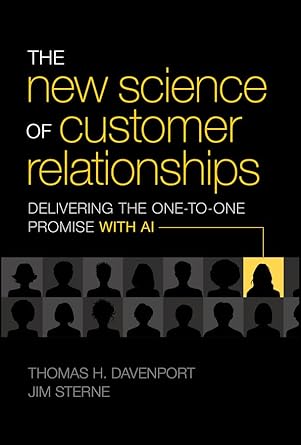
The New Science of Customer Relationships by Thomas H. Davenport and Jim Sterne Book Summary

Reading Time: 3 minutes

Top Three Quotes

  • “Technology alone will not create better customer relationships—it’s the culture and structure that must evolve with it.”
  • “Generative AI may finally deliver on the decades-old one-to-one marketing promise, but only if companies put the customer’s interest first.”
  • “Trust is the foundation for creating value on both sides of any customer relationship.”

Book Theme

The New Science of Customer Relationships explores how artificial intelligence and data science are transforming customer relationships. It examines the gap between decades of marketing promises (like personalization and one-to-one marketing) and the reality of limited progress, proposing a new, evidence-based discipline called customer science—the use of AI, analytics, and organizational change to build trust-based, individualized customer engagement.

Why You Should Read This Book

  • Understand how AI and generative AI can realistically personalize marketing, sales, and service.
  • See why organizations—not technology—are the main barriers to effective customer relationships.
  • Learn how leading companies are already succeeding with AI-driven personalization.
  • Discover a practical roadmap for using AI ethically while protecting customer trust and privacy.
  • Gain insight from two of the most respected authorities in analytics and marketing technology.

Key Ideas and Arguments Presented

  1. The one-to-one marketing dream remains unfulfilled—most firms still use mass tactics despite decades of customer data.
  2. Generative AI now makes it technically possible to personalize at scale, but organizational culture and data integration lag behind.
  3. Customer science combines rigorous data analysis, controlled experimentation, and continuous learning to improve relationships.
  4. Data quality and definition issues (like who “the customer” really is) are the biggest obstacles to customer insight.
  5. Better AI, data, and ethics must work together to transform marketing from manipulation to mutual value creation.
  6. AI agents and automation can handle routine interactions, freeing humans for empathy-driven work.
  7. Hyper-personalization requires collaboration across departments—marketing, sales, service, and analytics.
  8. Ethics and transparency are essential; trust is the new competitive advantage.
  9. The customer of tomorrow expects seamless, respectful, and intelligent interactions.
  10. True personalization is not a one-time project but a sustained scientific process.

Book Outline

  • The Broken Promise of Customer Data and Technology – Why decades of innovation failed to produce real personalization.
  • The Future Is Here, but Unevenly Distributed – Case studies of companies succeeding with AI-driven customer engagement.
  • Better AI: Generative AI as a Catalyst for Change – How GenAI transforms customer relationships.
  • Better Data – Data strategy and quality as the foundation of customer science.
  • Better Personalization and Hyper-Personalization – How to tailor marketing for individuals.
  • Better Customer Voice Analysis and Action – Using AI to listen and respond effectively.
  • Better Task Automation with AI Agents – Automating repetitive customer tasks with intelligence.
  • Better Customer-Facing Operations – Integrating marketing, service, and operations for unified CX.
  • Better Customer Analytics and Data Science – Modern analytics for predictive, personalized insight.
  • Better Ethics – Navigating privacy, bias, and trust in AI-powered marketing.
  • The Customer of Tomorrow – Visionary outlook on how AI will reshape the customer experience.

Key Takeaways

  • Technology progress has outpaced organizational readiness.
  • Generative AI can finally make scalable personalization possible—but only when supported by ethical data use.
  • Customer trust is non-negotiable; value creation must serve both sides.
  • Customer science is a continuous cycle of experimentation, data integration, and improvement.
  • The future of marketing lies in transparent, data-driven empathy—using AI to understand, not exploit.

Key Techniques

  • Customer Science Framework: A continuous process of data collection, AI-driven analysis, and behavioral experimentation.
  • Hyper-Personalization Process: Combining structured and unstructured data for real-time, individualized offers.
  • AI Agent Integration: Deploying intelligent agents to handle routine customer interactions.
  • Voice of Customer (VoC) AI: Using sentiment and speech analytics to guide proactive responses.
  • Ethical AI Governance: Establishing policies that prioritize privacy, fairness, and long-term value.

Author’s Qualifications

Thomas H. Davenport: Distinguished Professor at Babson College, MIT Fellow, Senior Advisor to Deloitte, and author of over 25 books including Competing on Analytics. Recognized globally as one of the top voices in AI and data-driven business strategy.

Jim Sterne: Digital analytics pioneer, founder of the Marketing Analytics Summit, author of 12 books on marketing and AI, and advisor to leading global organizations on generative AI adoption.

Comparison to Similar Books

Comparable to Competing on Analytics (Davenport) and The One-to-One Future (Peppers & Rogers), this book blends AI innovation with practical business insight. Unlike purely technical AI guides or marketing casebooks, The New Science of Customer Relationships provides a scientific, ethical, and cross-functional framework for modern marketing transformation.

Target Audience

  • Marketing executives adopting AI
  • Data and analytics professionals
  • Customer experience and CRM leaders
  • Business strategists and consultants
  • Technology executives and product managers
  • Entrepreneurs in AI-driven industries
  • Academics and students studying digital transformation

Critical Response to the Book

Early readers and industry reviewers praise the book for being both visionary and grounded, offering a realistic path to personalization after decades of hype. It’s recognized as a must-read guide for aligning AI innovation with customer trust and long-term business value.

One Sentence Takeaway

The New Science of Customer Relationships reveals how organizations can finally fulfill the long-promised vision of one-to-one marketing through AI, data, and ethics—by putting customer trust and value at the heart of every decision.
The New Science of Customer Relationships by Thomas H. Davenport and Jim Sterne Book Summary Read More »

,
95 percent of marketing leaders feel pressure to demonstrate roi

How Marketers Are Measuring AI ROI and Where They Struggle

Reading Time: 4 minutes

Challenges in Measuring AI ROI

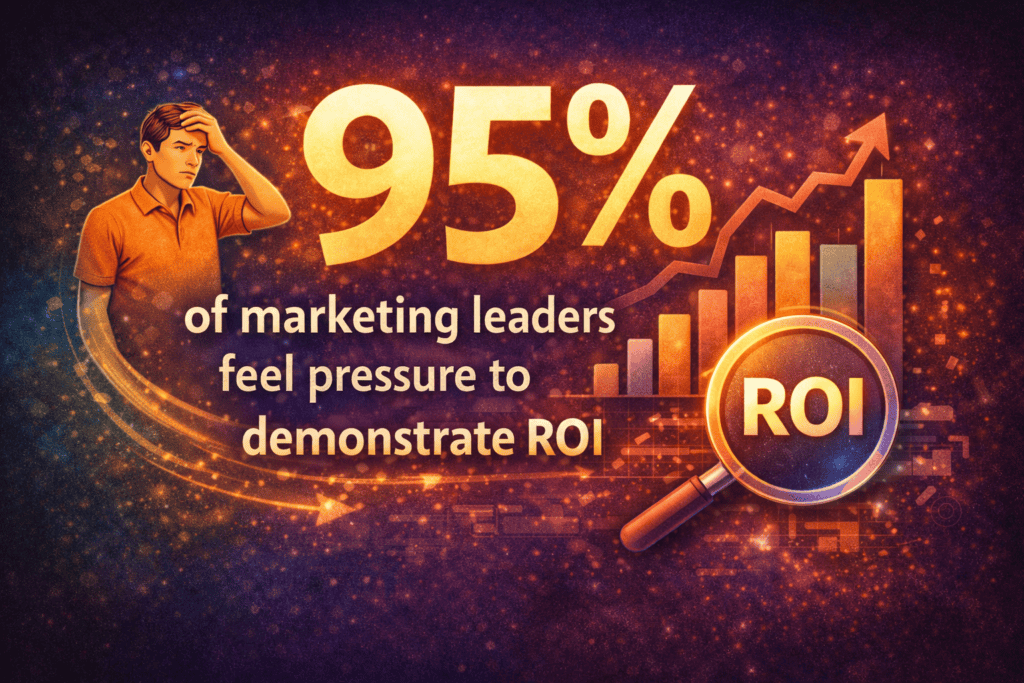
Marketers report intense pressure to prove AI’s value even as traditional metrics fall short. In fact, a recent survey found 95% of marketing leaders feel pressure to demonstrate ROI. Yet AI’s benefits often lie in efficiency gains or long-term insights, not immediate sales. For example, one consultant notes AI yields “efficiency, innovation, and risk reduction,” which are “hard to quantify in dollars”.

Likewise, IBM points out that many AI impacts are indirect and long-term, so short-term ROI is often elusive. This mismatch means “traditional analytics ROI metrics…fail to capture AI’s true value proposition”. Marketing veteran Jessica Apotheker (BCG CMO) bluntly observes that “most people are not seeing ROI from [AI] investment yet at scale”.

In practice, marketers struggle with multi-touch attribution (which channel “earned” revenue), defining soft costs (time and talent spent), and avoiding “vanity metrics” (like sheer content volume). In short, AI’s benefits often span multiple campaigns and customer journey stages, making a single ROI number hard to pin down.

Examples of Measurable Success

Despite the challenges, several case studies report clear lifts after adopting AI in marketing:

  • Advertising Optimization: A Nielsen and Google study of more than 50,000 brand campaigns and more than 1 million performance campaigns found AI-powered ad solutions significantly outperformed manual campaigns. For example, AI-driven YouTube ads achieved about 17 percent higher ROAS (return on ad spend), AI search Broad Match keywords drove about 15 percent higher ROAS, and Performance Max campaigns saw about 8 percent higher ROAS versus traditional methods. In total, combining AI-powered formats such as video reach and view campaigns boosted sales effectiveness by about 23 percent.
  • Email Personalization: Generative AI personalization can dramatically improve engagement. One retail case (Michaels Stores) increased personalized email campaigns from 20 percent to 95 percent of sends. This jump lifted click-through rates by 25 percent for email and 41 percent for SMS. More generally, AI-driven email personalization has been shown to boost revenue up to about 41 percent and click-through rate by about 13 percent. Bloomreach reports plus 41 percent revenue and plus 13.4 percent CTR.
  • Lead Scoring and CRM: AI predictive scoring also delivers value. One company using machine learning based lead scoring reported about a 25 percent larger sales pipeline and ultimately a 76 percent win rate on deals. By letting AI rank leads, conversion rates jumped compared to old methods. Pipeline growth and win rate lifts translate into clear revenue gains.
  • Process Automation: In related marketing and commerce functions, AI can yield large time savings. For instance, a direct to consumer retailer used generative AI to automate customer support responses, cutting time to first response by 80 percent and shaving about 4 minutes off each ticket resolution. While support is downstream of marketing, this efficiency freed teams to focus on higher value marketing activities.

Each of these examples ties AI investment to concrete metrics, such as higher ROAS or CTR, larger pipelines, and faster process times. This shows how ROI can be measured when the right KPI is chosen.

To see how AI efforts could pay off for your own marketingm try my free AI Content ROI Calculator.

Emerging Best Practices

Experts recommend new frameworks and tools for quantifying AI’s impact rather than relying on old metrics alone. A leading practice is to combine different measurement approaches: use ROI where applicable, but also track efficiency and prediction gains. Instead of just “revenue gained,” measure how AI cuts campaign analysis time, such as reducing a report run from hours to minutes, or improves forecast accuracy.

Gartner advises building an AI “portfolio” of use cases, from quick wins (measured by time or cost saved) to transformational initiatives (valued for long-term growth), and pilot each with clear targets. This might mean setting concrete goals like “increase model-driven ROI forecasts by 25 percent” or “cut data prep time by 50 percent” when testing a new AI tool.

On the tooling side, AI-driven analytics platforms are emerging. Marketers use unified measurement tools that blend marketing mix modeling and multi-touch attribution with incremental lift tests. For example, platforms like Rockerbox ingest all channel data and apply machine learning to allocate credit across touchpoints. Similarly, predictive analytics tools such as Pecan AI let teams forecast a campaign’s future ROAS and customer lifetime value within days. These systems make ROI more visible by simulating outcomes and testing scenarios up front. In practice, marketers are increasingly using “AI for attribution” to allocate budgets more effectively and “AI for prediction” to estimate campaign returns before full rollout.

Other best practices include investing in talent and data. Skilled analysts and clean data often deliver ROI faster than technology alone. As CMSWire notes, companies showing positive AI analytics ROI have built internal capability as much as buying tools.

Finally, incremental testing, such as A/B tests or hold out groups, is recommended to prove AI lift. By comparing similar audiences with and without an AI intervention, teams can attribute real revenue impact to the AI feature, much as Nielsen did for Google’s AI ads. In short, today’s best practice is to pilot AI projects with clear success metrics, both financial and operational, and use advanced analytics such as marketing mix modeling, machine learning attribution, and lift testing to tie AI-driven changes to concrete business outcomes.

References

  1. Nielsen study confirms Google’s AI-powered ad solutions drive higher ROI (Adgully summary)
  2. How AI is redefining marketing, today and tomorrow (Nielsen Insights)
  3. How Bloomreach Delivers True End-to-End Personalization (Bloomreach Blog)
  4. How BrewDog increased revenue using personalized email campaigns with Bloomreach (Case Study)
  5. River Island’s Email Marketing Success (Bloomreach Case Study)
  6. Why Marketing — and Not IT — Must Lead the AI Transformation (CMSWire)
  7. From Productivity to Impact: Unlocking the True Potential of AI in Marketing (Gartner)
  8. Marketing Teams Are Bringing Their Own AI — And It’s Changing Everything (CMSWire)

How Marketers Are Measuring AI ROI and Where They Struggle Read More »


Warning: Undefined array key "file" in /home/sites/37a/3/3c19782e61/public_html/marketingwithdave/wp-includes/media.php on line 1489

Warning: Undefined array key "width" in /home/sites/37a/3/3c19782e61/public_html/marketingwithdave/wp-includes/media.php on line 1503

Warning: Undefined array key "width" in /home/sites/37a/3/3c19782e61/public_html/marketingwithdave/wp-includes/media.php on line 1508

Warning: Undefined array key "height" in /home/sites/37a/3/3c19782e61/public_html/marketingwithdave/wp-includes/media.php on line 1508

Warning: Undefined array key "width" in /home/sites/37a/3/3c19782e61/public_html/marketingwithdave/wp-includes/media.php on line 1503

Warning: Undefined array key "width" in /home/sites/37a/3/3c19782e61/public_html/marketingwithdave/wp-includes/media.php on line 1508

Warning: Undefined array key "height" in /home/sites/37a/3/3c19782e61/public_html/marketingwithdave/wp-includes/media.php on line 1508
ai sentiment analysis

Why AI Finally Makes Sentiment Analysis Worth Using


Warning: Undefined array key "file" in /home/sites/37a/3/3c19782e61/public_html/marketingwithdave/wp-includes/media.php on line 1489

Warning: Undefined array key "width" in /home/sites/37a/3/3c19782e61/public_html/marketingwithdave/wp-includes/media.php on line 1503

Warning: Undefined array key "width" in /home/sites/37a/3/3c19782e61/public_html/marketingwithdave/wp-includes/media.php on line 1508

Warning: Undefined array key "height" in /home/sites/37a/3/3c19782e61/public_html/marketingwithdave/wp-includes/media.php on line 1508

Warning: Undefined array key "width" in /home/sites/37a/3/3c19782e61/public_html/marketingwithdave/wp-includes/media.php on line 1503

Warning: Undefined array key "width" in /home/sites/37a/3/3c19782e61/public_html/marketingwithdave/wp-includes/media.php on line 1508

Warning: Undefined array key "height" in /home/sites/37a/3/3c19782e61/public_html/marketingwithdave/wp-includes/media.php on line 1508
Reading Time: 5 minutes

In the past, analyzing customer comments and reviews was hit-or-miss at best.

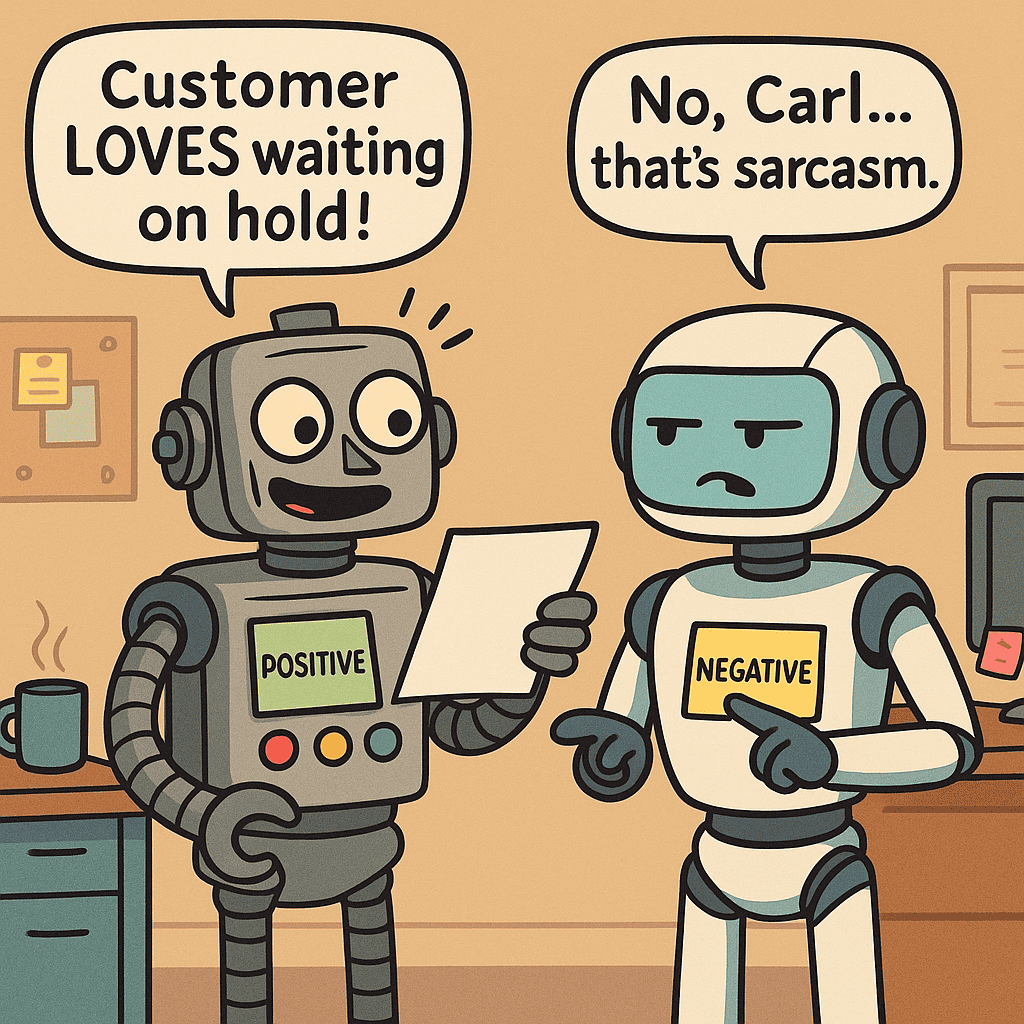
Early sentiment analysis tools often misread the emotional tone of unstructured text, especially when confronted with nuance. Sarcasm could be mistaken for sincere praise, and industry-specific terms could trigger false alarms. For example, insurance feedback might mention a “total catastrophe” or “flood loss” – terms that sound negative – even when the customer’s actual sentiment about their agent was positive.

Today, thanks to advances in artificial intelligence (AI), we can finally more reliably categorize unstructured sentiment data, grasping the true intent behind words.

The Challenge with Unstructured Sentiment (Before AI)

Human language is complex, and understanding sentiment isn’t as simple as counting positive or negative words. Some of the biggest hurdles historically included:

  • Sarcasm and Irony: Sarcasm flips language on its head – “I just love being on hold for an hour,” one might say, meaning the opposite. Older sentiment algorithms struggled with this. They took words at face value, so positive words in a sarcastic sentence could trick them into a positive classification when the sentiment was actually negative. Likewise, genuinely appreciative comments with a few “negative” words (e.g. “our agent was a lifesaver during this total catastrophe”) could be mislabeled as negative. Without understanding context or tone, these tools were easily foiled by irony and sarcasm.
  • Domain-Specific Language and Ambiguity: Words mean different things in different contexts. A phrase that sounds negative in one industry might be neutral or positive in another. Sentiment analysis has long been domain-dependent – the same words or expressions can indicate opposite sentiments in different domains. For instance, calling a video game “sick” is praise (slang for “awesome”), but a naive model might flag it as negative (thinking “sick” = ill/bad). Similarly, insurance or disaster-relief contexts include words like “damage,” “loss,” or “catastrophe” which describe events, not customer satisfaction.
  • Limited Context Understanding: Older approaches often relied on simple rules or keyword lists. They struggled with negation (“not bad at all” could be misread as negative due to the word “bad,” when the sentiment is mildly positive). They also analyzed each sentence in isolation, missing the broader context that humans use to interpret meaning.

These challenges left marketers and analysts with unreliable results – sarcastic complaints tagged as positive sentiment, mixed messages, and the need for manual review. Fortunately, AI has turned this around.

How AI Transformed Sentiment Analysis

Modern AI-driven sentiment analysis isn’t your 2010s “bag-of-words” algorithm. It’s far more sophisticated, which means far more accurate. Here’s what changed and why sentiment categorization is now markedly better:

  • Context is King: Today’s AI language models analyze text in context, not as isolated words. They evaluate the entire sentence (or even multiple sentences) to derive meaning. This means they catch nuances like negation and tone shifts.
  • Advanced NLP Techniques: Breakthroughs in deep learning – particularly transformer-based models – have given sentiment analysis a giant leap forward. These models “read” text in a human-like way, considering nuance and even world knowledge.
  • Learning from Huge Data (including Sarcasm and Slang): Modern AI is trained on vast amounts of text – from tweets and reviews to discussion forums. This exposure means the AI has “seen” countless examples of sarcasm, slang, and domain-specific usage.

One additional factor: cutting-edge sentiment tools can be fine-tuned to specific industries or contexts, allowing them to accurately interpret language that general models would still get wrong.

What AI Still Gets Wrong

Modern sentiment tools are dramatically better, but not infallible. A few limitations worth knowing:

Confidence matters: Good sentiment tools return a probability score, not just a label. If your tool isn’t surfacing confidence levels, you’re missing important signal about when to trust the output and when to take a second look.

Mixed sentiment: “The food was amazing, the service was a disaster” often gets flattened to a single label. Nuanced, multi-topic feedback still trips up many models.

Subtle sarcasm in short text: The same research on sarcasm detection that AI proponents cite also shows LLMs still require multi-step reasoning to reliably catch it. Short social posts remain harder than longer reviews.

Niche and low-resource domains: Fine-tuning helps, but models trained on general text can still misread highly specialized industry language they haven’t seen enough of.

Domain Adaptation and Customization: Cutting-edge sentiment tools can be fine-tuned to specific industries or contexts, allowing them to accurately interpret unique industry language.

Real-World Examples: Old vs. New Sentiment Categorization

CommentOld Approach SentimentModern AI Sentiment
“I absolutely loved waiting an hour on hold.”Positive (misread literally)Negative (sarcasm detected)
“Great job, team. You broke it again.”Positive (misread “great”)Negative (clearly sarcastic)
“Just perfect… now nothing works.”Positive (focus on “perfect”)Negative (understood irony)
“Thanks a lot, now I’m locked out of my account.”Positive (saw “thanks”)Negative (understood frustration)
“Yeah, everyone loves seeing errors first thing in the morning.”Positive (misled by “loves”)Negative (sarcasm about errors)
“Oh great, another meeting that could have been an email.”Positive (misread “great”)Negative (weary sarcasm)
“Our house was destroyed in a flood – a total catastrophe – but our agent was incredible through it all.”Negative (keying on “catastrophe”)Positive (praise for the agent)
“My car was totaled, yet the claims process was fantastic.”Negative (focus on “totaled”)Positive (satisfaction with service)
“This party was sick!”Negative (took “sick” literally)Positive (understood slang for “amazing”)
“Not bad at all for a Monday.”Negative (saw “bad”)Positive (recognized the negation as a mild praise)

Table: Ten example comments that would confuse old sentiment analysis but are correctly understood by modern AI. The old approach often relied on literal word sentiment, while new AI models grasp context, sarcasm, and slang to infer the true tone.

Why This Matters for Marketing and CX Professionals

  • You Get True Customer Insights: Sarcasm, jokes, and snarky comments won’t fly under the radar as false positives. Your Voice of Customer analysis becomes trustworthy.
  • Better Decision-Making: You can measure sentiment trends with confidence, making your reports actionable and reliable.
  • Adaptability Across Channels and Industries: Whether it’s product reviews, support tickets, or survey responses, AI adapts to the context and industry language.
  • Efficiency Gains: Teams no longer need to manually re-read comments to detect misclassifications, enabling faster action on real sentiment trends.

If your current sentiment tool only returns a positive or negative label with no confidence score attached, that’s the first thing worth re-evaluating.

Conclusion: From Hit-or-Miss to a Genuinely Useful Signal

We’ve entered a new era where unstructured sentiment data – the messy, honest, and nuanced text that customers produce – can be analyzed with a level of accuracy that was unheard of a few years ago. The tools have gotten genuinely good. But “genuinely good” isn’t the same as “done.” Mixed feedback, niche language, and short sarcastic posts still require human judgment to interpret correctly. The right frame isn’t that AI has replaced the analyst – it’s that AI has made the analyst’s job more tractable. You’re no longer drowning in manual review. You can now focus your attention where the signal is ambiguous rather than spending it on the obvious cases.

For marketers, customer experience professionals, and anyone working with feedback or social data, this is a game-changer. You can now take the pulse of customer sentiment with confidence, knowing that the insights reflect reality. AI has finally made the voice of the customer readable at scale – even when customers are being sarcastic, indirect, or industry-specific.

References

  1. Ingrid Fadelli (2023). “Can large language models detect sarcasm?” TechXplore.
  2. Kapiche (2024). “Sentiment Analysis: Guide for Businesses in 2024.” Kapiche Blog.
  3. Fang Yao & Yan Wang (2020). “Domain-specific sentiment analysis for tweets during hurricanes (DSSA-H): A domain-adversarial neural-network-based approach.” Computers, Environment and Urban Systems, 83, 101522
  4. Ben Yao, Yazhou Zhang, Qiuchi Li, & Jing Qin (2024). “Is Sarcasm Detection a Step-by-Step Reasoning Process in Large Language Models?” arXiv:2407.12725.

Why AI Finally Makes Sentiment Analysis Worth Using Read More »

the historical evoluation of ai

A Historical Evolution of Artificial Intelligence (AI)

Reading Time: 4 minutes

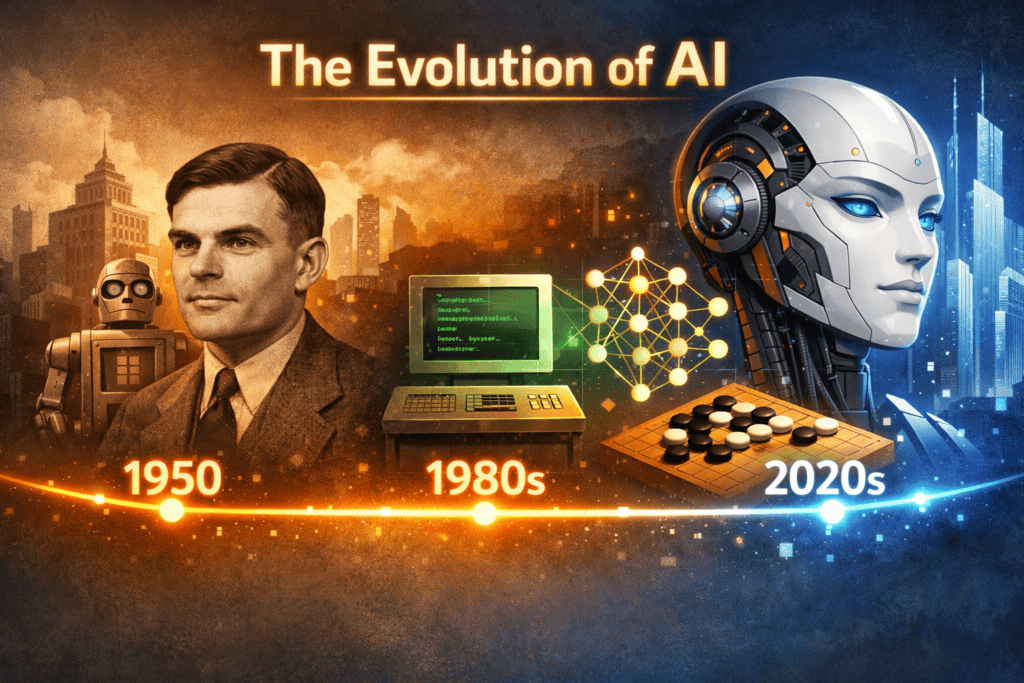
In the past several decades, artificial intelligence (AI) has evolved from theoretical concepts to an integral part of our daily lives. Below is a timeline highlighting some of the most significant milestones in AI history, from its mid-20th century origins to the breakthroughs of the modern era.

1950
October

Alan Turing Proposes the Turing Test

Alan Turing publishes “Computing Machinery and Intelligence,” introducing the idea of an “imitation game” (now known as the Turing Test) to evaluate a machine’s ability to exhibit human-like intelligence.

1956
Summer

The Term “Artificial Intelligence” Is Coined

At the Dartmouth workshop in the summer of 1956, John McCarthy and fellow researchers officially coin the term “artificial intelligence,” marking the birth of AI as a distinct field of study.

1966
1966

First Chatbot – ELIZA

Joseph Weizenbaum develops ELIZA, an early natural language processing program that simulates conversation. Many users are surprised by its human-like responses, making ELIZA a landmark experiment in human-computer interaction.

1969
1969

Shakey the Robot

Researchers at Stanford Research Institute introduce Shakey, the first general-purpose mobile robot able to perceive and navigate its environment. Shakey’s integration of computer vision and planning algorithms breaks new ground in robotics and AI.

1974
1974

The First “AI Winter”

Following years of hype and unmet expectations, the mid-1970s see a steep decline in funding and interest in AI research. A critical 1974 report by Sir James Lighthill leads to budget cuts, ushering in the first “AI winter” period of slowed progress.

1980
1980s

Rise of Expert Systems

Throughout the 1980s, AI research shifts toward “expert systems” – software designed to mimic the decision-making of human experts. These systems gain commercial success (especially in corporate and medical domains), spurring renewed investment and the formation of AI research communities like the AAAI.

1997
May 11

Deep Blue Defeats Chess Champion

IBM’s Deep Blue supercomputer defeats reigning world chess champion Garry Kasparov in a six-game match. It marks the first time a computer has beaten a human world champion, demonstrating the rapidly advancing power of AI in strategic reasoning.

2011
February

IBM Watson Wins on “Jeopardy!”

IBM’s Watson question-answering AI system competes on the TV quiz show “Jeopardy!” and beats two of the show’s greatest champions. Watson’s ability to interpret natural language questions and retrieve answers in real-time highlights major strides in AI’s language understanding and information processing.

2012
2012

Deep Learning Breakthrough

An AI system (AlexNet) built on deep neural networks wins the 2012 ImageNet image recognition contest by a startling margin. This breakthrough brings neural networks and “deep learning” into the mainstream, revolutionizing AI approaches to vision, speech, and beyond.

2016
March

AlphaGo Conquers the Game of Go

Google DeepMind’s AlphaGo program defeats Go champion Lee Sedol, a feat once thought decades away due to Go’s complexity. Mastering this ancient board game through advanced neural networks and reinforcement learning, AlphaGo’s victory is hailed as a milestone demonstrating AI’s potential to tackle incredibly complex problems.

2020
June

OpenAI’s GPT-3 Astonishes

OpenAI releases GPT-3, a language model with an unprecedented 175 billion parameters capable of producing remarkably human-like text. GPT-3’s performance across writing, question-answering, and other tasks shows a dramatic leap in AI’s natural language generation abilities.

2022
November

AI Goes Mainstream with ChatGPT

OpenAI deploys ChatGPT, a conversational AI chatbot that attracts over a million users within its first week. ChatGPT’s ability to engage in human-like dialogue and assist with a wide range of questions and tasks brings generative AI into everyday use for millions, sparking mainstream excitement about AI’s possibilities.

2023
March

GPT-4 and the Future of AI

OpenAI launches GPT-4, a new multimodal AI model that accepts both text and image inputs while producing even more sophisticated outputs. The rapid progress of AI models like GPT-4 fuels discussions worldwide about AI’s potential benefits and the importance of ensuring responsible, ethical AI development as we look to the future.

2024
March

Claude 3 and AI Self-Awareness

Anthropic releases the Claude 3 model family, including Claude 3 Opus, which surprises researchers with its ability to reflect on its own behavior during evaluations — suggesting a new level of meta-cognition in AI reasoning.

2024
March

European Union Passes AI Act

The EU formally adopts the Artificial Intelligence Act, the first comprehensive legal framework to regulate AI across the continent. It introduces a tiered, risk-based system and sets a global precedent for responsible AI governance.

2024
April

OpenAI Introduces Sora for AI Video

OpenAI unveils Sora, a powerful text-to-video model capable of generating realistic, minute-long video clips from natural language prompts, expanding the creative possibilities of generative AI into visual storytelling.

2024
May

OpenAI Launches GPT-4o

OpenAI debuts GPT-4o, a faster, more accessible multimodal model capable of reasoning across text, image, and audio. GPT-4o becomes available to free ChatGPT users, dramatically expanding public access to cutting-edge AI capabilities.

2024
June

Apple Intelligence Announced

Apple unveils “Apple Intelligence,” a suite of on-device generative AI tools integrated into iPhones, iPads, and Macs. The launch emphasizes user privacy, signaling a shift toward personal AI assistants with secure, hybrid processing.

2024
August

EU AI Act Takes Effect

The European Union’s AI Act officially takes effect, requiring companies to comply with new transparency and safety regulations for high-risk AI systems, marking a significant step in global AI policy enforcement.

2025
January

DeepSeek-R1 Disrupts AI Access

A Chinese startup launches DeepSeek-R1, an open-source language model offering GPT-4-level performance. Its free release and efficient design spark a surge in global downloads and challenge assumptions about AI model exclusivity.

2025
February

ChatGPT Deep Research Mode Debuts

OpenAI introduces a new “Deep Research” mode in ChatGPT, enabling users to request detailed, source-backed reports. This feature blurs the line between human and AI research capabilities, offering autonomous, multi-step synthesis tools.

2025
May

Google Veo 3 and Generative Video Ethics

Google unveils Veo 3, a state-of-the-art generative video model capable of creating hyper-realistic scenes from text. Its realism prompts widespread discussions about misinformation, authenticity, and synthetic media safeguards.

2025
May

Anthropic Releases Claude 4

Anthropic releases Claude 4, featuring extended autonomous capabilities and sustained task handling for hours without human input. Its enhanced reasoning and long context memory highlight the ongoing shift toward AI agents.

2025
July

Creative Labor Wins AI Protections

After a prolonged strike, voice actors secure a groundbreaking contract guaranteeing consent and compensation for AI use of their voices. This milestone sets global precedent for artist rights in the age of generative content.

2025
August

OpenAI Releases GPT-5

OpenAI launches GPT-5, a major step toward tool-using, agentic AI. The model excels at reasoning, software development, and multi-step tasks, marking a transition from conversational assistants to full-fledged digital collaborators.

A Historical Evolution of Artificial Intelligence (AI) Read More »

the cambridge handbook of responsible artificial intelligence

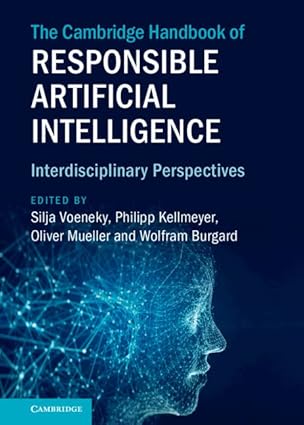
The Cambridge Handbook of Responsible Artificial Intelligence — Summary and Takeaways

Reading Time: 4 minutes

Source: The Cambridge Handbook of Responsible Artificial Intelligence by Cambridge University Press
Date Published: October 2022
Audience: Lawyers, business leaders, policymakers, and tech teams using AI
Data Sources Cited: European courts, EU AI Act plans, GDPR rules, WHO health guidelines, and research from MIT and Stanford.

This handbook covers the big legal and ethical problems AI creates. It looks at product safety, data privacy, medical uses, business rules, and fair competition. You will learn about new laws like the EU AI Act. You will understand who gets blamed when AI makes mistakes. And you will get clear steps to use AI the right way.

Actionable Tips

Nine quick wins for marketers and business leaders using AI:

  1. Sort your AI tools by risk level. Use the EU AI Act as your guide, even if you are in the US. High risk means it affects jobs, key systems, or critical services.
  2. Write down how your AI makes choices. Good records protect you in court. AI is a black box, so clear docs are your best defense.
  3. Explain your AI results in simple words. GDPR says people must understand what you do with their data. Machine learning makes this hard, but you still must try.
  4. Do a privacy check before you use AI on lots of personal data. GDPR Article 35 says you must do this for high-risk work. No exceptions.
  5. Keep humans in charge. AI should help people make choices, not replace them. This matters most when safety or rights are at stake.
  6. Watch your pricing AI closely. Regulators worry that AI can fix prices on its own without people knowing. If you use pricing tools, check them often.
  7. Get ready for changing rules. You will need to review your AI tools often. Save money or get insurance for high-risk AI. New laws say this is coming.
  8. Budget for regulatory capital now. Europe is testing a system where companies must set aside money before using high-risk AI. If your AI causes no harm after review, you get the money back. Set aside 10 to 20 percent of AI project costs as compliance insurance.
  9. Audit pricing algorithms for collusion risk. AI can learn to match competitor prices without any human telling it to. This breaks antitrust laws even if nobody programmed it. If you use dynamic pricing in e-commerce or SaaS, check quarterly. Compare your price changes to competitors. Document that you are not watching them. Hire a lawyer to review.

Pro Tip: Build your AI rules now. Do not wait for new laws. Starting early shows regulators you care. It also saves you money later.

Key Stats and Sources

  • World data storage hit 20 zettabytes in 2018. By 2025, it may reach 160 zettabytes. That is ten times more. More data helps AI but makes rules harder to write.
  • The EU AI Act sorts AI into four risk levels. High-risk tools must pass outside checks. Very bad uses, like government social scores, are banned completely.
  • AI can beat doctors at some tasks. One test showed AI beat 136 out of 157 skin doctors at finding skin cancer. This shows AI works well but also raises big questions about who is responsible.
  • Rules change fast. Always check the newest laws and stats before you make big choices.

Examples You Can Steal

  • Luxembourg said yes to the Webtaxi app. The app sets taxi prices using AI. But it helps customers too. This shows regulators look at both good and bad effects.
  • Germany went after Facebook for breaking privacy rules in its terms. This shows how fair competition laws and privacy laws now overlap. Watch both.
  • Siemens got approval for an AI tool that reads chest scans. It makes reports for doctors. Medical AI must follow safety rules and new AI laws. That is two sets of rules.

How To Apply This Fast

  • Today: Make a list of every AI tool you use. Write down what each one does, what data it uses, and who makes choices based on it. Use a simple spreadsheet. This list is your starting point.
  • This month: Build an AI team. Get people from legal, tech, and business. Have them sort your AI by risk level using EU rules. Find where you need better records, clearer explanations, or more human checks. Meet every month as rules change.

Bold Claims and Counterpoints

  1. Claim: AI can secretly team up to fix prices without people knowing.
    Counterpoint: This is really hard to do. Experts think people worry too much. But research is still going.
  2. Claim: GDPR rules about data use clash with how AI works. AI needs freedom to learn new things.
    Counterpoint: These rules stop spying on people. You can still build AI within clear limits. It takes balance, but it can work.
  3. Claim: You cannot truly hide who health data belongs to. Blood tests and heart scans are too unique.
    Counterpoint: Perfect hiding is hard, but good security steps can protect people enough for most uses.

Metrics That Matter

  • Watch these numbers to know if your AI is working right:
  • How many AI tools you have sorted by risk. Goal is all of them in six months.
  • How many privacy checks you did for high-risk AI. Match this to your AI list to find missing ones.
  • How well people understand your AI choices. Ask users or test your explanations.
  • How often people change AI choices. Write down why. This helps you make AI better.
  • How many complaints you get about AI. Fewer complaints means you are doing better.

What Is Missing or Caveats

  • This book has lots of legal talk but not much help for small businesses. Most tips are for big companies or banks and hospitals.
  • Rules change fast. Some parts may get old quickly. The EU AI Act is still being written. Each country will do it differently.
  • The book does not talk much about working across countries. This matters for global companies. It focuses on Europe. It skips China and US rules.
  • Not much here for marketers. The book talks more about doctors, banks, and factories. Less about product tips or personalized ads.

One-Sentence Takeaway

Build your AI rules now, not later, because fixing problems after you get in trouble costs way more money and time.

References and Resources

The Cambridge Handbook of Responsible Artificial Intelligence — Summary and Takeaways Read More »

marketing with ai for dummies

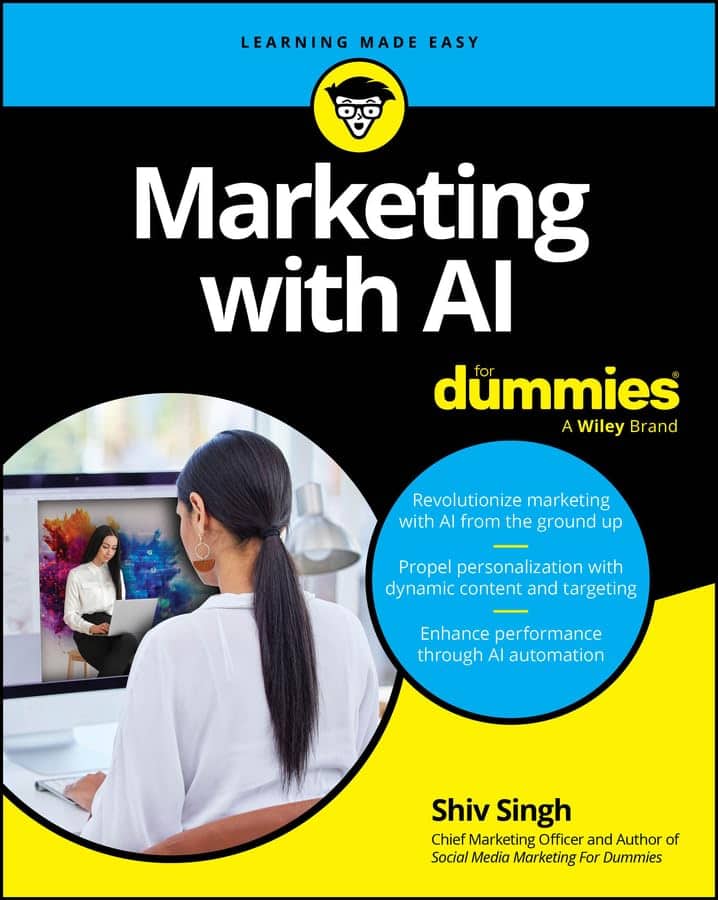
Marketing with AI for Dummies by Shiv Singh Book Summary

Reading Time: 3 minutes

Top Three Quotes

Version 1.0.0
  1. “AI isn’t replacing marketers—it’s supercharging them.”
  2. “Marketing will be less about guessing and more about predicting.”
  3. “The future of marketing lies in creating deeply personalized experiences at scale.”

Book Theme

The Marketing with AI for Dummies book centers around how artificial intelligence is transforming marketing by automating repetitive tasks, improving customer insights, and enhancing personalization which enables marketers to be more strategic, efficient, and data-driven.

Why You Should Read This Book

  • Learn how AI tools can elevate every aspect of marketing from customer segmentation to content creation.
  • Get practical, real-world use cases of AI in email marketing, paid media, SEO, and customer journey mapping.
  • Understand the ethical considerations and best practices for implementing AI responsibly.
  • Stay competitive in a rapidly evolving digital landscape by upskilling in AI.

Key Ideas and Arguments Presented

  • AI is a tool for augmentation, not replacement. It enhances creativity and strategic thinking.
  • Data is the fuel for AI. Quality input data is essential for accurate AI outcomes.
  • AI enables hyper-personalization by analyzing customer behavior and preferences at scale.
  • Predictive analytics and machine learning can forecast customer needs and optimize timing.
  • AI simplifies content generation by auto-creating or suggesting blog posts, product descriptions, or emails.
  • Chatbots and virtual assistants can significantly enhance customer service and response times.
  • AI is transforming ad targeting and optimization with real-time bidding and adaptive campaigns.
  • Ethics and transparency in AI are crucial for maintaining customer trust.
  • AI is not plug-and-play. It requires the right infrastructure, training, and human oversight.
  • Marketers need to evolve their skills to include data analysis, prompt engineering, and AI literacy.

Book Outline

  • Introduction to AI in Marketing
  • AI in Content Marketing
  • AI for Social Media and Influencer Strategy
  • Personalization and Predictive Analytics
  • Using AI in Paid Media and SEO
  • Customer Service and Chatbots
  • AI Tools and Technologies for Marketers
  • Challenges, Risks, and Ethics of AI
  • Future-Proofing Your Marketing Career

Key Takeaways

  • AI can make marketers smarter, not obsolete.
  • It’s critical to choose the right tools that align with your goals.
  • AI is already in many platforms (e.g., Google Ads, HubSpot) and can be used without deep coding knowledge.
  • Ethical AI use matters—bias and privacy must be managed.
  • Marketers who embrace AI now will lead the next generation of customer engagement.

Key Techniques

  • Prompt optimization for better AI output in content tools.
  • Customer segmentation models using AI clustering.
  • Predictive lead scoring based on behavioral data.
  • A/B testing with AI automation to speed up conversion insights.
  • AI-driven email subject line testing using natural language processing.

Author’s Qualifications

Shiv Singh’s background:

  • Former SVP of Marketing at Visa and digital marketing leader at PepsiCo.
  • Advisor to AI and tech startups.
  • Recognized thought leader in digital transformation and brand strategy.
  • Co-author of multiple marketing-related books and frequent keynote speaker.

Comparison to Similar Books

Target Audience

  • Digital marketers looking to modernize their strategy
  • CMOs and marketing executives evaluating AI solutions
  • Small business owners exploring automation tools
  • Marketing students or professionals wanting to stay relevant
  • Content creators and social media managers using AI tools
  • Customer experience and CRM managers
  • Marketing consultants advising on tech adoption

Critical Response to the Book

  • Praised for simplifying a complex topic without dumbing it down
  • Recognized for actionable insights and relatable examples
  • Appreciated by both beginners and mid-level marketers for its tool-based recommendations

One Sentence Takeaway

Marketing with AI isn’t about replacing people. It’s about equipping marketers to create smarter, faster, and more personalized campaigns at scale.

Marketing with AI for Dummies by Shiv Singh Book Summary Read More »

,