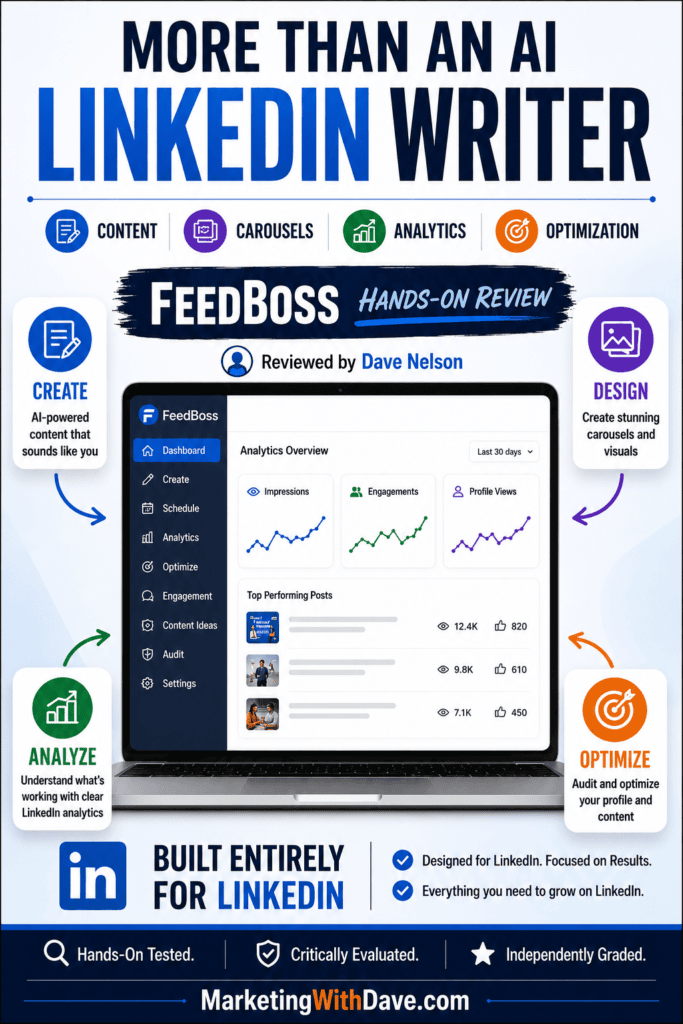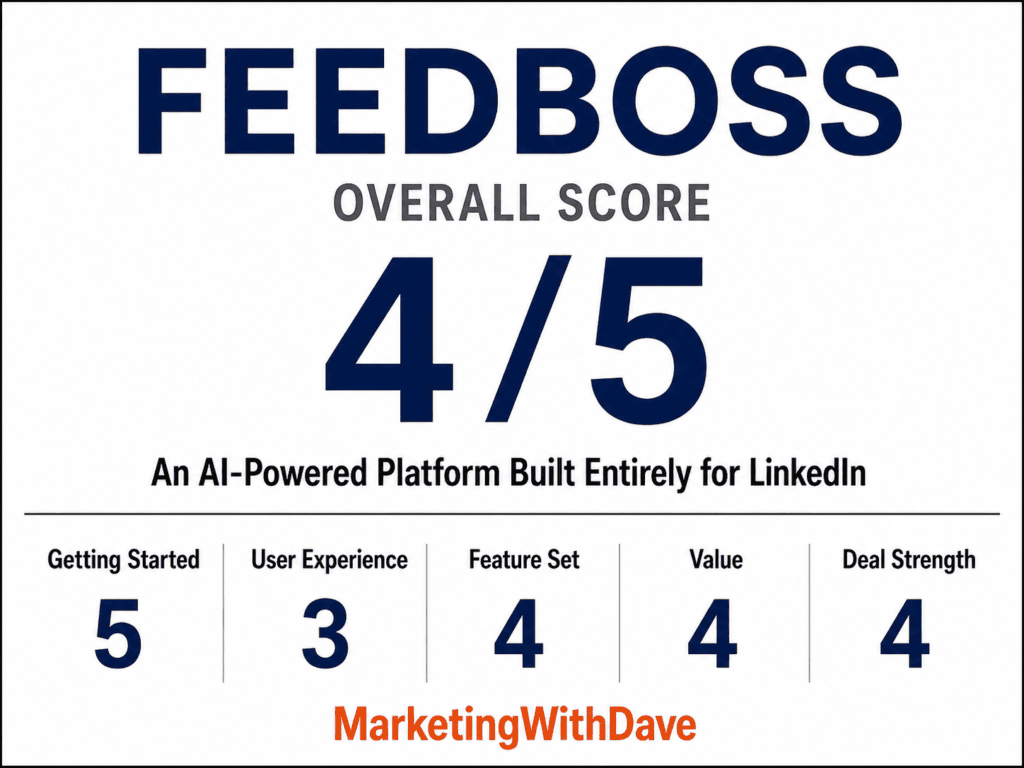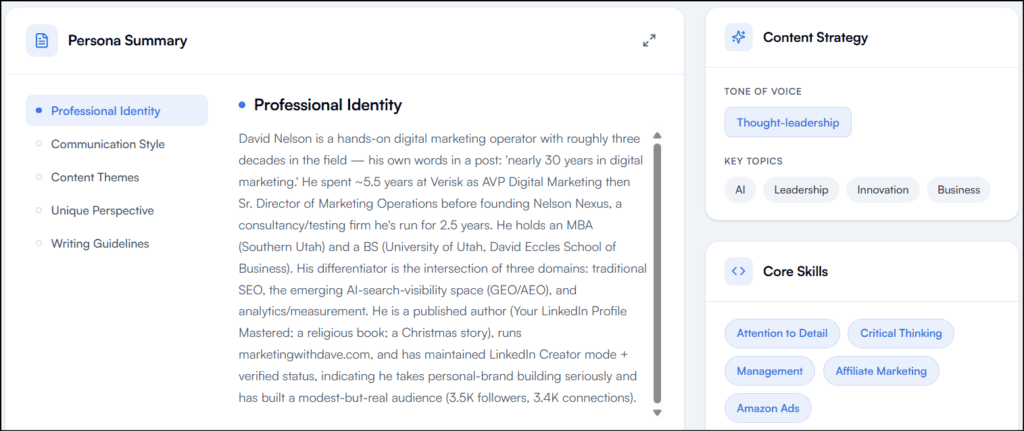
Screenshot of SearchIQ review showcasing search features, analytics dashboard, and autocomplete suggestions for improved website search optimization.

SearchIQ Review: Site Search Analytics and Visitor Insights

Reading Time: 8 minutes

Your visitors are telling you exactly what they want every time they use your site search. The question is whether you have a tool that can actually capture and use that signal. Default WordPress search is not that tool, and getting the right data out of GA4 requires more custom configuration than most site owners ever bother with. SearchIQ is built specifically for this problem: better search results for your visitors and better analytics for you.

Screenshot of SearchIQ review showcasing search features, analytics dashboard, and autocomplete suggestions for improved website search optimization.

I bought SearchIQ on AppSumo in December 2025 and have been running it on MarketingWithDave.com since. This review covers what works well, what genuinely falls short, and what you need to know before deciding whether the $39 lifetime deal is right for your website.

See the current AppSumo deal for SearchIQ

Affiliate disclosure: If you purchase through my link, I may earn a small commission at no additional cost to you. I only share tools I have used myself.

See how I rate software tools

The 30-Second Decision

SearchIQ is a cloud-based site search platform that replaces WordPress’s built-in search with lightning-fast autocomplete, faceted filtering, and a real-time analytics dashboard. The AppSumo lifetime deal is $39 for 5,000 documents and one month of analytics history. For most small business sites, blogs, and content-heavy WordPress installs, that is more than enough horsepower.

The short version: the search experience it delivers to your visitors is genuinely excellent. The analytics side has real limitations you need to know about before you buy, and there are signs that active development has slowed down significantly. Read on for the full picture.

Why Site Search Data Matters

Site search is one of the most underrated data sources in digital marketing. When a visitor types a query into your search bar, they are handing you something rare: intent in their own words, at the exact moment they need something. They are not searching on Google where you have to guess what brought them to your page. They are on your site, telling you directly what they want.

The data you want from site search goes well beyond just knowing what people searched. You want to know:

  • What search terms were used, and how often
  • Which page did the search happen from (context matters)
  • Which searches returned zero results (a content gap hiding in plain sight)
  • What brought that visitor to your site in the first place (referral source)
  • Click-through rate from search results to content

Is SearchIQ Right for You?

SearchIQ works well across a wider range of sites than you might expect. The engine is built to handle millions of documents in sub-seconds, so it scales beyond small blogs into serious WooCommerce and eCommerce catalogs. SKU search is supported, product autocomplete is a core use case, and the AppSumo deal includes unlimited domains, faceted filtering, and cross-domain search, which are features that matter for stores with real inventory depth.

That said, the 5,000 document limit on the AppSumo plan is a real ceiling. A large catalog with tens of thousands of SKUs will outgrow it. And regardless of site size, anyone who needs more than 30 days of analytics history without a manual export routine will find the plan limiting.

The tool calls out marketers, marketing agencies, and product managers as its target audience. In practice it fits content-heavy WordPress sites and WooCommerce stores well, as long as you go in with clear eyes about the analytics constraints.

What SearchIQ Actually Does

SearchIQ is a cloud-hosted search engine that replaces WordPress’s native search. It indexes your content off-site and serves results through a customizable front end with search-as-you-type autocomplete, faceted filtering, typo tolerance, and a real-time analytics dashboard. Cross-domain search, PDF indexing, multilingual support, and mobile optimization are all included in the AppSumo plan.

What are facets? Facets are filters that appear alongside search results, letting visitors narrow down what they are looking for. On a recipe site, facets might be “cuisine type,” “prep time,” or “dietary restrictions.” On a marketing blog like mine, they could be tool category, topic, or content type. SearchIQ builds facets automatically from your existing content taxonomy.

My Experience With SearchIQ: What Works and What Needs Work

Setup and Installation: Genuinely Easy

SearchIQ has a dedicated WordPress plugin, and installation is as straightforward as any plugin I have set up. Connect your account, run the initial sync, and your content is indexed. The search experience on the front end was noticeably better than WordPress default search within minutes of setup.

One note worth flagging: as of this writing, the SearchIQ WordPress plugin shows it was last updated nine months ago and has not been tested with WordPress 7.0, which released on May 20, 2026. That is not automatically a dealbreaker since many plugins run fine without an explicit compatibility flag, but it is worth keeping an eye on, especially after a major version jump. I have not experienced any compatibility issues on my site, but your mileage may vary.

Managing Settings: Two Interfaces, Easy to Confuse

This is a usability quirk worth calling out. SearchIQ settings live in two places: the WordPress plugin and the SearchIQ web app. They overlap in ways that are easy to forget when you are troubleshooting something.

The plugin has tabs for Configuration, Options, Results Page, Autocomplete, Mobile, and Facets. The web app has its own tabs for General, Autocomplete, Result Page, Mobile, Installation, and WP Installation. Similar enough that it is genuinely easy to forget where to go to control what. Once you know this, it is manageable. But it will trip you up the first few times.

Internal Traffic Filtering: A Meaningful Gap

This one bothers me more than anything else about the product. There is no way to filter out your own traffic from the analytics. For a small personal site like mine, my internal testing and browsing noise is not enormous, but there is no good reason a modern analytics tool should not support IP exclusion or user role filtering. I flagged this to the SearchIQ team shortly after purchasing.

Analytics: Useful Starting Point, Real Limitations

The analytics dashboard is clean and intuitive. You can see what your visitors are searching for and intent signals. That data is legitimately valuable. For a content site, even 30 days of search data can surface content gaps you did not know existed.

The limitation is the window: the AppSumo plan only retains 30 days of analytics history. For any kind of meaningful trend analysis or month-over-month comparison, that is not enough. There is no rolling view that automatically builds over time.

The practical workaround is to export your data manually each month. SearchIQ exports nine separate CSV files, which is comprehensive but not exactly elegant. There is also no date or time stamp included in the exported data, making historical reporting more cumbersome than it should be.

More importantly, the reporting data exists in silos. You can view top searches, no-result searches, countries, devices, and other metrics independently, but you cannot combine those dimensions to perform deeper analysis. For example, there is no way to see which no-result search terms are most common within a particular country.

The biggest analytics gap, however, is the lack of page-level search context. SearchIQ can tell you what users searched for, but not where they were when they initiated that search. From a content optimization perspective, this is often the most valuable piece of information. If users repeatedly search for “pricing,” “refund policy,” or “API documentation,” knowing which page triggered that search can reveal where your content is failing to answer questions or guide visitors effectively. Without that context, search analytics become significantly less actionable than they could be.

Heads up on analytics history: The AppSumo lifetime deal includes one month of analytics retention. If you want to do real trend analysis, set a monthly calendar reminder to export your data before it rolls off. SearchIQ has indicated they plan to extend the analytics window, but there is no confirmed timeline.

See the current AppSumo deal for SearchIQ

Pros and Cons

Pros Cons
  • WordPress plugin makes setup fast and easy
  • Clean, fast autocomplete with typo tolerance
  • Faceted search adds serious UX value
  • Analytics dashboard surfaces real content insights
  • Cross-domain support included
  • PDF indexing supported
  • Customizable UI to match your brand
  • Strong lifetime deal value for what you get
  • Responsive team when I contacted support
  • Analytics limited to 30 days with no historical trend view
  • No internal traffic filtering or IP exclusion
  • CSV exports have no date/time stamps
  • Settings are split across the plugin and web app
  • WordPress plugin has not been updated recently
  • Pace of product development appears to have slowed
  • Nine separate export files with no unified export option

Pricing and Plans

One plan, non-stackable. Here is what you get:

PlanPriceDocumentsAnalyticsDomains
SearchIQ Startup (AppSumo LTD)$39 one-time5,00030 days historyUnlimited

The plan includes white-label delivery (no SearchIQ branding), facet filters, CDN for thumbnail images, cross-domain search, and mobile optimization. For most small business sites, blogs, and solopreneur content hubs, 5,000 documents is well above what you will need for years.

SearchIQ vs. Native WordPress Search and GA4 Site Search Tracking

Capability Default WP Search GA4 Site Search (via GTM) SearchIQ
Search-as-you-type autocomplete ❌ ❌ βœ…
Typo tolerance ❌ ❌ βœ…
Faceted filtering ❌ ❌ βœ…
Keywords searched ❌ ⚠️ With setup βœ…
Zero-result searches ❌ ⚠️ Custom setup required βœ…
Page where search occurred ❌ ⚠️ With setup βœ…
Click-through rate on results ❌ ⚠️ Custom setup required βœ…
Internal traffic filtering β€” βœ… ❌
Analytics history ❌ None βœ… 14 months ⚠️ 30 days
Setup complexity βœ… None ⚠️ Moderate setup βœ… Low setup
PDF indexing ❌ ❌ βœ…
Cross-domain search ❌ ❌ βœ…
Mobile search optimization ❌ ❌ βœ…

Common Questions From the AppSumo Community

Can I use SearchIQ across multiple domains?

Yes, the AppSumo lifetime deal supports unlimited domains and includes cross-domain search, which lets you surface results from multiple sites in a single search experience.

How is “document” count calculated?

A document is any post, page, or product on your site. The 5,000 document limit on the AppSumo plan applies to total indexed content, not monthly queries. For most sites under 5,000 pages this is a non-issue.

Can I get more than 30 days of analytics?

Not on the AppSumo plan. Export manually each month before the data rolls off β€” nine CSV files, none of them date-stamped. SearchIQ has said they plan to extend the window but has not given a timeline.

Is there a GA4 integration for saving search data automatically?

No, not currently. Manual export is the only option. Worth submitting as a feature request if this matters to your workflow.

Does SearchIQ work with shortcodes or dynamically generated content?

SearchIQ indexes standard WordPress content. Content generated via shortcodes or table plugins that do not render content in the standard WordPress post structure may not be indexed correctly. This is worth testing during your trial period if your site relies heavily on shortcode-rendered tables or content.

What about Shopify?

SearchIQ has indicated they are not planning to re-support Shopify at this time. This is a WordPress-focused product.

A Note on Active Development

I want to be transparent about this because it matters for a lifetime deal purchase. Two data points concern me:

  • The WordPress plugin has not been updated in approximately nine months and has not been tested against WordPress 7.0 (released May 20, 2026)
  • A feature I requested six months ago (internal traffic filtering) has not been implemented

I am not saying SearchIQ is abandoned. The product works well day-to-day and the team was genuinely helpful when I was getting started. But for a lifetime deal, what you are evaluating is whether the product will continue to evolve. Based on what I have seen over six months of use, I would characterize the pace of development as slow rather than active. That is a real consideration.

If you are buying SearchIQ primarily for the search experience it delivers to your visitors, it delivers well today. If you are expecting a product roadmap full of new features, the evidence is not there to support that expectation.

Bottom Line

SearchIQ does the core job well. It replaces WordPress’s pedestrian default search with fast, accurate, autocomplete-powered search that your visitors will notice immediately. The analytics dashboard gives you real signal on what your audience is looking for, even if the 30-day window forces a manual export habit to make it useful over time.

At $39 lifetime, the value is strong if you accept the limitations. You need to be comfortable with manually exporting data each month, accepting that internal traffic will show up in your analytics, and understanding that development velocity appears to have slowed. Those are not small caveats, but they do not sink the deal for a site under 5,000 pages that wants a better search experience without a monthly subscription.

For most content-focused WordPress sites, blogs, and small business owners running on AppSumo tools, this is a buy.

See the current AppSumo deal for SearchIQ

This content is for educational purposes and reflects my experience, review of the product, and current publicly available deal information. Always evaluate tools based on your specific business needs, goals, and workflows before making a decision.

Looking for more marketing software reviews? See my full list of marketing tools and software I recommend.

SearchIQ Review: Site Search Analytics and Visitor Insights Read More Β»

Screenshot of a review article titled 'ZeroRank Review' showing Google search rankings, AI decision-making, and a mobile AI chat, emphasizing AI search visibility tracking.

ZeroRank Review: Find Out Why AI Recommends Your Competitors

Reading Time: 9 minutes

AI search is no longer a side experiment. ChatGPT, Perplexity, Google AI Overviews, and Gemini are actively answering buyer questions in your category right now, citing sources and recommending brands. If yours isn’t showing up, you’re invisible to a growing segment of your audience.

ZeroRank is an AI search visibility platform that tracks where your brand gets cited across the major AI engines, benchmarks you against competitors, and delivers prioritized recommendations to close the gap. I picked it up on AppSumo and ran it against MarketingWithDave.com.

Trying to decide between ZeroRank and SnowSEO?

I’ve also compared these two AI visibility platforms side by side, including where each one shines, the differences in workflow, and which type of marketer each is best suited for.

β†’ Read my ZeroRank vs SnowSEO comparison

Here’s what I found.

ZeroRank AI search visibility scorecard showing overall score of 4.3 out of 5, with categories like Getting Started, User Experience, Feature Set, Value, and Deal Strength, from Marketing with Dave.

See the current AppSumo deal for ZeroRank

Affiliate disclosure: If you purchase through my link, I may earn a small commission at no additional cost to you. I only share tools I have used myself.

See how I rate software tools

The 30-Second Decision

ZeroRank is worth serious consideration if you’re an SEO, content marketer, or agency that needs visibility into how AI engines are covering your brand or your clients’ brands. The topics and prompts system gives you precise control over what queries you’re tracking, and the recommendations are genuinely actionable. But go in with clear eyes: content generation credits are not included at Tier 1 or Tier 2, Workflows are an enterprise-only feature not covered by the AppSumo deal, and the onboarding has a few rough edges ZeroRank is actively working to fix.

Is ZeroRank Right for You?

You’ll like it if…You might skip it if…
You want precise control over which prompts and queries you track across AI enginesYou need content generation and optimization built in at the base tier
Tracking brand citations and share of voice in AI search matters to your strategyYou’re looking for a fully integrated content creation suite
You want structured on-page, off-page, and technical recommendations for AI visibilityYou want Workflows automation (that’s enterprise-only at $499/month)
You’re monitoring multiple brands or client properties against competitorsYou want a plug-and-play experience right out of the box

Why I Bought ZeroRank

I’ve been producing practitioner-grade content at MarketingWithDave.com for years, and the question of AI visibility has become impossible to ignore. Traditional SEO rankings tell me where I land in Google’s blue links. They say nothing about whether ChatGPT recommends me when someone asks “who personally tests AppSumo products?” or “where can I find honest software reviews before buying?”

I wanted a tool that would give me an honest picture of where I stood in AI search, not just a general SEO score with an AI tab bolted on. ZeroRank’s AppSumo listing positioned it as exactly that, so I bought Tier 1 to test it.

What ZeroRank Actually Does

ZeroRank is built around four core functions:

Topics and prompt tracking. You define topics and the specific prompts you want tracked across AI engines. This is the feature I got the most out of: rather than letting a tool decide what questions matter, you control exactly what you want to be found for and watch your visibility, sentiment, and rank move over time as you make changes. It’s a focused, intentional approach to GEO/AEO that generic rank trackers can’t replicate.

Brand monitoring across AI platforms. ZeroRank tracks citations, mentions, sentiment, and position across ChatGPT, Perplexity, Google AI Overviews, Gemini, Grok, and Bing Copilot. Results update daily and are organized by prompt, so you can see exactly which questions you’re appearing in and which ones competitors are winning instead.

Competitive benchmarking. ZeroRank automatically identified and began tracking over 100 competitor brands against MarketingWithDave.com with no manual setup required. The coverage was accurate, it flags potential duplicate brand entries so you can merge them, and you can add additional competitors manually with no cap on how many you track.

Actionable recommendations. The recommendations dashboard breaks down opportunities into three categories: on-page (article formats, content types, and structures that AI engines cite), off-page (Reddit threads, roundups, and editorial placements ranked by impact), and technical (schema markup, page speed, essential files like llms.txt and sitemap.xml). Each card includes Done/Decline/Todo controls so you can manage your queue.

Source intelligence. The Sources view shows which domains AI engines are pulling citations from in your category, how frequently they’re used, and how your domain compares. This gap analysis feeds directly into outreach and content strategy decisions.

ZeroRank In One Sentence

ZeroRank tracks the AI prompts that matter to your business, shows which brands are being recommended, and helps identify why your brand isn’t part of the answer.

My Experience With ZeroRank

Let me give you the full picture, friction and all.

Topics and prompts are the standout feature. Once I got past setup, the ability to define exactly which prompts to track was the most valuable thing in the platform. Rather than letting ZeroRank decide what’s relevant, I could dial in on the specific questions I want to rank for in AI search and get a clear read on how I’m doing. Seeing those prompts tracked across multiple AI engines with sentiment and rank data attached makes this genuinely useful for building a real GEO strategy.

Onboarding hiccup. When I first logged in after purchasing through AppSumo, the platform didn’t recognize my AppSumo purchase and presented subscription upgrade prompts instead of taking me to the dashboard. I had to contact support to get it sorted. ZeroRank has acknowledged this and is working to smooth it out, but it’s a frustrating start when you’re eager to dig in.

Topic creation needs a manual option. When you add a topic, ZeroRank auto-generates prompts based on what it infers about your site. In my case, it didn’t have the cleanest read on MarketingWithDave.com’s focus, so I ended up with generated prompts I didn’t want and had to delete them manually. I’d much rather have the option to create a topic without auto-generating so I can define my own prompts from scratch. ZeroRank says this is on the roadmap.

Starting from zero is humbling. The Brands overview showed MarketingWithDave.com at 0% visibility, 0 sentiment, and rank #0 across all tracked prompts. AppSumo led the category at 38% visibility, followed by Reddit at 33% and G2 at 19%. This is a new pursuit for me so not shocking but still, you never want to see zero results. It confirmed exactly why I need a tool like this.

Marketing with Dave logo displayed on a digital screen, emphasizing digital marketing expertise and online branding strategies.

Competitor auto-tracking is accurate and hands-off. 111 active brands were tracked automatically, including competitors in the affiliate marketing and software review space that I would have added myself. The merge suggestions for potential duplicate entries were a nice quality-of-life touch, and there’s no limit on how many brands you add manually.

Screenshot of the 'Active Brands' dashboard showing various competitor brands and their status in marketing analytics.

AI model access at Tier 1. The ZeroRank website lists Gemini, Grok, and Bing Copilot as requiring an upgrade, which caused confusion since the AppSumo listing includes all models. Here’s the clarification from ZeroRank directly: AppSumo buyers do have access to all AI models, but Tier 1 limits you to three active simultaneously. The website messaging reflects their old pricing before a recent change. You choose which three you want active, so you’re not stuck with only the basic engines. That’s an important distinction and one I wish had been clearer upfront.

Content generation is not included at Tier 1 or Tier 2. If you want AI-assisted content creation and optimization, those require credits not bundled at the lower tiers. You can purchase them separately ($5 per content generation, $2 per optimization), or they come as a one-time credit bundle at Tier 3 and above. ZeroRank’s position is that this is stated in the AppSumo tier breakdown, and technically that’s accurate. It’s still something to factor into your buying decision.

Workflows are enterprise-only. The Workflows section is visible in the dashboard but locked, requiring an enterprise plan starting at $499/month. This is not included in any AppSumo tier. ZeroRank is exploring per-credit access for AppSumo users, but there’s no ETA.

See the current AppSumo deal for ZeroRank

The Chats Timeline

The Chats Timeline shows how AI engines actually responded to your tracked prompts over time. You can see the full answer from ChatGPT, Perplexity, and AI Overviews side by side, along with which brands were mentioned in each response. This gives you a real audit of the AI search landscape in your category rather than just an aggregated score, and it’s useful for understanding the framing and language AI uses when covering your topic area.

Screenshot of a chat conversation with multiple AI and user prompts discussing software reviews, recommendations, and SEO strategies.

The Recommendations Are Specific

The on-page tab surfaces article types and content formats that AI engines in your category are actively citing, including specific competitor domains to draw inspiration from.

Marketing with Dave logo displayed on a website homepage, emphasizing digital marketing expertise and SEO strategies for online success.

The off-page tab identifies where to engage: in my case, r/appsumo, r/SaaS, and r/Affiliatemarketing were flagged as the top subreddits for mentions. Each recommendation card shows priority level and lets you mark it as Done, Declined, or Todo.

Technical AI Readiness Score

MarketingWithDave.com scored 60 on ZeroRank’s AI Readiness Score (9 of 15 checks passed). The good news: essential files are covered, including llms.txt, robots.txt, sitemap.xml, and HTTPS. The gaps are in schema markup: Organization, Article, Product, FAQ, and HowTo are all missing. Each gap includes a plain-language explanation of why it matters for AI citation accuracy, which makes this more actionable than a generic audit score.

Marketing with Dave logo displayed on a website header, emphasizing digital marketing expertise and online branding services.

Source Gap Analysis

The Sources view is one of the more strategically useful parts of the platform. It shows which domains AI engines are pulling from in your category, usage percentages, and average citations per answer. For my topic area, appsumo.com was the most-cited source at 129.2% usage (meaning it appears in more than one citation per answer on average), followed by youtube.com at 104.2% and reddit.com at 68.8%. MarketingWithDave.com didn’t appear at all. That’s a clear signal about where to focus outreach and content placement efforts.

Marketing with Dave logo on a website header, featuring a professional design with a focus on digital marketing and SEO strategies.

What I Liked and What Needs Work

What WorkedWhat Needs Work
Full control over topics and prompts you want to trackOnboarding didn’t recognize AppSumo purchase on first login
Chats Timeline showing actual AI responses side by side per promptNo option to create a topic without auto-generating prompts first
Automatic competitor tracking with brand merge suggestions, no cap on brandsContent generation credits not included at Tier 1 or Tier 2
On-page, off-page, and technical recommendations with clear priority levelsWorkflows locked to enterprise ($499/month, no AppSumo tier includes it)
Technical AI readiness score with specific, actionable schema gapsWebsite model access messaging doesn’t match AppSumo tier inclusions
Source gap analysis showing exactly which domains AI is citing in your categoryThree-model limit at Tier 1 requires choosing which engines to track

Pricing and Plans

ZeroRank is available on AppSumo as a lifetime deal across six tiers, priced from $69 to $1,199. The main differences across tiers are the number of brands and prompts you can track, how many AI models you can run simultaneously, and whether content generation credits are included (Tier 3 and above come with a one-time credit bundle).

Tier 1 at $69 covers the full monitoring, recommendations, and source intelligence features with access to all AI models (three active at once). Content generation and Workflows are not part of any AppSumo tier.

ZeroRank’s regular monthly pricing starts at $89/month, which means Tier 1 pays for itself in under a month against list price. If you’re an agency tracking multiple client brands, the higher tiers scale accordingly.

Bottom Line

Most AI visibility tools tell you whether your brand appears in AI-generated answers. ZeroRank goes a step further by showing which brands are being recommended instead, where your visibility gaps exist, and what actions may help improve your presence.

The biggest challenge with ZeroRank is not learning the interface but learning how to think about prompts and topics. Once that clicks, the platform becomes much easier to understand and significantly more valuable. The ability to monitor specific questions, see the brands and entities being mentioned, review supporting sources, and identify competitive gaps makes the insights far more actionable than many AI visibility tools I have tested.

If your goal is simply to track rankings, there are plenty of SEO tools that already do that. If you want to understand how AI platforms are answering questions in your industry, who they are recommending, and why your brand may be missing from those conversations, ZeroRank offers a compelling approach.

See the current AppSumo deal for ZeroRank

This content is for educational purposes and reflects my experience, review of the product, and current publicly available deal information. Always evaluate tools based on your specific business needs, goals, and workflows before making a decision.

Looking for more marketing software reviews? See my full list of marketing tools and software I recommend.

ZeroRank Review: Find Out Why AI Recommends Your Competitors Read More Β»

A frustrated man sitting at a desk with SEO and content analysis papers, looking at a computer screen displaying article metrics, with a checklist of SEO fixes on a whiteboard behind him.

Textfocus Review: Semantic SEO, EEAT, and GEO Analysis Tool

Reading Time: 9 minutes

Most SEO tools answer the wrong question.

A frustrated man sitting at a desk with SEO and content analysis papers, looking at a computer screen displaying article metrics, with a checklist of SEO fixes on a whiteboard behind him.

They tell me my title tag is too long, my meta description is missing, or my page speed needs work. All true. None of it explains why a thinner page with weaker writing is sitting above mine in the search results, or what I would need to change to close that gap.

Textfocus has a different approach. Rather than running down a technical checklist, it analyzes a page through three lenses that most on-page tools ignore entirely: semantic relevance (how well your word choices match what ranking competitors are actually using), EEAT signals (the Experience, Expertise, Authoritativeness, and Trustworthiness factors Google uses to evaluate content quality), and GEO readiness (how well AI search engines and LLMs can parse and cite your page). That combination provides a perspective on content quality and AI visibility that traditional crawl reports simply cannot offer.

To find out whether the reports were genuinely useful or just impressive-looking dashboards, I put my 5 marketing awareness stages blog post through every major tool in the platform. Some of what came back confirmed things I already suspected. A few findings stopped me cold, including one about my table of contents that I will get to shortly.

Here is an honest account of what I found.

Affiliate disclosure: If you purchase through my link, I may earn a small commission at no additional cost to you. I only share tools I have used myself.

Getting Started 3.5 User Experience 4 Feature Set 5 Value 4.5 Deal Strength 4 MarketingWithDave.

See how I rate software tools

Start Using Textfocus Today

The 30-Second Decision

If you create content for SEO and want a tool that does more than tell you to “add your keyword to the title,” Textfocus is worth your attention. It runs a full semantic analysis of any individual published page against real competitors in Google, scores your content for EEAT and GEO/AI readiness, and gives you specific word-level gaps to close. It is genuinely more thorough than most on-page tools I have used at any price.

The catch is that the interface takes some getting used to and the onboarding experience is thin. Once you are past that learning curve, though, the reports are dense with signal that you can act on right away.

What impressed me most: Semantic Analysis

Biggest weakness: Workflow and navigation

Is Textfocus Right for You?

You will likely love it if…You might struggle if…
You publish long-form SEO content and want to close semantic gaps vs. ranking competitorsYou are looking for a simple set-and-forget grading tool with a clean checklist
You care about GEO / AI search optimization and want a score you can track over timeYou need project folders, team workflows, or whole-site crawling out of the box
You want EEAT diagnostics broken into Experience, Expertise, Authority, and TrustworthinessYou are a non-technical user who finds report-heavy tools overwhelming
You need fully localized English labels and date formatting out of the box

Why I Bought Textfocus

I have been writing about content marketing and SEO at MarketingWithDave.com for years, and I am always looking for tools that help me diagnose what is actually wrong with a page rather than just confirming what I already know. Most on-page SEO tools tell you to optimize your title tag and add your keyword to the first paragraph. Textfocus promises to go deeper: semantic coverage analysis using TF-IDF and competitive benchmarking, EEAT scoring, and a separate GEO/AI readiness score that matters more every month as AI search grows.

I recognize a tool with genuine diagnostic depth when I see one. Textfocus looked like the real thing, so I picked it up.

What Textfocus Actually Does

A professional marketing consultant working on a laptop with digital marketing charts and analytics on the screen, representing digital marketing strategy and SEO analysis.

Textfocus is a page-level SEO and GEO analysis tool built by Christophe Hilmoine, a solo bootstrapped developer based in France who has been refining this product since 2016. You submit a single URL with a target keyword and it returns a layered set of reports. You can also load a CSV file to submit multiple URLs in a batch, though this still produces individual per-page analyses rather than a site-wide crawl. The tool is built around depth on one page at a time, not breadth across an entire domain.

The main tools available from the navigation menu are:

  • Page SEO Analysis — the core on-page audit covering technical and content factors
  • Analysis IA — the GEO/AI Readiness report that evaluates how well AI crawlers and LLMs can parse your page
  • EEAT Analysis — a dedicated report scoring Experience, Expertise, Authoritativeness, and Trustworthiness
  • Optimized Copywriting — a writing assistant that generates content direction based on your target keyword
  • Semantic Analysis — finds the right words to use based on competitor benchmarking
  • Query Comparison — helps you decide whether a topic warrants one page or two, useful for avoiding keyword cannibalization
  • Keyword Audit, Research Volumes, Search for Questions, Suggested Keywords, Alphabetical Generator — a set of keyword research utilities

The analysis engine is the star of the show. The keyword research utilities are useful supplements.

My Experience With Textfocus

To put this review on solid ground, I ran a single page through every major Textfocus tool. The target keyword was “five awareness stages.” It is a 4,153-word post with 32 unique internal links (most of those are in the header and footer), a well-organized heading hierarchy, and valid JSON-LD structured data. A solid page to stress-test a diagnostic tool against.

Here is what the reports actually surfaced.

The Page SEO Analysis: Thorough and Mostly Right

The SEO Page Analysis report came in at 53%, which sounds low until you look at what is being measured. The tool flagged my meta title at 99 characters and correctly called it too long, with an AI-suggested alternative of “5 Awareness Stages Explained – Marketing Guide” that I may actually use. It flagged my meta description at 171 characters and suggested trimming it under 170. It noted that 13 H2 tags is more than the recommended maximum of 10, and flagged that my page has too few first-person pronouns for content claiming hands-on experience.

Marketing with Dave logo on a website header, representing digital marketing expertise, branding, and online growth strategies for businesses.

What makes the SEO report more useful than most is the competitive context it provides alongside the score. My page scored 53/100 against a competitor average of 42/100 for the same keyword. My relevant word count was 2,604 against a competitor average of 746. In other words, 53% is not a disaster — it reflects that I am competing against thinner content and my main gaps are fixable technical items, not content depth.

The Semantic Analysis: Where Textfocus Earns Its Price

The Semantic analysis report that genuinely separates Textfocus from most on-page tools. Rather than checking keyword density, it benchmarks every significant term on your page against the range of occurrences across competitors who are actually ranking.

For my page, it found that the word “journey” appeared only once but competitors use it 3 to 38 times in the ideal range. “Potential” appeared zero times against a benchmark of 4 to 15. “Content” appeared 72 times, which is nearly double the maximum competitor occurrence of 38. These are specific, actionable gaps and excesses that I can address in a content refresh without guessing at what to change.

A professional digital marketing consultant analyzing a marketing performance dashboard with key metrics and data clusters for optimizing marketing strategies.

The semantic score came in at 67% with an interest score of 89/100 in the competitive benchmarking. That combination tells me the content signals are strong overall — the remaining gaps are specific terms to weave in, not a wholesale rewrite.

The EEAT Analysis: Honest and a Little Uncomfortable

The EEAT analysis report broke down as follows: Experience 70%, Expertise 79%, Authoritativeness 40%, Trustworthiness 90%. The authoritativeness score is the weak point, and the tool is specific about why: no direct quotes or blockquotes detected, no statistics or expert citations found, and no structured data linking to an author profile page.

A professional digital marketing consultant working on a laptop with marketing analytics charts, representing digital marketing strategy, SEO, and online advertising expertise.

Those are real gaps for any content site trying to build topical authority, and that level of specificity is useful. The trustworthiness score of 90% reflects HTTPS, no keyword stuffing, clean sentence length averaging 16 words, and legal pages in place — the baseline trust signals Google looks for.

The Analysis IA (GEO / AI Readiness): The Report I Did Not Expect to Find This Useful

In the AI readiness analysis, the overall GEO score was 76.1%, with strong marks across valid JSON-LD (96%), descriptive image alt text (95%), page segmentation (93%), page structure (89%), and robot accessibility (100%). The two major problem areas were page load performance (2% — slow server response time and blocking JavaScript) and the table of contents (0%).

That table of contents finding is the single most valuable thing Textfocus surfaced for me. My TOC is generated by a JavaScript plugin, which means it is invisible in the raw HTML. AI crawlers and LLMs parse the static source, not the rendered output. They cannot see my TOC at all. The fix is either switching to a server-side rendered TOC or tagging the existing one with a recognizable aria-label or id attribute that bots can identify.

That is the kind of insight I would not have found in any traditional SEO tool, and it has a direct bearing on how AI search engines like Perplexity and ChatGPT Search choose to cite and structure answers from pages like mine.

Start Using Textfocus Today

What Needs Work

Textfocus has real rough edges that are worth knowing about before you buy.

The navigation is the biggest friction point. The Tools menu and the Account / My Analysis area both show your saved analyses, which is confusing initially. Running a new analysis requires going through the Tools menu, not the account area — and this is not obvious at first. Once you are inside a specific tool, the navigation bar is no longer anchored to the top of the page, so getting to another tool requires scrolling back up or clicking away. At standard laptop resolution, the last two items in the Tools menu — Suggested Keywords and Alphabetical Generator — are cut off.

There are occasional untranslated French labels and non-localized date formats scattered through the reports and interface. Given that this is a bootstrapped solo product built in France, it is understandable context rather than a red flag, but English-speaking users will notice it.

The keyword input has some quirks. Pasting a list of keywords from an external tool can import invisible characters that register as separate entries, requiring manual cleanup. The field behavior is also inconsistent — sometimes tabbing confirms your entry, sometimes it drops it, and you need to press Enter. Small things individually, but they add up when you are trying to build a repeatable workflow.

There is no project or campaign layer. Each report lives in its own area and you re-find past analyses through separate tabs for each tool. Running a full diagnostic on one page means opening each tool to run the analyses, and tracking the results yourself. A project wrapper that could kick off all reports for a given URL at once and present the results together would make this feel like a significantly more complete platform.

Two additional polish issues: the Performance score box in the main dashboard took several times before it finally loaded during my testing, and PDF exports are given generic file names that become difficult to tell apart once you have exported two or three reports. Neither is a deal-breaker, but both are the kind of thing you notice in day-to-day use.

The Optimized Copywriting tool accepts only your target keyword, a word count target, and a language selection. It generates a content direction or brief rather than actually drafting the article. That is useful but more limited than the tool name implies.

Textfocus Inside Your AI Assistant

One capability worth calling out separately: Textfocus now supports MCP (Model Context Protocol), which means you can connect it directly to Claude, ChatGPT, or other AI assistants that support MCP integrations. In practice this means you can ask your AI assistant to run a Textfocus page analysis, look up related keywords, or check an SEO score without leaving the chat interface. For anyone building AI-assisted content workflows, that is a meaningful time saver. Plan 1 includes 30 MCP API calls per day, with higher tiers adding more.

Bottom Line

Textfocus does something most SEO tools do not: it treats a published page as a system with multiple diagnostic layers and benchmarks each one against what is actually ranking for your keyword. The semantic gap analysis is specific enough to act on immediately. The EEAT breakdown tells you exactly which signals are missing and why. The GEO/AI Readiness report surfaces problems — like a JavaScript-rendered table of contents being invisible to AI crawlers — that traditional SEO tools do not even look for. And the MCP integration means you can pull these insights directly into an AI assistant workflow without switching tabs.

The interface friction and lack of a project layer will slow down anyone trying to build a systematic audit workflow. These feel like the natural constraints of a bootstrapped product that has prioritized analytical depth over UX polish — a trade-off I can live with at this price point.

If you write content for search and want diagnostic depth that goes well beyond keyword density checks and title tag advice.

Start Using Textfocus Today

This content is for educational purposes and reflects my experience, review of the product, and current publicly available product information. Always evaluate tools based on your specific business needs, goals, and workflows before making a decision.

Looking for more marketing software reviews? See my full list of marketing tools and software I recommend.

Textfocus Review: Semantic SEO, EEAT, and GEO Analysis Tool Read More Β»

AI Credits, translation, WCAG, WP plugin, remediation, and alt text tools comparison chart for WebAccessibility vs Accessibility.

WebAbility vs Accessify: Which Accessibility Tool Should You Buy?

Reading Time: 7 minutes

Two web accessibility tools are live on AppSumo right now, and if you have been looking for a way to get your website closer to WCAG and ADA compliance without paying enterprise-level monthly fees, both deserve a look. But they are very different products at very different stages of development.

WebAbility.io is a tool I have already purchased and tested on this site. You can read my full WebAbility review. Accessify is a less mature entrant offering similar territory but with a noticeably narrower feature set and an AI credit model that limits how much automated work you can do per month.

This comparison is for website owners who are weighing these two tools side by side and want a practical, practitioner-level read on where they differ.

WebAbility offers broader accessibility coverage, automatic remediation, and fewer usage restrictions, while Accessify’s strengths are alt text management and built-in translation.

If you are…Choose
A solo site owner wanting a full-featured accessibility stackWebAbility
A WordPress, Shopify, or Wix user on a tight budgetWebAbility
A developer wanting source-level fix guidanceWebAbility
An eCommerce site owner wanting better image alt text managementConsider Accessify
Running multiple sites and need more domains per dollarCompare tiers carefully
An agency wanting white-label reportsWebAbility

The Quick Version

WebAbility is the more mature, feature-rich product. Its biggest practical advantage is automatic remediation of certain accessibility issues, allowing some problems to be addressed without manual intervention.

Accessify is newer with no AppSumo reviews yet after being out for a week. Its standout feature is AI-powered image alt text generation and management, which it handles well. But most functions run on a monthly AI credit allowance, and the platform is more limited overall. The audit report it generates is functional but sparse compared to what WebAbility produces.

What Each Tool Actually Does

WebAbility.io is built around a scanning and enhancement engine that detects accessibility barriers across content, navigation, forms, and media. It auto-fixes issues that are safely automatable, including alt text, ARIA labels, contrast, and focus order, then flags everything else for human review rather than silently claiming to fix it. The widget runs in a Shadow DOM so it does not conflict with your site’s existing scripts or styles. Fixes persist even if the widget is hidden.

The platform also includes an MCP chatbot that connects directly to Cursor, Claude Code, or your IDE to walk through source-level fixes. That is not something most small-site accessibility tools offer at any price.

Accessify positions itself around WCAG 2.1 scanning and AI-assisted remediation. Its strongest feature is image alt text: you can manage, generate, and bulk-apply AI-written alt text for site images directly from the dashboard. It also includes a no-code widget, real-time page scanning, accessibility profiles for visitors with different needs, and translation into 30+ languages. However, almost every AI-powered action consumes monthly credits, which resets each month within the limits of your tier.

Setup Experience

One area where the difference between these tools became obvious was installation.

WebAbility offers a native WordPress plugin. I had it installed, connected, and scanning in just a few minutes.

Accessify does not currently offer a WordPress plugin. During my testing, I initially attempted to deploy it through Google Tag Manager, but verification failed because the platform could not detect the installation correctly. I ultimately got it working by adding the code directly through the WPCode plugin.

This is not a deal-breaker, but it does create more friction for non-technical site owners. If ease of implementation matters to you, WebAbility currently has the advantage.

Accessibility Report Comparison

Both tools generate accessibility reports. The quality difference is meaningful.

WebAbility’s audit report identifies issues by page, categorize them by severity, show what has been auto-fixed versus what needs human attention, and include a compliance score. The reports are designed to be actionable and shareable.

I ran Accessify’s audit report against the MarketingWithDave.com posts index page. The report found 213 total issues: 104 critical, 2 medium, 66 low, and 41 informational. The issue breakdown is essentially one long table with truncated descriptions. Nearly all 104 critical issues were color contrast failures (both standard and enhanced), along with link contrast and one missing link name. The report format is clean enough but does not provide fix-level guidance or distinguish between what is automatable and what requires human judgment.

For a first-pass audit, Accessify’s report is useful. For understanding what to do next, WebAbility’s reporting is more actionable.

One workflow difference I noticed during testing is that Accessify encourages a more page-centric approach. While it supports bulk operations, remediation actions are generally performed against specific pages, and bulk processing is limited to batches of up to 20 pages at a time. Given the platform’s monthly AI credit limits, this approach may be intentional to help users manage credit consumption.

WebAbility is not entirely different in that many accessibility issues still require page-level review. However, its site-wide scanning, broader reporting, and automatic remediation capabilities create a workflow that feels less dependent on manually working through pages one by one.

Pricing Comparison

This is where the structural differences become most visible. WebAbility’s AppSumo deal scales by number of websites. Accessify’s deal scales by websites, AI credits, and monthly widget impressions, which creates meaningful limitations at lower tiers.

FeatureWebAbility (Plan 1)WebAbility (Plan 2)Accessify (Tier 1)Accessify (Tier 2)Accessify (Tier 3)
AppSumo price$59$118$49$139$239
Websites included24136
AI credits per monthUnlimitedUnlimited100250500
Monthly widget impressions per siteUnlimitedUnlimited25,00075,000200,000
Compliance standards coveredADA, WCAG 2.1 & 2.2, Section 508, AODA, EN 301 549, IS 5568SameWCAG 2.1SameSame
Accessibility statementIncludedIncludedIncludedIncludedIncluded
AI-generated alt textIncludedIncludedIncluded (uses credits)SameSame
Advanced dashboard analyticsIncludedIncludedTier 2 and aboveIncludedIncluded
Full customizationIncludedIncludedTier 3 onlyNot includedIncluded
Stacking codesUp to 5Up to 5N/A (tier-based)N/AN/A

The credit model in Accessify is worth pausing on. At Tier 1, 100 AI credits per month limits how many AI-assisted fixes or alt text generations you can run in a billing cycle. WebAbility does not have this constraint. For websites with a lot of images or frequent content updates, that matters.

The impression cap is also a real consideration. At 25,000 monthly widget impressions per site on the Tier 1 plan, a modest blog with consistent traffic could bump against that ceiling. WebAbility places no impression limits on its widget.

Feature-by-Feature Comparison

FeatureWebAbilityAccessify
Real-time WCAG scanningYesYes (WCAG 2.1)
WCAG 2.2 coverageYesNo
Automatic remediation of qualifying issuesYesNo
AI-generated accessibility fixesYesYes (uses credits)
AI-generated image alt textYesYes (primary feature, uses credits)
Bulk alt text management dashboardYesYes
Accessibility widgetYesYes
Widget can be hidden (fixes still active)YesNo
Accessibility profiles (low vision, ADHD, etc.)YesYes
Voice navigationYesYes
30+ language translationNoYes
Accessibility statement generatorYesYes
Audit reportYes (detailed, actionable)Yes (summary-level)
Fix/advisory/needs-review triageYesNo
Monthly impression limitsNoneYes (tier-based)
Monthly AI credit limitsNoneYes (100/250/500 per tier)
Browser extensionYesNo
Developer MCP chatbot (IDE integration)YesNo
WordPress plugin (native)YesYes
Shopify, Webflow, Wix supportYesYes
GoHighLevel integrationNoYes
Squarespace, WooCommerce, MagentoYesYes
White-label PDF reportsYes (agency add-on)Branded PDF included
Advanced dashboard analyticsYesTier 2 and above
Full customizationYesTier 3 only
GDPR compliant / DPA availableYesNot confirmed
No AI training on your dataConfirmedNot confirmed
Source code accessNoNo
Real AppSumo reviews240 (new listing)
Compliance: ADA, WCAG, Section 508, AODAYesWCAG 2.1 only listed

Where Accessify Has an Edge

Image alt text workflow. Accessify built a dedicated dashboard for managing alt text across your entire site. You can view all images, filter by status, generate AI alt text in bulk, and apply it from one place. This is genuinely well-implemented and slightly more refined than WebAbility’s alt text approach.

Digital graphic promoting Dave's marketing strategies with icons of books, calculators, and NPS framework, emphasizing marketing tools, book summaries, and customer satisfaction metrics.

Translation. Accessify translates your site into 30+ languages through the widget. WebAbility does not currently offer built-in translation.

Tier 3 pricing for multi-site. At $239 for six domains, Accessify’s Tier 3 offers a competitive per-site cost if you manage multiple properties and can work within the credit and impression limits.

Where WebAbility Has a Clear Advantage

No usage caps. WebAbility does not throttle your AI credits or cap monthly widget impressions. Run as many scans, generate as many fixes, and serve as many visitors as your site attracts.

More compliance standards. WebAbility covers ADA, WCAG 2.1 and 2.2, Section 508, AODA, EN 301 549, and IS 5568. Accessify lists WCAG 2.1 as its standard.

Fix triage. WebAbility distinguishes what it has auto-patched from what is advisory and what still needs human review. Every issue is bucketed so you know exactly where you stand. Accessify does not offer this level of transparency in its reporting.

Developer tools. The MCP chatbot that integrates with Cursor and Claude Code is a meaningful differentiator for anyone who wants to fix issues in source rather than just overlaying them.

Browser extension. WebAbility includes a browser extension. Accessify does not.

Proven user base. WebAbility has been on AppSumo long enough to collect 24 reviews and respond publicly to detailed technical questions about GDPR, screen reader compatibility, widget architecture, and overlay concerns. That Q&A thread is genuinely useful reading before you buy either tool.

Widget architecture. WebAbility’s widget runs in a Shadow DOM, preventing it from conflicting with your site’s existing styles, scripts, or extensions. If a visitor is already using JAWS, NVDA, or VoiceOver, WebAbility detects it and backs off rather than interfering.

GDPR clarity. WebAbility has published detailed answers on data handling, subprocessors, server locations, and AI training policies. All core data is stored on servers in Germany, IP addresses are discarded on arrival, and AI processing runs through zero-data-retention endpoints. Accessify has not addressed these questions publicly.

The Honest Take on Overlays

Both tools use a widget-based approach, which puts them in the same category that has drawn scrutiny from accessibility advocates pointing to products like AccessiBe and UserWay. This is worth understanding before you buy either one.

WebAbility has addressed this directly and at length in their AppSumo Q&A. They are transparent about what their tool fixes automatically versus what it flags for human review. They explicitly state that no widget alone equals EAA or ADA compliance. The honest framing is: accessible underlying code, plus automated fixes for what is safely automatable, plus manual audit for what is not, plus a VPAT when needed. Their tool is designed to be a foundation and a bridge, not a magic compliance badge.

Neither tool replaces a manual accessibility audit for sites that face real compliance risk. Both are useful starting points for small business website owners who want to improve accessibility without hiring specialists.

The biggest difference I noticed was not compliance coverage or reporting. It was how much manual work each platform expects from the site owner after issues are identified.

My Recommendation

If you are choosing between these two tools today, WebAbility is the clearer recommendation for most website owners. It is more mature, more transparent, covers more compliance standards, imposes no usage caps, includes developer tools, and has a real track record on AppSumo.

Accessify has genuine promise, especially around image alt text management and multi-language translation. If those features are your top priority and you are comfortable buying a tool with no user reviews yet, Tier 3 could make sense for a multi-site portfolio.

For my website, I currently use WebAbility. I wrote a full hands-on WebAbility review if you want more depth on what the real-world experience looks like before you buy.

See the current AppSumo deal for WebAbility

See the current AppSumo deal for Accessify

Affiliate disclosure: If you purchase through my links, I may earn a small commission at no additional cost to you. I only share tools I have personally used or thoroughly researched.

This content is for educational purposes and reflects my experience, review of the product, and current publicly available deal information. Always evaluate tools based on your specific business needs, goals, and workflows before making a decision.

Looking for more marketing software reviews? See myΒ full list of marketing tools and software I recommend.

WebAbility vs Accessify: Which Accessibility Tool Should You Buy? Read More Β»

Affordable AppSumo Plus subscription benefits including coupons, discounts, and refunds, designed for digital entrepreneurs seeking value and savings on software tools.

AppSumo Plus Review: The Only Subscription That Pays for Itself

Reading Time: 4 minutes

I have purchased more than 130 AppSumo deals since December 2016. So, when I say AppSumo Plus is one of the few subscriptions I actually keep, that is based on years of buying, testing, refunding, and keeping software through the platform.

See AppSumo Plus ->

A professional man in a suit with a tie, smiling confidently, representing marketing expertise and business success, on a website header for Marketing with Dave.

I test, review, and recommend lifetime software deals for small businesses. Not subscriptions. So when I tell you a subscription is worth it, I hope that means something.

The simple version: AppSumo Plus costs $99 per year and gives you back $100 in quarterly coupons. If you already buy AppSumo deals, the coupons cover the membership cost before you factor in a single discount. Everything else is upside.

The Math Is the Main Reason AppSumo Plus Works

The membership is $99 per year. Plus members receive $25 in coupons every quarter.

ItemValueWhy It Matters
Annual Plus Membership$99/yearThis is the cost you need to justify.
Quarterly Coupons$25 x 4 = $100/yearUse all four and they offset the membership cost entirely.
Net Difference+$1Before counting the 10% discount, Sumo Day savings, Plus exclusives, or the 60-day refund window.

The coupons make the membership easy to justify. The discounts, refund policy, and member perks are what keep me renewing.

Five Reasons I Keep AppSumo Plus

1. $100 in Annual Coupons

$25 per quarter, automatically. Use all four and you have effectively received $1 for the membership before buying anything at a discount.

2. 10% Off Eligible Products

Automatic discount on eligible AppSumo products every time you buy. No coupon code. No expiration. It stacks on top of the quarterly credits.

3. Bigger Sumo Day Savings

Sumo Day is AppSumo’s annual sales event. Plus members can stack their normal 10% member discount with the event discount, creating some of the best pricing opportunities of the year.

4. The 60-Day Refund Window

This is the one that separates AppSumo from every competitor I have tried. I have had to follow up with other platforms to get a refund. In a few cases I have had to dispute the charge through my bank because the vendor would not honor it. AppSumo has never been that vendor. Sixty days, no friction, no follow-up required. That policy alone is why I do almost all of my software evaluation through AppSumo.

5. Plus Exclusives and Free Member Tools

Plus members get access to exclusive offers, extended shopping windows, and early access to new deals before they open to the general public. On a marketplace where new tools drop every Monday and popular tiers sell out fast, early access is a practical advantage, not a marketing bullet point.

A colorful digital graphic displaying a savings amount of $1,449.15 with a yellow background, highlighting savings with Plus, including details of a $1,299.15 discount and additional coupons.
Screenshot from AppSumo account

Free Plus Exclusives Worth Noting

The Plus Exclusives catalog changes, so I would not join only for one specific item. But the current free tools and resources include genuinely useful options beyond the coupon math.

Free Plus ExclusiveWhat It Does
SendFoxEmail marketing software for scheduling and automating email growth.
KingSumoViral giveaway tool for growing leads and building an email audience.
The SaucePrivate business community for tech-savvy entrepreneurs.
Focusmate Private Group AccessOnline coworking platform for getting focused work done.
Ali Abdaal’s Part-Time YouTuber Academy PDFs13 templates for organizing, growing, and automating a YouTube channel.
AppSumo Masterclass SeriesOn-demand business and entrepreneurship training from AppSumo’s content library.
Tool Demos with AppSumo PartnersLive and recorded walkthroughs showing how operators actually use the tools before you buy.

The tool demos are underrated. Seeing a real use case before you commit is exactly the kind of pre-purchase research that speeds up your evaluation.

Who AppSumo Plus Is Really For

If you are the kind of person who regularly evaluates software, AppSumo Plus was built for you. New deals are announced every Monday, most run for a limited time measured in weeks or months, and tools frequently sell out their lower-tier plans before the deal closes. The $25 quarterly credit and 10% discount are not a one-time benefit. They are constant incentive to stay engaged with a marketplace that is genuinely active every week.

My Bottom Line

I have bought more than 130 AppSumo deals since 2016 and I keep Plus active every year. The math covers itself. The 10% discount lowers the cost of tools I was already considering. New deals come in every Monday and most run on a limited clock, so the discount is not a dormant perk sitting in an account I rarely visit. It gets used. And the 60-day refund policy makes testing software feel genuinely low-risk in a way that no other platform I have used comes close to matching.

Check Out AppSumo Plus

Review the current AppSumo Plus benefits, pricing, coupons, discounts, and member perks before deciding whether it fits your software-buying habits.

See AppSumo Plus β†’

Affiliate disclosure: This page contains affiliate links. If you purchase through my links, I may earn a small commission at no additional cost to you.

Disclaimer: AppSumo Plus benefits, pricing, coupons, discounts, exclusives, refund terms, and purchase protection may change. Always verify the current offer directly before purchasing.

AppSumo Plus Review: The Only Subscription That Pays for Itself Read More Β»

One comparison chart showing TidyCal's one-time purchase, simple setup, paid bookings, and suitability for freelancers and small businesses versus Calendly's monthly subscription, advanced workflows,.

TidyCal vs Calendly: Which Scheduling Tool Is Better for Your Business

Reading Time: 5 minutes

Calendly and TidyCal are appointment scheduling and calendar booking tools designed to eliminate the back-and-forth of finding meeting times. Both allow you to share booking links, manage availability, connect calendars, and schedule meetings online, but they target very different audiences.

One comparison chart showing TidyCal's one-time purchase, simple setup, paid bookings, and suitability for freelancers and small businesses versus Calendly's monthly subscription, advanced workflows,.

Calendly has evolved into a scheduling platform built for teams, CRM workflows, and enterprise-scale operations. TidyCal takes a different approach: simpler setup, fewer moving parts, and a one-time purchase instead of an ongoing subscription.

The question is not which tool is better. It is which tool fits your workflow.

If you are…Choose
Freelancer or solo business ownerTidyCal
Coach accepting paid bookingsTidyCal
Small agency managing client schedulingTidyCal Agency ($79 one-time)
Sales team using Salesforce or HubSpotCalendly
Recruiting team tracking candidatesCalendly
Enterprise organization with compliance requirementsCalendly

Why I Personally Chose TidyCal

  • I did not want another monthly subscription.
  • Paid bookings and reliable calendar scheduling mostly covered what I wanted. I didn’t need CRM integration and other enterprise functionality.
  • My workflow is using my desktop. If you live in your phone and need to edit bookings on the go, TidyCal does not have a mobile app. That matters and you should know it before you buy.
  • At $29 one-time with a 60-day refund window, the risk was low enough to test against my real workflow first.

What Each Tool Actually Does

TidyCal is built around a simple premise: set your availability, create booking types, connect your calendar, share a link, and get paid. It handles one-on-one, group, and recurring bookings, accepts payments through Stripe or PayPal, and integrates with Google Calendar, Apple iCal, Zoom, Google Meet, and Zapier. Setup is fast. The interface stays out of your way. It has processed over 3.7 million bookings since launching in 2021.

Calendly has grown well beyond booking links. It connects up to six calendars simultaneously, supports round-robin and collective scheduling, includes a native meeting notetaker, offers a contacts and relationship management layer, and connects to 100+ tools including Salesforce, HubSpot, and LinkedIn. Its pricing reflects that scope.

TidyCal gets you booked and paid. Calendly orchestrates scheduling across teams, workflows, and CRM systems.

Pricing and Plan Differences

For most buyers, this is where the decision starts. TidyCal’s biggest advantage is its one-time pricing model, while Calendly relies on recurring subscriptions. If you are a solo operator or small business owner trying to keep software costs under control, the differences here may matter more than any individual feature.

FeatureTidyCalCalendly
Pricing modelLifetime deal $29–$79 (AppSumo)Free tier; $10–$16/seat/mo (paid plans)
Free tierπŸ”΄ 60-day refund window🟒 Permanently free basic plan
Team members0 (Individual) / Unlimited (Agency)Unlimited (seat-based)
Custom branding / booking page🟒 Reduced TidyCal branding🟒 Paid plans
Custom domainπŸ”΄ LTD plans🟒 Paid plans

Core Scheduling Features

Both tools handle the fundamentals well. You can create booking pages, connect calendars, schedule meetings, and automate reminders. The differences are less about capability and more about depth, integrations, and flexibility.

FeatureTidyCalCalendly
Booking types (1:1, group, recurring)🟒 Unlimited🟒 Unlimited
Date polls🟒🟒 Meeting polls
Calendar integrationsUp to 10 (Individual) / 25 (Agency)Up to 6 calendars
Google Calendar🟒🟒
Microsoft 365 / Outlook🟒 Intermittent sync delays reported🟒
Apple iCal🟒🟒
Invite questions / intake forms🟒🟒
Automated reminders🟒🟒
SMS reminders🟒 U.S. & Canada🟒 Paid plans
Import existing bookings from Calendly🟒N/A

Team Scheduling and Meeting Management

This is where Calendly begins to separate itself. TidyCal works well for individuals and small teams, but Calendly was built with larger organizations, routing workflows, and multi-user scheduling in mind.

FeatureTidyCalCalendly
Zoom / Google Meet🟒🟒
Microsoft TeamsAgency plan only🟒
Round-robin schedulingAgency plan only🟒
Collective (multi-host) meetingsAgency plan only🟒
Routing & conditional logicπŸ”΄πŸŸ’ Teams and above
Mobile appπŸ”΄ Mobile website only🟒 iOS and Android
Browser extensionπŸ”΄πŸŸ’ Chrome, Edge, Firefox

Integrations, Analytics, and Enterprise Features

If your scheduling tool needs to connect with CRM systems, support compliance requirements, or provide deeper reporting and automation, Calendly has a clear advantage. These features are often unnecessary for freelancers and small businesses but become increasingly important as organizations grow.

FeatureTidyCalCalendly
Accept payments (Stripe & PayPal)🟒🟒 Stripe on paid plans
Salesforce / HubSpot / CRMπŸ”΄πŸŸ’ Paid plans
Meeting notetakerπŸ”΄πŸŸ’ Native feature
Contacts / relationship managementπŸ”΄πŸŸ’
Zapier integration🟒🟒
REST API access🟒🟒
Analytics / reportingBasic (CSV export)🟒 Dedicated analytics
Translation / locales30+ locales🟒
SOC 2 / GDPR / enterprise complianceπŸ”΄πŸŸ’

Looking across all four categories, the pattern is clear. TidyCal focuses on affordability and core scheduling functionality, while Calendly adds team management, CRM integration, analytics, mobile apps, and enterprise capabilities. The best choice depends less on features and more on whether you will actually use those advanced capabilities.

See the current AppSumo deal for TidyCal

Affiliate disclosure: If you purchase through my link, I may earn a small commission at no additional cost to you. I only share tools I have used myself.

Where the Meaningful Differences Live

No mobile app. This is TidyCal’s biggest practical limitation. Calendly has iOS and Android apps. TidyCal has a mobile-responsive website. If you edit availability, respond to reschedule requests, or check upcoming bookings from your phone throughout the day, TidyCal creates real friction. The team is working on mobile improvements, but there is no app today. Know that going in.

Microsoft 365 sync. Google Calendar sync works well. Microsoft 365 and Outlook integration is supported, but intermittent sync delays have been a recurring issue. If your operation runs on Microsoft infrastructure, test this carefully during the 60-day refund window before committing. Calendly’s Microsoft integrations are more mature.

Pricing. TidyCal is $29 once. Calendly’s paid plans start at $10/seat/month. For solo operators, that gap compounds quickly.

ScenarioYear 1Year 3
TidyCal Individual (one-time)$29$29
Calendly Standard ($10/mo)$120$360
Calendly Teams ($16/mo)$192$576

See the current AppSumo deal for TidyCal

Frequently Asked Questions

Is TidyCal better than Calendly?

For freelancers, coaches, consultants, and small businesses that need scheduling and payment collection without a monthly subscription, TidyCal is the stronger value. Calendly is better suited for teams, CRM workflows, advanced routing, and enterprise requirements.

Does TidyCal have a free plan?

No. TidyCal is a one-time purchase starting at $29 with a 60-day money-back guarantee. Calendly offers a permanently free plan limited to one event type and basic scheduling.

Does TidyCal integrate with Google Calendar?

Yes, and it is TidyCal’s most reliable integration. Google Calendar sync works consistently and is the setup the majority of users run without issues.

Does TidyCal work with Outlook and Microsoft 365?

Yes, but Microsoft 365 sync has produced intermittent delays for some users. If your workflow depends heavily on Microsoft tools, test it carefully during the 60-day refund window before committing.

Can TidyCal replace Calendly?

For most solo operators and small businesses, yes. TidyCal handles scheduling, payment collection, reminders, calendar sync, and intake forms. It is not the right replacement for teams that need CRM integrations, routing logic, or enterprise compliance.

Is TidyCal worth it?

At $29 one-time, the 60-day refund window lets you test it against your actual workflow before the decision is final. The only reasons to choose Calendly instead are a mobile app requirement, Microsoft 365 dependency, or team and CRM features TidyCal does not have.

Bottom Line

TidyCal is the right tool for solo operators and small service businesses that need booking pages, paid appointments, and no monthly bill. Calendly earns its pricing when team coordination, CRM integration, or enterprise compliance are real requirements. At $29 lifetime with a 60-day refund window, TidyCal is low-risk enough to test before you commit.

See the current AppSumo deal for TidyCal

Disclosure: This post may contain affiliate links. If you purchase through these links, I may earn a small commission at no additional cost to you.

Looking for more marketing software reviews? See my full list of marketing tools and software I recommend.

TidyCal vs Calendly: Which Scheduling Tool Is Better for Your Business Read More Β»